The right kayaking clothing in the UK is less about the month on the calendar and more about what happens if you end up in the water. Air temperature matters, but water temperature, wind and how far you are from an easy exit matter more. For most paddlers, what to wear kayaking UK trips comes down to a simple rule: dress for the swim, then adjust for comfort in the boat.
In This Article
- What To Wear Kayaking UK: Start With Water Temperature
- Spring And Autumn Clothing
- Summer Clothing
- Winter Clothing
- Wetsuit, Drysuit Or Waterproofs: Which To Choose
- Hands, Feet And Spare Kit
- Launch-Day Clothing Checks
- Frequently Asked Questions
What To Wear Kayaking UK: Start With Water Temperature
The trap with UK paddling is dressing for the car park. A mild April day can feel warm while you are loading the boat, then brutal once wind hits wet sleeves. The Met Office warns paddlers to think about weather, wind and cold-water risk before getting on the water, with specific advice for safe paddling in changing weather.
The clothing rule I use
If I would be uncomfortable floating beside the kayak for five minutes in what I am wearing, I add insulation or change the outer layer. That does not mean dressing like an Arctic explorer for a short canal paddle in July. It means accepting that a kayak clothing system has two jobs:
- Keep water off your skin where possible. A waterproof cag, paddle jacket or drysuit slows the chill from splash and rain.
- Keep some warmth when wet. Synthetic base layers, fleece, neoprene and merino keep working better than cotton.
- Let you paddle freely. Bulky coats, heavy hoodies and thick walking boots feel fine on land and awful in a kayak.
That last point is where beginners often go wrong. A £90 waterproof hiking jacket from Go Outdoors might keep rain off on a walk, but it can bunch under a buoyancy aid and leave your wrists pouring water into the sleeves. A proper paddling cag from Palm, Yak or NRS is usually £80-£180, has seals or adjustable cuffs, and is cut for sitting and reaching.
Cotton is the enemy
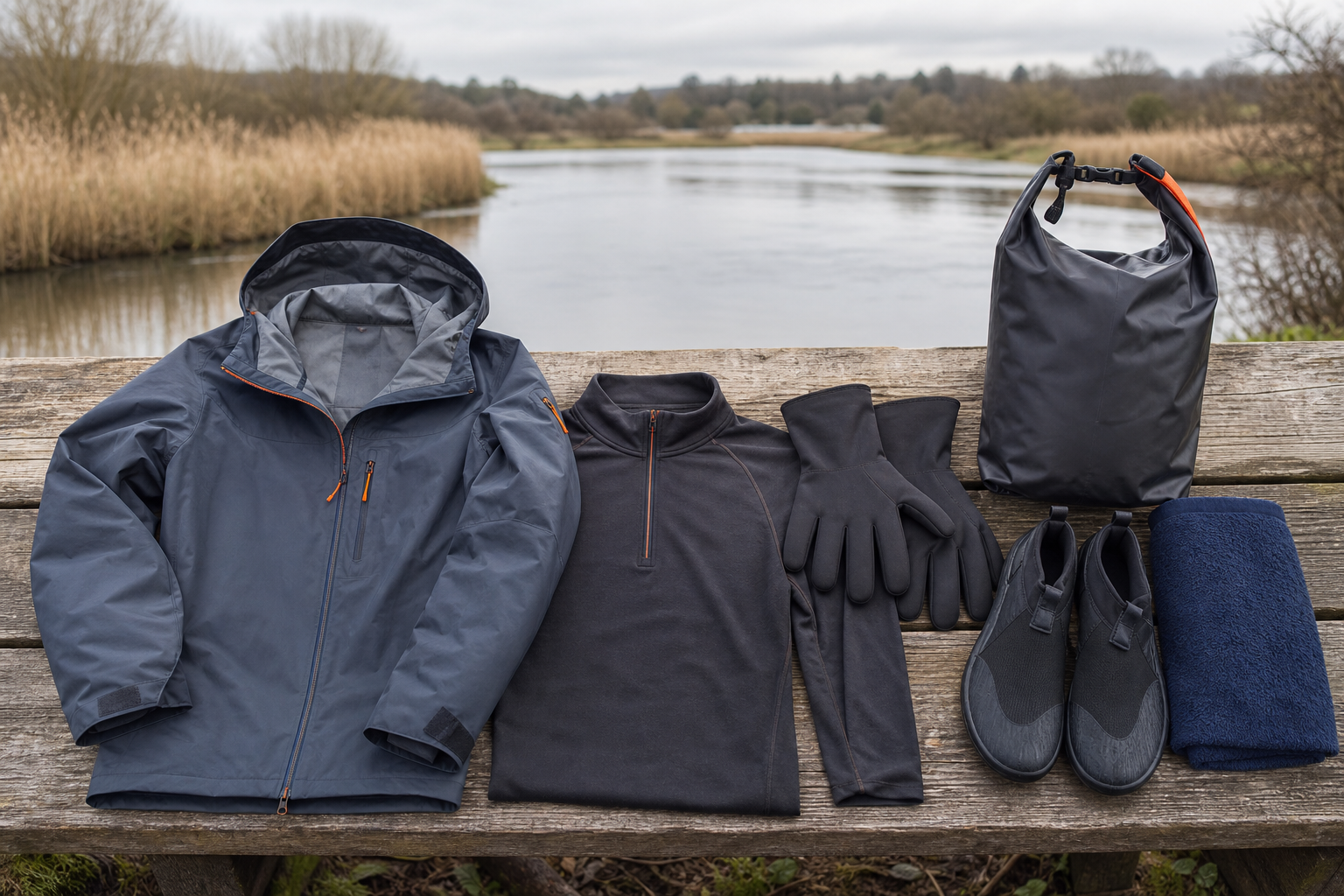
Avoid cotton T-shirts, jeans, hoodies and tracksuit bottoms. They soak up water, hold it against you and become heavy. The cheap fix is a Decathlon or Mountain Warehouse synthetic base layer for about £10-£25. A better setup is a thin synthetic top, a fleece mid-layer and a paddling jacket over the top.
You do not need to buy everything at once. I would rather see a beginner spend money on a good buoyancy aid, a synthetic base layer and warm spare clothes than turn up with an expensive jacket over cotton joggers. If you are still building your kit, our guide to choosing a buoyancy aid for kayaking is the place to sort the safety layer first.
Spring And Autumn Clothing
Spring and autumn are the awkward UK seasons. The air can be 14°C, the sun can appear for half an hour, then a squall comes through and you are suddenly cold, wet and annoyed with your earlier optimism.
A sensible shoulder-season outfit
For flat water, sheltered rivers and gentle lake paddles, a good spring or autumn setup looks like this:
- Synthetic or merino base layer. Budget tops are about £15-£30; merino is usually £40-£80.
- Thin fleece or grid fleece. A basic Decathlon fleece is about £10-£20; paddling-specific fleece trousers are nearer £45-£80.
- Waterproof paddling cag. Expect £80-£180 for a decent recreational jacket.
- Neoprene boots or water shoes. Decathlon and Amazon UK options start around £20; sturdier Palm or NRS boots are £45-£80.
- Neoprene gloves in the hatch. Not always on your hands, but close enough to grab when the wind rises.
That kit handles most spring and autumn canal, river and lake sessions where you can get off the water quickly. If you are going further from shore, paddling moving water, or heading out in rougher conditions, step up to a wetsuit or drysuit rather than stacking more ordinary clothes.
Where shoulder-season paddlers overdo it
The mistake is wearing too many thick layers under a buoyancy aid. If you cannot rotate your torso, reach forward or self-rescue cleanly, you have made yourself less safe. I like a thin warm layer and a proper shell over the top. It feels less cosy at launch, but it works better once you are moving.
A spare warm layer in a dry bag is non-negotiable. A 10-litre dry bag is about £10-£18 from Decathlon or Amazon UK, and a tougher Ortlieb or Palm bag is more like £20-£35. For a longer paddle, pack a fleece, hat, socks and a small towel. If you already carry camera kit or lunch, our dry bag guide for paddling explains what size makes sense.
Summer Clothing
Summer kayaking clothing looks easy until you add wind, sunburn and cold water. Shorts and a T-shirt might be fine for a supervised hire session on a sheltered lake, but they are not a universal answer.
Hot weather still needs paddling kit
On warm, settled days, I usually prefer:
- Quick-dry shorts or leggings. Running shorts or synthetic leggings work well and cost £15-£40.
- Rash vest or synthetic top. A long-sleeve UPF top is worth it if you burn easily.
- Light paddling jacket in the boat. A packable cag or windproof layer saves the day when the breeze picks up.
- Cap, sunglasses retainer and sun cream. Cheap, boring, and exactly what people forget.
- Water shoes or neoprene boots. Bare feet in a kayak are fine until you need to land on gravel or broken shells.
The Met Office notes that wind direction and strength can change around beaches, and its beach and tide guidance is worth checking before coastal paddles. For sea kayaking, a sunny forecast does not cancel out wind, tide or the need for clothing that still works after a capsize.
Sit-on-top kayaks feel wetter
If you are on a sit-on-top, assume you will get wet from the waist down. In summer I would choose quick-dry shorts over cotton shorts, or thin neoprene shorts if the water is cool. For a recreational sit-in kayak on flat water, you can often stay drier, but the same no-cotton rule applies.
The budget summer setup is not expensive: £20 water shoes, £15 synthetic top, £20 quick-dry shorts and a £25-£40 light waterproof layer. The upgrade path is a better paddling cag and neoprene shorts or leggings. If you are still choosing the boat itself, our best kayaks UK guide explains how sit-in, sit-on and inflatable designs change how wet you get.
Winter Clothing
Winter is where I stop being relaxed about clothing. If the water is properly cold, ordinary waterproofs over warm layers are not enough for many trips. You need a system that still protects you if you swim.
The winter baseline
For winter kayaking in the UK, the sensible baseline is usually one of these:
- Drysuit with thermal layers underneath. Best for cold water, moving water, sea kayaking and longer trips.
- Full wetsuit plus cag. Better than normal clothes for short, wetter sessions, though less comfortable for long touring.
- Dry trousers and cag. Useful for sheltered flat water, but not the same protection as a full drysuit.
A drysuit is expensive: budget models start around £350-£500, while Kokatat, Palm and NRS suits can run from £650 to well over £1,000. That price stings, but it is the single biggest clothing upgrade for serious cold-water paddling. Under it, wear synthetic thermals and fleece, not cotton. A £25 base layer and £40 fleece trousers under a drysuit do more useful work than a heavy jumper.
Do not cook yourself at launch
Winter clothing should feel slightly cool while you are standing around, then comfortable once paddling. If you are sweating before you launch, that moisture will chill you later. I tend to vent layers before getting on the water, then close cuffs and neck seals once I am ready to go.
For winter training, whitewater, sea conditions or isolated routes, clothing is only one part of the plan. Helmet choice, rescue skills and route judgement matter too. If you are moving into whitewater, read the whitewater kayak helmet guide before assuming a cycling helmet is close enough. It is not.
Wetsuit, Drysuit Or Waterproofs: Which To Choose
This is the real buying decision behind most searches for what to wear kayaking UK trips. You can paddle in many combinations, but the right one depends on water exposure rather than style.
Waterproofs are for splash, not immersion
A paddling cag and waterproof trousers are good for rain, paddle drip and wind. They are not the same as immersion protection. If water gets through the waist, cuffs or neck, your warm layers can still soak through.
For sheltered summer and mild shoulder-season paddles, waterproofs over synthetic layers are fine. Expect:
- Budget recreational cag: about £60-£90.
- Good touring cag: about £120-£220.
- Waterproof paddling trousers: about £60-£150.
My favourite value route for new paddlers is a mid-range cag from Palm or Yak before buying expensive trousers. It improves comfort straight away and works across more seasons than a cheap fashion waterproof.
Wetsuits suit wet, short and active sessions
A wetsuit traps a thin layer of water and lets your body warm it. That makes sense for surf, sit-on-top play, rescue practice and short sessions where you expect to be wet. A basic 3/2mm wetsuit is about £45-£90 from Decathlon, Go Outdoors or Amazon UK. Better paddling or surfing suits sit around £120-£250.
The downside is comfort. Wetsuits can rub around the neck and shoulders when paddling for hours. They also feel clammy when you stop. For a long flat-water tour, I would rather wear dry layers unless the capsize risk or water temperature pushes me towards a drysuit.
Drysuits are for cold water commitment
A drysuit is the one to buy if you paddle year-round, train rescues, paddle coastal water or cannot guarantee a quick exit. It is not magic; you still need warm layers underneath, and neck or wrist seals need care. But after a cold swim, a drysuit gives you a much better chance of staying functional.
For most committed UK kayakers, the progression is:
- Start with synthetic layers, water shoes and a buoyancy aid. Get out safely and avoid cotton from day one.
- Add a proper paddling cag. This gives the biggest comfort upgrade for the money.
- Buy neoprene gloves and boots. Small items, big effect.
- Move to wetsuit or drysuit when your paddling demands it. Let conditions drive the spend.
Hands, Feet And Spare Kit
Hands and feet decide whether a paddle is enjoyable. You can have the perfect jacket and still cut the trip short because your fingers stop working.
Gloves
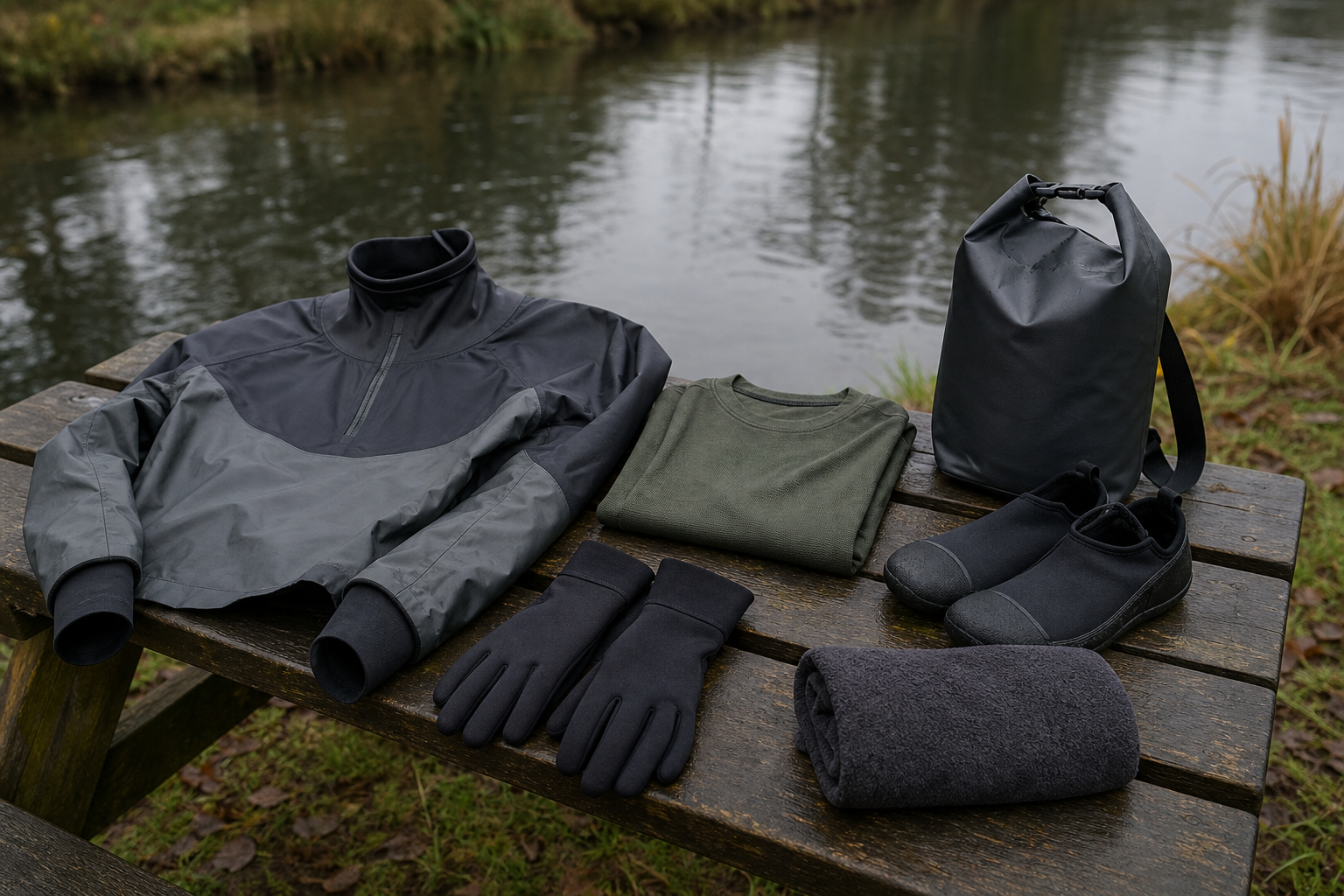
Neoprene gloves are best for cold and splash. Thin 1.5-2mm gloves cost about £15-£30 and keep paddle feel. Thicker 3mm gloves are warmer but clumsier. Pogies, which wrap around the paddle shaft, are brilliant for cold touring because your hands stay in contact with the paddle. They are usually £25-£50.
I keep thin gloves in the boat even in spring. They take almost no space and rescue a session when the wind turns. If your main issue is water running down the paddle shaft, look at paddle drip guards as well as gloves.
Footwear
For kayak footwear, avoid heavy walking boots and anything that can trap you in the boat. Slim neoprene boots, water shoes or old trainers work better. The sole needs enough grip for a muddy bank but not so much bulk that your foot jams under the deck.
Expect to pay:
- Basic water shoes: £12-£25.
- Neoprene boots: £25-£70.
- Winter paddling boots: £60-£110.
In winter, socks matter. Thin merino or synthetic socks under drysuit socks are warmer than thick cotton sports socks. If you wear a wetsuit, neoprene socks inside boots can make a big difference.
Spare clothes
Pack a full dry change, not just a jumper. That means top, bottoms, socks, underwear, hat and towel. Put them in a dry bag and keep it closed until needed. It sounds fussy until the first time someone tips out beside the car park and has to drive home in wet leggings.
Launch-Day Clothing Checks
Before launching, do a quick clothing check while you still have the car, club hut or dry bag open. It takes one minute.
The one-minute check
Ask yourself:
- Can I swim in this? If not, change the insulation or outer layer.
- Can I paddle freely? Rotate your torso and reach forward with your buoyancy aid on.
- Can I get out of the kayak? Check footwear and bulky layers do not jam.
- Do I have a dry change? Not in the car if the car is not near the take-out.
- Will I be visible? Muted kit looks tidy in photos but bright hats, cags or boat colours help other water users see you.
For gentle summer paddles, that check might confirm your light clothing is fine. For cold water, exposed coast or a river with awkward banks, it should push you towards better protection. Clothing should match the consequence of getting wet, not the optimism of staying dry.
My short answer: for most UK beginners, start with synthetic layers, a proper buoyancy aid, grippy water shoes, a waterproof paddling jacket and a dry change. Add neoprene gloves and boots early. Buy a wetsuit for wet, short sessions. Buy a drysuit when cold water becomes part of your normal paddling, not a rare accident.
Frequently Asked Questions
Can I wear normal gym leggings for kayaking? Yes, synthetic gym leggings are fine for warm, sheltered paddles because they dry faster than cotton. Avoid cotton-rich leggings in cold weather, and add waterproof or neoprene protection if you may swim.
Do I need a wetsuit for kayaking in summer? Not always. For a short sheltered lake paddle on a warm day, quick-dry clothing can be enough. For sit-on-top kayaking, surf, rescue practice or cold coastal water, a wetsuit is a better choice.
What shoes should I wear kayaking in the UK? Slim neoprene boots or water shoes are best for most paddlers. Avoid heavy walking boots because they are bulky, slow to dry and can make exits harder in some kayaks.
Is a drysuit worth it for kayaking? A drysuit is worth it if you paddle in cold water, winter, sea conditions or moving water. It is expensive, but it protects you better after a swim than normal waterproof clothing.
What should children wear kayaking? Children need the same no-cotton approach: synthetic layers, a correctly fitted buoyancy aid, warm spare clothes and footwear that stays on. In colder water, use a wetsuit or drysuit rather than relying on ordinary waterproofs.
Should I wear a helmet for kayaking? Wear a paddling helmet for whitewater, surf, rocky launches or anywhere head impact is realistic. It is not usually needed for calm open lake paddling, but route and conditions decide.