You’ve been paddling flat water for a year, you’ve booked onto a whitewater course, and the kit list says “helmet.” You look at your cycling helmet and wonder if that’ll do. It won’t — and the reasons why matter more than you’d think. A whitewater helmet protects against a specific set of impacts that no other sport’s headgear is designed for: rocks below the surface, your own boat, other paddlers’ equipment, and low branches at speed. Getting the right one is non-negotiable.
In This Article
- The Quick Recommendation
- Why You Need a Specific Whitewater Helmet
- Full-Cut vs Half-Cut Helmets
- Helmet Construction Types
- Fitting a Whitewater Helmet Properly
- Face Guards and Visors
- Best Whitewater Helmets Available in the UK
- What Grade of Whitewater Needs What Helmet?
- When to Replace Your Helmet
- Helmet Care and Maintenance
- Common Mistakes
- Frequently Asked Questions
- The Bottom Line
The Quick Recommendation
For most UK paddlers moving into whitewater (grades 2-3), a half-cut composite or injection-moulded helmet from a reputable whitewater brand is the right starting point. The Sweet Protection Strutter (about £80-100) and Palm AP4000 (about £60-80) are the most popular choices at UK paddling centres. Spend at least £50 — anything cheaper compromises on fit, retention, and impact protection in ways that matter when you’re upside down in a rapid.
Why You Need a Specific Whitewater Helmet
A cycling helmet is designed to absorb one major impact by crushing its foam liner, then being replaced. A climbing helmet protects against small falling objects hitting the top of your head. Neither is designed for what whitewater throws at you.
What Whitewater Helmets Protect Against
- Submerged rocks — the most common impact. You capsize, your head hits a rock below the surface. The impact angle is unpredictable — it could be the top, side, front, or back of your head
- Your own boat — during a capsize or combat roll, the cockpit rim and deck of your kayak are centimetres from your head. Hard impacts happen when rolls go wrong
- Other paddlers’ equipment — paddles, boats, and throw bags can hit you, especially in eddy lines and play spots where multiple paddlers converge
- Low branches and bridge supports — river obstacles at speed create impacts that no amount of skill prevents entirely
- Repeated impacts — unlike cycling helmets (designed for one crash), whitewater helmets handle multiple impacts over months or years without needing immediate replacement
Why Cycling and Climbing Helmets Don’t Work
- Cycling helmets crush on impact — they’re single-use. After one significant hit in whitewater, the EPS foam is compressed and offers no further protection. Whitewater helmets use multi-impact foam or hard shells that survive repeated knocks
- Cycling helmets lack side and rear coverage — they’re designed for forward impacts. Whitewater impacts come from every direction
- Climbing helmets protect the crown but often have minimal side protection. They’re also designed for vertical impacts (falling rock), not the lateral forces common in whitewater
- Neither is water-rated — absorption, drainage, and retention in turbulent water aren’t considered in their design
Full-Cut vs Half-Cut Helmets
This is the first choice you’ll make, and it’s about the trade-off between coverage and comfort.
Full-Cut Helmets
Cover your head from forehead to the nape of your neck, with protection extending down over the ears and temples. The most coverage available.
- Best for: Grade 3+ whitewater, creeking, steep descents, and anyone who prioritises maximum protection
- Coverage: Forehead, temples, ears, back of skull
- Downsides: Warmer, heavier, can reduce hearing (which matters for communication on the river), less comfortable in warm weather
- Examples: Sweet Protection Rocker, Palm Shuck
Half-Cut Helmets
Cover the top and sides of the head but leave the ears partially or fully exposed. More like a skate helmet profile.
- Best for: Grade 2-3 whitewater, playboating, warmer conditions, and paddlers who value hearing and comfort
- Coverage: Crown, forehead, upper temples. Ears exposed or lightly covered
- Downsides: Less protection for ears and lower skull. Not ideal for creeking or grade 4+
- Examples: Sweet Protection Strutter, Palm AP4000, Shred Ready Standard
Which to Choose
For most UK river paddling (grades 2-3), a half-cut helmet provides adequate protection with better comfort and awareness. Step up to full-cut if you’re paddling grade 4+, creeking, or running rivers with significant undercut rocks where ear and temple protection matters. The RoSPA water safety guidance recommends appropriate head protection for all whitewater activities without specifying full vs half cut — the choice depends on the conditions.
Helmet Construction Types
How a helmet is built determines its weight, protection level, durability, and price.
Injection-Moulded (Hard Shell + Foam Liner)
A hard plastic outer shell with closed-cell foam (usually EVA or EPP) bonded inside. The shell distributes impact force across a wide area; the foam absorbs it.
- Weight: 350-500g
- Protection: Good for most whitewater. Handles repeated impacts well
- Durability: 5-8 years with proper care
- Price: £40-80
- Best for: Most recreational and intermediate paddlers
Composite (Carbon/Fibreglass + Foam Liner)
A layered carbon fibre or fibreglass shell with premium foam lining. Lighter and stronger than injection-moulded, with better impact distribution.
- Weight: 280-400g
- Protection: Excellent. Better energy distribution than plastic shells
- Durability: 5-10 years. More resistant to UV degradation than plastic
- Price: £80-160
- Best for: Regular paddlers, advanced whitewater, and anyone who values low weight
In-Mould Construction
The foam liner and outer shell are fused during manufacturing, creating a single integrated structure. Common in cycling helmets but less common in whitewater.
- Weight: Lightest option (250-350g)
- Protection: Good for single impacts, less durable for repeated hits
- Durability: 3-5 years. Foam degrades faster than separated construction
- Price: £50-100
- Best for: Lighter whitewater (grade 2-3) where multiple heavy impacts are unlikely
Fitting a Whitewater Helmet Properly
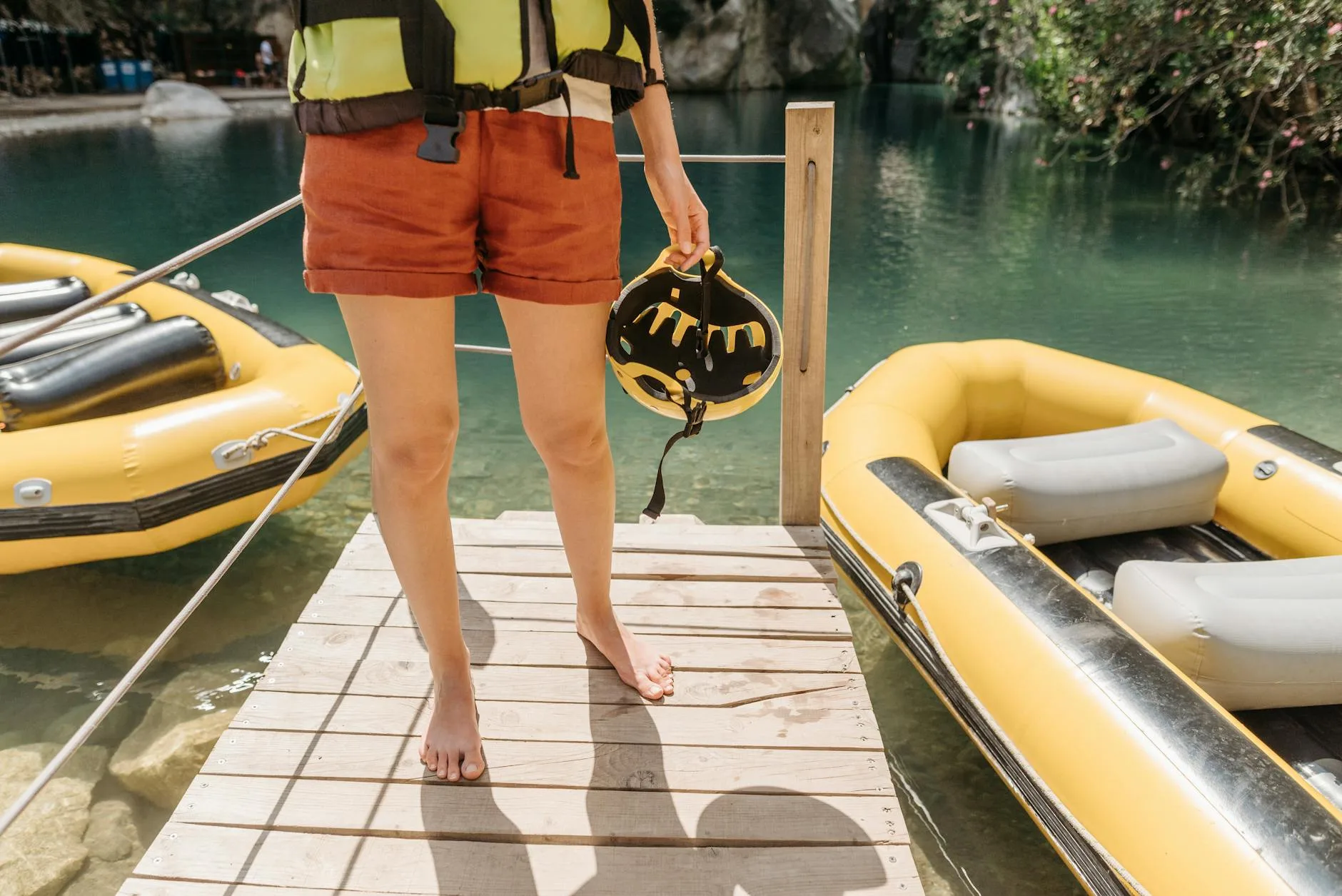
A helmet that doesn’t fit properly is barely better than no helmet at all. It can shift on impact, expose areas it should protect, or come off entirely in turbulent water.
How It Should Feel
- Snug but not painful — the helmet should grip your head evenly without pressure points. You shouldn’t be able to slide a finger easily between the foam and your forehead
- Level position — the front edge should sit about 2cm above your eyebrows. Too high exposes your forehead; too low blocks vision
- No rocking — grab the helmet and try to rock it side to side and front to back. Minimal movement is acceptable; significant shifting means wrong size or wrong shape
The Shake Test
Put the helmet on, fasten the chin strap firmly but comfortably, and shake your head vigorously in all directions. The helmet should stay put. If it shifts more than a centimetre in any direction, try a different size or brand — head shapes vary between manufacturers.
Chin Strap Adjustment
The chin strap is your last line of defence against the helmet coming off in turbulent water. Two rules:
- Tight enough that only one finger fits between the strap and your chin — any looser and the helmet can be ripped off by water force
- V-straps meet just below the ear — too far forward or back changes how the helmet sits and can expose the temples
Measuring Your Head
Measure the circumference of your head just above your eyebrows and ears. Most helmets come in S, M, L, XL with 2-4cm size ranges. If you’re between sizes, try both — it varies by brand.
Face Guards and Visors
When to Use a Face Guard
Face guards (metal or polycarbonate cages that attach to the helmet) protect your nose, jaw, and teeth. They’re recommended for:
- Grade 4+ whitewater — where impacts are harder and more frequent
- Creeking — running steep, technical drops where facial impacts on rocks are possible
- Beginners on moving water — if you’re still developing your roll and brace, a face guard provides insurance while you learn
When You Don’t Need One
For grade 2-3 paddling, playboating, and casual river trips, a face guard adds weight, restricts vision slightly, and isn’t necessary for most situations. Most UK paddlers on intermediate rivers don’t use them.
Visors
Small sun visors that clip onto helmet fronts. Useful for sunny conditions on the water, reducing glare without sunglasses that might fall off in a swim. About £10-20 as an add-on. A nice accessory, not a safety essential. For a related angle, see our Kids’ Paddles: How to Choose the Right Size guide.
Best Whitewater Helmets Available in the UK
Sweet Protection Strutter — Best All-Rounder
Price: About £80-100 from Peak UK, Kayaks & Paddles, or Go Outdoors
The Strutter has been the default recommendation at UK kayak schools for years. Half-cut profile with a composite outer shell, OCCIgrip liner for a customisable fit, and a clean aesthetic that doesn’t scream “extreme sport” at the café stop.
- Shell: Tough ABS with in-mould construction
- Fit: Adjustable via rear dial and removable padding
- Weight: About 350g
- Certification: CE EN 1385
Palm AP4000 — Best Value
Price: About £60-80 from Palm direct, Peak UK, or Kayaks & Paddles
Palm is a UK brand (based in Clevedon, Somerset) and the AP4000 is their workhorse whitewater helmet. Half-cut, injection-moulded shell, and a comfortable fit system. At £60-80, it’s the most affordable serious whitewater helmet available.
- Shell: High-impact ABS plastic
- Fit: Adjustable cradle with removable ear pads
- Weight: About 400g
- Certification: CE EN 1385
Sweet Protection Rocker — Best Full-Cut
Price: About £100-130 from specialist kayak retailers
The full-cut version of the Strutter. Extended coverage over ears and nape, with the same build quality. The go-to for creeking and grade 4+ in the UK.
- Shell: Composite with reinforced ABS
- Fit: OCCIgrip rear adjustment, removable padding
- Weight: About 380g
- Certification: CE EN 1385
Shred Ready Standard Half-Cut — Best for Playboaters
Price: About £55-70 from UK kayak retailers
The classic skate-style whitewater helmet. Low-profile, comfortable, and a favourite among freestyle and playboat paddlers. VFM is excellent.
- Shell: ABS plastic
- Fit: Foam padding with multiple thickness options included
- Weight: About 370g
- Certification: CE EN 1385
What Grade of Whitewater Needs What Helmet?
Grade 1-2 (Easy to Moderate)
A basic half-cut helmet is sufficient. These are gentle rapids with small waves and clear passages. Helmet impacts are uncommon but not impossible — rocks on a river bed don’t care about the grade above them. Our How to Repair a Damaged Paddle guide is useful alongside this.
Grade 3 (Moderately Difficult)
A quality half-cut helmet from a reputable brand. This is where impacts become more likely — irregular waves, rocks, eddies with current differentials, and the occasional unexpected swim. A well-fitting helmet with CE EN 1385 certification is essential.
Grade 4 (Difficult)
Full-cut recommended. Powerful, continuous rapids with significant risk. Undercut rocks, strong hydraulics, and limited recovery time. A face guard is worth considering, especially on unfamiliar rivers.
Grade 5 (Expert)
Full-cut with face guard mandatory for most paddlers. Extremely violent water, unavoidable hazards, and consequences where even minor equipment failures can be serious. If you’re paddling grade 5, you already know this — and you probably have strong opinions about which helmet to use.
If you’re getting into whitewater, choosing the right boat matters as much as the right helmet — our whitewater kayak guide covers the options.
When to Replace Your Helmet
Replace Immediately If
- Visible cracks in the outer shell — any crack compromises structural integrity
- Deformed foam liner — compressed or flattened foam no longer absorbs impacts
- A significant impact — if you hit a rock hard enough to feel it through the helmet, inspect it carefully. If the foam is compressed or the shell is cracked, replace it
- Broken retention system — if the chin strap, buckle, or adjustment dial breaks, the helmet can’t stay on your head when it matters
Replace After 5-8 Years
Even without visible damage, helmet materials degrade:
- UV exposure weakens plastic shells over time
- Foam compresses gradually, reducing impact absorption
- Strap webbing weakens and loses elasticity
- Adhesives bonding the liner to the shell can deteriorate
If you paddle regularly, inspect your helmet annually. If you paddle occasionally, replace it every 8 years regardless of appearance. The paddling safety guide covers broader equipment checks.
Helmet Care and Maintenance
After Every Session
- Rinse with fresh water — river water, especially in the UK, contains grit, bacteria, and sometimes sewage. Don’t let it dry inside the foam
- Air dry away from direct sunlight — UV degrades the shell. Dry in shade, not on the roof of your car
- Check the chin strap for damage — look for fraying, worn buckles, or stretching
Monthly (During Paddling Season)
- Inspect the shell for hairline cracks — run your fingers over the surface and look in bright light
- Check foam liner compression — press firmly on the foam. It should spring back immediately. If it stays compressed, it’s losing effectiveness
- Clean with mild soap and water if needed — don’t use solvents, bleach, or strong chemicals
Storage
Store in a cool, dry place away from direct sunlight. Don’t store heavy objects on top of the helmet. A mesh bag or helmet-specific carrying case prevents accidental damage.
Common Mistakes
Using a Cycling Helmet
Already covered, but it bears repeating: cycling helmets are designed for one impact, then disposal. Whitewater involves repeated knocks against rocks, boats, and equipment. A cycling helmet after one significant impact is just a fancy hat. We cover a similar decision in How to Choose a Kids’ Paddleboard.
Wearing the Helmet Too Far Back
Exposes the forehead — the most common impact zone in a capsize. The front edge should sit 2cm above your eyebrows, not halfway up your forehead.
Loose Chin Strap
A loose strap means the helmet can be ripped off by moving water. In a swim through a rapid, water force on a loose helmet is like a hand grabbing it and pulling. One finger between strap and chin — no more.
Buying Based on Looks
The coolest-looking helmet might not fit your head shape. Fit is everything. A £50 helmet that fits perfectly protects better than a £120 helmet that rocks on your head.
Never Inspecting It
Helmets deteriorate. Check yours regularly. A cracked shell or compressed liner is invisible from the outside but worthless in an impact.
Frequently Asked Questions
Can I use a climbing helmet for whitewater kayaking? Not recommended. Climbing helmets are designed for top-of-head impacts from falling objects, with minimal side coverage. Whitewater impacts come from all angles, and the helmet needs to stay on in turbulent water — which climbing helmet retention systems aren’t designed for. Use a purpose-built whitewater helmet with CE EN 1385 certification.
How much should I spend on a whitewater helmet? At least £50 for a basic model from a reputable brand. The £60-100 range covers excellent helmets for grade 2-4 paddling. Above £100, you’re paying for lighter materials (composites), enhanced fit systems, or full-cut designs for more serious whitewater. Don’t buy unbranded helmets under £30 — they often lack proper certification and reliable impact protection.
Do I need a face guard for UK rivers? For most grade 2-3 paddling, no. Face guards add weight and slightly restrict vision. Consider one for grade 4+, creeking, or if you’re a beginner still developing your roll — the extra facial protection provides peace of mind while you learn. Many paddlers add a face guard to their existing helmet later rather than buying a helmet with one built in.
What does CE EN 1385 mean? It’s the European safety standard for helmets used in canoeing, kayaking, rafting, and other whitewater activities. It tests for impact absorption, penetration resistance, retention system strength, and field of vision. Any helmet sold for whitewater use in the UK should carry this certification. If it doesn’t, don’t buy it.
Can I wear a hat under my whitewater helmet? A thin thermal beanie or neoprene skull cap works for cold-water paddling (common in UK winters). It shouldn’t be thick enough to change how the helmet fits — if you need to loosen the adjustment to accommodate a hat, the helmet is no longer fitting properly. Try the helmet with the hat before you get on the water.
The Bottom Line
A whitewater helmet is cheap insurance for an activity where head impacts are a matter of when, not if. The good news is that the options are mature, well-tested, and affordable. A £60-80 half-cut helmet from Palm or Sweet Protection protects your head for years of river paddling.
Don’t overthink the purchase. Get a CE EN 1385 certified helmet from a reputable whitewater brand, make sure it fits snugly with the chin strap tight, and inspect it regularly. The fanciest helmet in the world is useless if it’s sitting in your car while you’re on the river, so buy one you’ll actually wear every time you paddle.