The feathered vs unfeathered paddle choice is mostly about wrist position, wind, and how quickly you want the stroke to feel natural. If you are new to kayaking on UK canals, lakes and sheltered rivers, start unfeathered or at a low angle such as 15-30 degrees. If you paddle in wind, surf or faster water, a feathered setup can feel cleaner once your hands learn the rotation.
In This Article
- Feathered vs Unfeathered Paddle: The Short Answer
- What Feathering Actually Means
- How Each Setup Feels on the Water
- Wrists, Shoulders and Learning Curve
- Which Paddle Angle Suits Your Kayaking
- How to Set and Test Your Feather Angle
- What to Buy in the UK
- Frequently Asked Questions
Feathered vs Unfeathered Paddle: The Short Answer
A feathered paddle has the two blades set at different angles. When one blade is vertical in the water, the other sits partly edge-on to the air. An unfeathered paddle has both blades aligned, so each blade faces the same way.
For most beginners, unfeathered is the easier place to start. You can see both blades, keep both wrists neutral, and focus on boat control rather than twisting the shaft every stroke. That matters more than squeezing a tiny bit of wind advantage from day one.
I would only push a new paddler straight towards a higher feather angle if they were learning with a coach, paddling a narrow touring kayak in open wind, or already comfortable with rotation sports such as tennis, climbing or rowing. Everyone else should treat feathering as an adjustment to test, not a badge of progress.
My practical rule
Use this as a starting point:
- 0 degrees: best for beginners, relaxed canal paddling, tandem kayaks and anyone with fussy wrists.
- 15-30 degrees: a good compromise for UK recreational kayaking, especially if your paddle has a simple adjustable ferrule.
- 30-45 degrees: useful for touring, whitewater and windier days once your control hand is consistent.
- 60 degrees: common on older paddles, but too much for many casual paddlers unless they learnt that way.
The wrong answer is not “feathered” or “unfeathered”. The wrong answer is buying a fixed-angle paddle before you know what your wrists and stroke actually like.
What Feathering Actually Means
Feathering is the offset between the two paddle blades. If both blades line up flat, the feather angle is 0 degrees. If one blade is rotated compared with the other, the paddle is feathered.
Most modern split kayak paddles let you change this angle at the ferrule, which is the joint in the middle of the shaft. Basic paddles may offer only 0 and 60 degrees. Better recreational paddles often give several settings, and touring paddles may allow small increments across a wider range.
Control hand matters
With a feathered paddle, one hand usually controls the blade angle while the shaft rotates slightly through the other hand. Right-hand control means your right hand keeps its grip and sets the right blade angle. Left-hand control does the same on the left.
This is where beginners often get tangled. They grip both hands too hard, then wonder why their wrists ache after 20 minutes. The non-control hand should be relaxed enough for the shaft to rotate. Think firm enough not to drop it, loose enough that you are not trying to throttle it.
Feather angle is not paddle length
Feather angle is separate from paddle length. A 220cm paddle can be feathered or unfeathered. A short whitewater paddle can be feathered or unfeathered. If your main question is sizing rather than blade offset, read our guide to choosing the right paddle length first.
The two choices do interact, though. A shorter, higher-angle stroke often pairs better with some feather because the top hand comes higher and the air blade can catch wind. A longer, lower-angle touring stroke often feels fine at 0-30 degrees because the wrists stay calmer and the blade travels closer to the water.
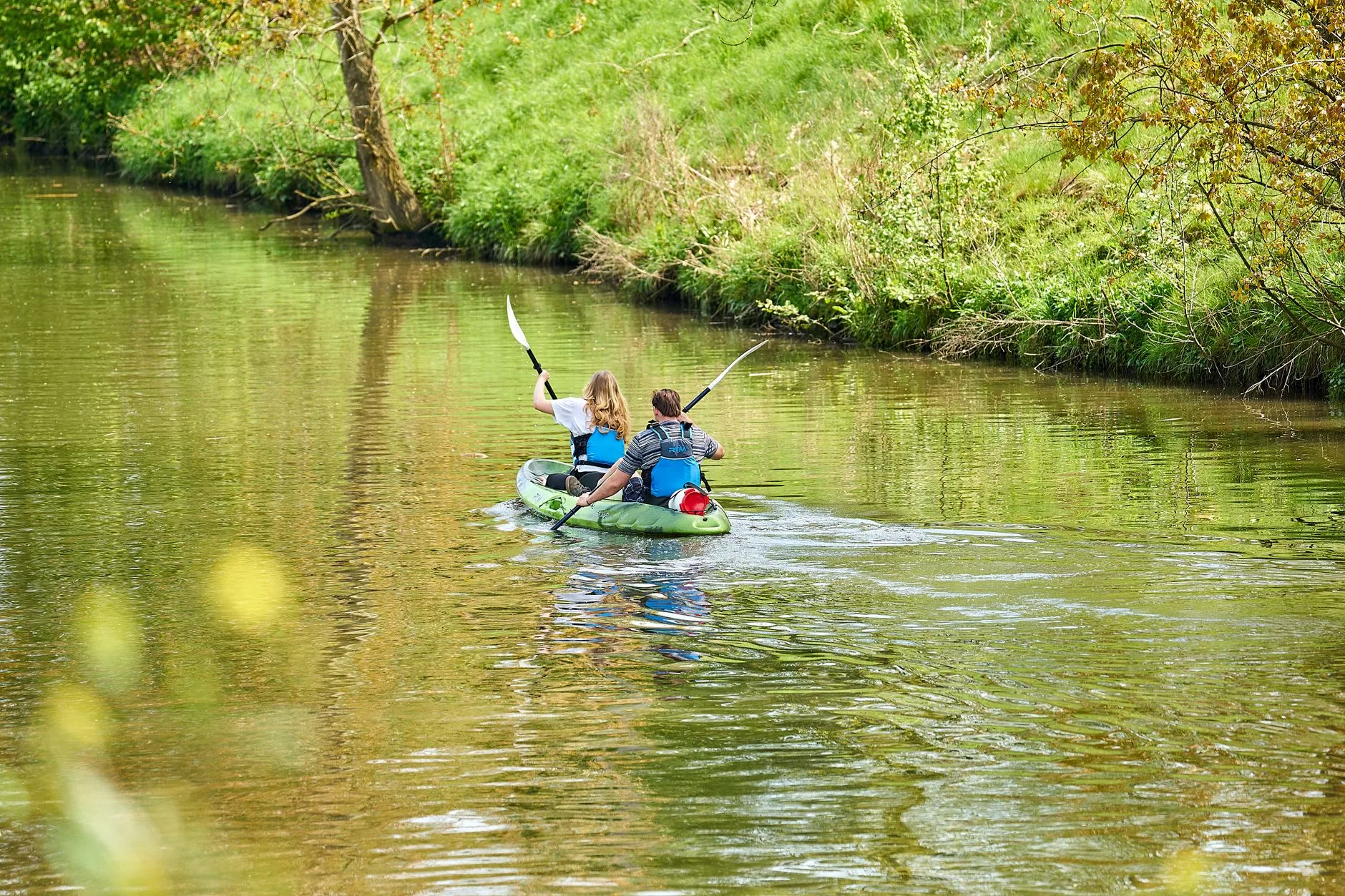
How Each Setup Feels on the Water
The first difference is timing. With an unfeathered paddle, the next blade is already presented in the same orientation as the previous one. There is less to think about. You plant the blade, pull, recover, swap sides.
With a feathered paddle, the recovery blade cuts through the air at an angle. Done well, it feels tidy and efficient. Done badly, it feels as if the blade is arriving half a beat late and you are correcting it with your wrist every time.
Wind and blade flutter
Feathering was originally popular because it reduces the face of the recovering blade against the wind. On a breezy reservoir or open estuary, that can make a long paddle feel less clumsy. It does not turn a cheap paddle into a race paddle, but it can stop the upper blade being slapped around by gusts.
The benefit is smaller on sheltered canals and slow rivers. If you mostly paddle tree-lined water in a stable sit-on-top, unfeathered may feel calmer and more predictable. The Met Office paddling weather advice is a useful reminder that wind, tides and weather planning matter more than tiny equipment tweaks when conditions change.
Catch quality
A feathered setup can encourage a cleaner catch because your control hand learns to square the blade before it enters. That is helpful if you are working on efficient forward stroke technique, especially in a touring kayak.
The catch can also go wrong. If your control hand rotates late, the blade enters half-open, splashes, then stalls. That wastes more energy than an unfeathered paddle would have saved. If your stroke is still rough, fix the blade path first. Our guide to holding and using a kayak paddle correctly covers the basic hand and shaft position.
Wrists, Shoulders and Learning Curve
Wrist comfort is the biggest reason I would not tell every beginner to use a traditional 60-degree feather. Some paddlers adapt quickly. Others end up cocking the control wrist on every stroke and blaming the kayak, the seat or their general lack of fitness.
An unfeathered paddle lets both wrists stay closer to neutral. That is useful if you are building confidence, paddling with children, or doing short recreational sessions where comfort beats speed. Based on typical UK club and hire-centre setups, 0-30 degrees is now far more beginner-friendly than the old “everyone uses 60 degrees” approach.
Shoulder feel
Feathering does not only affect wrists. A higher angle can change how your shoulders move during the recovery phase. If you paddle with good torso rotation, the change can feel smooth. If you paddle with arms alone, the same angle can feel forced.
Do not ignore warning signs. Sharp pain, pins and needles, or lingering joint pain after paddling is a stop-and-reset message, not something to tough out. The NHS sprains and strains guidance gives sensible advice on soft-tissue injuries, and it is a better reference point than forum bravado.
The learning curve
Unfeathered paddles are easier for teaching because the blade positions are visible and symmetrical. That helps when a coach says “slice the blade out” or “plant it closer to the boat” because the student is not also decoding shaft rotation.
Feathered paddles reward repetition. After a few sessions, the rotation becomes automatic. Before that point, it can steal attention from steering, edging, looking around, and staying relaxed. That is why I like adjustable paddles: you can learn at 0 degrees, test 15 degrees, then settle where the boat feels quiet.
Which Paddle Angle Suits Your Kayaking
There is no single correct angle because kayaking is not one activity. A sheltered canal bimble, a windy sea-kayak crossing and a whitewater session ask different things from the same bit of kit.
Beginners and casual paddlers
Start at 0 degrees or the lowest setting your paddle allows. Your first aim is a repeatable forward stroke, not looking technical. If the boat tracks straight and your wrists feel fine the next morning, you are winning.
For a first family kayak or occasional inflatable, I would buy an adjustable split paddle rather than a fixed feather. The budget Decathlon Itiwit-style paddles around £30-£45 are not glamorous, but they let you learn without spending carbon-paddle money. If you outgrow them, they become a spare paddle for guests.
Touring and sea kayaking
Touring paddlers often settle somewhere between 30 and 45 degrees. That gives some wind benefit without the old-school wrist twist of 60 degrees. If you paddle open water, also think about blade shape. A low-angle touring blade behaves differently from a wide high-angle blade, which we cover in the kayak paddle blade shape guide.
For longer trips, weight starts to matter. A paddle that saves 250g does not sound much in the shop, but after thousands of strokes it is noticeable. Mid-range fibreglass-shaft paddles around £80-£150 are the sweet spot for many UK paddlers.
Whitewater kayaking
Whitewater paddlers often use some feather, commonly around 30-45 degrees, because the stroke is dynamic and the paddle moves through awkward positions. A big 60-degree feather can still work if that is what you learnt on, but it is less forgiving when bracing, rolling or switching strokes quickly.
If you are learning whitewater, ask your coach what angle they want you to use during the course. Matching the coaching setup for a day is usually better than arriving with a strong opinion and no roll.
Fishing and tandem kayaks
Kayak fishing often favours lower angles because you are mixing paddling with rods, anchors, drift control and short corrective strokes. You want a paddle that behaves predictably when your attention is split.
Tandem kayaks are similar. Two paddlers already have enough rhythm to sort out. An unfeathered or low-feather paddle makes it easier for each person to copy the other and avoid paddle clashes.
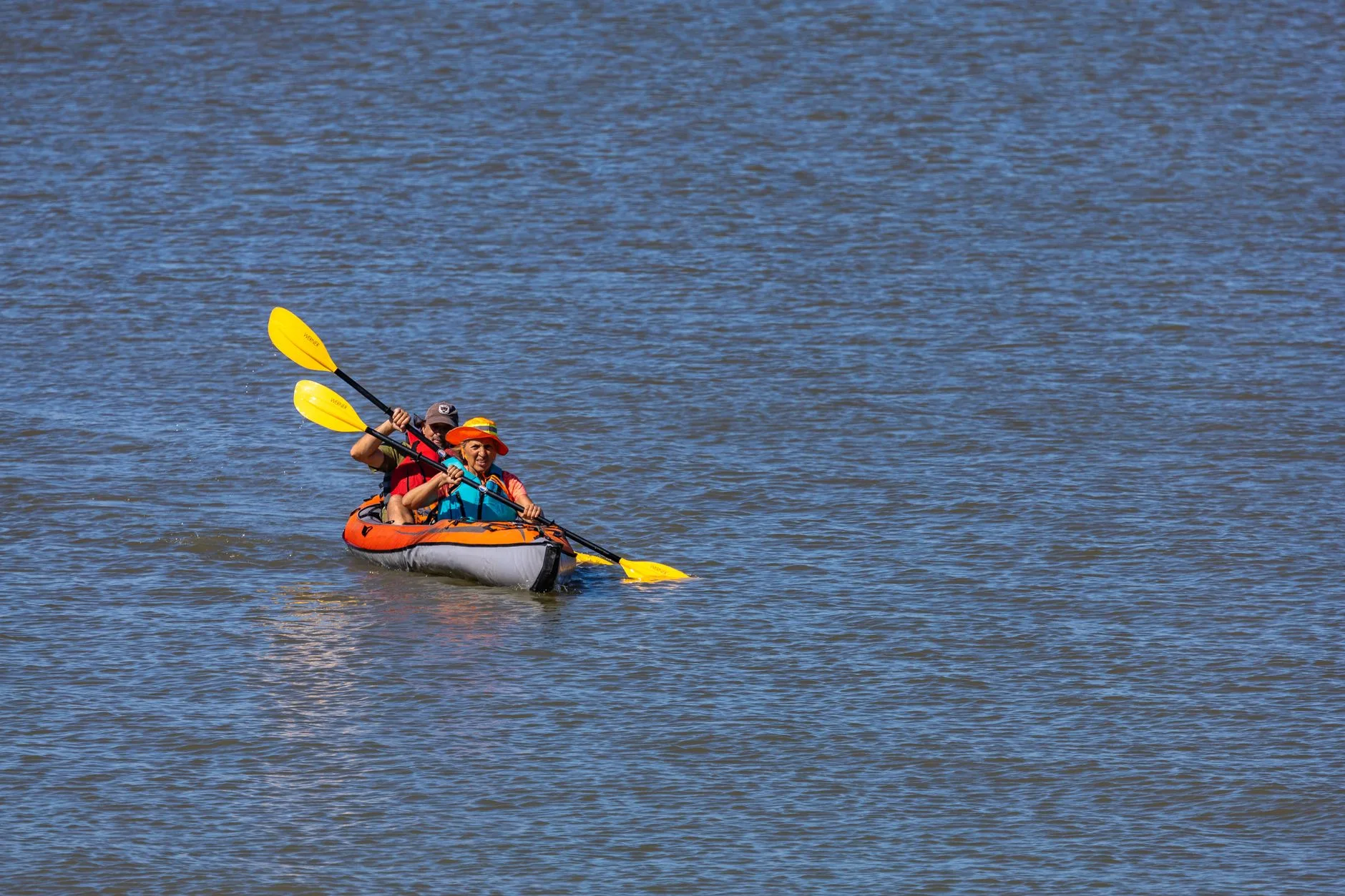
How to Set and Test Your Feather Angle
The best test is boring, which is why it works. Pick calm water, paddle the same short loop at two or three settings, and judge the result by comfort and consistency rather than speed.
A simple testing sequence
- Start at 0 degrees. Paddle for 10 minutes at an easy pace and notice if the kayak tracks straight.
- Move to 15 or 30 degrees. Keep the same route, same effort and same grip pressure.
- Check your wrists. If the control wrist bends on every stroke, the angle is too high or your grip is too tight.
- Try a light headwind. If the upper blade feels calmer without wrist strain, the feather is helping.
- Stop before fatigue muddies the answer. Tired paddlers grip harder, which makes every setting feel worse.
Do not change three things at once. If you alter feather angle, paddle length and seat position in the same session, you will not know what fixed the problem.
Check the ferrule properly
Before launching, lock the ferrule and tug both halves. A loose joint feels vague and can rotate mid-stroke, which is miserable in cold water. Sand and grit also make cheap ferrules stiff, so rinse the joint after beach or muddy-river sessions.
If your paddle has printed angle marks, do not assume they are perfect. Set the paddle on grass, line up one blade, and look at the other. You will soon see whether the marks match the actual blade position.
What to Buy in the UK
For a feathered vs unfeathered paddle decision, the best purchase is usually an adjustable split paddle. It lets you test angles without replacing the whole paddle. Fixed-angle paddles make sense only once you know your preference.
Budget options under £60
Decathlon usually has basic kayak paddles around £30-£45, including simple two-part models. They are fine for hire-style sit-on-tops, inflatables and short lake sessions. Expect aluminium shafts, plastic blades and more weight in your hands.
The Decathlon paddle range recently showed Lomo and Bravo split paddles from about £36-£63, while the basic Itiwit adjustable symmetrical paddle is often around the £30 mark. At this end, I would prioritise an adjustable ferrule over saving the last £10.
Mid-range options from £80 to £160
This is where most regular paddlers should shop. Look at brands such as TNP, Palm, Aqua-Bound and entry Werner models from UK specialists like Brighton Canoes, Canoe Shops Group, Escape Watersports and WWTCC. You will usually get a stiffer shaft, lighter swing weight and a cleaner ferrule.
If I were buying one paddle for mixed UK touring, I would choose a two-piece fibreglass-shaft paddle with adjustable feather and length, even if it cost £120-£150. It is the boring answer, but boring kit that works every weekend beats flashy kit that annoys your wrists.
Premium options above £180
Carbon and high-end touring paddles can run from about £180 to £350+. They are lovely if you paddle often, but wasted if the kayak only comes out twice a summer. Spend premium money after you know your preferred angle, blade shape and length.
Before upgrading, compare material choices in our paddle materials guide and check if your current paddle is actually the problem. Sometimes the bigger gain comes from fixing your stroke or buying the right kayak paddle for your usual water, not from chasing carbon.
Frequently Asked Questions
Is a feathered paddle better than an unfeathered paddle? Not always. A feathered paddle can help in wind and faster paddling, but an unfeathered paddle is easier to learn and often more comfortable for casual kayaking.
What feather angle should a beginner use? Start at 0 degrees if possible. If your paddle has limited settings, try the lowest feather angle first and only increase it if your wrists stay relaxed.
Why do feathered paddles hurt my wrists? Usually because both hands are gripping too hard or the control wrist is bending on every stroke. Lower the feather angle and let the non-control hand rotate around the shaft.
Do sea kayakers use feathered paddles? Many do, often around 30-45 degrees, because wind can catch the upper blade on open water. Some still prefer unfeathered, especially with low-angle touring strokes.
Can I change from feathered to unfeathered? Yes, if your paddle has an adjustable ferrule. Expect the first session to feel odd, then judge by comfort, catch quality and clean boat tracking.
Should I buy a fixed feather paddle? Only if you already know the angle you like. Most UK recreational paddlers are better served by a split paddle with adjustable feather settings.