Paddleboard care maintenance is mostly about what happens in the ten minutes after you get off the water. Rinse the grit out, dry the awkward bits, check the fin box, and store the board where heat, damp and sharp pressure points cannot slowly ruin it.
In This Article
- Paddleboard Care Maintenance: The Routine That Actually Protects Your Board
- Clean It Properly After Fresh Water, Salt Water and Mud
- Dry, Deflate and Pack Without Creasing the Board
- Check Fins, Rails, Valves and Deck Pad Before Damage Spreads
- Store Inflatable Paddleboards Without Killing the Seams
- Store Solid Paddleboards Without Dents, Heat Damage or Warping
- Build a Small Paddleboard Care Kit
- Frequently Asked Questions
Paddleboard Care Maintenance: The Routine That Actually Protects Your Board
Good paddleboard care maintenance is not a precious showroom routine. It is a quick habit that stops small things becoming expensive things: salt sitting around the valve, sand grinding into the fin box, mildew starting inside the bag, and sunlight baking the rails while the board sits in the garden after lunch.
Most inflatable SUP boards in the UK cost somewhere between £250 and £900, with Red Paddle Co, Starboard and premium touring boards often sitting above £700. Solid boards can cost similar money and are less forgiving if you dent a rail or store them badly. A £9 soft brush and five minutes with a hose is boring, but it is cheaper than finding a lifted seam in April because the board spent winter damp in a shed bag.
The useful routine is simple:
- Rinse after every salty or muddy paddle: fresh water is enough most of the time.
- Deep clean before long storage: use mild soap, not harsh bathroom cleaner or pressure washing.
- Dry before bagging: damp boards stored in dark bags start to smell fast.
- Inspect the stress points: valve, fins, rails, handles, leash point and deck pad.
- Store away from heat and direct sun: lofts, greenhouses and car boots are worse than people think.
That routine applies whether you paddle at a canal, lake, estuary or sheltered beach. The only real change is how fussy you need to be with salt, sand and invasive species hygiene.
If you are new to board ownership, keep the care routine separate from the buying decision. Our guides to beginner paddleboards, inflatable SUP boards and inflatable vs solid paddleboards help with the board choice; once the board is yours, the care routine is what keeps it usable.
Clean It Properly After Fresh Water, Salt Water and Mud
Fresh-water paddles are the easiest. If the board is clean and you have been on a reservoir, lake or calm river, a quick rinse around the deck pad, rails, valve and fin box is usually enough. The goal is not to make it look new every time. The goal is to remove anything abrasive before you roll or rack it.
Salt water needs more care. Salt crystals sit in seams, around bungee mounts, in fin screws and inside textured deck pads. Leave them there and they hold moisture against the board. On a hot day, they also make zips and metal fittings feel gritty. After a sea paddle, rinse the whole board with fresh water, then pay extra attention to the valve area, the leash D-ring and the fin box.
Mud is different again. Canal edges and river put-ins can leave fine grit on the underside, and that grit gets dragged across the PVC when you fold an inflatable board. If the board is muddy, clean the bottom before the deck. Otherwise you end up kneeling on the clean side while smearing grit across the rails. Ask me how I know.
Red Equipment’s paddle board maintenance advice recommends mild soap and fresh water for deeper cleaning, with gentle scrubbing rather than harsh chemicals. That matches what I would do with most PVC inflatable boards: warm water, a soft brush, a microfibre cloth and patience around the awkward fittings.
What To Use
You do not need a specialist cleaning cupboard. A basic UK kit looks like this:
- Soft brush: about £4-£10 from B&Q, Screwfix or Amazon UK.
- Microfibre cloths: about £5-£8 for a pack from Halfords or supermarkets.
- Mild biodegradable cleaner: about £6-£12 from Decathlon, Amazon UK or outdoor shops.
- Old toothbrush: useful for fin boxes, valve surrounds and bungee mounts.
- Clean towel: boring, but much faster than waiting for deck pad grooves to dry naturally.
Avoid bleach, solvent cleaners, abrasive scouring pads and pressure washers. A pressure washer can force water into places you do not want it, and a scouring pad can roughen the deck pad or mark the rails. If a stain will not shift with mild soap, it is usually better to accept a mark than damage the board trying to chase showroom perfection.
Clean The Deck Pad Last
The deck pad traps sun cream, river silt and bits of weed. Scrub it gently with a soft brush along the grooves, then rinse until the water runs clear. Do not dig at it with a stiff brush. Once the pad starts peeling or shedding, it is annoying to live with and fiddly to replace.
If you paddle in different waterways, cleaning is not just about your own board. Decathlon’s maintenance guidance for inflatable SUP boards points to the same care logic: clean, repair and store the board properly so it lasts longer. The practical version is easy: check the fin, leash, deck bungees and bag before leaving the launch spot, then rinse and dry properly at home.
Dry, Deflate and Pack Without Creasing the Board
Drying is where a lot of otherwise careful owners get lazy. The board looks clean, the sky is turning grey, everyone wants chips, and the wet board gets rolled into the bag. Two weeks later the bag smells like an old wetsuit and the deck pad has damp patches. No judgement, but it is avoidable.
For inflatable boards, dry the deck first, then flip the board and dry the underside. If you cannot get it fully dry at the water because the weather is miserable, roll it loosely for the journey and unpack it at home the same day. A hallway, garage floor or covered patio is fine for the final dry. Just keep it away from radiators and direct heat.
The Deflation Order That Works
- Remove the fin first: sand and grit around the box are easier to clean while the board still has shape.
- Open the valve briefly: let the first rush of air out while keeping your face away from the valve.
- Wipe around the valve: clear grit before rolling air towards it.
- Fold or roll from the nose: push air steadily towards the valve without sharp creases.
- Stop if something pinches: trapped fin screws, repair kits and leashes can press marks into the board.
Some bags almost encourage bad habits because they are tight. If you have to wrestle the board into the bag, you are probably folding it too aggressively or leaving too much kit inside. A replacement iSUP backpack can cost £45-£120, depending on brand and wheel quality, so it is worth keeping the original bag alive as well.
For solid boards, drying is less about bag mildew and more about protecting the rail and deck pad. Dry the leash plug, handle recess and fin box. If the board has a vent plug, follow the manufacturer’s instructions rather than fiddling with it every time.
This is also the moment to separate the care of the board from the care of the paddle. If your paddle is chipped, loose or full of water, our guide to repairing paddle damage is the better next read.
Check Fins, Rails, Valves and Deck Pad Before Damage Spreads
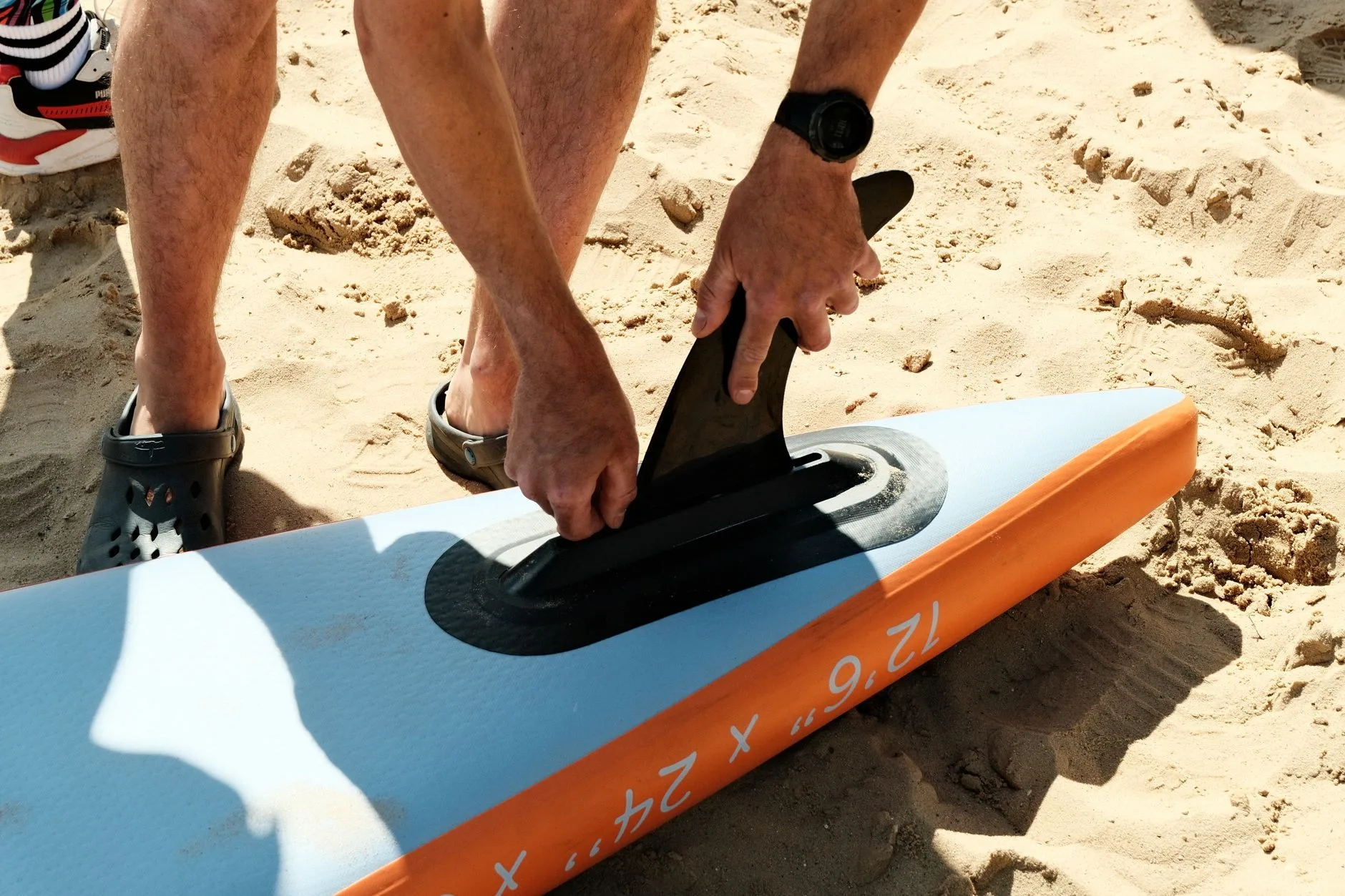
A maintenance check does not need to feel like an MOT. You are looking for early warnings: a fin that no longer sits square, a rail scrape that has gone through the outer layer, a valve that hisses, a deck pad corner that has started to lift. Catch those early and most are cheap fixes.
Start with the fin box. Sand is the usual villain. Remove the fin, rinse the track, and check the screw plate or clip. A spare US fin screw and plate costs about £5-£8 from Amazon UK or watersports shops. A replacement touring fin can be £18-£45. If the fin is wobbling because the box itself is damaged, do not keep paddling hard on it; the repair bill climbs quickly.
Next, inspect the rails. On inflatables, look for cuts, lifted seams, glue lines that look uneven, and bubbles. Small PVC patch kits are often £8-£20. A professional repair can be £40-£100+ depending on the damage and postage, and some cheap boards are barely worth repairing once the seam goes.
Valve Checks For Inflatable Boards
Inflate the board to normal pressure, listen around the valve, and use a little soapy water if you suspect a slow leak. Bubbles tell you where air is escaping. Many valves can be tightened with the valve spanner supplied in the repair kit, but go carefully. Overtightening can make things worse.
If the valve is dirty, clean around it before tightening. Grit in the valve seat can mimic a leak. If you lose the valve spanner, replacement iSUP valve tools are usually about £6-£12 online. Keep one in the repair pouch, not loose in the car boot.
Deck Pad And Leash Point
Deck pads fail slowly. Corners lift first, then water gets under the foam, then the pad starts catching under your feet. Press lifted edges down after cleaning and drying. If the adhesive has failed, a proper marine adhesive is better than random household glue. Expect to pay about £8-£15 for a small tube.
The leash point deserves a tug check. A coiled leash costs roughly £20-£40, and a waist leash for moving water is often £30-£55. The board’s leash point should not look cracked, loose or stretched. Safety kit is not the main topic here, but if you are reviewing your board setup at the same time, our dry bag guide and buoyancy aid guide cover the surrounding kit.
Store Inflatable Paddleboards Without Killing the Seams
Inflatable paddleboards are tough on the water and surprisingly vulnerable in bad storage. Heat, tight folds, damp bags and pressure against the same crease all winter do more harm than normal paddling. The worst storage spot is usually a hot loft or a shed that swings from freezing to roasting.
The best option is to store the board clean, dry and loosely rolled, with the valve open and no heavy boxes on top. If you have space, storing it partly inflated at low pressure is kinder to the seams. You do not need it rock hard. Just enough air to keep its shape, then keep it flat or supported.
Bag Storage
If the board must live in its bag, make the bag work for you:
- Do not pack it damp: dry the deck pad and seams first.
- Remove the fin: never leave a fin pressing into the board inside the bag.
- Loosen the roll: a slightly bigger roll is better than sharp folds.
- Store upright only if stable: a bag falling over repeatedly can damage fittings.
- Keep accessories separate: pumps, paddles and repair kits should not dig into the PVC.
If you paddle through winter, do not leave the board in the car between sessions. Cold PVC is stiffer, and a wet board in a freezing boot is miserable to handle. At home, aim for a dry garage, utility room or spare-room corner. A cheap tarpaulin or old rug under the board protects it from concrete grit.
Pressure And Heat
Do not leave an inflated board in strong sun or a closed car. Air expands as it heats up, and pressure can climb. That is especially relevant on beaches, patios and campsite pitches. If you are stopping for lunch, move the board into shade or bleed a little air if it will sit in the sun for a while.
A basic pressure gauge pump from Decathlon, Go Outdoors or Amazon UK is usually £25-£60. Electric SUP pumps tend to be £70-£150. If your current pump gauge is unreliable, our paddleboard pump guide is worth reading before you overinflate by guesswork.
Store Solid Paddleboards Without Dents, Heat Damage or Warping
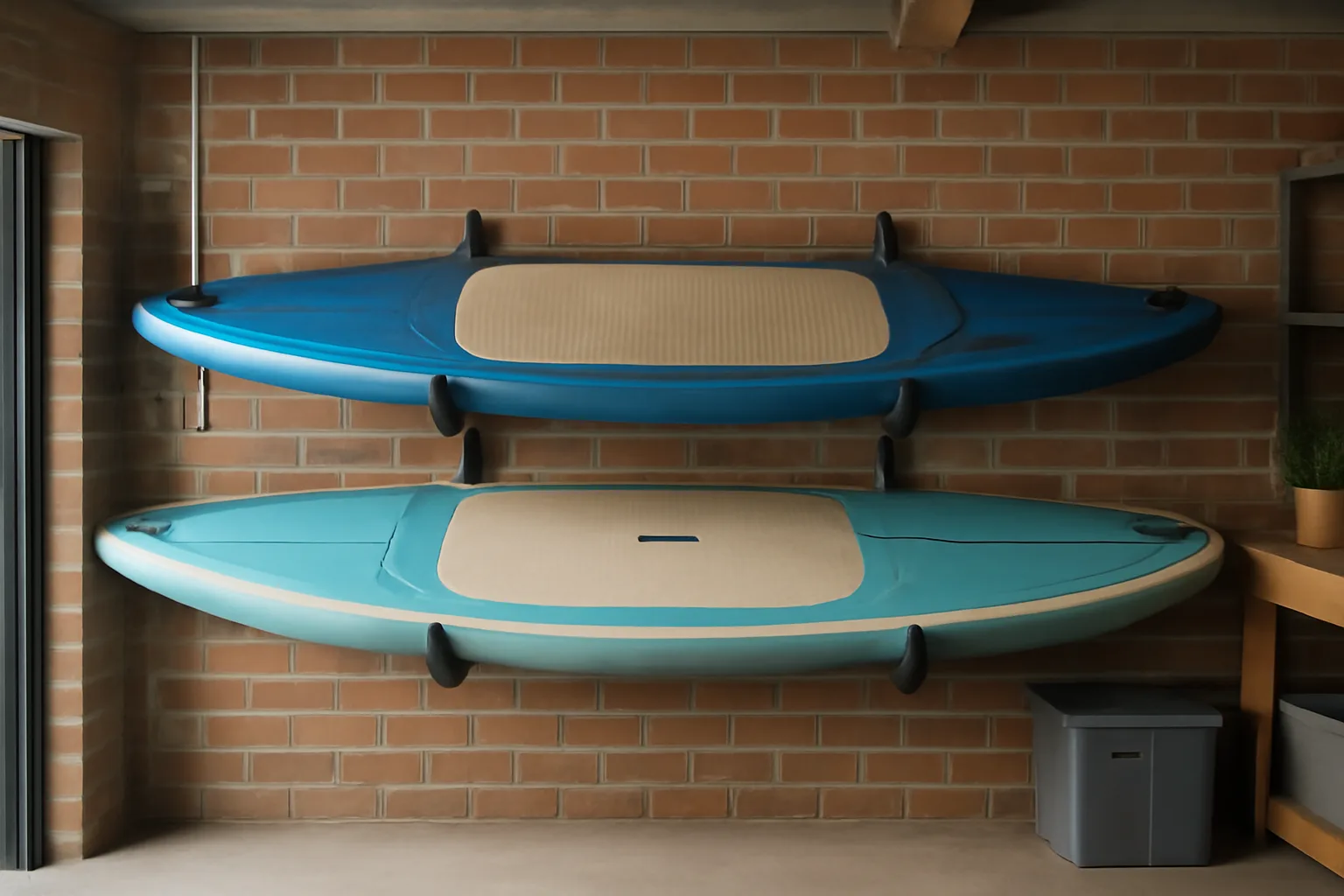
Solid boards avoid the inflatable seam problem, but they punish bad support. Leave a hard board leaning on one rail in a hot garage for months and you can end up with dents, pressure marks or a warped shape. They also hate being knocked by bikes, ladders and garden tools.
Wall racks are the cleanest answer for most UK garages. Budget foam-padded wall arms cost about £20-£35 from Amazon UK. Better surf/SUP wall racks are usually £40-£90, and ceiling hoists can be £35-£80 if floor space is tight. Whatever you buy, the support points should be padded and wide enough to spread the load.
Store the board out of direct sunlight. UV fades colours and can make materials more brittle over time. A board sock costs about £25-£60 and gives basic scratch and dust protection. A full padded board bag can be £70-£180, which makes sense for travel but can trap damp if the board goes in wet.
Rail Protection
Rails take the abuse: car park knocks, wall scuffs, paddle strikes and careless storage. If your board is on a rack, check that the rail is not resting on a sharp edge. If it is leaning vertically, use padding at the floor and a strap higher up so it cannot slide sideways.
Do not hang a solid board by its leash plug or handle. Those points are not designed to carry the board’s weight for months. Horizontal support is dull, but it works.
Transport overlaps with storage, but only at the edges. If you are moving the board by car or keeping roof straps on it, read our guide to transporting and storing a paddleboard. For this article, the important point is simpler: never store a board under strap tension. Straps are for journeys, not winter.
Build a Small Paddleboard Care Kit
A small care kit saves faff because you stop borrowing the wrong thing. Keep it in a box near the board rather than buried in the paddle bag. If you paddle as a family, label the fin screws and repair bits, because somehow the smallest parts always disappear first.
My practical kit would be:
- Soft brush and cloths: £8-£15 total from B&Q, Halfords or Amazon UK.
- Mild biodegradable cleaner: £6-£12 from Decathlon, outdoor shops or Amazon UK.
- Spare fin screw and plate: £5-£8.
- Valve spanner: often supplied; replacement about £6-£12.
- PVC patch kit: £8-£20 for inflatable boards.
- Marine adhesive: about £8-£15 for small deck-pad or trim fixes.
- Board rack or storage straps: £20-£90 depending on weight and finish.
- Old towel: free if you stop pretending it still belongs in the bathroom.
For most owners, the best spend is not the fancy cleaner. It is a decent storage solution. A board left clean on padded racks is in a better place than a board cleaned with expensive spray and then folded damp under camping chairs.
If you are still buying accessories, keep the priorities sensible. A leash, buoyancy aid and waterproof phone pouch matter more than cosmetic polish. A repair kit and spare fin hardware come before a premium board bag. And if you mainly paddle sandy beaches, a cheap soft brush will get used more than almost anything else.
The final habit is a short end-of-season check. Inflate the board on a dry day, clean it, check the valve, inspect the rails, dry everything, then store it properly. That one quiet half-hour in October can save the first warm weekend in spring from turning into a repair session.
Frequently Asked Questions
How often should I clean my paddleboard? Rinse it after every salty, sandy or muddy paddle. For clean fresh-water sessions, a quick rinse around the deck pad, valve and fin box is usually enough. Give it a deeper clean before winter storage.
Can I use washing-up liquid on an inflatable paddleboard? A tiny amount of mild washing-up liquid in warm water is fine for occasional cleaning, but rinse it thoroughly. Avoid bleach, solvent cleaners, abrasive pads and pressure washers.
Should I store an inflatable paddleboard inflated or deflated? If you have space, loosely inflated at low pressure is kind to the seams. If it must go in the bag, store it clean, dry and loosely rolled with the fin removed and no heavy items on top.
Is it OK to keep a paddleboard in the shed? A dry, shaded shed can work, but avoid damp corners, sharp tools, rodents and big temperature swings. A hot loft or greenhouse-style shed is a poor choice for inflatable boards.
How much does paddleboard repair cost in the UK? Small DIY patch kits are usually £8-£20. Professional inflatable SUP repairs often start around £40 and can run beyond £100 if seams, valves or large tears are involved.
Why does my paddleboard bag smell musty? The board, deck pad or accessories were probably packed damp. Empty the bag, dry everything fully, wipe the inside, and leave it open in a ventilated place before repacking.