The best touring paddleboard UK buyers should shortlist is not the widest board with the biggest accessory bundle. For distance and speed, you want a longer board that tracks cleanly, carries a dry bag without sagging, and still feels calm when the wind turns on the way back. My pick for most UK paddlers is the Red Paddle Co Voyager 12’6″ because it has the stiffness, nose shape and cargo layout to make longer canal, lake and estuary paddles feel less like hard work.
In This Article
- Best Touring Paddleboard UK Pick for Distance Paddling
- What Makes a Touring Paddleboard Different
- How to Choose for Distance and Speed
- Best Touring Paddleboards to Shortlist in the UK
- Kit That Matters on Longer SUP Trips
- Safety, Weather and Route Fit
- Bottom Line
- Frequently Asked Questions
Best Touring Paddleboard UK Pick for Distance Paddling
The Red Paddle Co Voyager 12’6″ is the board I would buy if the brief was one inflatable touring SUP for UK distance paddling. It is not cheap at about £1,200 to £1,350 from Red Paddle Co dealers, SUP specialists and some larger UK watersports retailers, but the shape makes sense: 381 cm long, around 71 cm wide, with a drawn-out nose, decent stiffness and proper cargo space.
Why the Voyager Wins
The Voyager is quick without being twitchy. That matters more than raw top speed for most people, because touring paddles are about holding an efficient rhythm for an hour or two rather than sprinting for 200 metres. On mixed UK water, a board that glides calmly at a steady cadence beats one that feels fast for five minutes and tiring after half an hour.
The second reason is stiffness. Cheaper touring boards can look similar in photos, but once you load a dry bag, water bottle, phone case and spare layer, the middle can flex. You feel that as drag. The Voyager holds its shape better than most mid-price inflatables I have used, and that saves energy when you are paddling back into a light headwind.
Who Should Not Buy It
Do not buy a 12’6″ touring board as your first-ever SUP if you mainly want short beach sessions, family messing about, or slow paddles with children. It will feel long to turn, and the narrower width asks more from your balance. PaddleGeek already has a separate beginner paddleboard guide for that job.
If you want racing pace, the Voyager is still not a race board. A dedicated 14 ft race SUP is faster and narrower, but it is less forgiving, more awkward to store, and less pleasant when the water gets scruffy. For most UK leisure touring, the Voyager is the more useful compromise.
What Makes a Touring Paddleboard Different
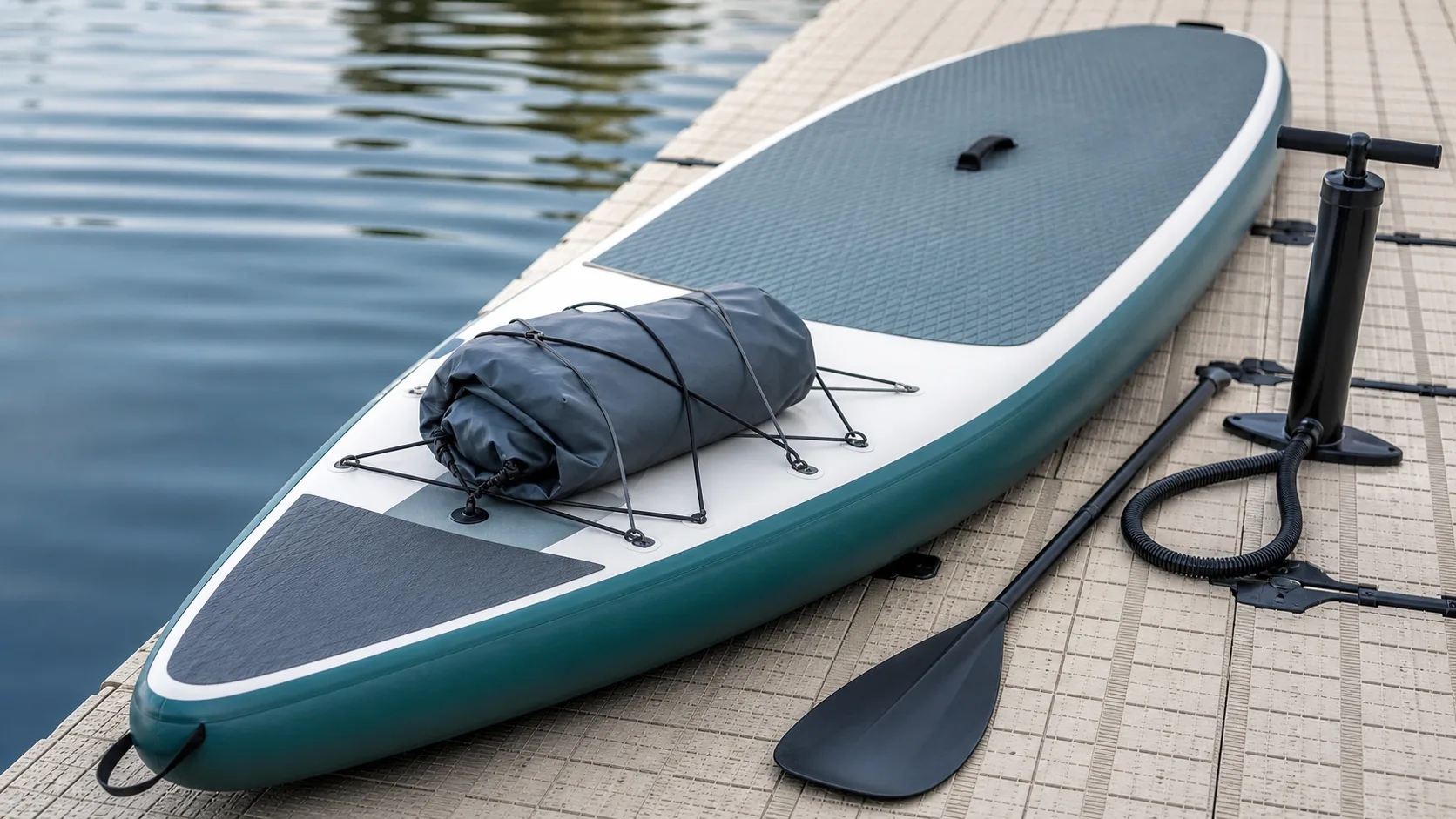
A touring paddleboard is built to travel in a straight line efficiently. That sounds obvious, but it changes almost every buying decision: length, width, nose shape, fin, stiffness, deck bungees and even the paddle you pair with it.
Length and Glide
Most all-round boards sit around 10’6″ to 11′ long. Touring boards usually start around 11’6″ and often run to 12’6″ or 14′. The extra length helps the board glide between strokes, so you are not constantly restarting it. On a canal or lake, that means fewer correction strokes and a smoother pace.
There is a trade-off. Longer boards take more space to turn and can feel clumsy at a crowded launch. If your paddling is mostly short loops, narrow rivers with tight bends, or beach sessions where you keep turning around, an all-round inflatable may be more fun. For point-to-point routes and long open stretches, touring length earns its keep.
Width and Stability
Touring boards usually sit between 71 cm and 81 cm wide. A 71-76 cm board is quicker and cleaner through the water, but it rewards better balance. An 81 cm touring board feels more settled with kit or a heavier paddler, though it gives away a little speed.
For most UK paddlers moving up from a beginner board, I would not jump straight to a narrow race-style shape. A 12’6″ x 30″ board, roughly 381 cm x 76 cm, is the sweet spot. It gives enough touring benefit without making every side chop feel like a test.
Nose Shape and Tracking
The nose should look pointed or gently tapered, not round and blunt. A pointed nose cuts through small ripples better and helps the board keep its line. A touring fin also matters. Longer swept fins track better than tiny river fins, although they need enough water depth and can catch weed on canals.
This is where a lot of budget boards pretend to be touring boards. They add a cargo bungee and use the word “touring”, but keep an all-round hull shape. That is fine for casual paddles. It is not the same as a board designed for distance.
How to Choose for Distance and Speed
Start with where you paddle, not the board spec sheet. A fast board on flat water can be annoying on a shallow canal, and a stable board that feels safe on a choppy reservoir can feel slow if you are trying to cover distance every weekend.
Match the Board to Your Water
For canals, sheltered rivers and lakes, a 12’6″ inflatable touring board is usually the best touring paddleboard UK choice. You get enough length for glide, enough width for real-world balance, and a board that still fits in a car boot once packed down.
For estuaries, tidal rivers and bigger open water, lean towards stiffness, cargo security and a shape that handles chop. You also need the judgement to turn back early. The weather and tides guide for paddlers is worth reading before you plan those routes, because tide and wind can matter more than board speed.
For narrow twisting rivers, be careful with long boards. A 14 ft touring board can be lovely on a reservoir and irritating on a tree-lined river with awkward bends. If you keep catching banks and reeds, you will not enjoy the extra glide.
Decide Inflatable or Hard Board
Inflatable touring boards suit most UK buyers because storage and transport are the real constraints. A good inflatable packs into a rucksack, fits under the stairs, and can go in a normal car. Expect to pay about £500 to £900 for a decent mid-range inflatable and £1,000 to £1,400 for premium construction.
Hard touring boards are faster and more responsive. They also need a roof rack, careful storage and more patience at home. If you have a garage, a van, and regular access to open water, a hard board can be brilliant. If you live in a terrace and paddle twice a month, it becomes a faff.
Check the Real Weight Limit
Ignore heroic maximum payload numbers if they are not explained. A board might claim 150 kg, but that does not mean a 105 kg paddler plus 20 kg of kit will enjoy it. Look for a comfortable paddler weight and check whether the brand separates rider weight from total load.
As a rough guide:
- Under 75 kg paddler: a 12’6″ x 28-30″ touring board can work well if your balance is decent.
- 75-95 kg paddler: look at 12’6″ x 30-32″ boards with strong stiffness claims and a sensible fin.
- Over 95 kg paddler: prioritise thickness, construction and load comfort over tiny gains in speed.
The separate SUP board weight limit guide goes deeper on this, but the short version is simple: if a touring board bends under you, it will feel slow however sleek it looks.
Best Touring Paddleboards to Shortlist in the UK
These are the touring boards I would actually put on a UK shortlist. Prices move around with seasonal offers, but the ranges below are realistic at UK retailers in 2026.
Best Overall: Red Paddle Co Voyager 12’6″
The Red Paddle Co Voyager 12’6″ is the safest premium pick for distance paddling. It costs about £1,200 to £1,350, often including the bag, pump, leash and fin depending on the package. UK buyers can find it through Red Paddle Co, SUP specialists and established watersports shops.
Pros: it tracks well, feels stiff for an inflatable, has proper deck storage, and suits the kind of all-day canal or lake paddling most people mean by touring. Cons: the price is painful, and beginners may find the narrower shape less settled than a 10’6″ all-round board.
If you are upgrading from a beginner board and want to cover more distance, this is the one I would choose. It feels like a touring board rather than a wide all-rounder with a sharper nose drawn on.
Best Mid-Range: Bluefin Cruise Carbon 12′
The Bluefin Cruise Carbon 12′ usually sits around £650 to £850 depending on bundle and discount. It is not as refined as the Voyager, but it gives plenty of stiffness for the money and often comes with a generous accessory package.
It suits paddlers who want longer day trips but cannot justify a four-figure board. The board is fairly stable, the construction feels substantial, and the package value is strong. The downside is weight. Bluefin boards can feel heavy when packed, and you notice that when carrying the bag from a distant car park to the launch.
Buy it if value matters and you want a board that can handle touring use without getting too nervous. Skip it if you prize a light, quick feel above all else.
Best Budget Touring Option: Decathlon Itiwit Touring 500 12’6″
Decathlon’s Itiwit touring boards are worth considering because they are easy to buy, easy to return, and usually better specified than random marketplace boards. Expect to pay roughly £450 to £650 depending on the exact model and bundle.
The appeal is practical: Decathlon stores are accessible, replacement parts are easier to source, and the boards tend to be designed for real users rather than pure Amazon listing drama. The compromise is that the package may not feel as premium, and you might want to upgrade the paddle sooner.
For a first touring board, this is a sensible place to start. I would rather buy this than a no-name 12’6″ board with a fake £899 RRP and a permanent “70% off” badge.
Best Lightweight Upgrade: Starboard Touring Inflatable 12’6″
Starboard’s touring inflatables vary by construction, but the better 12’6″ options are excellent if you want a lighter, more responsive board. UK pricing often lands around £900 to £1,250. They are not bargain buys, but the design work shows.
The Starboard suits paddlers who notice how a board trims, accelerates and carries speed. It is a lovely upgrade if you already paddle regularly and know that touring is your thing. The reason I do not put it first is availability and package value: depending on the year and retailer, the exact model and included kit can vary, so you need to compare the bundle carefully.
Best Hard Board Alternative: Fanatic Ray or Similar 12’6″ Touring Board
If you have storage and transport sorted, a hard touring board such as a Fanatic Ray-style shape can feel quicker and cleaner than any inflatable. Expect to pay about £1,000 to £1,700 for a quality hard touring SUP, plus roof bars if you do not already own them.
Hard boards reward regular paddlers. They are less convenient, easier to ding, and harder to store, but the glide is better. If you paddle every week from the same club or waterside storage spot, the faff drops away and the performance starts to make sense.
Kit That Matters on Longer SUP Trips
Touring is where small kit choices start to matter. On a 20-minute paddle, a cheap paddle and awkward dry bag are tolerable. After 8 km, they become the thing you complain about in the car home.
Paddle, Pump and Bag
Do not spend all the money on the board and keep a heavy aluminium paddle forever. A carbon-blend paddle around £90 to £180 from brands such as Red Paddle Co, Aqua Marina, Starboard or Decathlon can make distance paddling feel easier. Full carbon paddles can cost £180 to £300, but the biggest jump is usually from basic aluminium to a lighter composite shaft.
An electric pump is not essential, but it is useful if you paddle often. Decent SUP electric pumps cost about £80 to £180 from Decathlon, Amazon UK and watersports retailers. They save your shoulders before the paddle starts, which matters if you are planning distance. PaddleGeek’s paddleboard pump guide covers the trade-offs.
The carry bag matters too. A touring board is often heavier than a beach board, and cheap bags with thin straps are miserable over car parks, towpaths and railway footbridges. Look for padded rucksack straps, waist support and wheels if the packed board is over 14 kg.
Dry Bags and Deck Storage
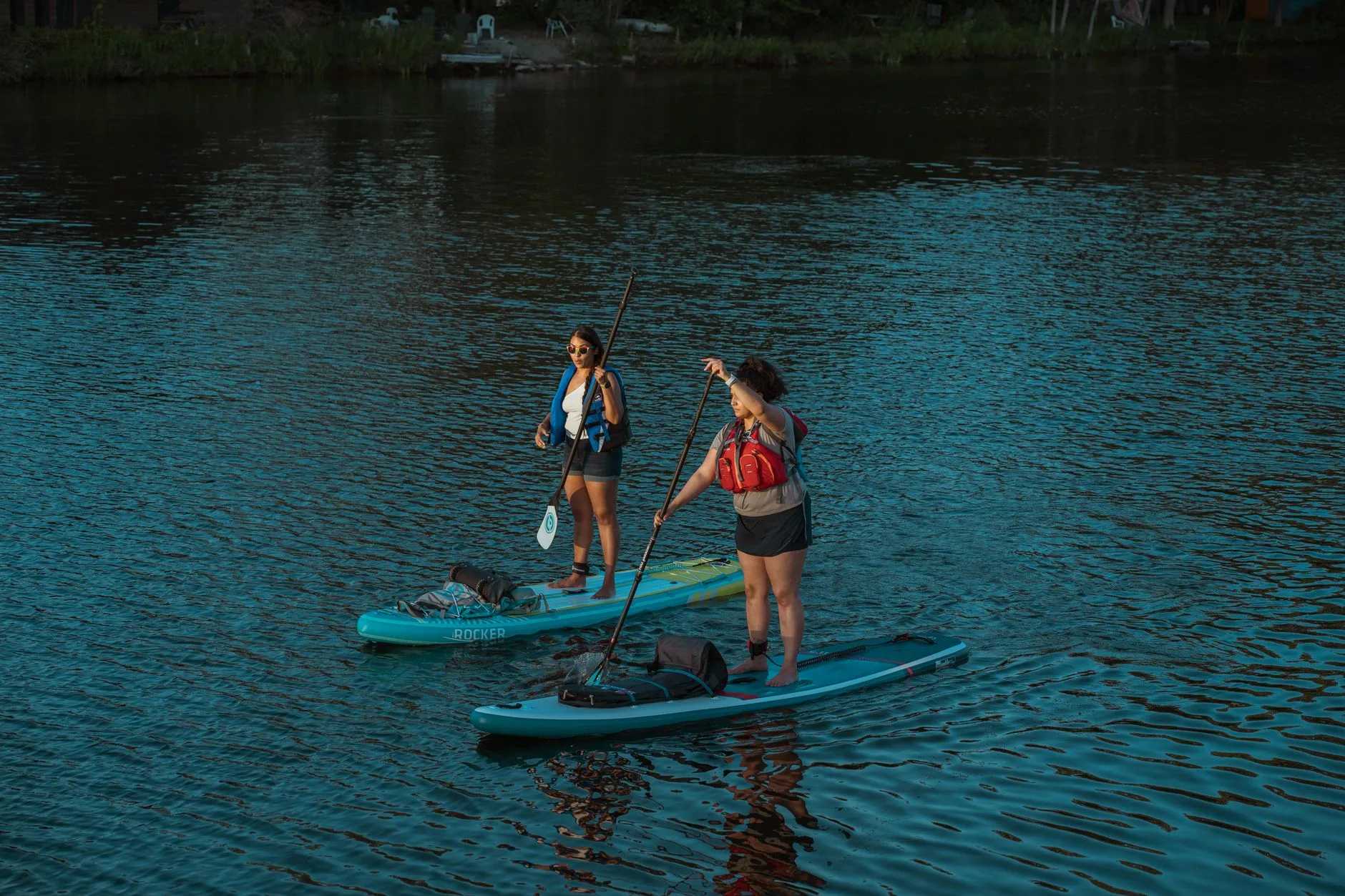
Touring boards should have front cargo bungees at minimum. Better boards add rear bungees or extra D-rings. For day trips, I like one 20-30 litre dry bag up front with spare layers, snacks, keys in a waterproof pouch, and a small first-aid kit.
The mistake is overloading the nose. A heavy dry bag too far forward makes the board plough. Keep weight low, compact and centred. If your board has front and rear storage, split the load rather than building one tall bag stack at the front.
For storage, expect to spend:
- Dry bag: £15-£40 for a 20-30 litre bag from Decathlon, Go Outdoors or Amazon UK.
- Waterproof phone pouch: £8-£25, but test it in a sink before trusting it.
- SUP deck bag: £35-£90 for easier access to snacks, camera kit or spare layers.
The SUP deck bag guide is more useful than a generic dry-bag list if you want storage you can reach while kneeling on the board.
Safety, Weather and Route Fit
Touring boards tempt people to go further, which is the whole point. The safety standard needs to rise with the distance. A long board does not make wind, cold water or boat traffic less serious.
Check Wind Before You Check Sunshine
For touring SUP, wind direction is the first check. A gentle tailwind on the way out can become a tiring headwind on the way back. Crosswinds are worse on high-sided inflatables because the board and paddler act like a little sail.
The RNLI’s stand-up paddleboarding safety advice is clear on using a suitable leash, wearing a buoyancy aid and checking conditions before heading out. That is not box-ticking. On UK water, a calm-looking launch can be very different 3 km down the route.
As a personal rule, if I would not fancy kneeling back against the wind for 20 minutes, I do not paddle further away from the launch. Touring is meant to be satisfying, not a stubbornness test.
Think About Access and Permissions
Some UK waterways need a licence or membership. Paddle UK’s waterways licence covers many managed canals and rivers in England and Wales, and the Paddle UK waterways licence information explains where it applies. Scotland has different access rules, and local restrictions can still apply around reservoirs, harbours and private lakes.
Before buying a faster touring board, check where you can use it. If your realistic routes are short, shallow and narrow, spend less on speed and more on a comfortable paddle, warm kit and a board that turns easily.
Leash Choice Changes With Water
Use the right leash for the water. A coiled ankle leash is common on flat open water, but moving water and rivers can require a quick-release waist system because entrapment is a real risk. If you are unsure, get local coaching rather than guessing from a product listing.
A buoyancy aid is non-negotiable for longer routes. PaddleGeek has a full buoyancy aid guide, and the same fit logic applies to SUP: it should stay put, allow shoulder movement, and have enough flotation for your weight and clothing.
Bottom Line
Buy the Red Paddle Co Voyager 12’6″ if you want the best touring paddleboard UK all-rounder for distance, speed and real-world stability. It is expensive, but it feels like money spent on the bits that matter: stiffness, glide, tracking and cargo layout.
Buy the Bluefin Cruise Carbon 12′ if you want a strong mid-range package and can live with extra packed weight. Buy the Decathlon Itiwit Touring 500 if you want a sensible first touring board without gambling on a no-name Amazon UK listing. Look at Starboard or a hard Fanatic-style touring board if you already paddle often and want a sharper ride.
The biggest mistake is buying a board that is either too beginner-wide to tour well or too narrow to enjoy in UK chop. Touring speed only matters if you can hold it comfortably. Choose the board that lets you paddle further with less fuss, not the one with the most aggressive spec sheet.
Frequently Asked Questions
What size touring paddleboard is best for UK paddlers? A 12 ft 6 in board around 76 cm wide suits most UK distance paddlers because it balances glide, stability and storage practicality.
Is a touring paddleboard faster than an all-round board? Yes, usually. The longer shape tracks better and glides further per stroke, although it will turn more slowly than a shorter all-round board.
Can a beginner use a touring paddleboard? A confident beginner can use a stable touring board, but most first-time paddlers are better on a wider all-round board before moving to a narrower touring shape.
How much should I spend on a touring paddleboard in the UK? Budget about £450-£650 for a sensible entry option, £650-£900 for mid-range, and £1,000-£1,400 for premium inflatable touring boards.
Are inflatable touring paddleboards good enough for distance? Good inflatable touring boards are ready for UK canals, lakes and sheltered coastal routes, provided they are stiff, correctly inflated and not overloaded.
Do I need a different paddle for touring? You do not need one immediately, but a lighter carbon-blend paddle around £90-£180 is one of the best upgrades for longer SUP trips.