A kayak safety knife is not there for looking outdoorsy. It is there for the ugly moments: rope under tension, a snagged leash, tangled deck line, stuck fishing braid, or a spray deck pull loop you cannot find fast enough.
In This Article
- The Core Tools I Would Carry First
- Knife, Rope and Entrapment Risks
- Signalling and Calling for Help
- First Aid, Repair and Small Problem-Solvers
- Where to Carry Safety Tools on a Kayak
- What to Buy in the UK
- Maintenance Checks Before Each Paddle
- Frequently Asked Questions
The Core Tools I Would Carry First
The best kayak safety tools are the ones you can reach while wet, cold, and slightly annoyed with yourself. A £45 rescue knife buried in a hatch is less useful than a £5 whistle clipped to your buoyancy aid.
For normal UK kayaking, I would build the kit in layers. Start with what stays on your body, then add what sits in the cockpit or deck bag, then add group rescue kit if you paddle moving water or open water.
On your body
Your body-worn kit should survive a swim. If you and the kayak part company, these are the tools that still come with you.
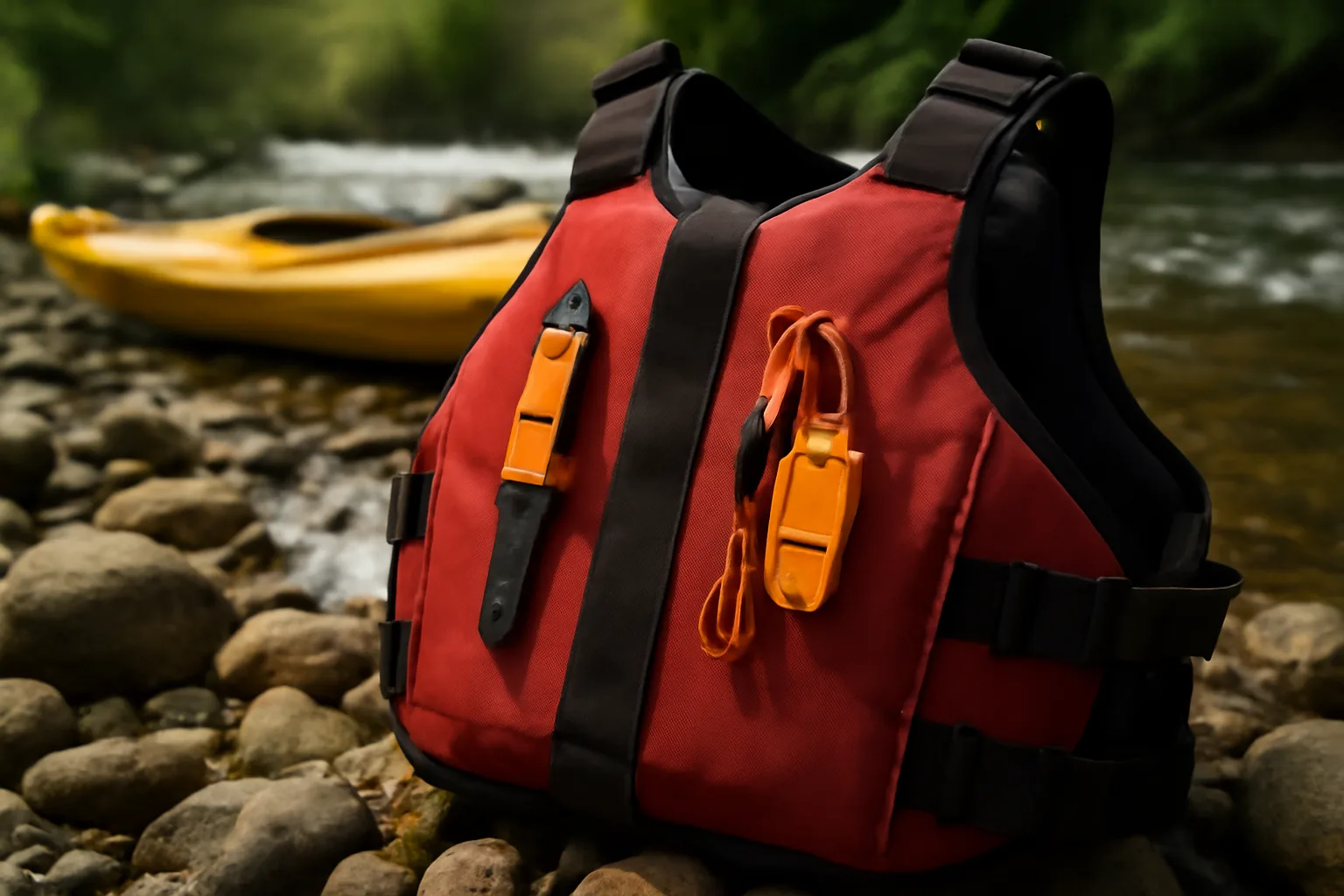
- Buoyancy aid: the base for carrying a whistle, small knife or line cutter, and sometimes a phone pouch.
- Pealess whistle: about £3-£8 from Decathlon, Go Outdoors or paddle shops; louder and more reliable than shouting.
- Rescue knife or line cutter: useful around ropes, towlines, fishing line and leashes, but only if carried legally and safely.
- Phone or PLB: in a waterproof pouch or case, not loose in a dry bag you may lose.
- Small light: a waterproof torch or strobe for dull evenings, mist, and delayed returns.
That list assumes you are already wearing a suitable buoyancy aid. If not, fix that first with our guide to choosing a kayaking buoyancy aid. Tools are not a substitute for flotation.
In the boat
Boat-carried tools are for problems that give you time to think: a loosened seat bolt, a split dry bag clip, a minor cut, a snapped deck bungee, or a cold paddler needing an extra layer.
The practical cockpit or deck-bag kit is:
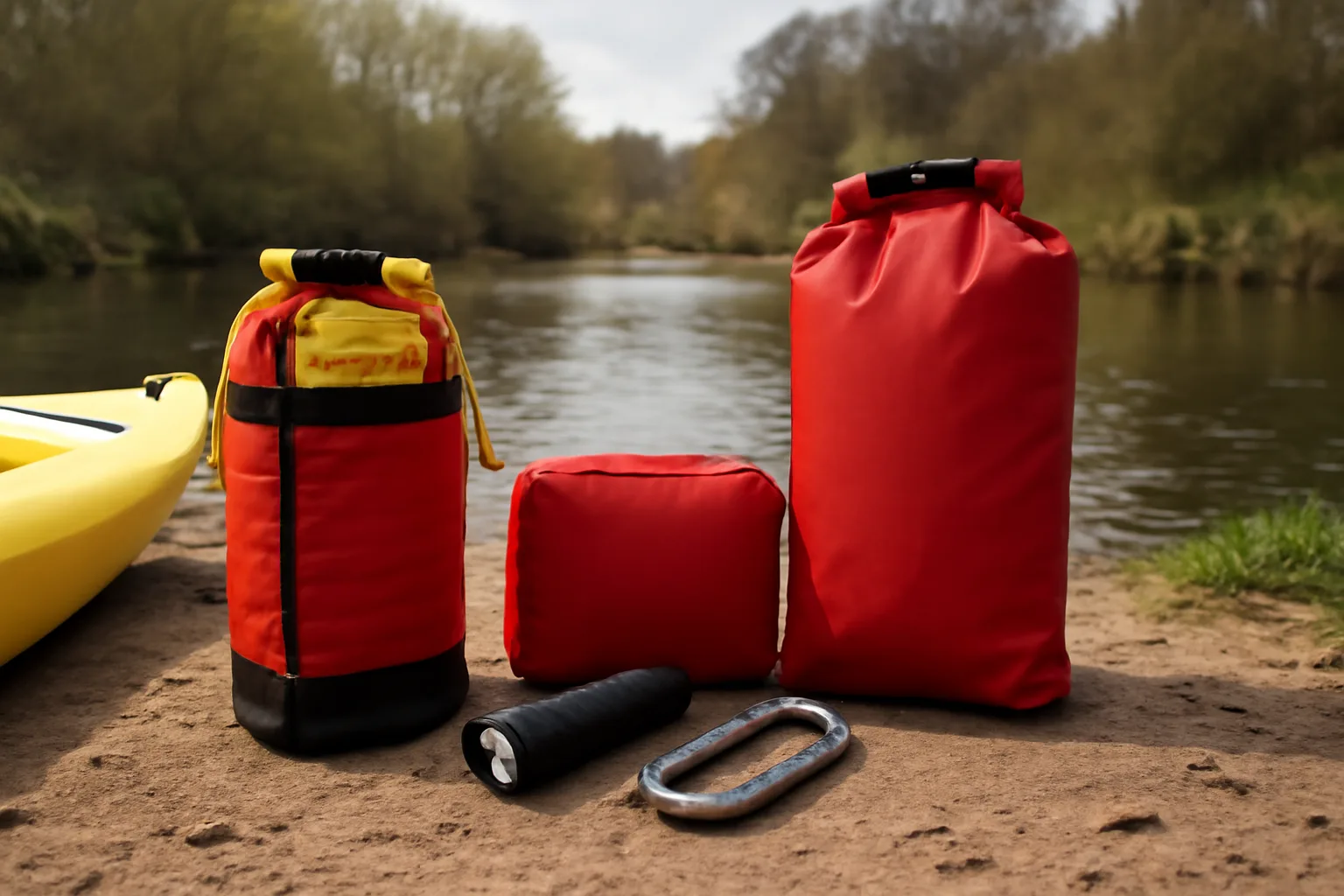
- Compact first-aid kit: £10-£25 from Boots, Decathlon or Amazon UK, upgraded with blister plasters and nitrile gloves.
- Dry bag: £10-£35 depending on size and brand; use one for repair and first-aid items only.
- Electrical tape: cheap, compact, and good for temporary fixes.
- Multi-tool without a large blade: handy for bolts and buckles, but check the legal carry rules.
- Spare split ring, cable tie, and cord: tiny items that solve irritating kit failures.
If you are still working out what belongs in which dry bag, our dry bag guide for paddling covers the storage side in more detail.
Group kit
Group kit depends on water type. Flat canals and sheltered lakes do not need the same setup as whitewater, surf, or tidal sea kayaking. The Canal & River Trust advises canoeists to wear a life jacket or buoyancy aid, check local waterway rules, and treat locks, weirs and sluices with caution: Canal & River Trust canoeing safety guidance.
For moving water or sea trips, add a throwline, towline, spare warm layer, group shelter, repair tape, and a proper communication plan. The Met Office water safety code says to call 999 for assistance if someone is in trouble and to look for public rescue equipment such as a throwline while waiting for help: Met Office water safety code.
Knife, Rope and Entrapment Risks
The knife is the tool that gets talked about most because it sounds dramatic. The dull truth is that a kayak knife is mainly for rope, webbing, fishing line, leashes, and awkward tangles. It is not a survival fantasy prop.
When a knife makes sense
A rescue knife makes most sense if you paddle around ropes or lines:
- Whitewater: throwlines, tow systems, pinned boats, and rescue belts can create rope hazards.
- Sea kayaking: towlines, deck lines, split paddles, and landing in surf all raise the chance of snagging.
- Kayak fishing: braid, anchor lines, rod leashes, and landing nets can wrap around hands or kit.
- Canal touring: mooring lines, low bridges, locks and bank clutter add snag points, though the risk is usually lower.
If you only paddle short, sheltered lake loops with no lines, a whistle and phone may matter more than a knife. If you carry a throwline, towline or anchor, a cutting tool becomes much harder to argue against.
What type of blade
For kayaking, I prefer a blunt-tip rescue knife or dedicated line cutter. A pointed bushcraft-style fixed blade is the wrong tool for a buoyancy aid. It is more likely to puncture kit, catch on things, or worry people at the car park.
Look for:
- Blunt or rounded tip: safer near inflatables, drysuits and buoyancy aids.
- Serrated cutting section: better for rope and webbing than a plain edge.
- Secure sheath: it should not pop open during a swim or re-entry.
- One-hand access: only useful if you have trained with it, not just mounted it for decoration.
- Corrosion resistance: sea paddlers need to rinse and dry blades properly.
The NRS Pilot Knife usually sits around £42-£48 from UK paddle retailers such as Go Kayaking. Palm and Peak UK river knives are often around £20-£35 depending on model. A compact line cutter can be cheaper and less intimidating, but make sure it will actually cut wet rope or webbing.
UK knife law caution
This is where kayakers need to be adults. GOV.UK says it is illegal to carry most knives in public without a good reason, and illegal to sell most knives to anyone under 18: GOV.UK knife rules.
Paddling can be a good reason for carrying a rescue knife in the right context, but that does not mean you should wander into Tesco afterwards with it still clipped to your buoyancy aid. Keep it with your paddling kit, use a safety-specific design, and remove or pack it away when the paddling reason has ended.
No tool in this article is advice to carry a knife for self-defence. That is a bad idea legally and practically.
Signalling and Calling for Help
A safety tool only helps if someone can find you, hear you, or understand what has happened. This is where the cheap kit often beats the expensive kit.
Whistle
A pealess whistle is the easiest win in the whole article. It costs less than a coffee and should live on your buoyancy aid, not in a hatch.
Cheap ball whistles can jam when wet. Pealess designs from Fox 40, Palm or Decathlon are better. Expect to pay £3-£8. Clip it high enough that you can reach it with either hand, but not so loose that it swings into your face during rescues.
Agree signals with your group before launching. Three blasts commonly means help or emergency, but local clubs and coaches may use their own system. The key is not the exact code; it is everyone knowing it before the wind picks up.
Phone, VHF or PLB
For sheltered inland paddling, a charged phone in a proper waterproof pouch is the minimum I would carry. Budget £10-£25 for a reliable pouch, and test it with tissue paper before trusting it with your phone.
For sea kayaking, remote lochs, or tidal trips, a phone alone is not enough. A handheld marine VHF radio costs roughly £90-£250 from marine and paddle retailers, and it belongs on your body, not in a hatch. Our guide to VHF radios for paddlers explains when that upgrade is worth it.
A personal locator beacon is another step up, usually around £200-£300. That is not normal canal kit, but it makes sense for serious remote paddling.
Light and visibility
A small waterproof torch or strobe is easy to overlook until a slow group, headwind, or missed landing turns a late-afternoon paddle into a gloomy one. Budget £12-£35 for a compact waterproof light.
Do not rely on black kit in poor light. Bright deck bags, reflective tape, and a high-visibility hat all help. Not glamorous, but neither is waving a black paddle in drizzle while a motorboat fails to spot you.
First Aid, Repair and Small Problem-Solvers
Most paddling incidents are not cinematic rescues. They are cold fingers, a cut shin, a lost hatch cover, a snapped clip, a blister, a twisted ankle on the bank, or a boat that will not stay comfortable for the return leg.
First-aid kit
Buy a small waterproof first-aid kit, then make it paddling-specific. A generic £10 kit from Boots or Amazon UK is a starting point, not the finish.
I would add:
- Nitrile gloves: for helping someone else without making a mess worse.
- Blister plasters: useful on long portages and wet feet.
- Wound wipes: riverbanks are not clean places.
- Foil blanket: cheap backup for cold, wet waiting.
- Personal medication: inhaler, antihistamine, or anything you may actually need.
Keep it dry and obvious. If your group has to ask where the first-aid kit is while someone is bleeding, the storage system has failed.
Repair basics
You do not need a floating workshop. You need small items that buy time:
- Duct or Gorilla tape: £5-£10; wrap some round an old card to save space.
- Cable ties: useful for seats, deck lines and broken clips.
- Spare cord: 2-3m of thin cord solves more problems than it should.
- Mini multi-tool: pliers and screwdriver bits matter more than a big blade.
- Pump or sponge: relevant for sit-inside kayaks and sea kayaks.
If you paddle inflatables, add the repair kit that came with the boat. If you are still choosing between inflatable and hard-shell kayaks, our inflatable vs hard-shell kayak comparison covers the practical trade-offs.
Throwline and towline
A throwline is not just an item to own. It is a skill to practise. If you have never thrown it, repacked it, and missed with it, you are not ready to rely on it.
Throw bags usually cost £35-£60 from Go Kayaking, Norfolk Canoes, Southampton Canoes or similar UK paddle shops. Towlines can be £45-£80. Both can be useful, but they add rope to an environment where rope can become a hazard. Carry a cutting tool if you carry rope, and practise with people who know what they are doing.
For product choice, our UK rescue throw bag guide goes deeper without turning this checklist into a buying guide.
Where to Carry Safety Tools on a Kayak
The right tool in the wrong place is still the wrong setup. Think about what happens if you swim, capsize, lose the boat, or need help while your hands are cold.
On your buoyancy aid
The buoyancy aid is the right place for tools you may need after separation from the kayak:
- Whistle: clipped high and reachable by either hand.
- Knife or cutter: secure, not dangling, not mounted where it catches on deck lines.
- Phone or PLB: in a waterproof pouch attached to you.
- Small light: clipped or pocketed where it cannot switch on by accident.
Do a wet test in shallow water or during a club practice session. If a tool catches when you climb back into the kayak, move it. If you cannot reach it with your weaker hand, move it.
In a deck bag or cockpit
First aid, repair kit, spare snacks, spare gloves and a warm hat can live in a small deck bag or cockpit dry bag. Keep the bag attached to the boat, but avoid loose leashes that create new tangle risks.
For sit-inside kayaks, keep the cockpit tidy. Loose kit around your feet can make a wet exit harder. If you have not practised that skill recently, read our wet exit guide and practise somewhere controlled.
In hatches
Hatches are for spare layers, lunch, larger repair items and group kit you do not need in the first ten seconds of a problem. They are not for whistles, knives, phones, or anything you need while separated from the kayak.
I have seen tidy hatch packing that looks brilliant on shore and useless on water. The question is not “does it fit?” It is “can I get it when things go sideways?”
What to Buy in the UK
Do not buy every shiny rescue tool at once. Buy the layer that matches your paddling, then train with it.
Beginner sheltered-water kit: about £35-£80
For canals, sheltered lakes and short club paddles:
- Pealess whistle: £3-£8 from Decathlon, Go Outdoors or Amazon UK.
- Waterproof phone pouch: £10-£25.
- Small first-aid kit: £10-£25 from Boots, Decathlon or Amazon UK.
- Compact dry bag: £10-£20.
- Basic repair bits: tape, cable ties, cord, about £5-£10.
That is enough for many beginners once they already own a buoyancy aid and suitable clothing. If you are new to the sport, pair it with our beginner kayak buying guide rather than spending safety money on a boat that does not suit you.
Moving-water kit: about £100-£220
For whitewater, faster rivers and club rescue practice, add:
- Rescue knife or line cutter: £20-£50.
- Throwline: £35-£60.
- Rescue belt or tow system: £35-£80, only with training.
- Helmet: usually £45-£100 if you do not already have one.
Do not buy a tow system because it looks professional. Buy it when you have a use case and someone competent has shown you how to release it under load.
Sea kayaking kit: about £150-£450
For open coast, tidal crossings, or remote trips, the safety budget rises quickly:
- Handheld VHF: £90-£250.
- Waterproof torch or strobe: £12-£35.
- Towline: £45-£80.
- PLB: £200-£300 for remote routes.
- Split paddle: often £80-£200, depending on blade quality.
That sounds expensive because sea kayaking has less margin for lazy planning. Check weather and tides properly; our weather and tides guide for paddlers is the better place to start before buying more kit.
Maintenance Checks Before Each Paddle
Safety tools fail quietly. The whistle cracks. The knife rusts. The phone pouch seal folds over. The torch batteries die. The first-aid kit gets raided for plasters and never restocked.
The two-minute check
Before launching, run this:
- Whistle: present, clipped, not blocked with grit.
- Knife or cutter: secure, legal context clear, edge clean, sheath locked.
- Phone: charged, waterproofed, attached to you.
- First aid: dry, stocked, easy to find.
- Throwline: packed correctly, not mildewed, no knots in the wrong place.
- Light: switches on and off cleanly.
This is the bit people skip because it feels dull. It takes less time than finding your car keys.
After salt water or dirty rivers
Rinse metal tools after salt water. Open the knife sheath and dry it. Check carabiners for grit. Open the first-aid dry bag at home so trapped moisture does not sit there for a month.
Buoyancy aids need care too. Rinse, dry away from direct heat, and check webbing, buckles and foam. Our PFD care and maintenance guide covers that in more detail.
Practise before it matters
A throwline you have never thrown is half a tool. A knife you cannot reach with cold hands is a decoration. A VHF you have never switched on is dead weight.
Book a club safety session, practise wet exits, throw a rope badly until you start throwing it better, and learn where your kit catches. That is what turns kayak safety tools from shopping into safety.
Frequently Asked Questions
Should every kayaker carry a knife? Not every sheltered-water beginner needs a mounted rescue knife, but kayakers who carry throwlines, towlines, anchors, fishing line or paddle moving water should seriously consider a blunt-tip rescue knife or line cutter.
Is it legal to carry a kayak safety knife in the UK? UK law restricts carrying knives in public without good reason. Paddling may be a good reason in context, but keep the knife with your paddling kit, use a safety-specific design, and pack it away after the paddle.
Where should a kayak knife be carried? It should be reachable on your buoyancy aid, secure in its sheath, and positioned where it will not snag during swimming, re-entry or rescues. Do a controlled wet test before trusting the placement.
What is the cheapest useful kayak safety tool? A pealess whistle. It costs about £3-£8, weighs almost nothing, and can be heard much further than shouting in wind or moving water.
Do I need a throwline for normal kayaking? Not always. For sheltered solo lake paddling, it may be less important than a phone, whistle and buoyancy aid. For moving water, group trips and rescue practice, a throwline becomes much more useful.
What safety tools should kayak anglers carry? A line cutter or rescue knife, whistle, waterproof phone, first-aid kit, light, and a way to manage anchors or leashes safely. Fishing line and anchor ropes add tangle risks that casual touring paddlers may not face.