If you have a garage, roof bars and regular access to the water, a hard shell kayak is usually better to paddle. If you live in a flat, drive a small car or need something you can store in a cupboard, an inflatable kayak is the better buy. The right answer is less about pride and more about which boat you will actually use.
In This Article
- Inflatable Vs Hard Shell Kayak: Quick Answer
- Storage, Transport And Setup
- Performance On UK Rivers, Lakes And Coast
- Durability, Safety And Rescue
- Real UK Costs And What You Need To Budget For
- Who Should Buy Which?
- Frequently Asked Questions
Inflatable Vs Hard Shell Kayak: Quick Answer
An inflatable vs hard shell kayak choice comes down to storage, transport, performance and confidence. A good inflatable is not a toy, and a cheap hard shell is not automatically a performance boat. The best option depends on the boring ownership details as much as the paddling.
The Short Version
Choose an inflatable kayak if you need easy storage, simple transport, occasional family paddles, canals, sheltered rivers, calm lakes or a boat that fits in a car boot. Choose a hard shell kayak if you paddle often, want better tracking, deal with wind or chop, plan longer distances, or already have somewhere secure to store it.
My practical split is this:
- Best for flats and small homes: inflatable kayak.
- Best for regular paddling: hard shell kayak.
- Best for one car and no roof bars: inflatable kayak.
- Best for exposed lakes and coastal conditions: hard shell kayak, assuming your skills match the water.
- Best for family holiday use: decent inflatable, not the cheapest pool-style boat.
- Best long-term value for keen paddlers: hard shell kayak if storage is solved.
That last caveat matters. A £700 hard shell that sits unused because it is awkward to move is worse value than a £350 inflatable that gets used every other weekend.
The Biggest Mistake
The biggest mistake is judging only the kayak, not the full system. With a hard shell, the system includes roof bars, straps, storage, lifting height, parking near the launch and somewhere to rinse it. With an inflatable, the system includes a pump, drying time, a bag you can actually carry and enough patience to set it up properly.
If you are still choosing your first boat, our guide to choosing a beginner kayak is worth reading alongside this comparison. If you already know you want an inflatable, our best inflatable kayaks guide goes into specific models.
Storage, Transport And Setup
This is where inflatables win most real-life decisions. A hard shell kayak might paddle better, but it needs space before it ever touches water.
Living With An Inflatable
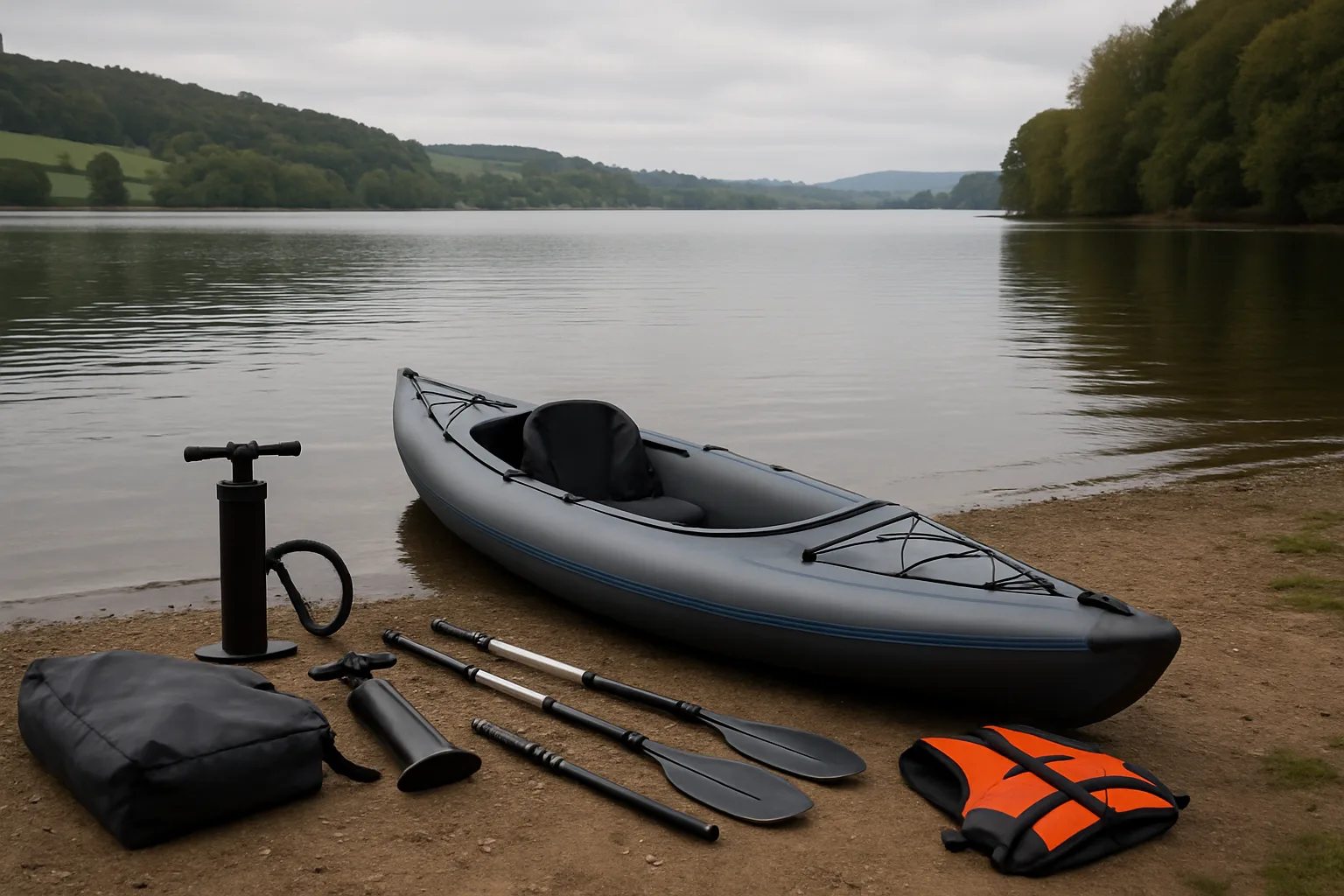
Most inflatable kayaks pack into a large holdall or wheeled bag. They are not tiny once you include the paddle, pump, buoyancy aid and wet kit, but they are manageable in a cupboard, shed, under-stairs space or car boot. A one-person inflatable might weigh around 11-18kg. A tandem can be 16-25kg, and cheap bags often make that feel heavier than the number suggests.
Setup takes longer than the marketing photos imply. A simple inflatable might be ready in 8-12 minutes with a decent hand pump. A higher-pressure drop-stitch kayak can take 10-15 minutes and more effort. Add drying and packing at the end, especially in a UK car park with drizzle blowing sideways, and you need to be honest about your tolerance.
The upside is freedom. You can take an inflatable in a hatchback, store it at home without building a rack, and carry it down a canal path. That makes a big difference if your local launch has height barriers, awkward parking or no easy loading area.
Living With A Hard Shell
A hard shell kayak removes inflation time but adds transport friction. Even a short recreational kayak is often 2.7m-3.5m long. Touring and sea kayaks can be 4m-5m. You need roof bars, straps, enough strength to lift it safely and somewhere secure to store it at home.
Roof bars commonly cost about £100-£250, depending on the car and brand. J-bars or kayak carriers add roughly £40-£150. Good cam straps are about £10-£25. If you need a wall rack or freestanding storage rack, allow another £30-£120. Suddenly the hard shell that looked like £500 becomes a more complicated purchase.
The benefit is speed at the water. Unstrap, unload, check gear and go. No pumping. No drying folds. No worrying about rolling the boat up badly. If you paddle every week, that convenience starts to outweigh the storage faff.
The Car Test
Before buying a hard shell, stand beside your car and imagine lifting 20kg-30kg above shoulder height in wind, after a paddle, while tired. If that sounds grim, do not ignore it. A lighter kayak helps, but lighter hard shells often cost more.
Before buying an inflatable, measure your boot and check the packed dimensions. Some tandem inflatables are bulky enough to fill the boot once wet kit and paddles are included. They fit, but they do not disappear.
Performance On UK Rivers, Lakes And Coast
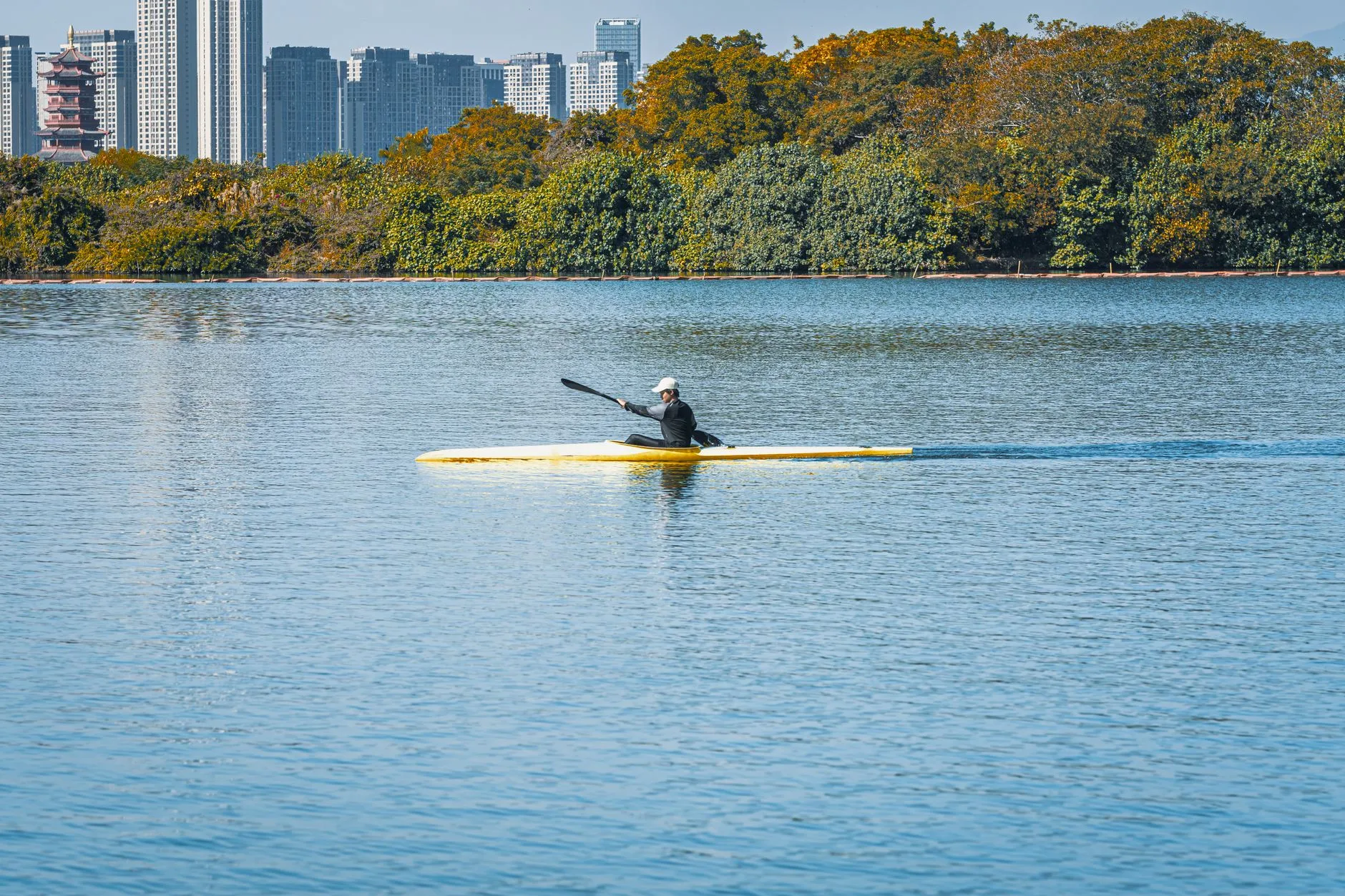
Hard shell kayaks generally win on performance. They track better, respond more cleanly to edging, hold speed with less effort and cope better with wind. But the gap depends on the type of inflatable.
Tracking And Speed
A cheap, wide inflatable can feel slow and vague. It turns easily, which beginners sometimes like, but it may wander from side to side with every paddle stroke. That is fine for a gentle canal potter. It becomes tiring over distance.
A better inflatable with a skeg, shaped bow and drop-stitch floor can paddle well on sheltered water. It will not feel identical to a good hard shell, but it can be good enough for recreational touring, family trips and relaxed lake paddles.
Hard shells have a stiffer hull and more defined shape. That means better glide and more predictable tracking. If you are trying to cover distance, paddle into a breeze, or keep up with friends in proper touring kayaks, the hard shell advantage is obvious.
Wind And Choppy Water
Inflatables sit higher on the water, so wind can push them around more. On a calm canal, no problem. On a breezy reservoir or open lake, it can become hard work quickly. A hard shell usually sits lower, cuts through chop better and gives you more control.
That does not mean a hard shell makes rough water safe. Conditions, skill and safety kit matter more than hull type. The RNLI kayaking and canoeing safety advice is blunt for a reason: wear a buoyancy aid or lifejacket, carry a way to call for help and treat changing conditions seriously.
For canals and gentle rivers, both can work. For exposed lakes, tidal estuaries or coastal paddling, I would lean hard shell unless you have a high-quality inflatable and the experience to use it. For whitewater, specialist boats are a separate topic; do not assume a general recreational inflatable or budget hard shell is suitable.
Comfort And Seating
Inflatables often feel stable at first because they are wide. That can be reassuring for beginners, kids and nervous paddlers. The trade-off is that wide boats are slower, and soft floors can make posture sloppy over longer paddles.
Hard shells vary more. A recreational sit-on-top can feel simple and stable. A touring sit-inside kayak can feel narrower but more efficient. A sea kayak may feel lively to a beginner but superb once you know what you are doing.
If comfort is your weak point, seat quality matters. A £20 foam pad can improve a hard shell. A £40-£90 upgraded inflatable seat can transform a soft-backed budget boat. For longer paddles, read our kayak seat upgrade guide before blaming the whole kayak.
Durability, Safety And Rescue
People often assume hard shells are durable and inflatables are fragile. That is too crude. A decent inflatable is tougher than it looks, and a hard shell can still crack, oil-can, dent or wear through if abused.
Punctures, Scrapes And Impact
Inflatables are vulnerable to sharp metal, broken glass, fish hooks, barnacles and careless dragging. Better models use tougher PVC or reinforced materials, and many have multiple air chambers. That means one puncture does not necessarily sink the boat, but it can still end your day.
Hard shells handle scrapes better, especially rotomoulded polyethylene kayaks. They are not precious. You can land on shingle, bump a pontoon and drag short distances without panic, although dragging any kayak over rough ground is still lazy ownership.
The weak point with hard shells is impact and storage damage. Leave a plastic kayak badly supported in heat and it can deform. Hit rocks hard enough and you can gouge or crack it. Composite kayaks are faster and lighter, but they cost more and need more care.
Safety Gear Is Not Optional
The safety kit does not change just because the kayak inflates. You still need a correctly fitted buoyancy aid, suitable clothing for water temperature, a phone in a waterproof pouch, and a plan for wind, current and getting back.
The Canal & River Trust canoeing safety guidance tells paddlers to wear a buoyancy aid, check local waterway rules and avoid hazards such as locks, weirs and sluices. That applies to both inflatable and hard shell kayaks.
Budget around £35-£90 for a proper buoyancy aid, £10-£25 for a waterproof phone pouch, £15-£40 for a dry bag and £20-£60 for basic paddling clothing upgrades. If you paddle in colder months, the clothing budget can rise quickly.
Rescue And Re-Entry
Inflatables can be easier to climb back onto because they are wide and buoyant, especially sit-on-top styles. Sit-inside hard shells need more practice, and re-entry can be difficult without training.
Hard shells give you more precise control for rescues once you have skills. Touring and sea kayakers use assisted rescues, paddle floats, spray decks and bilge pumps. That is proper paddling, not a casual accessory list.
For beginners, the decision is simple: practise capsizing and getting back to shore in warm, shallow, supervised conditions. Do not find out how your kayak behaves for the first time in deep cold water.
Real UK Costs And What You Need To Budget For
The kayak price is only the start. The real comparison is kayak plus transport, safety kit and storage.
Inflatable Kayak Costs
At the cheaper end, basic inflatable kayaks from Go Outdoors and similar retailers can sit around £85-£250. They are fine for calm, short, fair-weather use, but I would not buy the cheapest one expecting touring performance.
Better recreational inflatables are commonly £250-£600. Decathlon often lists Itiwit and Sevylor options in this range, with examples such as budget inflatables around £199 and higher-spec packraft/drop-stitch models around £479.99. Tandem and higher-pressure models can move into the £500-£800 bracket.
You may also need:
- Pump: £25-£70 if the included pump is poor or missing.
- Paddle: £25-£80 for a basic aluminium or fibreglass split paddle.
- Buoyancy aid: £35-£90 for a proper paddling model.
- Dry bag: £15-£40 for phone, keys and spare layers.
- Repair kit: often included, but extra patches and glue can be £8-£20.
Hard Shell Kayak Costs
Budget sit-on-top and recreational hard shells often start around £300-£600. Better touring, fishing and sea kayaks move from about £700 to £1,500 plus. Composite sea kayaks can cost far more, but that is not where most beginners should start.
The hidden cost is transport:
- Roof bars: about £100-£250.
- Kayak carrier or J-bars: about £40-£150.
- Cam straps and bow/stern lines: about £15-£40.
- Wall rack or storage stand: about £30-£120.
- Locking cable or security: about £20-£60 if stored outside.
If you already own roof bars and have a garage, a hard shell can be excellent value. If you need to buy everything from scratch, the real starting cost can be £500-£900 even for a modest boat.
Buying Used
Used hard shells can be good buys because there is less hidden damage than people fear, but inspect the hull shape, deep gouges, repaired cracks, seat fittings and hatch seals. Used inflatables are riskier because slow leaks, valve issues and seam problems are not always obvious in a seller’s driveway.
If buying used inflatable, inflate it fully, leave it for at least 30 minutes, check valves with soapy water if possible and inspect the floor. If the seller will not let you inflate it, walk away.
Our guide to UK kayak costs gives a wider price breakdown if you want to sanity-check a listing.
Who Should Buy Which?
For most first-time UK paddlers without storage, I would buy a decent inflatable kayak and spend properly on the buoyancy aid, paddle and dry bag. That gets you on canals, sheltered rivers and calm lakes without turning transport into a weekend project.
Buy An Inflatable If
An inflatable makes sense if storage is tight, you drive a small car, you paddle occasionally, you want family flexibility, or your local water is mostly sheltered. It is also the friendlier option if you need to carry the kayak alone from car to launch.
The inflatable I would avoid is the very cheap, soft, beach-toy style boat sold as a kayak. It might be fun for a holiday cottage lake, but it will frustrate you if you actually want to learn.
If you are comparing brands, our Sevylor vs Intex vs Advanced Elements guide is the more detailed inflatable-brand comparison.
Buy A Hard Shell If
A hard shell makes sense if you paddle often, want better tracking, cover distance, paddle in windier conditions, fish from a stable platform, or plan to develop skills. It also suits anyone who dislikes faffing with pumps and drying.
The hard shell I would avoid is the one you cannot store or lift properly. Be honest. If roof loading makes every paddle feel like a chore, you will slowly stop going.
For longer routes and bigger water, a hard shell gives you more room to grow. Pair it with proper technique practice, and it becomes a better long-term boat. Our guides to kayak strokes and kayak weight limits help with the next layer of decision-making.
Final Recommendation
If this is your first kayak and you do not have storage sorted, buy a mid-range inflatable. Not the cheapest. Something stiff enough to paddle properly, with a decent seat and skeg. Expect to spend around £250-£600 plus safety kit.
If you know you will paddle monthly or more, have storage, and can transport it safely, buy a hard shell. A used or mid-range recreational hard shell can be better value over years, and it will teach cleaner paddling habits.
The deciding question is not “which kayak is better?” It is “which one removes the fewest excuses?” The boat you can store, carry, launch and trust is the one that will get used.
Frequently Asked Questions
Are inflatable kayaks as good as hard shell kayaks? Good inflatables can be excellent for sheltered recreational paddling, but hard shell kayaks usually track better, handle wind better and feel more efficient over distance.
Are inflatable kayaks safe on UK rivers? They can be safe on suitable sheltered rivers if the kayak is appropriate, the paddler wears a buoyancy aid, checks conditions and avoids hazards such as weirs, locks and fast water.
Do hard shell kayaks last longer than inflatables? Often yes, especially rotomoulded plastic kayaks stored properly. A good inflatable can still last for years, but valves, seams and punctures need more care.
Which is cheaper, inflatable or hard shell? Inflatables usually have a lower starting cost because you avoid roof bars and storage racks. Hard shells can be better long-term value if you already have transport and storage sorted.
Can one person carry a hard shell kayak? Some short recreational kayaks are manageable solo, but many hard shells are awkward rather than just heavy. Check length, weight and car-loading height before buying.
Which kayak is better for beginners? A stable inflatable is easier for many beginners to store and transport, while a simple hard shell teaches better tracking and control. Choose based on your storage, water type and how often you will paddle.