Your buoyancy aid only helps if it still floats, fits and stays shut when you end up in the water. PFD care maintenance life jacket checks are not glamorous, but they are the difference between safety kit and a tired vest that has spent three winters crushed under a paddleboard bag.
In This Article
- PFD Care and Maintenance: Why It Matters
- After Every Paddle: Rinse, Drain and Dry
- How to Clean a Buoyancy Aid Properly
- Inspection Checklist Before You Launch
- Storing Your Life Jacket Between Trips
- Inflatable PFDs and CO2 Cartridge Checks
- When to Replace Instead of Repair
- UK Care Kit, Servicing and Replacement Costs
- Frequently Asked Questions
PFD Care and Maintenance: Why It Matters
A paddling PFD, buoyancy aid or life jacket is not like a dry bag with a broken clip. If it fails, you may not get a tidy second chance to fix it on the bank. Foam can compress, straps can fray, buckles can crack, reflective panels can peel, and inflatable life jackets have cylinders and firing heads that need proper checks.
The Canal & River Trust canoeing safety guidance reminds paddlers to wear a life jacket or buoyancy aid while afloat. The maintenance bit is easy to ignore because most paddlers finish a session thinking about warm clothes, chips and getting the boat onto the roof bars. Fair enough. Still, the kit needs five minutes before it is shoved away.
Buoyancy aid, PFD and life jacket
UK paddlers often use the terms loosely, so here is the practical split:
- Buoyancy aid: usually a foam PFD for kayaking, canoeing and SUP where you expect to move, swim and self-rescue.
- Life jacket: often higher buoyancy and designed to support the airway better, especially in boating contexts.
- Inflatable life jacket: compact until inflated, but it relies on a cylinder, firing mechanism and bladder.
- Impact vest: common in some board sports, but not always a proper paddling buoyancy aid.
Most recreational kayakers and paddleboarders use foam buoyancy aids. They are simple, durable and forgiving, but they still need care. If you are choosing one from scratch, start with our buoyancy aid buying guide; this article is about keeping the one you own safe.
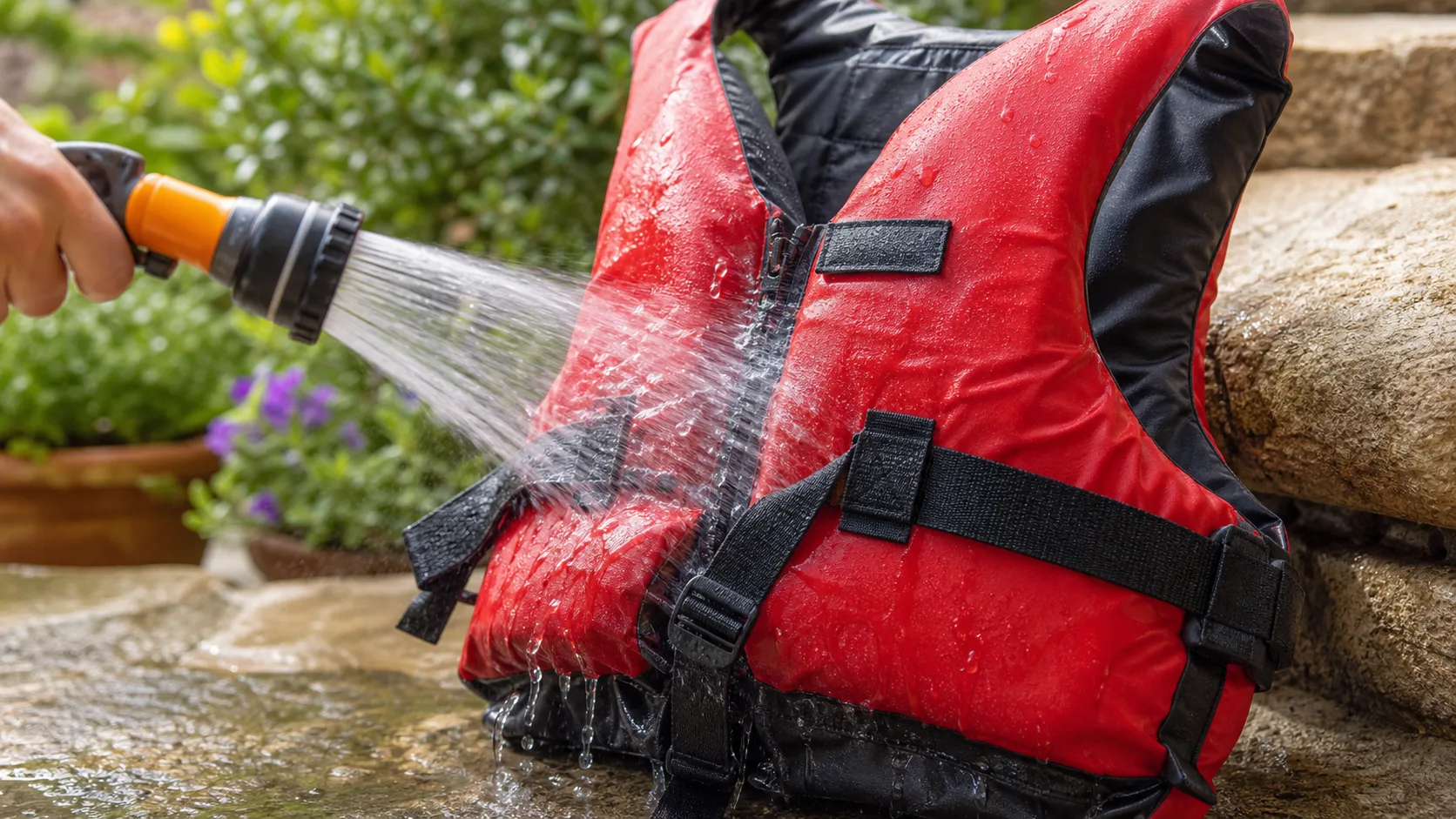
After Every Paddle: Rinse, Drain and Dry
The best maintenance habit is boring: rinse the PFD after wet, salty, muddy or sweaty sessions, then let it dry properly before storage. Salt stiffens zips and buckles. Mud works into stitching. Sunscreen and body oils sit in the fabric. Canal water brings its own little buffet of grime. No judgement, the kit has had a day.
The two-minute post-paddle routine
Do this when you get home:
- Open every strap and pocket: trapped grit hides under webbing and in zip corners.
- Rinse with cool fresh water: use a hose, shower head or bucket. Avoid pressure washers because they are too harsh on seams and foam.
- Drain pockets and mesh panels: small items, weed and grit love to sit in drainage holes.
- Squeeze gently: press water out by hand. Do not wring foam panels like a towel.
- Hang in shade: wide hanger, rail or drying rack; not direct heat, radiator or blazing sun.
If you paddle on the sea, rinse every time. If you paddle clean inland water, rinse when the PFD is muddy, sweaty or smelly, and still dry it properly. A damp buoyancy aid left in a kit bag is how you earn that stale changing-room smell by Wednesday.
What not to use
Avoid bleach, biological washing powder, fabric conditioner, solvent cleaners and hot washes. They can attack fabric coatings, foam, glue and stitching. A mild soap is fine for a deep clean, but the normal routine should be fresh water and air.
The same mindset applies to the rest of your paddling kit. A dry bag full of damp gloves, snacks and river water will make everything smell worse, so empty and dry the bag as well.
How to Clean a Buoyancy Aid Properly
A deeper clean is worth doing a few times a season, or after a muddy river day, sea trip, algae bloom, rescue practice or borrowed-kit session. You are not trying to make it showroom-new. You are removing salt, grit, bacteria and grime without damaging the buoyancy or hardware.
Safe cleaning method
Use a bath, large trug or plastic storage box:
- Fill with cool or lukewarm water: not hot water.
- Add mild soap: a small amount of non-bio laundry liquid or wetsuit cleaner is enough.
- Soak briefly: 10-15 minutes is plenty for normal grime.
- Brush gently: use a soft nail brush or toothbrush on webbing, zip teeth and shoulder areas.
- Rinse twice: soap left in fabric attracts dirt and can irritate skin.
- Air dry fully: inside first if it is raining, then somewhere ventilated until every pocket is dry.
A bottle of wetsuit cleaner from Decathlon, Go Outdoors or Amazon UK is usually £6-£12 and lasts ages. You do not need specialist magic fluid for a foam buoyancy aid. You do need patience, because drying thick foam and pockets takes longer than you think.
Dealing with smells
If the PFD smells sour, the problem is usually trapped moisture rather than dirt alone. Clean it, rinse it well, then dry it for a full day in moving air. A cheap £15-£25 dehumidifier wardrobe bag in a kit cupboard can help, but do not store the PFD pressed against it. Airflow matters more than perfume.
Do not spray it with heavy fabric fragrance. You will just create a floral river-boot smell, which is nobody’s finest work.
Inspection Checklist Before You Launch
Inspection is the bit people skip because the PFD still looks roughly like a PFD. Build it into your normal launch routine. Clip, tug, zip, look, then paddle.
The quick pre-paddle check
Before getting on the water, check:
- Zip: closes smoothly and does not split under light tension.
- Buckles: click firmly, release properly and are not cracked or sun-brittle.
- Webbing: no deep frays, cuts, melted patches or loose stitching.
- Shoulder seams: no pulling apart where the vest carries load during rescue.
- Foam panels: no hard creases, thin patches, crumbling or permanent compression.
- Reflective strips: present and not peeling badly if you rely on visibility.
- Whistle and knife points: whistle attached if fitted; safety knife mount secure if you use one.
The RYA guidance on personal flotation devices is useful because it separates buoyancy aids, life jackets and impact vests by use case and care requirements. That distinction matters when you are checking kit: a foam kayaking PFD and an inflatable boating life jacket do not fail in the same way.
Fit check after adjustment
Put the PFD on over the layers you are actually wearing. Tighten from the lower straps upwards, then lift the shoulder straps. It should move a little, not ride up over your chin. If it slips towards your ears, it is too loose, too big, or badly shaped for you.
This is especially important with winter kit. A PFD that fits over a T-shirt may feel different over a dry suit and thermal layers. Our seasonal kayaking clothing guide covers layers, but the short version is: test the PFD over your real outfit, not in the hallway in jeans.
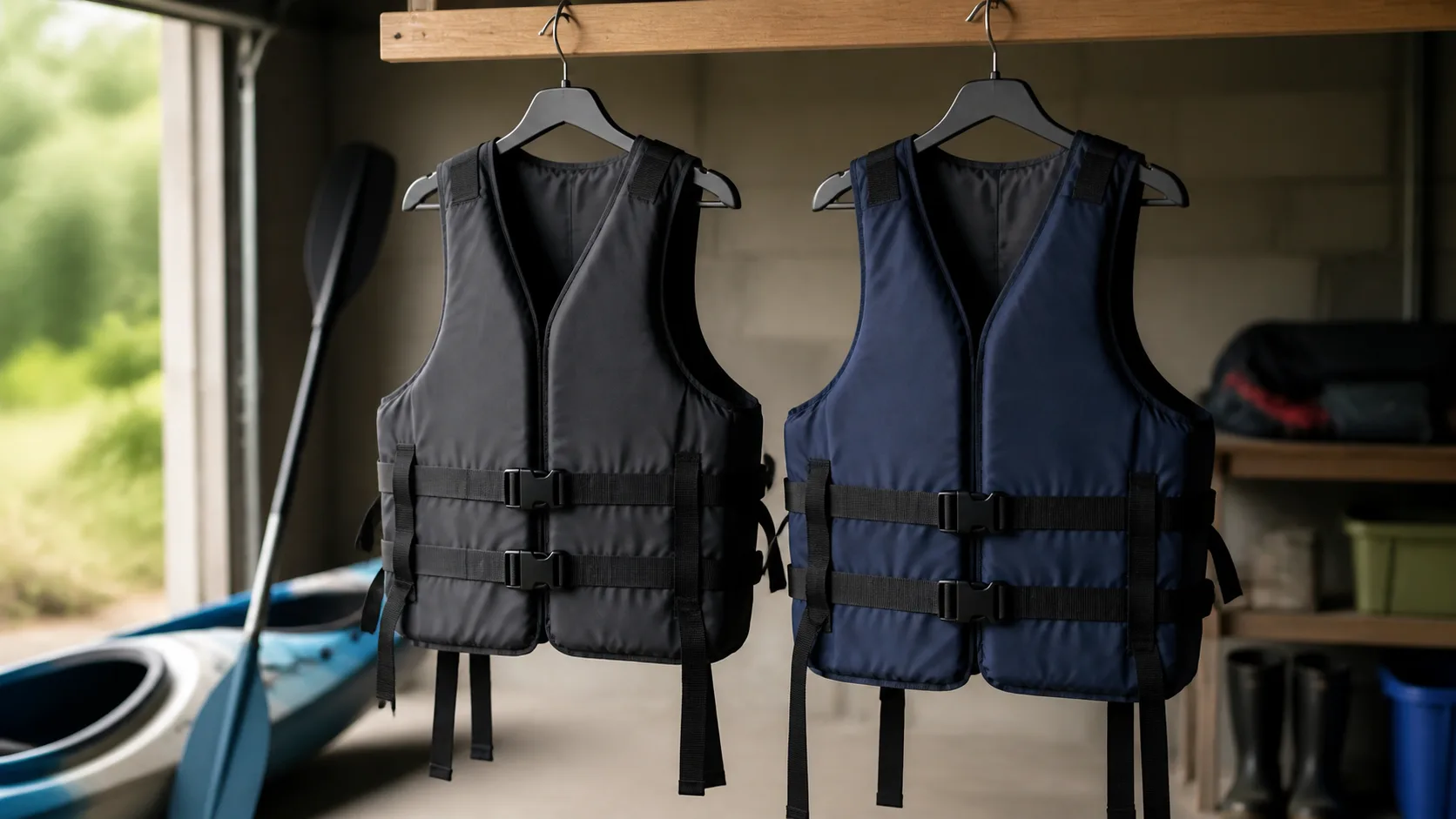
Storing Your Life Jacket Between Trips
Bad storage quietly ruins PFDs. Foam does not like being crushed for months. Fabric does not like damp. Buckles do not like being sat under a loaded roof box. If the vest lives in a heap under the stairs, it will age faster than one hung properly.
Best storage setup
Use:
- A wide hanger: spreads the load across shoulders better than a thin wire hanger.
- A dry, ventilated space: garage, utility room or cupboard with airflow.
- Open straps and pockets: lets damp escape and stops grit hiding in folds.
- No compression: do not store kayaks, paddles or camping boxes on top of it.
- No direct heat: avoid radiators, boiler cupboards and hot conservatories.
A set of wide plastic hangers costs about £6-£10. A wall-mounted rail or heavy-duty garage hook is £8-£20 from Screwfix, B&Q or Amazon UK. That is dull money, but it is cheaper than replacing a £70-£140 paddling PFD early.
Transport without damage
For travel, put the PFD on top of heavier kit, not underneath it. If it goes in a roof box, keep it away from sharp paddle edges and roof-bar clamps. If it goes in the boot, do not let a wet dog, fuel can, toolbox and lunch bag all take turns sitting on it. Oddly specific? That is because paddling kit bags become chaos very quickly.
Good storage also keeps your launch routine calmer. If the buoyancy aid is dry, visible and in one place, you are less likely to forget it when heading to a new route from our UK kayaking spots guide.
Inflatable PFDs and CO2 Cartridge Checks
Most paddlesport buoyancy aids are foam, but some paddlers, anglers and boat users wear inflatable life jackets. These need a stricter routine because there is more to fail: cylinder, firing head, oral inflation tube, bladder, indicators, jacket fabric and expiry dates.
What to check
For an inflatable life jacket, check:
- CO2 cylinder: screwed in firmly, not corroded, not punctured, and the correct size for the jacket.
- Status indicator: green or ready according to the manufacturer’s instructions.
- Firing mechanism: cartridge or capsule in date and not swollen, damaged or already triggered.
- Bladder: no obvious abrasion, folding damage or leaks.
- Oral inflation tube: cap present and valve working.
- Service date: still within the recommended interval.
Replacement CO2 cylinders are often £8-£18. Re-arming kits with cylinder and cartridge are commonly £18-£35 depending on brand. Professional life jacket servicing in the UK is often around £20-£45 per jacket, more if parts need replacing. If you use an inflatable offshore, at night, for kayak fishing or around tidal water, the service cost is not where I would economise.
Foam PFDs are simpler, not maintenance-free
Foam buoyancy aids do not need cylinders, but they can still become unsafe. A crushed foam panel, torn shoulder seam or split buckle is not cosmetic. If the vest cannot stay fitted during a swim or assisted rescue, it is done.
For the wider safety picture, pair this with our weather and tides guide for paddlers. A well-maintained PFD is not permission to ignore wind, tide, flow or cold water.
When to Replace Instead of Repair
Small loose threads are normal. Serious structural damage is not. If the buoyancy aid has been heavily used for several seasons, stored badly, or bought second-hand with an unknown history, inspect it with a harsher eye.
Replace it if you find these
Replace the PFD or life jacket if you see:
- Cracked or unreliable buckles: a failed buckle can let the vest ride up or come loose.
- Torn shoulder straps: these matter during rescue and lifting moments.
- Compressed foam: permanent flattening means less buoyancy and worse fit.
- Rotten stitching: especially around side panels, shoulders and waist webbing.
- Damaged inflatable bladder: do not patch casually unless the manufacturer allows it.
- Missing compliance label: not always fatal, but a warning sign if buying second-hand.
For foam paddling PFDs, a new adult model from Decathlon starts around £25-£45, Palm and Yak recreational models often sit around £55-£90, and more technical whitewater or sea-kayak buoyancy aids can be £100-£180. Kids’ buoyancy aids are often £20-£50. If the old one is structurally suspect, replacement is usually the sensible answer.
Second-hand caution
Second-hand PFDs can be fine, but only if you can inspect them properly and the price reflects the risk. I would avoid very old inflatable life jackets from marketplaces unless they have clear service history and a known re-arming kit. Saving £30 is a poor trade if you inherit a corroded cylinder and no idea how long the bladder has been folded.
The same caution applies to other safety kit. If you carry comms, our VHF radios for paddlers guide explains where that kit makes sense, but it should sit alongside a good PFD, not compensate for a bad one.
UK Care Kit, Servicing and Replacement Costs
You do not need much to look after a buoyancy aid. Most of the job is habit, not gear. Still, a small care kit makes it more likely you will actually do it.
Useful care kit
Keep:
- Soft brush: £3-£6 for webbing, zips and gritty seams.
- Mild cleaner: £6-£12 for wetsuit cleaner or non-bio liquid used sparingly.
- Wide hanger: £2-£5 each, or £6-£10 for a multipack.
- Mesh drying bag: £8-£15 if you travel with wet kit often.
- Spare whistle: £2-£6 if your PFD does not have one attached.
- Inflatable re-arming kit: £18-£35 if your life jacket uses one.
If I were spending money, I would buy the hanger and brush first. Fancy cleaners matter less than drying the PFD properly every time.
Simple annual routine
At the start of each paddling season:
- Clean and dry every PFD: even the spare one that lives in the garage.
- Do a full inspection: buckles, webbing, foam, stitching, labels and accessories.
- Try it on over paddling layers: check fit, movement and shoulder lift.
- Check inflation parts: only for inflatable life jackets, and book servicing if due.
- Retire weak kit: mark it clearly so it does not end up back in the car by mistake.
That last step matters. Do not leave a failed buoyancy aid in the “maybe useful” pile. Cut a strap or label it as retired if there is any chance someone else will grab it for a quick paddle.
Frequently Asked Questions
How often should I clean my PFD or buoyancy aid? Rinse it after salty, muddy or sweaty sessions, then deep clean it a few times a season. Sea paddlers should rinse after every trip because salt is hard on zips, buckles and fabric.
Can I put a life jacket in the washing machine? Usually no. Machine washing can damage foam, stitching, coatings and inflatable parts. Use cool water, mild soap, gentle brushing and thorough rinsing instead.
How should I dry a buoyancy aid? Hang it on a wide hanger or rail in shade with good airflow. Do not use a radiator, tumble dryer, hot cupboard or strong direct sun.
How long does a buoyancy aid last? There is no single lifespan because use and storage vary. Many foam PFDs last several seasons with good care, but replace yours if foam is compressed, buckles crack, seams fail or webbing frays badly.
Do inflatable life jackets need servicing? Yes, they need cylinder, firing-head, bladder and expiry checks. Follow the manufacturer’s service interval, and budget around £20-£45 for professional UK servicing before parts.
Can I repair a torn PFD strap? Do not rely on DIY repairs for structural straps, shoulder seams or buckles. Minor cosmetic stitching is one thing; load-bearing damage means repair by the manufacturer or replacement.