If you need to re-enter a kayak after capsize, the first job is not climbing back in. It is getting your breathing under control, keeping hold of your boat and paddle, and deciding if re-entry is safer than swimming to shore.
In This Article
- First Rule: Stabilise Yourself Before The Kayak
- What Kit Makes Re-Entry Realistic
- Re-Entering A Sit-On-Top Kayak
- Re-Entering A Sit-Inside Kayak With A Paddle Float
- What To Do Once You Are Back In
- Practice Plan For UK Paddlers
- Frequently Asked Questions
First Rule: Stabilise Yourself Before The Kayak
A capsize feels messy because everything happens at once: cold water, floating paddle, boat drifting, maybe a spray deck, maybe wind pushing you sideways. Trying to climb back in while you are still gasping is how people waste energy and make a bad situation worse.
The order is simple:
- Float and breathe: keep your buoyancy aid doing its job and give yourself a few seconds to control the shock.
- Stay with the kayak: a kayak is a big floating object and easier for other people to see than your head.
- Keep or recover the paddle: if it drifts away, re-entry becomes harder and getting back to shore becomes slower.
- Check the water around you: wind, current, waves, weirs, boat traffic and cold all affect the decision.
- Choose the safest exit: re-enter, self-rescue with a paddle float, accept help, or swim the boat to shore.
The Canal & River Trust advises paddlers to wear a buoyancy aid, check local waterway rules, make sure the craft suits the waterway and avoid dangerous features such as locks, weirs and sluices. That matters here because re-entry practice on flat sheltered water is not the same as trying to sort yourself out near moving water. Their canoeing safely guidance is worth reading before treating any rescue drill as routine.
This guide also assumes you have already exited the kayak. If you paddle a sit-inside kayak with a spray deck and that bit still feels uncertain, read our wet exit kayak guide first. Re-entry comes after a clean exit, not instead of it.
Cold water changes the calculation. RoSPA’s cold water shock advice says to float first, control your breathing, then think about getting out. UK sea, lake and river water can be cold even when the air feels mild, so do not rush the climb back in just to prove you can.
What Kit Makes Re-Entry Realistic
You can practise re-entry in swim shorts on a sunny lake and think it is easy. Then you try it in real kit, with a half-flooded kayak, cold hands and a breeze, and the whole thing feels different. The right kit does not guarantee success, but it makes the drill less of a circus.
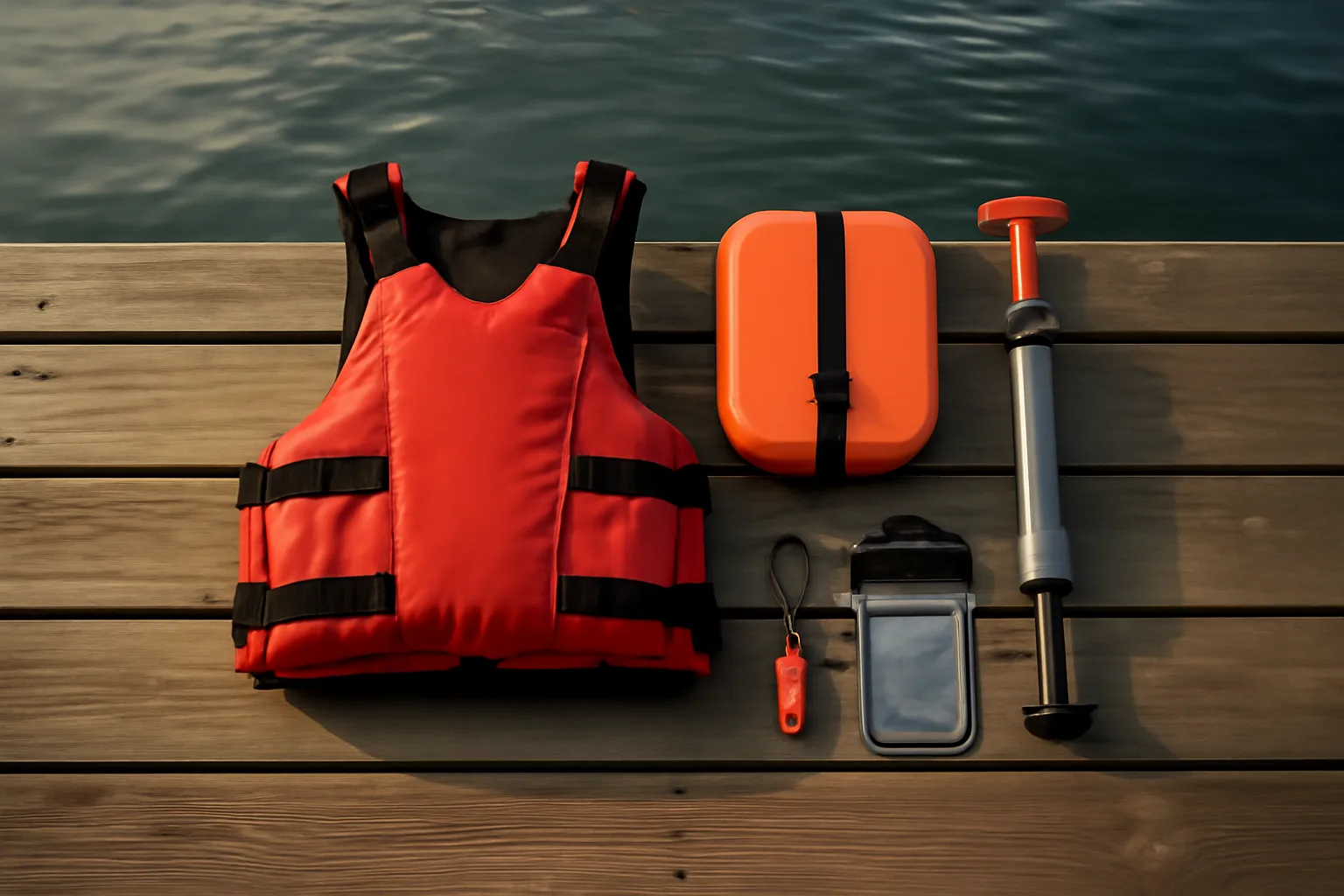
The basics I would want before practising proper re-entry are:
- Buoyancy aid: a paddling-specific 50N or 70N aid that fits your weight range and does not ride up.
- Paddle leash or spare-paddle discipline: useful on sheltered water, but avoid anything that can tangle in surf or moving water.
- Paddle float: mainly for sit-inside kayaks, used as an outrigger during self-rescue.
- Bilge pump or sponge: needed to empty a flooded cockpit after re-entry.
- Suitable clothing: wetsuit, dry trousers or drysuit depending on water temperature, not just air temperature.
- Communication: phone in a waterproof pouch, whistle, VHF for coastal paddling if trained to use one.
Specific UK prices help set expectations. A Decathlon/Argos beginner buoyancy aid is about £35. Better paddling buoyancy aids from Palm, Yak or NRS often sit around £60-£130 from UK kayak shops. Paddle floats are usually about £25-£45. Brighton Canoes lists a Beluga bilge pump at £24.95 and a Kajak Sport hand pump at £32.95. A whistle is £3-£8, a waterproof phone pouch is £8-£20, and a basic wetsuit from Decathlon or Gul is often £40-£120.
For a sit-on-top kayak, the biggest kit win is a snug buoyancy aid and clothing that lets you kick and rotate. For a sit-inside touring kayak, a paddle float and pump are the difference between a realistic solo drill and a long, wet wrestling match.
Do not ignore boat fit either. If you are already close to the kayak’s capacity, a flooded cockpit or awkward remount can make it unstable. Our kayak weight limits guide explains why payload is more than the number printed in a product listing.
Re-Entering A Sit-On-Top Kayak
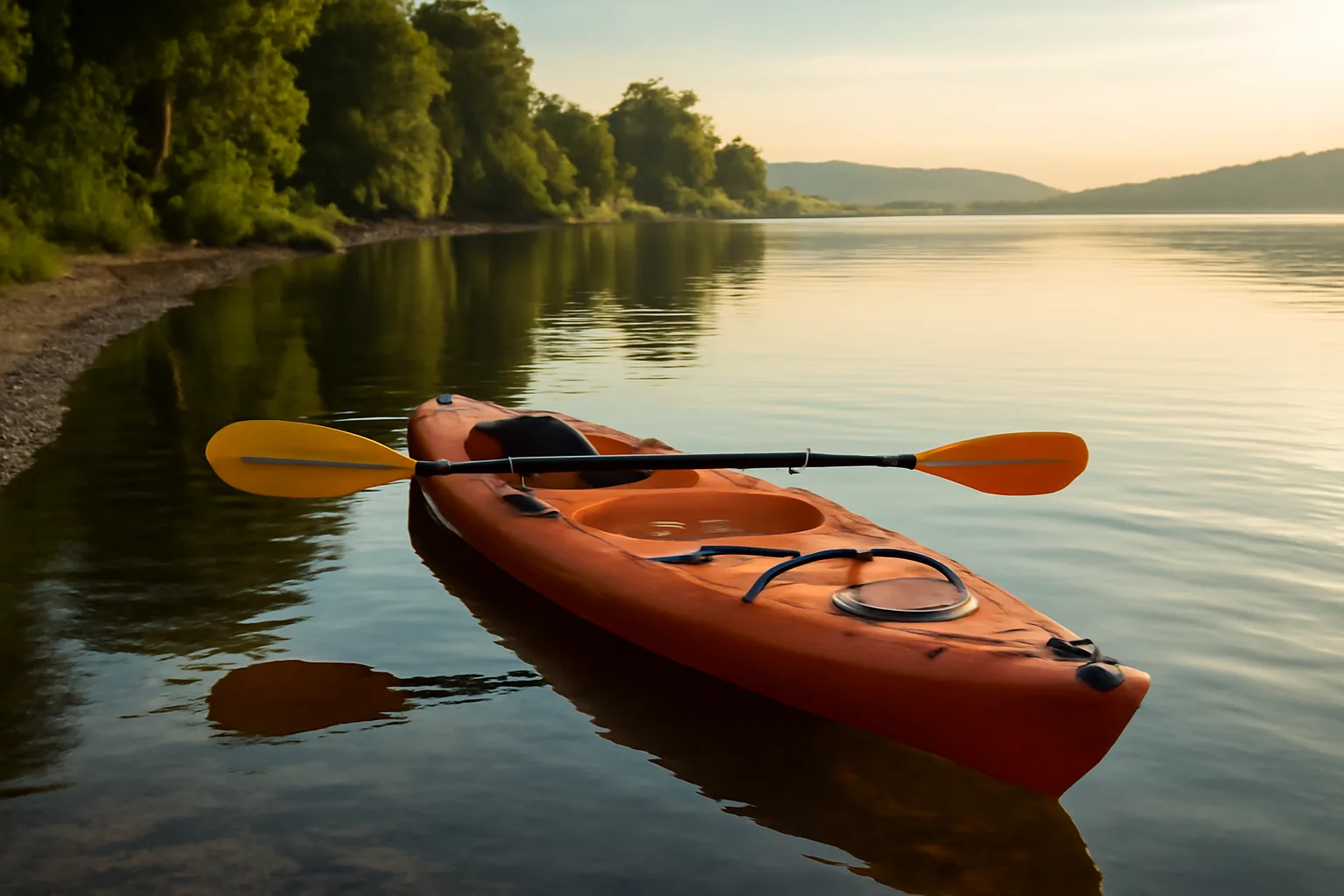
Sit-on-top kayaks are usually easier to remount because there is no cockpit to drain and no spray deck to manage. That does not mean they are effortless. The trick is to keep your weight low and pull yourself across the kayak, not straight up like climbing out of a swimming pool.
Use this sequence on flat sheltered water:
- Move to the side of the kayak: stay near the centre, not the bow or stern.
- Put the paddle across the deck if you can: secure it under deck lines or hold it with one hand.
- Kick your legs behind you: horizontal legs float better than dangling legs.
- Pull your chest across the seat area: aim to get your belly button over the centreline.
- Pause low across the kayak: do not sit up the second your ribs touch plastic.
- Roll your hips into the seat: bring one leg over, then the other.
- Reset before paddling: find the paddle, breathe, check direction and only then move off.
The common mistake is grabbing the far side and yanking down. That flips the kayak towards you. Think chest across, hips low, legs kicking. On a wider fishing kayak, you may have to climb over more volume, but the extra beam helps once your weight is centred.
If you paddle an inflatable kayak, the same low-and-across principle applies, but handles and soft side tubes can change the feel. Some inflatables flex under your weight, so practise with the exact boat you use. Our inflatable vs hard shell kayak comparison covers those stability differences in more detail.
If the first attempt fails, stop and breathe. A second tidy attempt is better than five panicked scrambles. If the shore is close, the water is calm and you are not cold, swimming the kayak in may be the smarter call.
Re-Entering A Sit-Inside Kayak With A Paddle Float
A sit-inside kayak is harder because the cockpit can flood and the deck is narrower. Re-entry without help is a skill, not a party trick. Practise it in warm, shallow, supervised water before you trust it on a trip.
The paddle-float method gives the kayak a temporary outrigger. The details vary by boat, but the structure is consistent:
- Right the kayak: flip it upright and stay close to the cockpit.
- Secure the paddle float: inflate or fit the foam float to one paddle blade.
- Set the paddle behind the cockpit: the float blade sits out on the water, the shaft crosses behind you.
- Grip the cockpit rim and paddle shaft together: this stops the outrigger sliding away.
- Kick and slide your chest onto the rear deck: stay low and face down at first.
- Keep weight on the float side: the outrigger only helps if you use it.
- Slide one leg, then the other, into the cockpit: move slowly; rushed legs capsize boats.
- Roll your body upright last: keep your head low until your hips are in the seat.
Once seated, the kayak may still be full of water. This is where the pump matters. A £25 pump feels boring in the shop and brilliant when you need to remove water while staying balanced.
Some paddlers learn a cowboy scramble from the stern, where you climb onto the rear deck and shuffle forward. It can work on sea kayaks with suitable deck shape and good balance, but it is not my first recommendation for most beginners. It is tiring, unstable and much harder in wind. A paddle float is slower but more forgiving.
If you paddle with other people, an assisted rescue is often faster. A T-rescue or rafted rescue lets another paddler stabilise the boat while you re-enter. That belongs in a coached session, not a quick paragraph, because hand placement and boat control matter. The point for this article is knowing your solo option, not pretending solo is always best.
What To Do Once You Are Back In
Getting back into the kayak is not the finish. It is the middle of the incident. You still need to clear water, recover kit, warm up, check confidence and decide if the paddle continues.
After re-entry, work through this:
- Stay low: keep movements small until the kayak feels stable again.
- Recover the paddle: do not drift while sorting footrests or clothing.
- Empty water: use a pump, sponge or shore landing depending on kayak type.
- Check the spray deck: only refit it if you are calm and conditions are suitable.
- Warm your hands: cold hands make paddle grip, deck toggles and phone use harder.
- Tell your group: say if you are shaken, cold or done for the day.
The sensible decision after a capsize is often to land. That is not failure. If you capsized because of wind, current, tiredness or poor boat fit, climbing back in has not removed the cause. Our guide to paddling into wind and current is a useful follow-up if the capsize happened in moving conditions.
Look for the small stuff too. A missing water bottle, loose dry bag or floating deck line can become another problem. A £10 paddle leash may keep a paddle nearby on calm canals, but in snaggy moving water I would rather rely on good group spacing and spare-paddle planning. Gear choices always depend on the water.
If you swallowed water, banged your head, feel unusually cold or cannot stop shivering, get off the water. The heroic version of kayaking is overrated. The useful version gets home, dries the kit and learns something.
Practice Plan For UK Paddlers
Do not make your first re-entry attempt during a real capsize. Practise deliberately, in controlled conditions, with someone nearby who can help. A club session or coached course is money well spent if you paddle beyond shallow summer lakes.
A good progression looks like this:
- Pool or waist-depth practice: learn how the boat behaves without cold, wind or depth stress.
- Sheltered lake session: practise sit-on-top remounts or paddle-float self-rescue near shore.
- Loaded-boat practice: add the dry bag, clothing and kit you use on real trips.
- Light wind practice: only after calm-water attempts are boringly repeatable.
- Group rescue practice: learn assisted rescue, towing and communication with club paddlers or a coach.
Expect to pay about £60-£120 for a half-day or day skills session with a UK paddlesports provider, more for sea kayaking or whitewater coaching. Club pool sessions can be much cheaper, often £5-£15 plus membership, and they are ideal for wet exits, rescues and confidence.
Practise with the boat you actually paddle. A wide sit-on-top, compact recreational kayak, inflatable tandem and narrow sea kayak all re-enter differently. Your clothing changes it again. Thick winter kit restricts movement; a drysuit traps air; gloves make small buckles harder.
Before trips, build the habit into normal planning. Check weather and tides, tell someone your route, wear the buoyancy aid, keep communication reachable and know the landing options. Our weather and tides for paddlers guide covers that broader trip planning.
The practical benchmark is not “can I do it once?” It is “can I do it calmly after a surprise capsize, then make a sensible decision?” If the answer is no, stay close to shore, paddle with stronger partners, and keep practising. That is not cautious for the sake of it. That is how kayaking stays fun.
Frequently Asked Questions
Can you re-enter a kayak after capsizing? Yes, but the method depends on the kayak. Sit-on-top kayaks are usually remounted from the side, while sit-inside kayaks often need a paddle float, pump and practised self-rescue technique.
Is it easier to get back into a sit-on-top kayak? Usually, yes. There is no flooded cockpit to empty and no spray deck to refit, but you still need to keep your weight low and practise in calm water.
What kit do I need for kayak self-rescue? A well-fitting buoyancy aid, paddle float for sit-inside kayaks, bilge pump, suitable clothing, whistle and waterproof phone pouch are the core items for most sheltered-water paddlers.
Should I swim to shore instead of re-entering? If shore is close, conditions are calm and you can keep hold of the kayak and paddle, swimming in can be safer than repeated failed re-entry attempts. Avoid swimming in strong current, offshore wind or near hazards.
How much does kayak rescue kit cost in the UK? Budget about £35 for a starter buoyancy aid, £25-£45 for a paddle float, £25-£35 for a bilge pump, £3-£8 for a whistle and £8-£20 for a waterproof phone pouch.
Can an article teach kayak re-entry properly? It can explain the sequence, but it cannot replace coached practice. Learn the movements in warm, sheltered water with someone nearby before trusting them on a trip.