Paddling into wind technique is mostly about angles, trim and patience, and current adds the same lesson with faster consequences. If you try to bully the water with bigger strokes, you tire faster and usually end up farther off line.
In This Article
- Paddling Into Wind Technique: Start With the Conditions
- Set Your Body and Boat Up Properly
- How to Handle Headwinds, Tailwinds and Crosswinds
- How to Paddle in Current Without Fighting It
- Kit and Setup That Make Conditions Easier
- Practice Drills for Wind and Current
- Safety Decisions Before You Launch
- Frequently Asked Questions
Paddling Into Wind Technique: Start With the Conditions
Good paddling into wind technique starts before the first stroke. You need to know which force matters more: the wind on your body and craft, or the current moving the water under you.
On a canal, current may be tiny but gusts can funnel between buildings and trees. On a river, the surface can look calm while the flow is doing plenty. On the sea, wind, tide and chop can all point in slightly different directions, which is why coastal paddling gets serious quickly.
Read the water, not just the forecast
Before launching, stand still for two minutes and watch what is actually happening. Look at moored boats, reeds, floating leaves, flags, ripples and any anchored buoys. If everything on the surface is moving one way and the wind is touching your face from another, plan for both.
Use the forecast as the first filter, not the whole answer. The Met Office Beaufort scale guide is useful for translating wind speeds into real-world effects, because a number on a forecast means more when you know what it does to water, trees and loose kit.
Know the difference between wind and current
Wind pushes the part of you and your craft above the water. Current moves the water itself. That means a high-sided inflatable kayak, a standing paddleboarder and a loaded touring kayak can all behave differently in the same place.
If your bow keeps blowing sideways but floating leaves are barely moving, wind is the main issue. If your boat feels as if it is sliding downstream even when the air is still, current is in charge. If both are working against you, shorten the plan. No shame in that.
Pick a reachable target
Do not aim at the final destination straight away. Pick a near target: a tree, mooring post, bend, bridge arch, eddy line or beach marker. Paddle to that, reassess, then choose the next one.
This keeps you honest. If a target 100m away takes far longer than expected, the return leg may be harder than your original plan allowed.
Set Your Body and Boat Up Properly
Technique falls apart when your body is tense and the craft is badly trimmed. You need a quiet platform before you can make useful strokes.
Lower your profile
Wind loves height. On a paddleboard, standing tall turns you into a sail. In a stiff headwind or crosswind, kneeling is often the sensible choice. It drops your centre of gravity, reduces windage and lets you keep moving without wobbling through every gust.
In a kayak, sit tall but relaxed. Slumping makes your blade entry messy and reduces rotation. Bracing your shoulders up by your ears just wastes energy. Think long spine, loose hands, steady breathing.
Trim the craft
Trim means how weight is balanced front to back and side to side. If the nose is too light, it gets blown around. If the stern is too light, tracking becomes twitchy. A dry bag, water bottle or spare layer can make a noticeable difference when moved from behind your seat to the bow area.
For inflatable kayaks, this matters more than many beginners expect. A £20-£35 waterproof dry bag from Decathlon, Go Outdoors or Amazon UK is not just storage; packed sensibly, it can help balance the boat. Keep heavy kit low and central where possible.
Use the blade cleanly
A tired paddler often starts slapping at the water. That is when the craft wanders. Place the blade cleanly, load it gently, then drive through with torso rotation. The stroke should feel connected, not frantic.
If you need a refresher on efficient blade use, our SUP paddle stroke technique guide and kayak strokes explainer cover the basics without conditions layered on top.
How to Handle Headwinds, Tailwinds and Crosswinds
Wind direction changes the job. The same board or kayak can feel stable one way and awkward 50m later after a bend in the river.
Headwind
Into a headwind, shorten the stroke slightly and increase cadence a little. Do not reach too far forward if it makes you wobble or bury the blade badly. A compact, repeatable stroke beats a heroic one.
On a SUP, kneel early rather than waiting until you are already tired. On a kayak, keep the bow aimed a few degrees upwind if gusts keep pushing it off line. Small corrections made early cost less than big corrections made late.
If progress drops below walking pace and you still have a long return, turn back. That is judgement, not failure.
Tailwind
A tailwind sounds helpful, but it can push you past your turning point or into busier water. Paddleboards in particular can accelerate downwind and then become hard to bring back.
Keep checking behind you. If the return will be into the wind, save energy and time. It is often smarter to paddle out against the wind first, then use the easier return leg when you are more tired.
Crosswind
Crosswind is the awkward one. It pushes the bow or board sideways while you are trying to move forwards. Angle slightly into the wind rather than aiming directly at your target. This is called allowing for drift, and it feels odd until you see it work.
In a kayak, use small sweep strokes on the windward side before the bow is blown too far. On a board, switch sides more often and keep the blade close to the rail. Wide, sweeping SUP strokes can turn the board when you only wanted forward drive.
Our existing guide to paddling a SUP in wind and choppy water goes deeper on board-specific stance and kneeling choices; this guide is the broader technique layer for both kayaks and boards.
How to Paddle in Current Without Fighting It
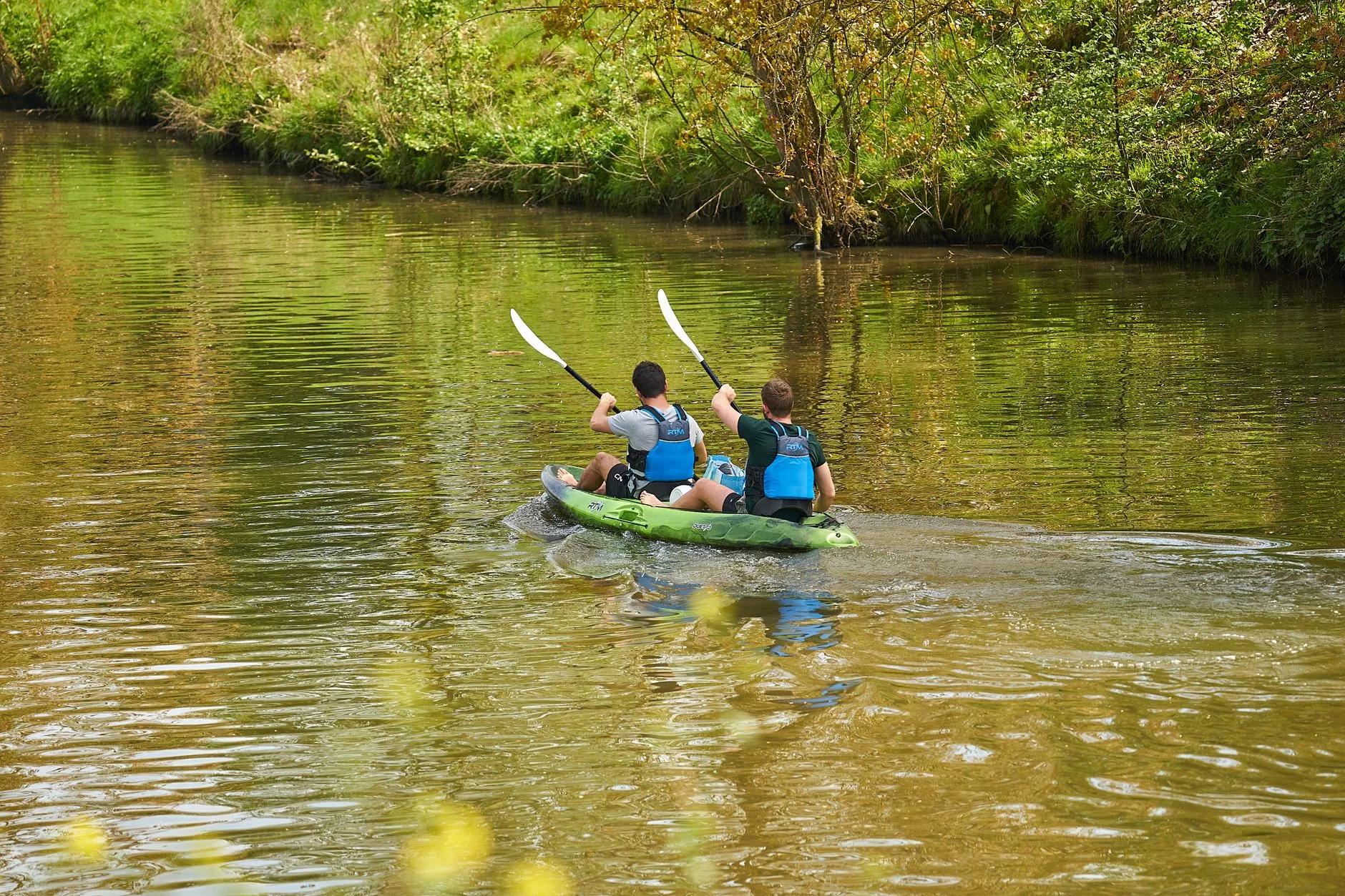
Current punishes straight-line thinking. If you point directly at the place you want to reach, the flow may carry you below it before you arrive. The answer is usually an angle, not more power.
Ferry angle
A ferry angle means pointing partly upstream while moving across the flow. The current carries you sideways while your paddling stops you being swept too far downstream. Start with a shallow angle, about 30-45 degrees into the current, then adjust.
Too much angle and you burn energy without crossing. Too little and you drift below the target. Watch the bank rather than staring at the bow. The bank tells you what is really happening.
Use eddies
An eddy is slower or reverse-moving water behind a rock, bend, bridge support or bank feature. On moving rivers, eddies are resting places and turning points. Enter them with control, not as a last-second panic move.
For kayaks, edging helps the boat turn and cross eddy lines cleanly. Our kayak edging guide explains that skill in more detail. For SUPs, use a lower stance and expect the board to wobble as it crosses confused water.
Avoid strainers and fixed hazards
A strainer is anything water can pass through but you cannot: fallen trees, fences, mooring ropes, bridge debris. Do not paddle close to them in current. The water pressure can pin a boat or board with frightening force.
The Canal & River Trust canoeing safety guidance is worth reading for inland paddling basics, including why a course is a smart move for new paddlers.
Do not race the flow
If you need repeated sprint efforts just to hold position, you are in the wrong place for your current ability. Move to the bank, use slower water, or get off before you are exhausted. The river does not care that you bought nice kit.
Kit and Setup That Make Conditions Easier
Skill matters more than shopping, but the right setup gives you margin. The wrong setup removes it.
Buoyancy aid
A properly fitted buoyancy aid should be non-negotiable in wind or current. Budget models such as the Decathlon BA 50N often sit around £35-£50, while more comfortable paddling-specific options from Palm or NRS tend to be £70-£130 from Go Outdoors, WWTCC, Escape Watersports or Amazon UK.
Our buoyancy aid guide for kayaking covers fit, float rating and pocket choices. Fit matters: a loose buoyancy aid riding up around your chin is miserable and unsafe.
Paddle length and blade size
A blade that is too large feels powerful for five minutes and tiring for the next hour. Into wind or current, a slightly smaller blade and steady cadence can be easier on shoulders. Aluminium paddles are cheap, often £25-£45, but heavier. Fibreglass paddles around £70-£130 are a nice middle ground. Carbon paddles can run £160-£300+.
Check our paddle length guide if your stroke feels clumsy or your shoulders ache after every windy session.
Skegs, fins and rudders
On inflatable kayaks and SUPs, a fin or skeg helps tracking. In wind, that can be a blessing because the craft wanders less. In shallow rivers or weedy canals, it can also snag, so use the right depth for the venue.
Touring kayaks with rudders or skegs give more control in crosswind, but they do not replace technique. If the rudder is doing all the work, your trim or stroke may still be off.
Clothing and hand protection
Wind strips heat quickly, especially when you are wet. In spring and autumn, a light paddle jacket around £45-£90 and neoprene gloves around £15-£35 are often better value than a fancy accessory you barely use. Cold hands make blade control worse.
Our cold-water paddling gloves guide is useful if your fingers go numb before your fitness gives out.
Practice Drills for Wind and Current
Do not wait for a horrible day to learn this. Practise in mild conditions first, close to an easy landing point.
The upwind-first drill
Choose a short, sheltered stretch with a steady light wind. Paddle upwind for three minutes, then turn and come back. Notice how much easier the return feels. Repeat twice, changing cadence rather than power.
The aim is to learn your honest speed into wind. If three minutes feels like a slog, you have useful information before planning a longer route.
The ferry-glide drill
On gentle moving water, pick a safe target across the flow. Set a shallow ferry angle and paddle across without aiming directly at the target. Adjust the bow angle until you arrive level with it rather than below it.
Keep this drill away from weirs, locks, strainers and busy boat traffic. Gentle flow only. If you cannot hold the angle calmly, conditions are too strong for practice.
The correction-limit drill
Give yourself three strokes before making a steering correction. This stops you overcorrecting every wobble. In crosswind, many paddlers snake across the water because they correct too late, then too hard, then too late again.
Three quiet strokes, small correction, repeat. It is dull in the best way.
The turn-back test
Halfway through a windy practice paddle, turn around and paddle back for one minute. If the return direction feels much harder than expected, shorten the session. This habit keeps small problems small.
Safety Decisions Before You Launch
The best paddling decision is often made on the bank. Wind and current are not moral tests. You do not get extra points for launching into conditions that are wrong for your ability.
Use simple limits
For newer paddlers, avoid strong offshore winds, fast river flow, flood conditions, poor visibility and cold water without proper clothing. If you are on the coast, check tide times, wind direction and the actual exit points before you launch.
Offshore winds can push paddleboarders and kayakers away from shore faster than expected, especially when the return leg is already tiring. A cheap waterproof phone pouch costs about £8-£15; carrying a working phone and telling someone your plan is basic, not overcautious.
Choose the route that gives options
Paddle close enough to the bank or shore that you can stop. Avoid routes where the only exit is the original launch point several kilometres away. On canals, think about locks, tunnels and boat traffic. On rivers, think about bends, trees, weirs and access.
Our weather and tides guide for paddlers is the better place for full planning detail. Here, the point is simple: technique cannot rescue a bad route choice every time.
Paddle with someone better
If you are learning current or wind technique, go with a competent paddler or book a session with a local club. Beginner paddling courses in the UK are often around £45-£90 for a group session, depending on location and craft. That is cheap compared with buying gear you hope will compensate for uncertainty.
The bottom line
Paddling into wind and current is not about being stronger than the conditions. It is about reading them early, setting the craft up well, using angles, and turning back before tired technique becomes poor judgement.
Frequently Asked Questions
Is it better to paddle into the wind first? Usually, yes. Paddling into the wind first means the return leg should be easier when you are more tired, provided the route and launch point are safe.
How do you paddle across current? Use a ferry angle. Point partly upstream, paddle steadily, and let the current move you sideways towards the target rather than aiming straight across.
Should paddleboarders kneel in wind? Yes, if standing feels unstable or progress is poor. Kneeling lowers your profile, reduces windage and gives more control in gusts.
What wind speed is too much for beginners? There is no single number, but beginners should avoid strong or offshore winds, especially on open water. If you cannot make steady progress close to shore, turn back.
Does a kayak skeg help in wind? A skeg can help tracking in crosswind, especially on touring kayaks or inflatables, but it does not replace good trim, posture and blade control.
What is the most useful safety kit for windy paddling? A well-fitted buoyancy aid, waterproof phone pouch, suitable clothing and a leash where appropriate are more useful than performance upgrades.