Paddling cadence for kayaking is the rhythm of your strokes, and it matters most when your shoulders start doing work your torso should be doing. If you finish a gentle river paddle with tight traps, sore front shoulders or numb forearms, the fix is rarely “get stronger”. It is usually a calmer stroke, a cleaner exit and a pace you can repeat without fighting the boat.
In This Article
- What Paddling Cadence Means in a Kayak
- The Shoulder-Friendly Answer
- Set Your Boat and Paddle Up Before Blaming Fitness
- The Stroke Rhythm That Saves Your Shoulders
- How to Match Cadence to Wind, Current and Distance
- Common Cadence Mistakes That Create Tired Shoulders
- A Simple 20-Minute Practice Plan
- Frequently Asked Questions
What Paddling Cadence Means in a Kayak
Cadence is simply how often your paddle blades enter the water. A high cadence means more strokes per minute. A low cadence means fewer, slower strokes. The trap is thinking higher automatically means faster, because that is where many newer paddlers start yanking with their arms.
In a kayak, useful cadence is tied to three things:
- Boat speed: a short recreational kayak will not reward frantic strokes in the same way a long touring kayak might.
- Stroke length: a clean catch near your feet and an early exit near your hip usually beats a long drag behind your body.
- Body rotation: your shoulders should transfer power from your torso, not act as the main engine.
For most relaxed UK river, canal and lake paddling, the sweet spot is not a racing rhythm. It is a steady rhythm where the paddle slips in quietly, loads for a moment, exits early, then repeats. You should feel effort through your core, side body and back. You should not feel as if your front shoulder is being tugged forward every time the blade catches.
This is why cadence links directly to comfort. If your stroke rate is too low and each stroke becomes a heavy pull, your shoulders take a beating. If your stroke rate is too high and messy, you splash, shorten the catch and tense your neck. The middle ground feels boring in the best way: repeatable, quiet and easy to hold for half an hour.
A useful way to measure it
You do not need a GPS watch. Count how many right-side strokes you take in 30 seconds, double it, then double again for total strokes per minute. If that sounds too fiddly, count only right-side strokes and compare against yourself next time. The exact number matters less than whether the boat moves smoothly and your shoulders stay relaxed.
The Shoulder-Friendly Answer
The shoulder-friendly answer is a moderate cadence with light pressure, not slow power strokes. Think of each blade as a firm anchor in the water for a short moment. You rotate past it, release it beside your hip, then set the next blade without rushing.
A lot of tired shoulders come from trying to make every stroke heroic. That works for ten minutes. It does not work for a 90-minute paddle on the Thames, the Wye or a windy reservoir where you still need enough energy to land neatly at the end.
What good rhythm feels like
A good rhythm has four signs:
- Quiet catch: the blade enters cleanly without a slap.
- Short power phase: the useful pull finishes around your hip, not behind your back.
- Loose grip: your hands guide the shaft rather than crushing it.
- Easy breathing: you can talk in short sentences without gasping.
If you can only keep your pace by holding your breath or shrugging your shoulders, the cadence is wrong for that moment. Drop the effort first. Then rebuild the rhythm.
For a beginner or casual paddler, a quality coaching session is often better value than buying another gadget. Many UK clubs and centres offer intro or improver sessions at roughly £45-£80, and a coach can usually spot the shoulder problem in the first few minutes. That is money better spent than upgrading from a £60 paddle to a £180 carbon paddle while keeping the same arm-heavy stroke.
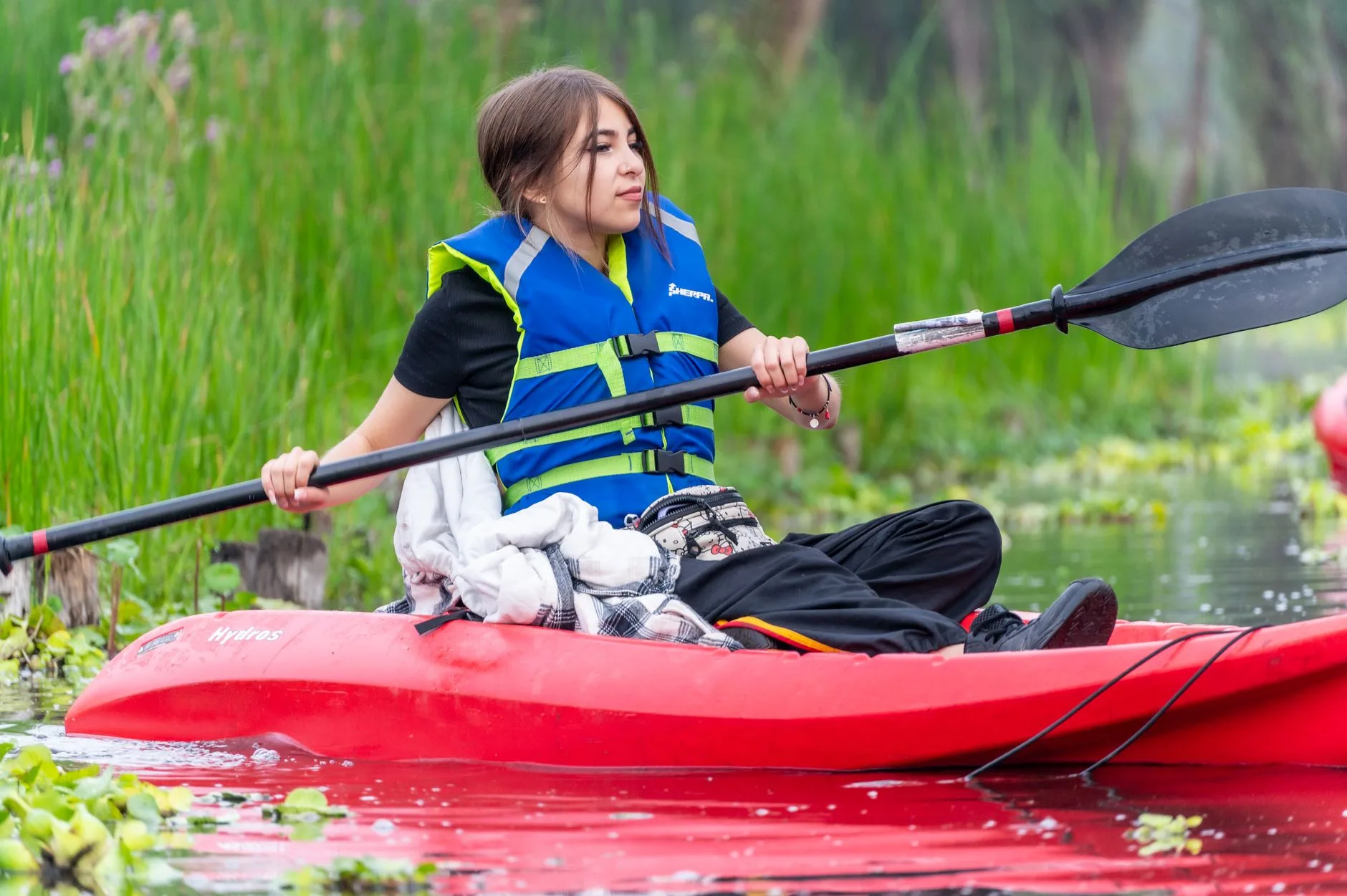
Set Your Boat and Paddle Up Before Blaming Fitness
A poor setup can make any cadence feel bad. Before deciding your shoulders are weak, check the things that change how much leverage you are asking your body to handle.
Paddle length and blade size
Too long a paddle encourages sweeping, wide strokes. Too large a blade gives you more resistance than your shoulders want. For easy touring and recreational kayaking, many adults end up around 210-230cm depending on boat width, height and stroke angle, but fit matters more than copying a chart.
Budget aluminium paddles from Decathlon or Go Outdoors often sit around £25-£45. They are fine for short sessions but can feel heavy after an hour. A lighter fibreglass paddle in the £70-£130 range is usually the better upgrade for shoulder comfort. Carbon models from brands such as Werner, Aqua Bound or Select can run from about £180 to £350, and they make most sense once your stroke is already tidy.
If you are comparing materials, our guide to aluminium vs fibreglass vs carbon paddles explains the trade-off without pretending everyone needs carbon. For blade shape, the separate kayak paddle blade shape guide is worth reading before you buy a big high-angle blade because it looks faster.
Footrests, seat and posture
Cadence falls apart when your lower body is loose. Your feet should press lightly into the footrests, your knees should have contact, and your seat should let you sit tall without leaning back like a deckchair. That stable base lets your torso rotate. Without it, your shoulders try to create all the movement.
A basic foam seat pad is about £10-£20. A better replacement kayak seat can be £35-£90. Neither fixes bad technique, but a sagging seat that rounds your back makes good rhythm much harder. I would fix posture before chasing a faster cadence every time.
Safety kit still matters on practice days
Short practice sessions can feel harmless, which is exactly when people skip kit. Paddle Scotland’s paddlesport safety advice puts the basics in plain terms: wear a buoyancy aid, tell someone where you are going, carry a mobile phone, check the weather and know your limits. A decent buoyancy aid is usually £35-£90 from Decathlon, Go Outdoors or specialist paddling shops, and it should be worn rather than clipped under deck lines.
For open-water practice, the RLSS water safety information is a useful reminder that calm-looking water still deserves planning. Keep your phone on you in a waterproof pouch rather than buried in a dry bag. A pouch is about £8-£25. Cheap, unglamorous, useful.
The Stroke Rhythm That Saves Your Shoulders
The best cadence for tired shoulders starts with a boring technical rule: stop pulling past your hip. Once the blade passes your body, it is no longer moving the kayak forward cleanly. It starts lifting water, twisting your shoulder and slowing the next stroke.
Catch, drive, exit, recover
Use this four-part rhythm:
- Catch: place the blade fully in the water near your feet. Do not stab at the surface.
- Drive: rotate your torso and press lightly through the foot on the same side as the active blade.
- Exit: lift the blade out beside your hip before it drifts behind you.
- Recover: let the opposite blade move forward without tensing your neck or wrists.
That is the rhythm to practise. Not “pull harder”. Not “spin faster”. Just clean entry, short drive, early exit, relaxed recovery.
I have found the easiest self-check is listening to the blade. A loud slap usually means you are dropping it late or rushing the catch. A splashy exit often means you are dragging too far back. Quiet strokes are not always perfect, but noisy strokes are rarely efficient.
Keep the top hand calm
The top hand should guide and support the stroke, not punch across your face. If your top hand is flying high and your lower hand is yanking, your shoulders will complain first. Keep the shaft controlled, let the torso turn, and keep your elbows soft.
For basic paddle handling, the existing guide to holding and using a kayak paddle correctly covers grip and hand spacing. This article is about rhythm, so use that guide as the setup piece and come back here for the pacing work.
How to Match Cadence to Wind, Current and Distance
Your cadence should change with conditions. A pace that feels perfect on a sheltered canal can feel clumsy on open water with a headwind. The aim is not one magic number. The aim is a rhythm you can adjust without losing technique.
Calm water
On calm water, use a relaxed cadence and focus on blade quality. This is where you practise quiet catches and early exits. If you are paddling with a friend, your test is simple: can you hold a conversation and still keep the boat tracking neatly?
A recreational kayak will often feel best at a steady touring rhythm rather than a sprint. If you try to race it, you create wake, splash and shoulder tension without much extra speed. Let the hull do what it can do.
Headwind or gentle current
Into wind or current, shorten the stroke slightly and raise cadence a touch. Do not turn each stroke into a deadlift. Smaller, cleaner strokes keep the boat moving and reduce the stop-start feeling that tires your shoulders.
This is also where paddle feather can matter. Some paddlers like a feathered blade in wind because the recovery blade slices through the air more easily. Others find it twists the wrist. Our feathered vs unfeathered paddle guide covers that decision in more detail.
Longer trips
For longer trips, pick a cadence you can hold at 60-70% effort. If you need a burst to cross a breezy open stretch, use it, then settle back down. The mistake is treating the first 15 minutes as proof of fitness. The real test is whether your technique still looks tidy in the final 15 minutes.
A lighter paddle helps here, but only after the basics are sorted. If your current paddle is a heavy aluminium model and you regularly paddle for more than an hour, moving to a £90-£150 fibreglass paddle is a sensible comfort upgrade. If you only paddle twice a summer, spend the money on a coached session or better safety kit first.
Common Cadence Mistakes That Create Tired Shoulders
Most cadence problems are easy to spot once you know the pattern. The hard part is admitting the fix might be slower for a while.
Mistake: using a low cadence with too much force
This feels strong at first. Each stroke bites, the kayak surges, and then your shoulders start to tighten. The fix is to reduce pressure per stroke and raise the rhythm slightly. You want steady movement, not a series of mini sprints.
Mistake: rushing the catch
A rushed catch makes the blade slap and slip. You then pull harder to make up for the wasted stroke. Slow the entry down for five minutes. Let the whole blade settle before you load it. The boat will feel calmer almost immediately.
Mistake: gripping the paddle too hard
White knuckles waste energy. They also make your forearms and shoulders tense. Keep enough grip to control the shaft, then relax your fingers on recovery. If your hands ache before your core works, your grip is doing too much.
Mistake: copying faster paddlers in different boats
A long sea kayak, a racing boat and a short sit-on-top do not reward the same cadence. Copying someone in a narrower, faster hull can make your own stroke messy. If you are still choosing boats, start with how to choose a kayak for a beginner so your expectations match the craft.
Mistake: ignoring paddle size
Large blades feel powerful but can overload smaller paddlers or anyone with sensitive shoulders. If you are shopping, compare blade area as well as shaft material. Our best kayak paddles UK guide includes options across budget, mid-range and premium prices, which is more useful than buying the biggest blade in the shop.

A Simple 20-Minute Practice Plan
Pick sheltered water, wear your buoyancy aid, keep your phone on you in a waterproof pouch, and make this deliberately unglamorous. You are training rhythm, not proving speed.
The drill
- Five minutes easy: paddle at a pace where your shoulders feel loose and your breathing stays relaxed.
- Five minutes quiet catch: listen for splash. If the blade slaps, slow the entry and place it more cleanly.
- Five minutes early exit: focus on lifting the blade out beside your hip. Do not pull behind your body.
- Five minutes steady pressure: keep the same cadence but reduce force until the boat still moves smoothly.
After the drill, check your body. Tired core and back muscles are normal. Sharp shoulder pain, pinching or tingling is not. Stop if you feel that, and get advice from a coach or physio rather than trying to paddle through it.
For kids or smaller paddlers, cadence problems often come from oversized kit. The same logic applies: smaller blade, lighter shaft, relaxed rhythm. The kids’ paddle sizing guide covers that in more detail.
The best sign you have it right is not a number on a watch. It is finishing the session feeling as if you could have paddled longer. That is the cadence worth keeping.
Frequently Asked Questions
What is a good paddling cadence for kayaking? A good paddling cadence for kayaking is one you can hold with relaxed shoulders, clean blade entry and steady breathing. For casual paddlers, that usually means moderate strokes with light pressure rather than slow, heavy pulls.
Why do my shoulders get tired when kayaking? Your shoulders usually get tired because you are pulling with your arms, gripping too hard, using a paddle blade that is too large, or dragging the stroke behind your hip. Poor seat and footrest setup can make the problem worse.
Should I paddle faster or harder in a headwind? In a headwind, use slightly shorter strokes and a small increase in cadence. Avoid huge power strokes because they create shoulder fatigue quickly and can make the kayak surge rather than glide.
Can a lighter paddle reduce shoulder fatigue? Yes, a lighter paddle can help, especially on sessions over an hour. A fibreglass paddle around £70-£130 is often the best value upgrade, but it will not fix an arm-heavy stroke by itself.
Is shoulder pain normal after kayaking? Mild muscle tiredness can be normal after a longer paddle. Sharp pain, pinching, tingling or pain that changes your movement is not something to ignore. Stop paddling and get qualified advice if it keeps happening.
Do beginners need a cadence monitor? No. A beginner is better off counting strokes occasionally, listening for splash and learning a clean early exit. A watch or app can be useful later, but it is not needed to fix tired shoulders.