A spray deck is one of those bits of kayak kit that looks simple until you buy the wrong one. The spray deck neoprene vs nylon choice comes down to how wet your paddling is, how confident your wet exit is, and how tight a seal your kayak cockpit needs. For gentle touring, nylon is often enough; for rougher water, cold conditions and rolling practice, neoprene is usually the better buy.
In This Article
- What A Spray Deck Actually Does
- Spray Deck Neoprene vs Nylon: The Short Answer
- Fit And Sizing Matter More Than Material
- When Nylon Makes Sense
- When Neoprene Is Worth Paying For
- Safety Checks Before You Paddle
- UK Buying Guide And Prices
- Frequently Asked Questions
What A Spray Deck Actually Does
A spray deck, sometimes called a spray skirt, seals the gap between your waist and the cockpit rim of a sit-inside kayak. It keeps splash, rain and small waves out of the boat. It does not make the kayak unsinkable, and it does not remove the need for a buoyancy aid, bilge pump, spare clothing or sensible route choice.
Think of it as a water-control layer. On a calm canal it stops paddle drips and light rain soaking your legs. On a choppy estuary it reduces the amount of water sloshing into the cockpit. In whitewater or surf, a strong deck helps keep the boat controllable when water is hitting the bow, deck and cockpit from all directions.
It is not only for advanced paddlers
Beginners sometimes avoid spray decks because they look like serious whitewater kit. That is understandable, but not always helpful. A loose nylon touring deck can make a cool, drizzly paddle much more comfortable without feeling trapped. The key is learning how to release it before you use it on open water.
The safety issue is not the deck itself. It is a deck that is too tight, badly fitted, or used by someone who has never practised pulling the grab loop.
Spray decks suit kayaks, not paddleboards
A spray deck is for a sit-inside kayak cockpit. It is not a dry bag, deck bag or paddleboard storage cover. If your problem is keeping spare layers, snacks or a phone dry, read the guide to dry bags for paddling instead. If you are storing kit on a SUP, the SUP deck bag guide is the closer match.
Spray Deck Neoprene vs Nylon: The Short Answer
Nylon spray decks are cheaper, easier to fit and more comfortable for relaxed paddling. Neoprene spray decks seal better, stay put in rougher water and feel more secure once fitted, but they cost more and can be harder to release if you buy too tight.
That is the honest comparison. I would buy nylon for sheltered touring, club taster sessions and casual lake paddling. I would buy neoprene for whitewater, surf, rolling practice, exposed sea kayaking or any paddle where waves are likely to break over the cockpit.
The quick decision rule
Use this rule before you get lost in sizing charts:
- Choose nylon if you mainly paddle canals, calm rivers, sheltered lakes or short beginner sessions.
- Choose neoprene if you paddle moving water, sea chop, surf, winter conditions or practise rolling.
- Choose a hybrid deck if you want a neoprene cockpit seal with a more comfortable fabric waist tube.
- Do not choose the tightest deck you can force on unless you are confident releasing it under stress.
A deck that technically fits but takes a wrestling match to remove is not a clever upgrade. It is a safety problem with nicer stitching.
The feel on the water
Nylon feels lighter and less restrictive. You can usually pop it on without much effort, which is handy when launching from a muddy bank or helping children at a club session. It can flap slightly and may pool water on top if the deck is loose.
Neoprene feels more secure and drum-tight across the cockpit. Water sheds better, and the deck is less likely to implode when hit by a wave. The trade-off is that it demands better sizing and more release practice.
Fit And Sizing Matter More Than Material
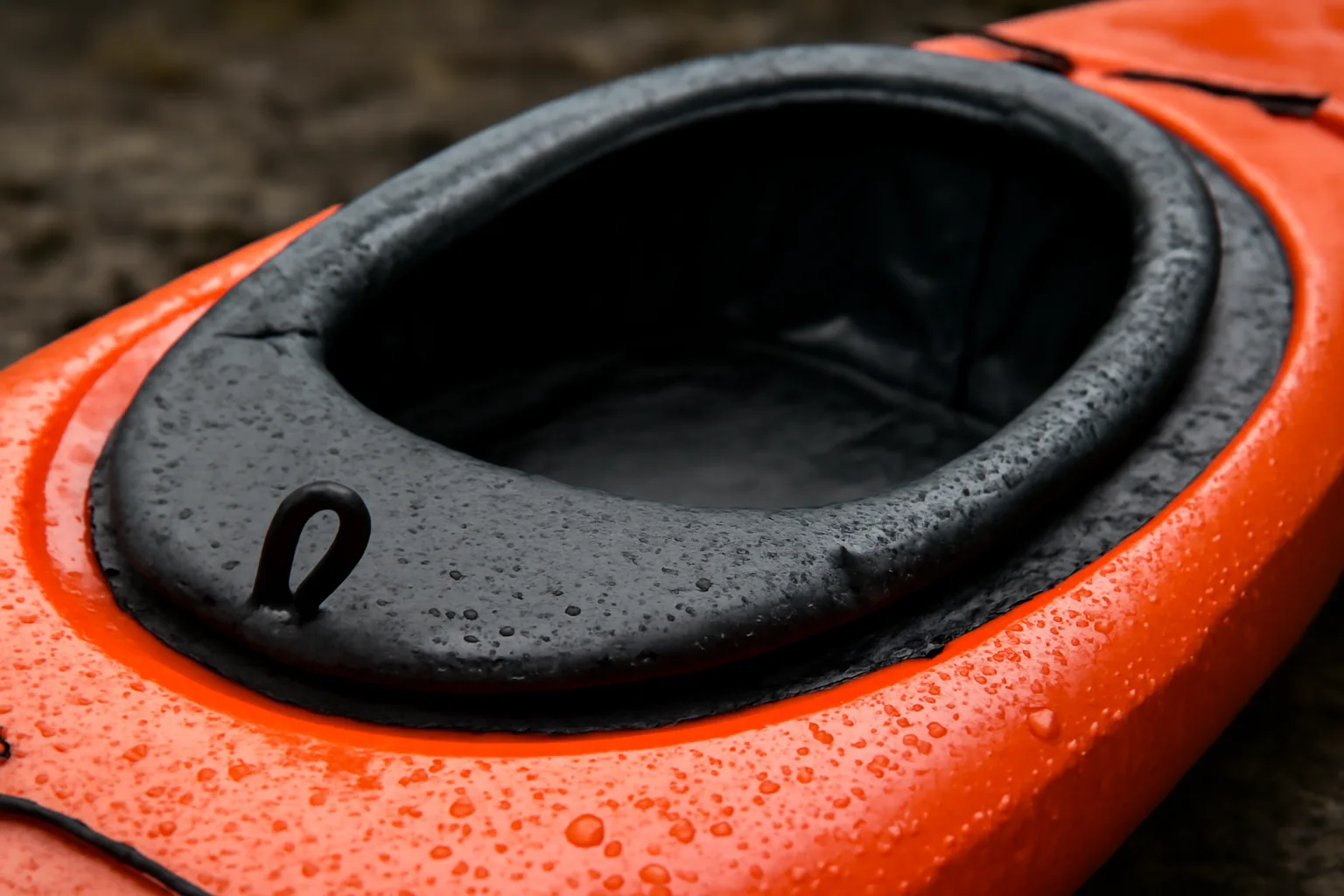
The best material still fails if the deck is the wrong size. Spray decks have two fit points: the cockpit rim and your waist. Both matter.
Cockpit size is brand-specific
Kayak cockpits are not universal. A deck marked “large” from one brand may not fit the same boat as a large from another. Touring kayaks, sea kayaks and whitewater boats can all have different rim shapes, even when the cockpit looks similar in a shop photo.
Peak UK makes this point clearly in its spraydeck advice: deck choice depends on both the kayak cockpit and the type of paddling. That is why proper sizing charts matter more than vague product names.
Before buying, check:
- Kayak make and model, not just approximate cockpit length.
- Cockpit rim size code from the spray-deck brand.
- Waist size, especially if wearing winter layers.
- Grab loop position, which must stay visible and reachable.
- Return policy, because even good charts can be slightly off.
The grab loop must be obvious
Never tuck the grab loop inside the cockpit. It should sit outside and forward, where either hand can find it. This sounds basic, but it is the one detail that matters most when you capsize.
Practise pulling it on dry land first. Then practise in shallow water with someone watching. If you cannot release the deck calmly, do not use it on a trip where a capsize is realistic.
Clothing changes the fit
A deck that feels fine over a T-shirt can feel tight over a cag, thermal layer and winter paddling trousers. If you paddle all year, test the waist tube with the kit you actually wear in February, not just the outfit you wore in the shop.
For cold sessions, pair the deck decision with proper hand protection. The guide to cold-water paddling gloves covers that part better than trying to solve cold hands with a tighter cockpit seal.
When Nylon Makes Sense
Nylon decks are the sensible starting point for many UK paddlers. They are cheaper, easier to put on, and less intimidating when you are still building confidence.
Best for sheltered touring and beginners
A nylon deck is usually enough for canals, slow rivers, sheltered lakes and calm estuary paddles where the main annoyance is splash rather than waves landing on your lap. It keeps rain and paddle drip out, adds warmth, and stops loose water building up in the cockpit.
Good use cases include:
- Introductory club sessions where easy release matters.
- Flat-water touring on canals and gentle rivers.
- Summer kayaking where comfort beats maximum seal.
- Shared family boats where several paddlers use the same kayak.
- Budget setups where a buoyancy aid and training should come before premium deck fabric.
If you are still choosing your boat, start with how to choose a kayak for a beginner. The deck should match the kayak and water, not the other way round.
Nylon price range in the UK
Expect to pay about £30-£60 for a basic nylon or fabric touring deck in the UK. Palm, Peak UK, Nookie and RUK Sport all appear regularly at retailers such as Wetsuit Outlet, Canoe Shops UK, Kayaks & Paddles and Amazon UK.
At the cheaper end, you may get a looser seal and lighter fabric. Around £45-£60, you usually start seeing better waist adjustment, stronger seams and a more useful grab loop. I would avoid the cheapest no-name marketplace deck unless the sizing is clear and the returns process is painless.
The downsides
Nylon does not seal as firmly as neoprene. Water can pool on top, the edge can lift in choppy water, and a loose deck may let splash sneak through at the rim. That does not make nylon bad. It just means it belongs on calmer water.
If you are paddling rough water often enough to worry about implosion, you are probably past the nylon stage.
When Neoprene Is Worth Paying For
Neoprene is the better choice when the deck has to stay sealed under pressure. It stretches around the cockpit rim, grips firmly and sheds water better than a loose nylon deck.
Best for rougher water and rolling
Choose neoprene if you paddle whitewater, surf, exposed sea routes or regular rolling practice. It is also useful for colder paddling because less water gets into the cockpit, which helps keep your lower body warmer.
This is where the deck becomes part of the boat’s performance. A loose deck can pop off at exactly the wrong moment: punching through a wave, edging in current, or resurfacing from a roll. A good neoprene deck gives you more trust in the boat.
Neoprene price range in the UK
Neoprene decks usually start around £65-£90 and can reach £120-£170 for tougher whitewater or sea-kayaking models. Peak UK, Palm, Nookie, Reed Chillcheater and Playboater are common names in UK shops.
Typical examples:
- Entry neoprene: around £65-£85, suitable for club paddlers moving beyond flat water.
- Touring or sea-kayak neoprene: around £90-£130, often with braces or better waist comfort.
- Whitewater/surf deck: around £100-£170, built for a tighter seal and harder use.
If I were buying one deck for mixed UK club paddling, I would look at a mid-range neoprene or hybrid deck around £90-£120 rather than jumping straight to the stiffest whitewater option.
Neoprene downsides
Neoprene can be hot in summer, harder to fit, and more awkward for nervous beginners. A very tight deck may be brilliant for experienced whitewater paddlers but the wrong call for someone still learning wet exits.
It also needs rinsing and drying. Leave a neoprene deck damp in the boot for a week and it will smell like poor life choices. Rinse it after salty or dirty water, dry it out of direct heat, and check the seams before the next trip.
Safety Checks Before You Paddle
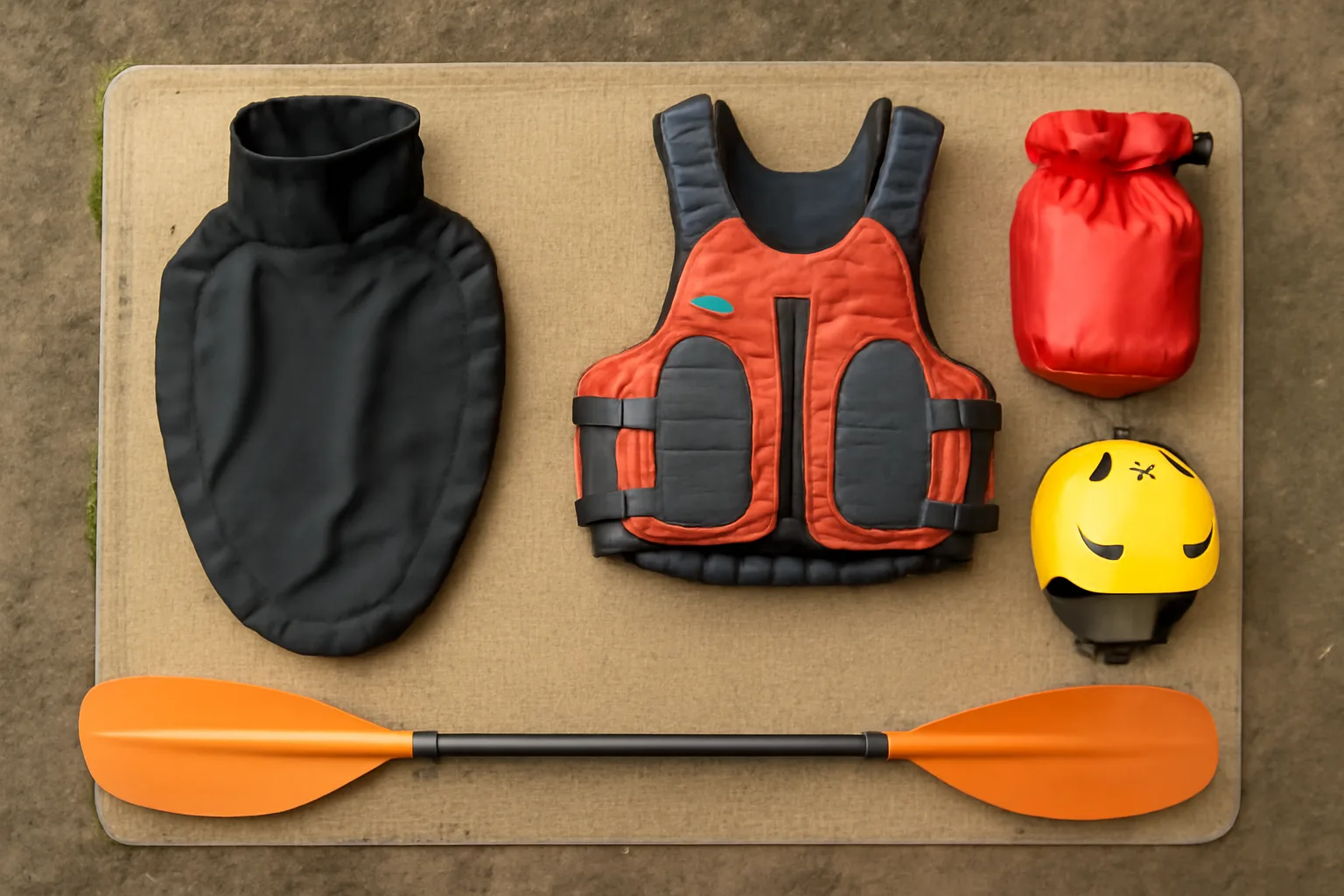
A spray deck changes how you exit a kayak, so safety checks are not optional. They are part of using the kit properly.
Practise the release
Before launching, sit in the kayak on land and fit the deck. Look down. The grab loop should be outside, central and easy to see. Pull it forward and up until the deck releases from the cockpit rim.
Then practise in shallow water with a helper. If you capsize, lean forward, tap the hull if that is part of your club routine, pull the loop, push the deck away, then exit. The existing wet exit kayak guide covers the full process, so this article will not repeat every step.
Match the deck to the route
Do not use a spray deck to talk yourself into poor conditions. If river levels are up, wind is building or the sea state is beyond your ability, the answer is not a tighter neoprene deck. It is a different route or a different day.
For example, paddlers on the Thames can check GOV.UK river restrictions and closures before travelling. The same habit applies elsewhere: check local conditions, access notices and weather before you pack the boat.
Keep the rest of the safety kit boring
A spray deck is not a substitute for the basics:
- Buoyancy aid: choose and wear one that fits properly; the buoyancy aid guide covers sizing and foam placement.
- Helmet: use one for whitewater, surf and rocky launches; see the whitewater kayak helmet guide if that is your paddling.
- Communication: keep a phone or VHF protected and reachable.
- Spare warmth: pack dry layers in a proper dry bag.
- Launch plan: know how you will get in and out; the launch and land a kayak safely guide is worth reading before awkward banks or surf landings.
Good paddlers make safety look boring. That is the goal.
UK Buying Guide And Prices
The right spray deck is the one that fits your boat, releases cleanly and matches your paddling. Material comes after that.
Budget pick: nylon touring deck
For calm-water beginners, I would start with a nylon deck around £35-£55. Look for a clear cockpit size chart, adjustable waist, visible grab loop and taped or well-finished seams. Palm and RUK Sport options often appear in this range, with Peak UK nylon decks sometimes slightly higher depending on model and sale pricing.
Buy from a specialist paddlesports retailer if you are unsure about sizing. A £10 saving disappears quickly if the deck does not fit your cockpit.
Best all-rounder: hybrid or softer neoprene
For mixed club paddling, a hybrid or softer neoprene deck around £80-£120 is the sweet spot. You get a better cockpit seal than nylon without necessarily buying the tightest whitewater deck in the shop.
This is the one I would choose if you paddle sheltered water now but expect to move into sea-kayak skills, small surf or moving-water practice. It gives you room to progress without making early sessions unpleasant.
Premium pick: whitewater or sea-kayak neoprene
For whitewater, surf and regular rolling, expect to pay £110-£170 for a serious neoprene deck. Peak UK and Palm are the obvious UK names, with Nookie and Reed Chillcheater also worth checking depending on your boat and discipline.
At this level, do not buy on price alone. Match the deck to your cockpit rim, waist, paddling style and release confidence. If you can, ask your club coach or local shop to check the fit before you take it into moving water.
Frequently Asked Questions
Is neoprene better than nylon for a spray deck? Neoprene seals better and is stronger for rough water, rolling and cold conditions. Nylon is cheaper, easier to fit and usually enough for calm touring or beginner sessions.
Can beginners use a spray deck? Yes, but beginners should start with an easy-release deck and practise pulling the grab loop before paddling. A spray deck should build comfort, not make exits frightening.
How much should I spend on a kayak spray deck in the UK? Budget nylon decks usually cost about £30-£60. Good neoprene or hybrid decks are more often £80-£130, while tougher whitewater models can reach £170.
How do I know what size spray deck to buy? Check the kayak make and model against the spray-deck brand’s cockpit size chart, then choose the correct waist size. Do not rely on generic small, medium or large labels alone.
Should a spray deck be hard to remove? No. It should stay secure on the cockpit rim but release reliably when you pull the grab loop. If you struggle to release it calmly, it is too tight or not suitable for your current skill level.