You can have a lovely paddle on the River Wye in the morning and a completely different kind of session on the Devon coast the next day, even if you use the same board. River vs sea paddleboarding is not just a scenery choice. Rivers reward control, route planning and obstacle awareness; the sea rewards judgement, timing and respect for wind and tide. If you are choosing where to paddle next, my view is simple: learn on sheltered flat water first, then treat the sea as a step up, not a sideways move.
In This Article
- River vs Sea Paddleboarding: Key Differences
- Where Rivers Work Best
- Where the Sea Works Best
- Safety Risks That Actually Change
- Board Choice for River vs Sea Paddleboarding
- Leashes, Buoyancy Aids and Kit
- Wind, Tides and Flow
- Technique Differences
- What I Would Recommend
- Frequently Asked Questions
River vs Sea Paddleboarding: Key Differences
The biggest difference is control. On a river, the water has direction and obstacles, but the edges of the problem are usually visible. You can see the bank, the bridge, the bend, the fallen branch and the next get-out point. On the sea, the problem is wider and less obvious: wind direction, tide state, swell, current, beach shape and your ability to get back in through small surf.
That is why rivers are usually better for beginners. Not every river, obviously. A fast spate river after heavy rain is not beginner water. But a sheltered, slow-moving river or lake-style inland stretch gives you space to practise balance, forward stroke, turns and self-rescue without also reading a tide table. If you are still at the first-session stage, start with our stand up paddleboarding for beginners guide before planning anything coastal.
The sea is more exciting, and on the right day it can feel easier than a busy river because there are fewer branches, bridges and moored boats to avoid. The catch is that the bad decisions are less forgiving. A gentle offshore breeze can become a long, frightening paddle back. A falling tide can expose rocks or leave you walking across mud. Small chop can turn a relaxed cruise into a kneeling slog.
- Choose a river if you want calm technique practice, wildlife, picnic stops and a more predictable route.
- Choose the sea if you already have basic SUP control and want open views, swell, coastal exploring or surf-style sessions.
- Do not choose either if the wind, flow or tide means you are relying on luck to get home.
Where Rivers Work Best
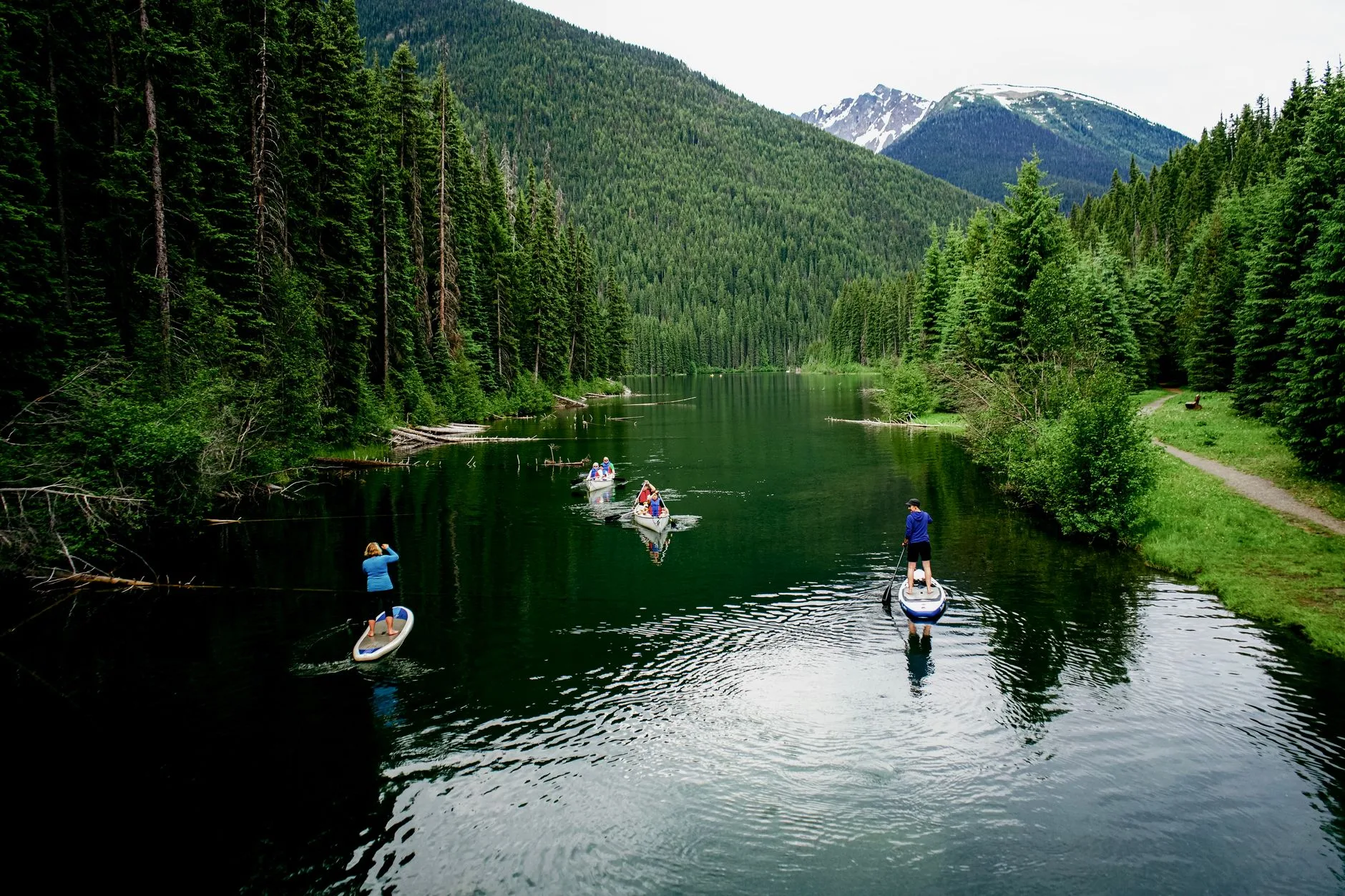
Rivers suit paddleboarders who want a route with shape. You are following a line through the landscape rather than playing in open water. The upper Thames, River Cam, River Avon and gentler stretches of the Wye are good examples of why inland paddling has become so popular in the UK: easy scenery, simple navigation and plenty of places to stop.
The Good Bits
A sheltered river lets you build the boring skills that make everything else safer: paddling in a straight line, turning without falling in, slowing down near other water users and climbing back on after a swim. It is also easier to judge distance because the bank is always there. If you get tired, you can usually kneel, drift to the side and reset.
The best river sessions are not necessarily the longest ones. A 5-8km out-and-back on a calm stretch can teach more than a heroic day trip where you spend half the time fighting flow. The only inland caveat I would keep from the wider waterways discussion is this: canals can be useful practice water, but they are not the same as rivers, and estuaries behave more like the sea because tide and current dominate. For this article, the useful comparison is river control versus coastal exposure.
The River Catch
Rivers hide hazards. Weirs, strainers, fallen trees, low bridges and debris matter more than waves. After heavy rain, a familiar route can change quickly. If the water is brown, fast and carrying branches, it is not a relaxed SUP day. I would rather cancel a river paddle than pretend a buoyancy aid and enthusiasm make a weir safe.
Access also needs checking. Many navigable inland waterways require a licence or membership cover; the Canal & River Trust explains small craft licensing for canoes, kayaks and paddleboards. Keep the admin simple: check the route, check the launch, check whether your membership covers it, then paddle.
Where the Sea Works Best
Sea paddleboarding is better when you want space, movement and a sense of adventure. Sheltered beaches such as Studland Bay, Porthminster at St Ives, or Boscombe on a gentle day can be brilliant. You get open views, clearer water, and the feeling that a short session has a bit more edge to it.
For confident paddlers, the sea also gives more variety. You can cruise along a sheltered coastline, practise small surf entries, explore coves, or use a touring board to cover distance. This is where a 12’6″ board like a Red Paddle Co Voyager starts to make sense. It tracks better than a short all-rounder and feels less twitchy once the water has texture.
The sea is not automatically dangerous, but it is rarely neutral. Tide, wind and swell are always doing something. The single biggest mistake river paddlers make when switching to the sea is treating wind and tide as background details. On a river, you can often muddle through a bad forecast. At the coast, an offshore wind or outgoing tide can decide the session for you, which is why our weather and tides for paddlers guide is worth reading before your first coastal SUP.
Safety Risks That Actually Change
Do not use the same safety plan for both environments. A buoyancy aid, phone pouch and basic self-rescue skills belong everywhere, but the specific hazards change.
River Risk Is About Entrapment and Flow
- Weirs: avoid them and portage well before the hazard. They can look harmless from upstream.
- Strainers: fallen trees and branches let water through but can trap a person or board.
- Cold water: UK rivers stay cold long after the air feels warm.
- Changing levels: rain upstream can affect your stretch even if the sky above you is blue.
Sea Risk Is About Being Carried Away
- Offshore wind: the classic SUP trap. If the wind is blowing from land to sea, beginners should not launch.
- Tide: check whether it is coming in or going out, and how that affects your return.
- Swell and surf: small waves can still knock a beginner over during launch and landing.
- Distance judgement: open water makes everything look closer than it is.
The Met Office paddling weather advice is worth reading before exposed sessions. My practical version is shorter: if you cannot explain how you will get back to shore if the wind increases, do not paddle out.
Board Choice for River vs Sea Paddleboarding
You can use one board for both, but it will be a compromise. For most UK paddlers, that compromise is fine. A decent 10’6″-11’6″ inflatable, at least 32″ wide, is still the sensible first buy because it works on calm rivers and sheltered beaches.
- Best first board: a wide all-round inflatable such as the Decathlon Itiwit 10’6″ at about £299 or Bluefin Cruise 10’8″ at roughly £399-£499.
- Better for rivers: shorter, tougher boards that turn easily and can take knocks from banks, stones and shallow launches.
- Better for sea touring: longer boards, usually 12’6″ or 14′, with better glide and tracking through chop.
- Better for surf: shorter surf SUPs or hard boards, but that is a different skill set from casual coastal paddling.
If you are above the average rider weight, do not buy the cheapest small board because the box says “beginner”. Volume matters. A board that sits too low in the water will feel unstable everywhere, and the sea will expose that weakness faster. Our SUP board weight limit guide goes into the sizing detail.
My recommendation for a mixed river and sea paddler would be a quality all-round inflatable first, then a touring board later if coastal distance becomes the thing you enjoy most. Buying a specialist sea board before you can paddle comfortably in flat water is putting the exciting purchase before the useful skill.
Fins are worth mentioning because they are a small part that changes the feel of the board. On shallow rivers, a shorter flexible fin is less likely to catch stones or weeds. At the coast, a longer centre fin helps tracking, especially if you are covering distance along a bay. Keep the spare fin screw, repair patches and pump hose in one dry bag; the least glamorous bit of kit is always the one you need in the car park.
Leashes, Buoyancy Aids and Kit
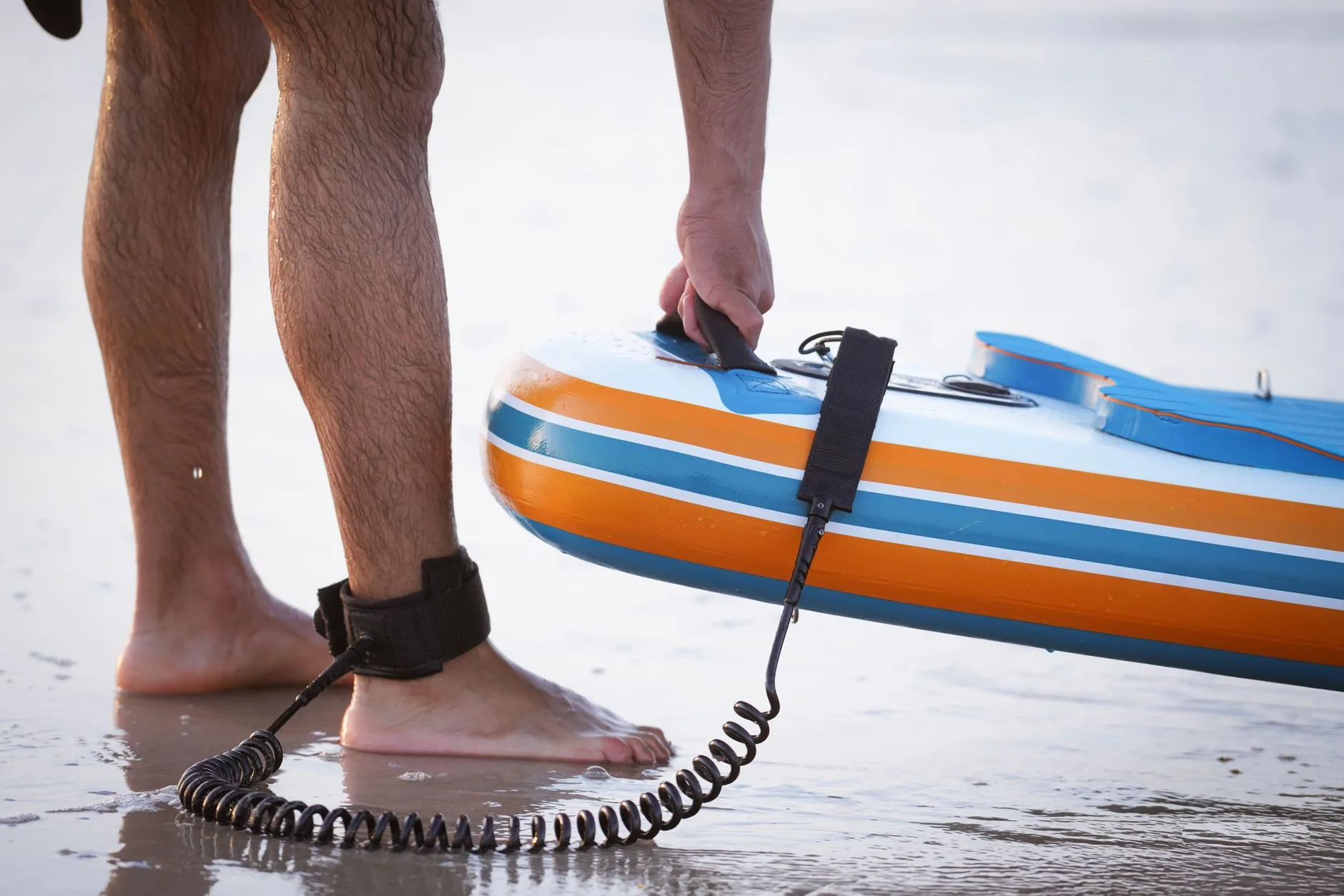
The leash choice is one of the few places where I would be blunt. An ankle leash is wrong for moving rivers because it can snag and trap you. Use a quick-release waist leash on rivers. At the coast, an ankle or calf leash is normal for open water and small surf, though a quick-release system still makes sense near rocks, tidal flow or mixed conditions.
- Buoyancy aid: wear one on both river and sea. Palm, Yak and NRS all make low-profile SUP-friendly options.
- Phone: keep it in a waterproof pouch on your body, not clipped to the board.
- Clothing: dress for water temperature. A 3/2mm wetsuit or neoprene layers may be sensible even when the car park feels warm.
- Footwear: neoprene boots are useful for rocky river entries; barefoot or sandals may be fine on sandy beaches.
- Small dry bag: 10-20L is enough for spare layer, snack, keys and basic first aid.
The kit does not need to be fancy. It does need to match the water. A £25 waterproof phone pouch and the correct leash are more important than another carbon paddle upgrade.
For access and practicalities, keep it to two checks. Inland, confirm your licence or membership covers the stretch before you launch. At the coast, check local beach rules, lifeguard zones and seasonal restrictions, because some busy resorts separate swimmers, craft and SUPs in summer.
Wind, Tides and Flow
This is the section that decides more sessions than board choice. If river vs sea paddleboarding has one rule, it is this: water movement tells you whether the plan is sensible.
On Rivers, Watch the Flow
Check recent rain and river levels before you leave home. On the day, watch leaves, foam or small sticks moving on the surface. If debris is travelling faster than you can comfortably paddle upstream, an out-and-back route is a bad idea. Start into the harder part, or arrange a one-way route with a proper get-out.
At Sea, Watch the Wind First
For beginners, I would treat 12-15mph as the point where a coastal paddle stops being relaxed. Direction matters as much as speed. Offshore wind is the one to avoid because it pushes you away from shore. Onshore wind is safer in that sense, but it creates chop and messy landings. If you want technique detail, read how to paddle a SUP in wind and choppy water before testing yourself at the beach.
Tides Are Not Optional
Use a tide app, local harbour website or beach noticeboard before launching. In places with big tidal range, such as the Bristol Channel, the beach you launched from can look like a different place two hours later. If you are new to the sea, paddle near lifeguarded beaches, stay close to shore and ask local SUP schools where they take beginners.
Technique Differences
River technique is about manoeuvrability. Sea technique is about stability and efficient forward movement. There is overlap, but the emphasis changes.
- Rivers: practise sweep turns, step-back turns, stopping strokes and ferry gliding across gentle current. Our SUP turning techniques guide is useful here.
- Sea: use a lower stance, softer knees and longer steady strokes. If chop builds, kneeling is not failure; it is good judgement. The basics in our SUP paddle stroke technique guide still matter once the water gets bumpy.
- Launch and landing: rivers need careful bank choice and obstacle awareness. The sea needs timing between small wave sets and a plan for getting back in without being knocked sideways.
If you are moving from rivers to sea, practise falling in and getting back on in deep flat water first. Then book a coastal lesson or go with a local group. One coached session on tides, wind and beach launching is worth more than another month of guessing from apps.
What I Would Recommend
If you are a beginner choosing between river and sea paddleboarding, start on sheltered flat water. A calm river, lake or very protected inland spot gives you the best chance to learn without being punished for every wobble. Once you can paddle straight, turn confidently, self-rescue and handle light wind, move to the sea on a calm day with someone who understands the local conditions.
If you already paddle rivers and want to try the coast, do not make your first sea session a long point-to-point trip. Pick a lifeguarded or sheltered beach, avoid offshore wind, check the tide, stay close enough that swimming in would be realistic, and paddle into the wind first. That one habit prevents a lot of ugly afternoons.
My clear answer: rivers are better for learning and relaxed exploring; the sea is better once you want challenge, movement and bigger scenery. The sea is not the prize you graduate to forever, though. The best paddlers I know still enjoy both. They just stop pretending both places play by the same rules.
Frequently Asked Questions
Is river or sea paddleboarding better for beginners?
A sheltered river or flat inland water is better for most beginners. You can practise balance, steering and self-rescue without also dealing with swell, surf, offshore wind and tide. Avoid fast-flowing rivers after rain.
What is the biggest mistake when moving from river to sea paddleboarding?
The biggest mistake is treating wind and tide as minor details. River paddlers often focus on board control, then underestimate how quickly an offshore breeze or outgoing tide can carry them away from shore.
Do I need a different leash for river and sea paddleboarding?
Usually, yes. Use a quick-release waist leash on rivers because ankle leashes can snag in moving water. At sea, an ankle or calf leash is common, but quick-release remains useful near rocks, tidal flow or mixed conditions.
Can one paddleboard work for rivers and the sea?
Yes. A good 10’6″-11’6″ all-round inflatable, at least 32″ wide, is the best first board for mixed use. It will not tour as well as a 12’6″ coastal board, but it is stable, portable and forgiving.
How windy is too windy for sea paddleboarding?
For beginners, anything around 12-15mph can become hard work at the coast, especially with chop. Offshore wind is the bigger red flag: if it is blowing from land to sea, choose another day or a sheltered supervised spot.