Whitewater paddles take abuse that a normal touring paddle never sees: rock hits, shallow boofs, hard braces, rolls in aerated water and the occasional ugly swim where the paddle gets pinned before you do. The best whitewater paddle for most UK paddlers is the Palm Maverick Pro at £125, because it gives you a proper reinforced blade shape without jumping straight to a £300-plus Werner or VE paddle.
In This Article
- Best Overall: Palm Maverick Pro
- What Makes a Whitewater Paddle Different
- Best Whitewater Paddles 2026 UK: Product Picks
- Quick Comparison of the Shortlist
- Length, Feather and Shaft Choice
- Durability vs Feel: Where to Spend
- Buying Mistakes That Show Up on the River
- Final Verdict
- Frequently Asked Questions
Best Overall: Palm Maverick Pro
If I were replacing a tired club paddle for Grade 2 and Grade 3 river running, I would buy the Palm Maverick Pro. It is currently listed at £125 by Palm Equipment, with the 4-piece version at £185. That puts it above cheap aluminium shafts but well below premium Werner, VE and carbon builds.
Why it suits most UK whitewater paddlers
The Maverick Pro makes sense because it sits in the practical middle. It has the whitewater blade shape and stiffness you want for edging, ferry glides and braces, but it is not so expensive that every scrape on a Welsh boulder ruins your weekend. The blade is stronger and more purposeful than a generic recreational paddle, and the shaft feels less dead than the cheapest aluminium options.
For a paddler moving from pool sessions and flat-water confidence into rivers, that matters. A weak paddle does not just feel vague; it makes the boat slower to respond when the water is pushing you sideways. If you are already working through bracing strokes in rough water, a better paddle gives those braces a cleaner bite.
Who should spend more
Spend more if you paddle hard whitewater every week, creek regularly, or already know exactly what blade area and shaft feel you like. At that point, a Werner Sherpa, Werner Powerhouse or VE Creeker becomes easier to justify. For most UK paddlers building skills on club trips, Lee Valley sessions and Grade 2-3 rivers, the Palm Maverick Pro is the sensible upgrade.
What Makes a Whitewater Paddle Different
A whitewater paddle is not just a shorter kayak paddle. It is built around fast correction strokes, hard support strokes and impact resistance. Touring paddles care about efficiency over distance. Whitewater paddles care about authority in messy water.
Reinforced blades
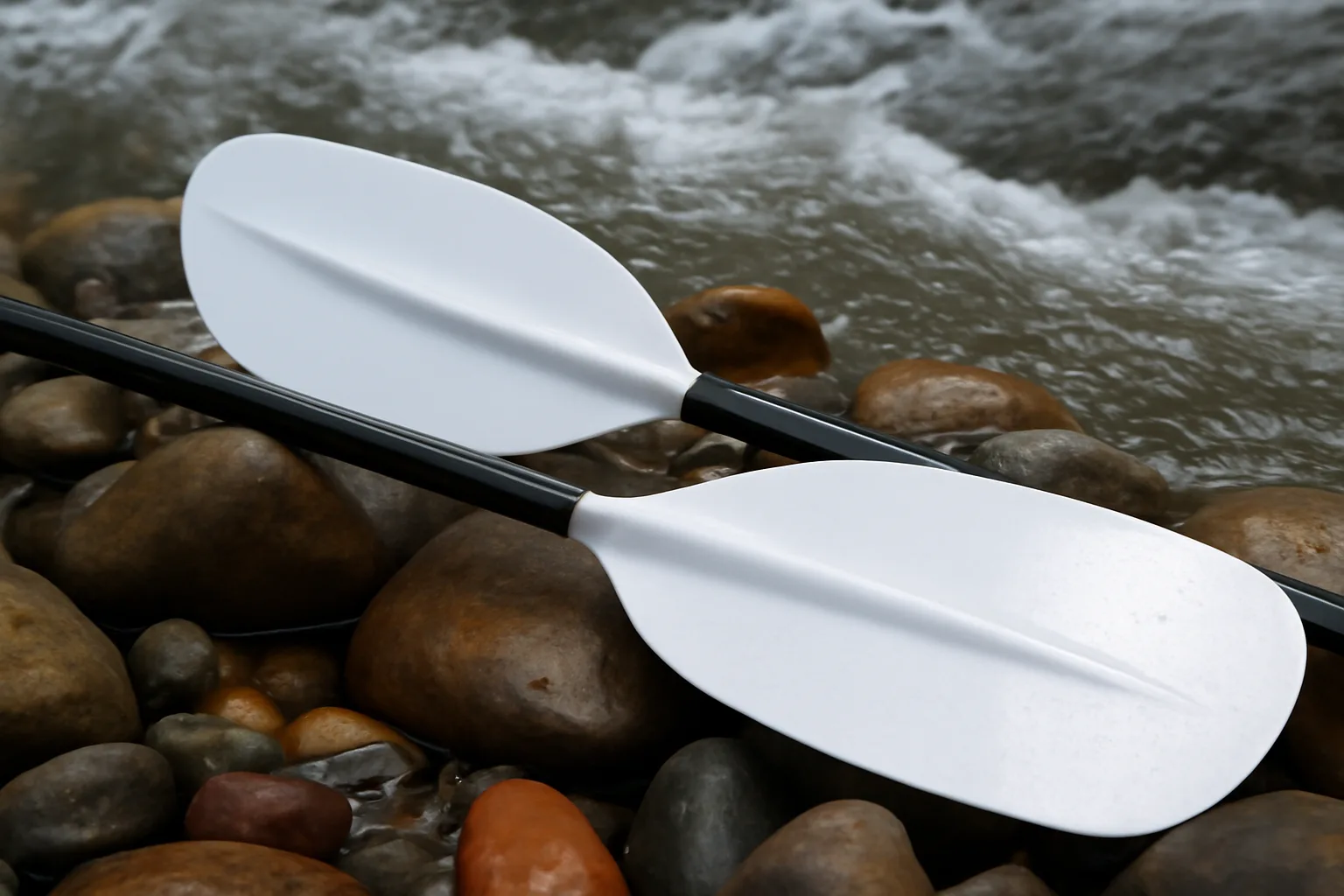
The blade is the business end. In whitewater, it gets jammed into foam, scraped across rocks, pulled through aerated water and used for emergency support. A reinforced blade should have a stiff spine, enough surface area to catch water quickly and enough toughness to survive bad entries.
Cheap recreational blades flex when you load them. That wastes power and feels horrible when you need a fast draw or low brace. A reinforced whitewater blade gives you a more positive catch. It is the same reason our kayak paddle blade shape guide treats high-angle blade shape as a real decision, not a spec-sheet decoration.
Shorter lengths
Most whitewater kayakers use paddles around 191-200 cm. Taller paddlers and river runners may go to 200-203 cm, but very long paddles feel clumsy in tight features. A shorter paddle keeps strokes close to the boat and makes cross-deck moves less awkward.
Stronger shafts
Shaft stiffness affects timing. A very flexible shaft can be comfortable on a long flat-water day, but in whitewater it can feel delayed. Glass and carbon shafts give a cleaner response. Aluminium is cheap and tough, but colder in the hands and usually heavier.
The RoSPA watersports safety advice stresses using correct safety equipment and checking kit condition before activity. For whitewater, the paddle is part of that kit check. A cracked blade or slipping joint is not a minor annoyance once you are committed to a rapid.
Best Whitewater Paddles 2026 UK: Product Picks
These are the UK options I would shortlist, from entry-level club kit to serious river-running paddles. Prices are current UK guide prices checked in July 2026, but specialist paddling shops change stock and sale pricing often.
Best budget: Palm Maverick
The standard Palm Maverick is listed at £78 by Palm Equipment, and Kayaks & Paddles has shown the Maverick around £70.20. It is the cheapest proper whitewater paddle I would recommend before looking at second-hand kit.
- Best for: beginners, club paddlers and centres replacing battered kit.
- Why it works: simple, tough and built for whitewater rather than casual touring.
- Weak point: heavier and less crisp than the Maverick Pro or premium glass/carbon paddles.
This is a good first whitewater paddle if you are still deciding how serious you are. It is also the one I would buy for a teenager who is going to scrape it through every eddy line while learning.
Best overall: Palm Maverick Pro
The Palm Maverick Pro is the sweet spot at £125. It gives you a more refined whitewater feel than the basic Maverick without demanding Werner money. For most UK paddlers, that is the right spend.
The blade has enough bite for river running and coaching sessions, and the price is still realistic for someone buying helmet, buoyancy aid, cag, deck and throw bag at the same time. If your current paddle came bundled with a recreational kayak, the jump in control will be obvious.
Best breakdown/spare: Palm Maverick Pro 4-piece
The Palm Maverick Pro 4-piece is £185 direct from Palm. It is not what I would choose as a main paddle if you always drive to the river, because one-piece shafts feel cleaner. It is useful as a travel paddle, a packraft paddle or a serious spare that fits inside a boat.
If you paddle with a group, a spare paddle is not just convenience. A lost or broken paddle can turn a manageable river day into a messy extraction. The 4-piece Pro is expensive for a spare, but much better than strapping a cheap touring paddle to the back deck and hoping nobody needs it.
Best entry premium: Werner Rio
The Werner Rio is around £179 from Kayaks & Paddles, down from roughly £199 when on offer. It is Werner’s more accessible whitewater-style option and a good pick if you want a recognisable performance brand without going straight to the Sherpa or Powerhouse.
It suits developing paddlers who want a cleaner catch than basic club kit but are not ready to spend £330. The downside is that once you are considering £179, it is worth asking whether the Palm Maverick Pro at £125 is enough for your use. For a lot of people, it is.
Best UK-made upgrade: VE Creeker Glass
The VE Creeker Glass is usually around £271 from Kayaks & Paddles or Southampton Canoes, reduced from about £319 in some listings. VE paddles are handmade in the UK and have a loyal whitewater following for a reason: they feel solid, direct and built for rocky rivers.
This is the paddle I would shortlist for regular Grade 3 paddling, especially if you want a strong river-running blade rather than a bargain. It costs enough that you should know your preferred length and feather before ordering. If you are still guessing, borrow or demo first.
Best premium river runner: Werner Sherpa
The Werner Sherpa sits from about £313.65 to £483.65 at Manchester Canoes, depending on glass/carbon blade and shaft choice. Radical Rider has also listed the Sherpa Straight Glass from £329.95, with bent carbon-glass options higher.
The Sherpa is the premium answer for paddlers who want a trusted mid-sized whitewater blade. It is lighter, crisper and nicer in the hand than budget kit. It is also too much money for someone who paddles moving water four times a year. Buy it when you know you will use it.
Best big-water power: Werner Powerhouse
The Werner Powerhouse is around £329.95 at Radical Rider for the straight glass version, with carbon and bent-shaft models much higher. It has a larger, more powerful blade than the Sherpa. Strong paddlers love that. Smaller paddlers or anyone with shoulder history may not.
If your paddling is mostly big-volume rivers, hard acceleration and powerful boofs, the Powerhouse makes sense. If you are mainly learning eddy turns and ferry glides on moderate UK rivers, the Sherpa or Maverick Pro is easier to live with.
Quick Comparison of the Shortlist
| Paddle | Approx UK price | Best for | Main compromise |
|---|---|---|---|
| Palm Maverick | £70.20-£78 | Budget whitewater starter paddle | Heavier, less refined feel |
| Palm Maverick Pro | £125 | Best overall for most Grade 2-3 paddlers | Not as light as premium glass/carbon |
| Palm Maverick Pro 4-piece | £185 | Travel paddle or serious spare | Joints add cost and slight compromise |
| Werner Rio | About £179 | Entry premium Werner option | Awkward middle ground against Palm Pro |
| VE Creeker Glass | About £271 | Regular UK whitewater paddlers | Know your specs before ordering |
| Werner Sherpa | From £313.65 | Premium mid-sized river running | Expensive for occasional paddlers |
| Werner Powerhouse | From £329.95 | Powerful paddlers and big water | Can be hard on shoulders |
The best whitewater paddle reinforced UK buyers should start with is not automatically the most expensive. If you are still developing, the Palm Maverick Pro gives more real-world value than jumping too early to a premium blade.
Length, Feather and Shaft Choice
Paddle specs can look fussy until you get one wrong. Then they become very obvious.
Length
For most whitewater kayakers, 194-197 cm is the middle of the bell curve. Smaller paddlers often prefer 191-194 cm. Taller paddlers and those in river runners may like 197-200 cm. Creek boats with higher volume can sometimes feel better with a touch more length, but do not drift into touring lengths.
If you are unsure, borrow before buying. Paddle length affects boat control, cadence and shoulder position. Our guide to choosing paddle length covers the general sizing logic, but whitewater usually skews shorter than touring.
Feather
Feather is the angle between the two blades. Many UK whitewater paddles are sold with right-hand feather around 30-45 degrees. Lower feather can feel more natural for some paddlers and easier on wrists. Higher feather can suit people who learned that way and do not want to change.
The safest advice: match what you already use unless you have a reason to change. Switching feather while learning harder water adds one more thing to think about when you should be looking downstream.
Shaft shape
Straight shafts are cheaper, simpler and fine for most paddlers. Bent or cranked shafts can reduce wrist strain and make hand position more repeatable, but they cost more. Do not buy a bent shaft as a status upgrade. Buy it because you have tried one and your wrists prefer it.
Durability vs Feel: Where to Spend
Whitewater kit always has a tension between toughness and feel. A paddle that survives anything may be heavy and dull. A paddle that feels beautiful may make you nervous around shallow rocky runs.
Aluminium and polymer
The cheap end is tough in a blunt way. Aluminium shafts and polymer blades are good for clubs because they survive clumsy learners. They are also heavier and colder. The basic Palm Maverick sits around this use case: practical, robust, not precious.
Glass
Glass blades and shafts are where whitewater paddles start to feel much better. You get a cleaner catch, less dead weight and more confidence in support strokes. For most active paddlers, this is the sensible upgrade zone.
The Canal & River Trust canoeing safety guidance advises checking equipment and making sure your craft is suitable for the waterway. On rocky moving water, a paddle with visible cracks, loose joints or badly chewed blade edges should be treated as suspect kit, not just cosmetic damage.
Carbon
Carbon feels sharp and light, but it is expensive. It can also be less forgiving if abused. Serious paddlers love it because it saves energy and responds instantly. Newer paddlers often get better value from instruction, river time and safety kit before carbon blades.
If your shoulders tire quickly, a lighter paddle is tempting. Just make sure you are not compensating for poor technique. Paddling cadence and clean rotation matter as much as material.
Buying Mistakes That Show Up on the River
Whitewater exposes bad kit decisions quickly. You might tolerate a poor paddle on a canal. In pushy water, the same paddle becomes annoying or risky.
Buying too much blade
A big blade feels powerful for ten minutes. Then your shoulders notice. The Werner Powerhouse is excellent for the right paddler, but it is not automatically better than the Sherpa. If you are smaller, lighter or coming back from shoulder trouble, mid-sized blades are kinder.
Choosing a touring paddle because it is cheaper
A £30-£60 recreational paddle can move a kayak, but that does not make it a whitewater paddle. The blade may flutter, the shaft may flex, and the length may be wrong. Keep touring kit for touring.
Ignoring spare-paddle practicalities
If you paddle harder rivers, think about how your group carries a spare. A 4-piece breakdown paddle, even a £185 Palm Maverick Pro 4-piece, can be money well spent if it stops one broken paddle ending the whole day.
Buying before trying feather and length
Whitewater paddles are personal. If you can demo, demo. If you cannot, copy the length and feather that felt best from club kit. Guessing is how people end up selling nearly-new £330 paddles after two sessions.
Forgetting the rest of the whitewater setup
A premium paddle does not make up for weak safety basics. You still need a suitable helmet, buoyancy aid, spray deck, clothing and rescue kit for the river. If you are building the setup from scratch, our whitewater kayak helmet guide and rescue throw bag guide should come before luxury upgrades.
Final Verdict
Buy the Palm Maverick Pro at £125 if you want the best balance of price, durability and river performance. It is the whitewater paddle I would recommend to most UK paddlers moving beyond entry-level club kit.
Buy the basic Palm Maverick at £70.20-£78 if budget is tight or the paddle will get shared, abused or used by learners. Buy the VE Creeker Glass around £271 or Werner Sherpa from £313.65 if you paddle regularly and already know your preferred specs. Buy the Werner Powerhouse from £329.95 only if you actually want a larger, more demanding blade.
The mistake is thinking whitewater paddles are only about materials. They are about control under pressure. Pick the paddle that gives you clean strokes, dependable braces and enough durability that you are willing to use it properly.
Frequently Asked Questions
What is the best whitewater paddle for most UK paddlers? The Palm Maverick Pro is the best whitewater paddle for most UK paddlers because it costs £125, has a proper whitewater blade and sits below premium Werner and VE pricing.
How long should a whitewater kayak paddle be? Most whitewater kayakers use 191-200 cm paddles. Smaller paddlers often prefer 191-194 cm, while taller river runners may choose 197-200 cm.
Are carbon whitewater paddles worth it? Carbon whitewater paddles are worth it for regular paddlers who value low weight and crisp response. Occasional paddlers usually get better value from glass or reinforced polymer options.
What is better, Werner Sherpa or Powerhouse? The Werner Sherpa is better for most mid-sized river running because it is easier to manage. The Powerhouse suits stronger paddlers who want a larger blade for big water and powerful strokes.
Should I buy a 4-piece whitewater paddle? Buy a 4-piece whitewater paddle as a travel paddle or serious spare. For a main paddle, a one-piece or two-piece shaft usually feels cleaner and costs less.