The short answer: a flexible full-length 3/2mm suit is the most useful first wetsuit for many UK paddleboarders. The Two Bare Feet SupaFlex 3/2mm full suit is our best overall men’s option, while the women’s version fills the same role in a women-specific cut. Choose a 4/3mm suit for cooler water, a longjohn when shoulder freedom matters most, or a shorty only for warm, sheltered sessions.
Fit matters more than the badge. A suit that follows your body without folds will retain a thin layer of water better than a thicker suit that gaps at the neck or lower back. Check the exact size and colour attached to a retailer link, then use the maker’s current measurements before ordering.
In This Article
- Quick Verdict
- Paddleboarding Wetsuit Comparison
- The Best Paddleboarding Wetsuits Reviewed
- How to Choose
- How a Wetsuit Should Fit
- Cold-Water Clothing and Safety
- The Bottom Line
- Frequently Asked Questions
Quick Verdict
For general spring-to-autumn use, start with the full-length Two Bare Feet SupaFlex 3/2mm in the cut that matches your measurements. Both versions use a back zip and stretch panels, giving broad coverage without moving straight to a heavy winter suit. The Gill Pursuit 4/3mm is the stronger men’s colder-water choice because it adds glued-and-blindstitched construction, internal critical taping and a thermal-lined core.
The women’s Two Bare Feet 4/3mm is the simpler cooler-water counterpart. The Osprey 3mm Long John prioritises shoulder movement and ventilation for active fair-weather paddling. The Osprey 3mm Shorty is the lightest option here, but exposed arms and legs make it a warm-session specialist rather than a versatile first purchase.
Paddleboarding Wetsuit Comparison
| Wetsuit | Cut | Thickness | Best for | Main compromise |
|---|---|---|---|---|
| Two Bare Feet Men’s SupaFlex | Men’s full suit | 3/2mm | General spring-to-autumn use | Back zip can flush more than a well-fitted chest zip |
| Two Bare Feet Women’s SupaFlex | Women’s full suit | 3/2mm | Women wanting a versatile first suit | Exact linked variant is XL |
| Gill Pursuit | Men’s full suit | 4/3mm | Cooler water and added seam protection | Warmer and less airy during hard paddling |
| Two Bare Feet Women’s Winter | Women’s full suit | 4/3mm | Cooler-water women’s option | Published listing detail is lighter on seam construction |
| Osprey Long John | Men’s sleeveless full-leg | 3mm body; 2mm joints | Shoulder freedom and active paddling | Arms exposed to wind and water |
| Osprey Origin Shorty | Men’s shorty | 3mm body; 2mm underarms | Warm, sheltered summer sessions | Least immersion coverage |
Thickness labels are useful shorthand, not fixed temperature guarantees. Your effort level, wind, water temperature, session length and likelihood of swimming all change what is appropriate.
The Best Paddleboarding Wetsuits Reviewed
Two Bare Feet Men’s SupaFlex 3/2mm — Best Overall Men’s Suit

This is the most balanced men’s option in the shortlist. Its full-length 3/2mm construction suits paddlers who want useful coverage without the heat and bulk of a 4/3mm suit. The listing describes stretch panels through the coloured areas and a conventional back zip with a long pull cord.
The linked listing is the navy small variant. That detail matters: use the brand’s size chart rather than treating one live variant as a universal fit. A back zip is easy to manage alone, although it may admit more water than a close-fitting chest-entry design.
- Buy it if: you need a versatile full suit for moderate UK conditions and your measurements match an available size.
- Skip it if: you paddle mainly in cold winter water or need a women-specific cut.
- Main compromise: easy entry and broad usefulness, but not a dedicated winter suit.
Two Bare Feet Women’s SupaFlex 3/2mm — Best Overall Women’s Suit

This women-specific 3/2mm full suit follows the same practical brief: full coverage, stretch panels and back-zip entry for general summer and shoulder-season watersports. It is a sensible starting point when a generic unisex cut leaves folds around the waist or lower back.
The exact linked variant is black and teal in XL. Check bust, waist, hip, height and weight against the current chart; do not simply translate a normal clothing size. The listing makes broad warmth and durability claims, but fit and care will determine the real experience.
- Buy it if: you want a women-specific full suit for general spring-to-autumn paddling.
- Skip it if: the linked size does not match the maker’s measurements for you.
- Main compromise: good all-round coverage, but the retailer route may open on one particular size and colour.
Gill Pursuit 4/3mm — Best Men’s Suit for Cooler Water

The Pursuit is the more technically documented colder-water choice. Gill specifies zoned 4/3mm neoprene, glued-and-blindstitched construction, critical internal taping, a thermal lining at the chest and back, and protective knee panels. Those details make it more convincing for cooler water than a basic flatlock suit.
The linked variant is XXL, with the listing giving an average height of 188–191cm, chest 120–125cm and waist 104–109cm. Other variants can differ. Gill also says it is not suitable for chlorinated water and instructs users to rinse it in fresh water and avoid storing it wet.
- Buy it if: you need more insulation and better-documented seam construction for cooler sessions.
- Skip it if: you run hot, paddle hard in mild weather or need a lighter suit.
- Main compromise: better cold-water construction, offset by extra warmth and bulk above the water.
Two Bare Feet Women’s SupaFlex 4/3mm — Best Women’s Cooler-Water Suit

This full suit puts 4mm neoprene around the core and 3mm through the limbs, aiming to add insulation without making the arms uniformly thick. Stretch panels and a back zip keep the design familiar for recreational paddlers moving up from a summer suit.
The exact linked variant is black and burgundy in medium. The listing documents the thickness, women-specific pattern and YKK back zip, but gives less useful seam detail than Gill provides for the Pursuit. Treat it as a practical colder-water option, not proof that it suits every winter condition.
- Buy it if: you want a women-specific 4/3mm suit and the medium variant matches the current chart.
- Skip it if: you require documented glued-and-blindstitched or taped seams.
- Main compromise: useful added thickness, but less published seam information than the Gill.
Osprey 3mm Long John — Best for Shoulder Freedom

A longjohn leaves both arms free, which removes sleeve resistance during repeated paddle strokes and helps release heat during active sessions. Osprey specifies 3mm neoprene through the body, 2mm around joints, ergonomic panelling and reinforced knees.
The listing title mentions a front zip, while its feature copy also refers to a YKK back zip, so the entry description is inconsistent. Rely on the current product images and seller confirmation before ordering if zip placement matters. The sleeveless cut also exposes your arms to wind and cold water.
- Buy it if: shoulder movement and knee coverage matter more than maximum upper-body insulation.
- Skip it if: you expect cold wind, repeated immersion or want one suit for the widest conditions.
- Main compromise: excellent movement, but exposed arms and inconsistent zip wording require care.
Osprey Origin 3mm Shorty — Best for Warm Summer Sessions

The Origin shorty uses 3mm neoprene through the body and 2mm under the arms. Short sleeves and legs make it easier to move in warm weather, while flatlock seams and back-zip entry keep the construction simple.
The exact link is the blue medium variant. Osprey says its size guide reflects an average body type and advises choosing the larger size when between sizes, but measurements still matter more than that general rule. A shorty offers much less protection during an unexpected swim than a full suit.
- Buy it if: you paddle close to shore in genuinely warm, sheltered conditions.
- Skip it if: you want a first suit for mixed UK seasons or colder exposed water.
- Main compromise: comfortable summer mobility, but the least arm and leg coverage in the shortlist.
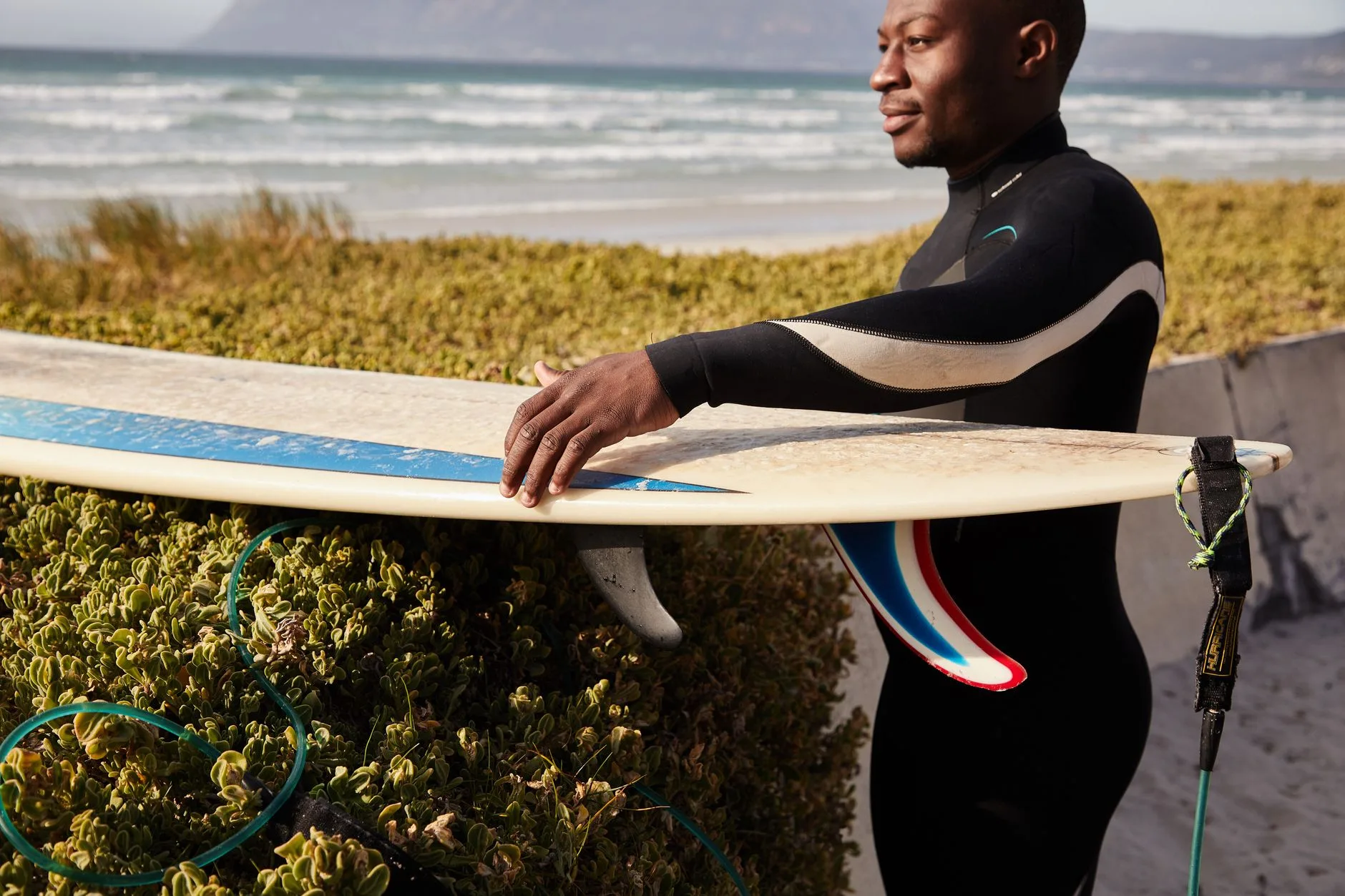
How to Choose a Paddleboarding Wetsuit
Match the suit to the water and wind
Warm air does not guarantee warm water. The Met Office explains that water below 15°C can trigger cold-water shock, affecting breathing and movement. Check local conditions and plan for an unexpected swim rather than dressing only for the car park.
- Shorty: warm, sheltered summer use near an easy exit.
- 3/2mm full suit: the broadest first choice for many spring-to-autumn paddlers.
- 4/3mm full suit: extra insulation for cooler water, with more heat to manage while paddling.
- Longjohn: strong shoulder freedom for active sessions, but exposed arms need a separate plan.
Compare seams and entry systems
Flatlock seams are comfortable but allow more water exchange, so they suit milder conditions. Glued-and-blindstitched seams reduce water movement; internal taping can reinforce vulnerable joins. Back zips are usually easiest to enter alone, while chest-entry designs can reduce flushing when the fit is right.
How a Paddleboarding Wetsuit Should Fit
A wetsuit should sit close without restricting breathing. Reach overhead, rotate through several paddle strokes, squat and kneel. Reject a suit that drags hard at the shoulders, presses painfully at the throat or leaves large folds at the lower back.
Use the manufacturer’s chest or bust, waist, hip, height and weight measurements. If they point to different sizes, ask the seller or maker which measurement takes priority for that cut. Try the suit with your buoyancy aid: a zip, thick seam or fold can rub beneath its straps. Our guide to choosing a paddling buoyancy aid explains the same secure-but-mobile fit principle.
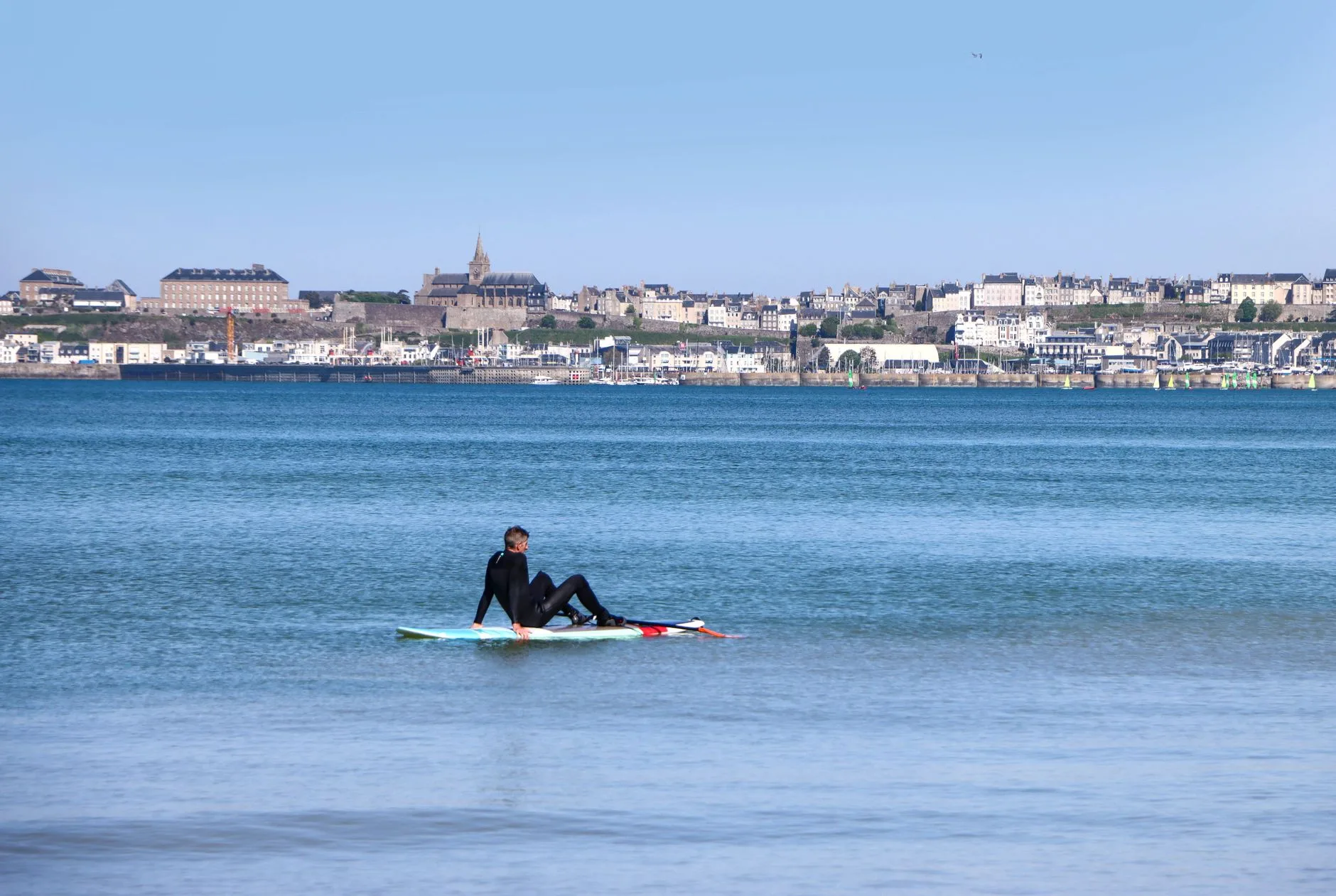
Cold-Water Clothing and Safety
A wetsuit is insulation, not a complete safety system. Check the weather and tides before paddling, carry a complete dry change and wear an appropriate buoyancy aid. Neoprene boots protect feet at rough launch points; see our paddleboarding shoe guide. Gloves can help in cold weather, but thick pairs may tire your grip, as our cold-water glove guide explains.
Choose the leash for the environment. An ankle leash can snag in moving water, where an appropriate quick-release waist system and the training to use it are important. Our river-versus-sea guide explains why one setup does not suit every venue.
The Bottom Line
Choose the Two Bare Feet SupaFlex 3/2mm full suit in the appropriate cut for a versatile first purchase. Move to the Gill Pursuit 4/3mm or women’s Two Bare Feet 4/3mm when cooler-water insulation matters more than ventilation. Pick the Osprey longjohn for shoulder freedom, and reserve the Osprey shorty for genuinely warm, sheltered sessions.
Fit outranks brand and nominal thickness. Confirm the exact linked size, compare the current chart, mimic your paddle stroke and reject gaps or painful restriction.
Frequently Asked Questions
What thickness wetsuit is best for paddleboarding in the UK? A flexible 3/2mm full suit is the most useful starting point for many spring-to-autumn paddlers. Cooler water may call for 4/3mm or more, but conditions, fit and immersion risk matter.
Is a longjohn or full wetsuit better for SUP? A longjohn frees the shoulders and vents heat; a full suit gives more complete immersion and wind coverage. Choose according to conditions rather than paddle movement alone.
Can I use a surfing wetsuit for paddleboarding? Yes, provided it fits closely, allows a full paddle stroke and suits the water temperature. Try it while reaching, rotating and kneeling.
Do I need a wetsuit in summer? Not for every sheltered warm-water session, but UK water can remain cold despite warm air. Check local water temperature, wind, distance from shore and the likelihood of swimming.
Should I size up in a wetsuit? Not automatically. Follow the maker’s measurements. A loose suit can flush and collect water, while an excessively tight suit can restrict breathing and shoulder movement.
Is a wetsuit enough for paddleboard safety? No. Use suitable flotation, the correct leash for the environment, weather and route planning, communication and a dry change.