The Cressi Minorca 3mm Shorty Boots are the best paddleboarding shoes here for typical UK spring-to-autumn use. Choose the low-cut Cressi Water Shoes for warm summer sessions, ZHR for a cheap quick-dry pair, Osprey 5mm boots for colder conditions or SEAC Reef shoes for family beach use. Footwear improves grip and protection, but it does not remove the risks of cold-water immersion.
Quick picks: the best paddleboarding shoes
- Best overall 3mm option: Cressi Minorca 3mm Shorty Boots.
- Best lightweight summer option: Cressi Water Shoes.
- Best budget quick-dry option: ZHR Aqua Shoes.
- Best cold-water option: Osprey 5mm Neoprene Zip Boots.
- Best family and beach option: SEAC Reef Water Shoes.
Quick navigation
- How we chose
- Comparison at a glance
- Five paddleboarding shoes reviewed
- Which shoes should you buy?
- Grip, drainage and sole protection
- Fit, thickness and cold water
- Frequently asked questions
How we chose
We compared the exact UK products by footwear type, stated neoprene thickness, sole construction, ankle coverage, closure, drainage and intended use. The shortlist covers thin warm-weather shoes, 3mm short boots and a 5mm zipped boot rather than treating every water shoe as interchangeable.
This is a specification-led guide. We have not claimed hands-on testing, and seller descriptions such as non-slip, thermal or quick-dry are not independent guarantees. Grip changes with deck material and contamination; warmth depends on water temperature, session length, circulation and the rest of the clothing system.
Comparison at a glance
| Shoe | Best for | Type | Warmth | Main compromise |
|---|---|---|---|---|
| Cressi Minorca 3mm Shorty Boots | Best overall 3mm option | 3mm neoprene short boot | Moderate | Less drainage than mesh shoes |
| Cressi Water Shoes | Best lightweight summer option | Low-cut quick-draining shoe | Low | Limited cold-water insulation |
| ZHR Aqua Shoes | Best budget quick-dry option | Lightweight aqua shoe | Low | Basic sole and support |
| Osprey 5mm Neoprene Zip Boots | Best cold-water option | 5mm zipped neoprene boot | Highest here | Bulky with reduced board feel |
| SEAC Reef Water Shoes | Best family and beach option | Quick-dry reef shoe | Low | Sized variation needs checking |
Check the selected size and colour before ordering because one product page can contain materially different variations. A secure heel, enough toe room and a sole suited to the launch matter more than the brand name.
The five best paddleboarding shoes
1. Cressi Minorca 3mm Shorty Boots: best overall

The Minorca is the most balanced choice for common UK conditions. Its 3mm neoprene upper gives more coverage and insulation than a mesh aqua shoe, while the low ankle and reinforced sole remain less cumbersome than a tall winter boot. It suits cool launch water, rough beaches and longer spring-to-autumn sessions.
Three millimetres is not a promise of warmth in every season. The boot holds some water, drains more slowly than mesh footwear and can feel warm during long walks. Check Cressi sizing closely because a loose heel can twist on the board while a cramped fit restricts circulation.
- Buy it if: you want one versatile short boot for much of the UK paddling season.
- Skip it if: you only paddle on hot summer days or need maximum winter insulation.
- Main compromise: useful protection and warmth with slower drainage.
2. Cressi Water Shoes: best lightweight summer option

The low-cut Cressi Water Shoes are the easiest choice for warm beaches, pools, lakes and short approaches. They are lighter and more packable than neoprene boots, and the closed upper gives more protection than going barefoot around shells, stones and launch hardware.
They are not winter footwear. The thin upper provides limited insulation and the sole is less protective than a structured boot on sharp rock. Sand and grit can also enter around the collar, so rinse them before they abrade the foot or damage the shoe.
- Buy it if: you want a compact shoe for warm-weather paddling and holidays.
- Skip it if: cold water, long walks or sharp launches are routine.
- Main compromise: easy drainage and board feel with limited warmth.
3. ZHR Aqua Shoes: best budget quick-dry option
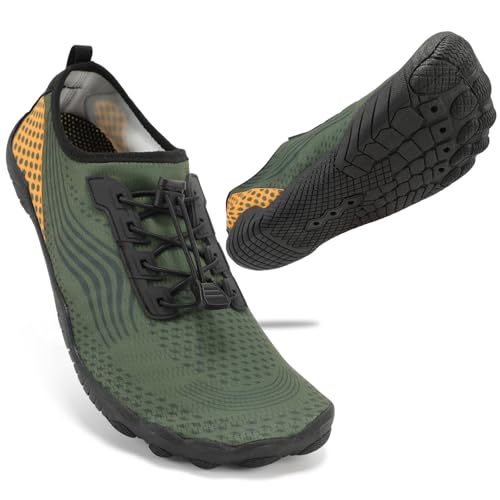
The ZHR is the cheapest simple aqua shoe in the shortlist. It is designed around flexible, quick-drying material and a close sock-like fit, which suits occasional summer SUP, swimming and simple beach launches. Importantly, this is a ZHR product; the previous article incorrectly labelled the same route as GUL.
A lightweight budget shoe should not be mistaken for technical footwear. Expect modest underfoot protection, little ankle support and minimal insulation. Inspect seams and the sole regularly, especially if it is used on rough slipways rather than sand.
- Buy it if: you need an inexpensive spare or occasional summer shoe.
- Skip it if: you need reliable cold-water insulation or a rigid protective sole.
- Main compromise: low price and flexibility with basic protection.
4. Osprey 5mm Neoprene Zip Boots: best cold-water option

The Osprey 5mm boot is the warmest and most protective option here. A zipped ankle, reinforced toe and heel, and thicker neoprene make it better suited to cold launches, winter preparation and rocky access than a thin aqua shoe. It also offers more coverage against board hardware and rough ground.
Five-millimetre boots are bulky. They reduce barefoot-like board feedback, take longer to dry and can feel clumsy if sizing is wrong. They are one part of a cold-weather system, not protection from cold-water shock or hypothermia by themselves.
- Buy it if: you paddle in colder months and need thicker coverage for rough launches.
- Skip it if: you prioritise minimal weight, fast drainage and direct deck feel.
- Main compromise: the most warmth here with the most bulk.
5. SEAC Reef Water Shoes: best family and beach option

The SEAC Reef is a simple quick-drying shoe sold across adult and children’s sizes. It is well suited to family beach days, swimming, warm-water SUP and easy launches where basic sole protection matters more than thermal insulation.
Variation selection needs care. Adult and children’s sizes, colours and prices can share one page, so verify the intended size before buying. It is a reef and pool-style shoe rather than a substitute for a structured neoprene boot on cold, exposed or sharp terrain.
- Buy it if: you want simple beach footwear for mixed family water activities.
- Skip it if: you need 3mm or 5mm insulation for colder water.
- Main compromise: broad warm-weather usefulness with little thermal protection.
Which paddleboarding shoes should you buy?
Choose the Cressi Minorca if you want one 3mm short boot for typical UK spring-to-autumn paddling. The Cressi Water Shoes are better for warm, light travel; ZHR suits occasional budget use; Osprey 5mm is the cold-weather choice; and SEAC Reef works well for family beach days.
Match footwear to where you launch. Our guide to river versus sea paddleboarding explains how access and conditions differ, while the best beginner paddleboards guide helps if you are assembling a first setup.
Grip, drainage and sole protection
Grip depends on the shoe sole and the board deck. Sand, sunscreen, algae and mud can overwhelm even an aggressive tread. Clean both surfaces, stand with soft knees and avoid assuming that a “non-slip” label guarantees traction on every wet surface.
Mesh and low-cut shoes release water quickly and usually dry faster. Neoprene boots hold a thin water layer and favour insulation rather than drainage. Neither design stays dry. If dryness is essential, footwear has to work with an appropriate drysuit system rather than an open water shoe.
A thicker sole protects against stones, shells and rough slipways but reduces board feel. Thin soles help foot placement and pack small, yet offer less protection for long approaches. Carry the board closer to the water instead of forcing light shoes to perform like hiking footwear.
Store spare clothing and valuables separately in a proper dry bag. Our dry-bag guide explains closure and packing, and our SUP turning guide covers foot placement once on the board.
Fit, thickness and cold water
Water footwear should hold the heel without crushing the toes. Try it with the socks or drysuit seals you intend to use. A loose shoe twists and fills with debris; a tight one can restrict circulation and make cold feet worse. Check brand measurements rather than assuming normal trainer size will transfer perfectly.
Thin aqua shoes suit warm conditions and short sessions. A 3mm boot adds moderate coverage, while 5mm boots are usually chosen for colder use. Thickness is only one variable: water entry, wind chill, activity, circulation and time immersed all affect comfort.
Footwear does not prevent cold-water shock. The Met Office cold-water safety guidance explains that sudden immersion can disrupt breathing and recommends floating, controlling the breath and calling for help. Wear a suitable buoyancy aid; our buoyancy-aid guide covers fit and movement.
Rinse shoes after salt water, remove insoles where possible and dry them open in moving air away from direct heat. Heat can damage adhesives and neoprene. Rotate two pairs if paddling on consecutive days, and replace footwear when the sole separates, tread wears smooth or the upper no longer holds the foot securely.
Frequently Asked Questions
What are the best shoes for paddleboarding?
The Cressi Minorca 3mm boots are the best overall choice here for typical UK spring-to-autumn conditions. Warm summer paddlers may prefer lighter Cressi Water Shoes.
Can I paddleboard barefoot?
You can on a clean board in suitable warm conditions, but footwear protects against shells, stones, rough slipways and hidden debris during launching and landing.
Are 3mm boots warm enough for paddleboarding?
They suit many cool spring-to-autumn sessions, but comfort depends on water temperature, wind, session length and circulation. Colder conditions may require 5mm boots and appropriate clothing.
Do water shoes stop you slipping on a paddleboard?
They can improve traction, but no shoe prevents every slip. Deck-pad condition, mud, sand, sunscreen, stance and movement all affect grip.
Should paddleboarding shoes be tight?
They should be snug enough to hold the heel without crushing the toes or restricting circulation. Check the maker’s size chart and allow for any socks or drysuit layers.
How do I dry neoprene boots without making them smell?
Rinse them, open zips and collars, remove insoles where possible and dry them in moving air away from direct heat. Do not store them damp in a closed bag.
The bottom line
The Cressi Minorca 3mm Shorty Boots are the best overall paddleboarding shoes here for typical UK use. Choose lighter Cressi shoes for summer, ZHR for budget use, Osprey 5mm for colder conditions or SEAC Reef for family beach sessions. Fit and launch protection matter, but footwear never replaces cold-water planning and a suitable buoyancy aid.