A board labelled “racing” is not automatically the right board for an organised race. The event’s board class, the water and your balance matter more than the label. If you want to practise on a long, narrow inflatable, the 14ft SereneLife is the closer match to a common 14ft race length; the VirtuFit Racer 381 is a shorter sport-shaped alternative. Neither is presented here as a proven podium-level board. For a serious race season, try specialist equipment before buying.
Both inflatables are best considered routes into race-style training. Some events welcome them; others require a hard board. Check the organiser’s current rules before buying a board for a particular start line.
Our top picks

SereneLife 14ft Racing SUP
Best for longer-distance race-style training
A 14ft × 28in inflatable with a narrower stance than a typical all-round board.

VirtuFit Racer 381
Best for race-style fitness training
A 381 × 71cm (about 12ft 6in × 28in) inflatable with a narrow outline and compact carry kit.
On this page
- Racing boards compared
- Two inflatables in detail
- What competition-ready actually means
- Choosing length, width and construction
- Race kit and water safety
- The bottom line
- Frequently Asked Questions
Racing boards compared
| Board | Useful for | Limit before buying |
|---|---|---|
| SereneLife 14ft Racing SUP | A 14ft × 28in inflatable with a narrower stance than a typical all-round board. | Its 13 PSI specification and bundled aluminium paddle do not establish the stiffness or speed of a specialist race setup. |
| VirtuFit Racer 381 | A 381 × 71cm (about 12ft 6in × 28in) inflatable with a narrow outline and compact carry kit. | It is shorter than a 14ft board; buyer feedback is limited, and event class eligibility must be checked. |
These are two different training choices, not interchangeable race machines. The SereneLife gives you 14ft of board length in an inflatable package; the VirtuFit is shorter and easier to accommodate off the water. Neither customer feedback nor a product description tells you how either will compare with a specialist race board under an experienced paddler.
Two inflatables in detail
SereneLife 14ft Racing SUP — Best for longer-distance race-style training
The SereneLife is 14ft long and 28in wide, with a pointed outline and a stated inflation pressure of 13 PSI. That makes it a more relevant shape for practising a straight, repeatable race stroke than a short, wide leisure SUP. The package includes a paddle, pump, fin and bag, so check the exact contents against what you already own.
Best for: A paddler who wants a transportable 14ft board to build technique and find out whether organised inflatable events suit them.
Watch out for: The stated pressure and basic bundled paddle do not prove race-level stiffness or speed. Test how the board handles your weight and conditions before entering an event; verify the organiser accepts this construction and any required board markings.
VirtuFit Racer 381 — Best for race-style fitness training
The VirtuFit Racer 381 specification gives 381cm length and 71cm width, with a single fin and an included paddle, pump and carry bag. Its long, narrow outline is intended for sportier paddling, but 381cm is about 12ft 6in, not 14ft. That difference can matter in both board class and glide.
Best for: Someone progressing from an all-round SUP who wants a narrower board for training without storing a full-length 14ft board.
Watch out for: There is limited buyer feedback for this exact variant. Check the exact red model, included kit, UK delivery and returns before ordering; do not treat the model name as confirmation of event eligibility.
What competition-ready actually means
Start with the event class
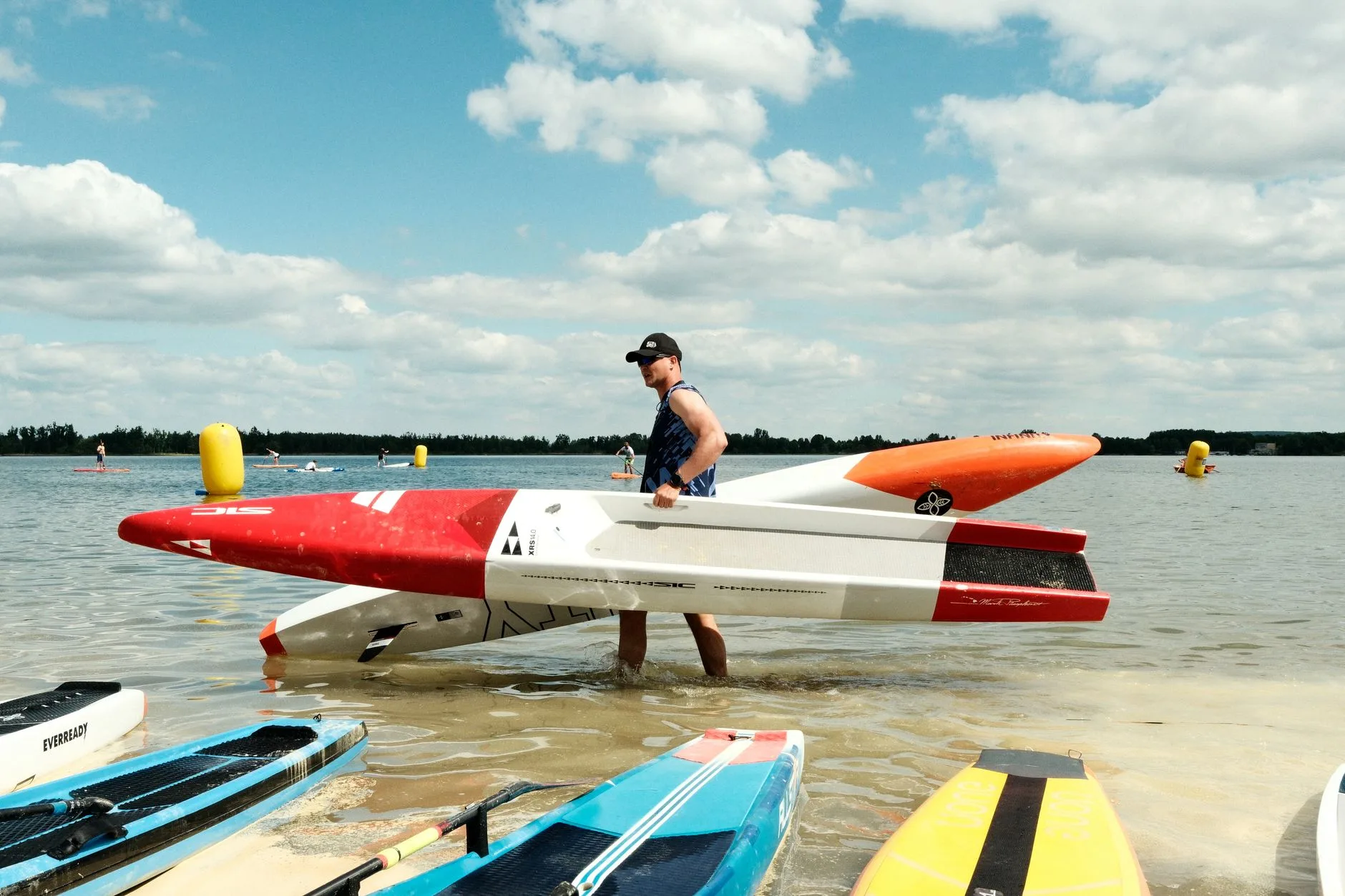
Race rules can be stricter than a product listing. For example, Paddle UK’s 2026 SUPER Festival booking information distinguishes an ICF race requiring a hard board up to 14ft from informal festival races open to hard and inflatable boards. That is one event, not a universal UK rule. Confirm the current event’s class, maximum length, leash and buoyancy requirements before committing to a board.
When specialist race equipment is the better buy
If you intend to race regularly, compare dedicated designs from Red Paddle Co, Starboard and SIC with an opportunity to try them. Board stiffness, fin setup, width that you can balance on, and handling in the actual race water all matter. A hard board may be required by your chosen event; an inflatable may be the practical route if transport and storage limit you. Do not infer a speed ranking from shape or marketing language alone.
Choosing length, width and construction
A narrower board is a skill trade-off
Both boards here are roughly 28in wide. That is narrower than many all-round SUPs, but width alone does not predict how stable a board will feel under you. Practise turns and remounting in controlled conditions before using a narrower board farther from shore. Our board-choice guide explains the broader size trade-offs, while the weight-limit guide helps you leave room for paddler and kit without treating the printed maximum as a performance target.
Length and storage must fit your route
A 14ft inflatable packs down, but is still a long board on the water. Check your launch space, home storage for drying and the trip to the water. The shorter VirtuFit may be easier to manage, but length is one reason it should not be assumed equivalent to the 14ft option. If you are still developing your basic balance, the beginner SUP guide is a better starting point than a narrow race outline.
Paddle and turns matter too
A board cannot compensate for a rushed stroke or poor turning technique. Work on planting the blade cleanly and keeping the board tracking before chasing a narrower width. Our stroke guide and turning guide cover those foundations. A bundled aluminium paddle gets you started, but check its fit and weight if longer training sessions are the plan.
Race kit and water safety
Match your safety kit to the water
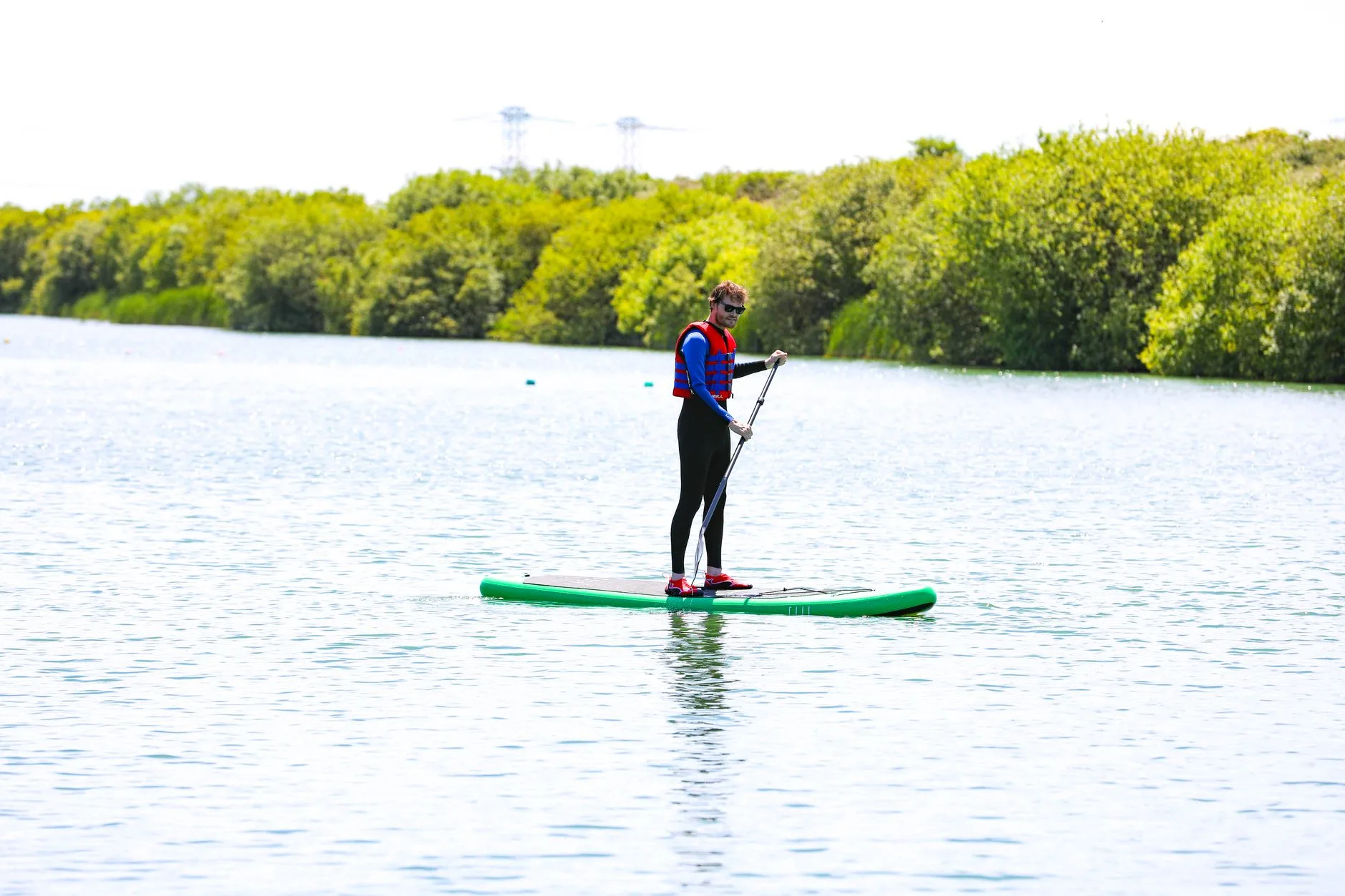
Check forecast, wind direction, water temperature and organiser instructions before every session. Wear a suitable buoyancy aid and carry a means of calling for help on your person. Paddle UK explains why leash choice changes with the water: an ankle leash that works in one setting may create an entrapment risk in moving water. Take local instruction before paddling current or exposed water; no board design removes those hazards.
Train on the setup you will use
Practise starting, turning, remounting and carrying the board with the same fin, paddle and clothing planned for the event. Ask the organiser whether a buoyancy aid, leash or other equipment is mandatory. Give yourself enough time to prepare and never rely on an advertised delivery estimate for an entry deadline.
The bottom line
For a first long, narrow inflatable, choose the SereneLife 14ft only if its 28in width and 13 PSI package make sense for your training and the event permits it. Choose the VirtuFit Racer 381 if a shorter sport-shaped board suits your storage and local paddling, while bearing in mind the limited buyer feedback. Neither is a substitute for trying specialist race equipment if podium-level performance or a hard-board-only class is your goal.
Frequently Asked Questions
Can I enter a race on an inflatable paddleboard? Sometimes. Entry depends on the specific event and class. Some races accept inflatable boards, while others require a hard board. Read the current organiser rules before buying.
Is a 14ft board always faster than a 12ft 6in board? Not always. Length can affect glide, but paddler technique, board shape, stiffness and conditions also matter. No speed comparison between these two boards has been established here.
Are these boards suitable for a first SUP session? A narrow sport-shaped board can feel less forgiving than a wider all-round SUP. Learn basic balance, turning and remounting on suitable sheltered water before training on one.
Does the SereneLife include a race paddle? It includes a three-piece aluminium paddle. A bundled paddle is useful to start with, but its presence does not make the package a specialist race setup.
Is the VirtuFit Racer 381 a 14ft board? No. Its stated length is 381cm, approximately 12ft 6in. Check your event’s board-class limits rather than relying on the Racer model name.
What safety kit do I need for SUP racing? Follow the organiser’s current rules and local water guidance. A suitable buoyancy aid, appropriate leash and means of calling for help may be essential; leash choice depends on the water and its hazards.