If you paddle on moving water, coastal water or busy lakes, a rescue throw bag is one of those bits of kit you buy before you need it. The best rescue throw bag UK choice for most paddlers in 2026 is the Palm Pro 20m: it is bright, easy to repack, long enough for river banks and open-water edges, and currently about £45 from the RLSS UK shop. Budget paddlers can start with the Lomo 20m throw line at about £25.98 from Decathlon, but I would spend the extra on the Palm if it is going to live in a club kit bag or get regular use.
In This Article
- Best Rescue Throw Bag UK: Quick Picks for 2026
- What a Rescue Throw Bag Is For, and What It Is Not For
- How to Choose the Right Length, Rope and Bag Shape
- Best Rescue Throw Bags for UK Paddlers
- River vs Sea Safety: Which Throw Bag Makes Sense?
- Carrying, Practice and Maintenance
- My Buying Advice: Spend Enough, Then Practise
- Frequently Asked Questions
Best Rescue Throw Bag UK: Quick Picks for 2026
The best rescue throw bag UK pick depends on where you paddle, but most recreational paddlers should buy a 15-20m floating rope in a bright, easy-to-throw bag. It needs to drain, float, repack quickly and sit somewhere you can reach it fast. A throw bag buried under spare fleeces in a rear hatch is mostly a good intention.
My quick recommendations
- Best overall: Palm Pro Open Water Throw Bag 20m, about £45 from RLSS UK Shop.
- Best budget option: Lomo Kayak Throw Line 20m, about £25.98 via Decathlon Marketplace.
- Best compact river option: NRS Compact Rescue 20m, about £49 from NorthShore Watersports when in stock.
- Best club/training spare: Northern Diver Throw Bag with Reflective Line, from about £35.
- Best heavier-duty whitewater choice: HF Big Fish 20m Throwline, about £49.99 from Kayaks & Paddles.
If I were buying one bag for mixed UK use, I would buy the Palm Pro 20m. It is not the cheapest, but the stiffer neck and sensible length make it easier to throw and reload than many bargain bags. For occasional canal, lake and gentle river paddling, the Lomo is a fair starting point. For regular whitewater, get something tougher and practise with it until repacking feels automatic.
What not to overbuy
Do not buy the longest rope just because it sounds safer. A 25m or 30m line gives more reach, but it is bulkier, slower to repack and easier to tangle if you do not practise. For most kayakers and paddleboarders, 15-20m is the useful range.
What a Rescue Throw Bag Is For, and What It Is Not For
A throw bag is a bag of floating rope designed to be thrown to someone in the water. The rescuer holds the loose end, throws the bag beyond or across the swimmer, and the rope pays out as the bag travels. The swimmer grabs the rope, not the bag, then the rescuer uses a low stance and controlled pull to bring them towards safety.
The Met Office water safety code says to call 999 rather than entering the water yourself, and to look for public rescue equipment such as a throwline while you wait for help. That water safety code matters when choosing a bag because grip, repacking and how you carry it all affect real use.
It is not a dry bag
This is worth saying because the names confuse people. A rescue throw bag is safety kit. A dry bag keeps spare layers, phones and sandwiches dry. If you need storage advice, read our separate guide to dry bags for paddling. Do not buy a waterproof deck bag and assume it can do rescue work.
It is not a replacement for a buoyancy aid
A throw bag sits alongside a buoyancy aid, whistle, suitable clothing and a way to call for help. If you are still choosing your core flotation kit, start with our guide to choosing a buoyancy aid for kayaking before adding rescue accessories.
It is not magic
A throw bag only helps if you can reach it, throw it and manage the rope without creating a second problem. On moving water, loose rope can catch on rocks, branches or equipment. On sea trips, wind can ruin a throw. On paddleboards, a bag clipped badly to the board can be awkward to access if you are already in trouble.
That is why I would rather see a paddler with a £35 bag they have practised with than a technical bag still wrapped in the shop packaging.
How to Choose the Right Length, Rope and Bag Shape
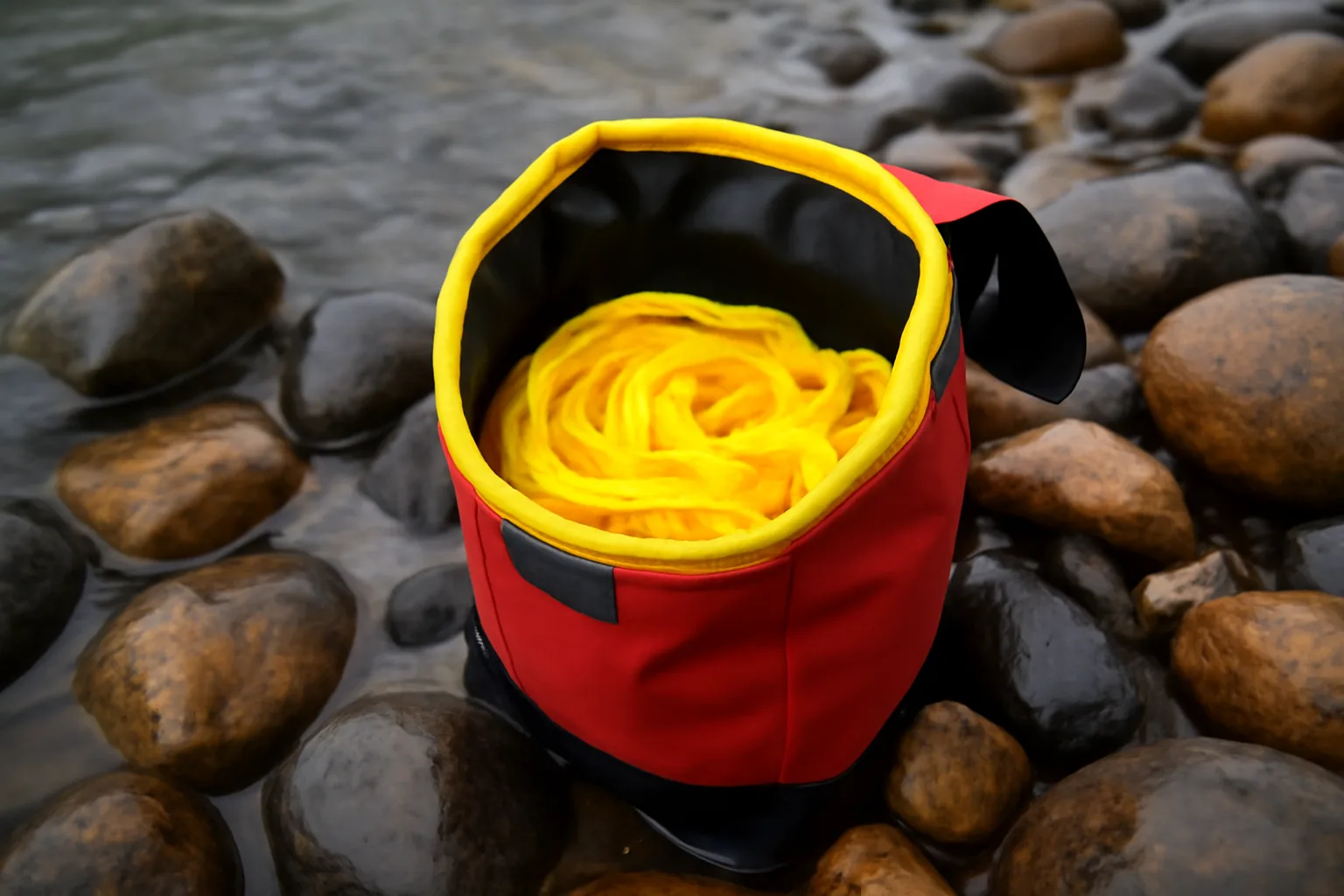
Most rescue throw bags look similar online: bright bag, yellow rope, some straps, claims about rescue use. The real differences are length, rope diameter, bag opening, drainage, grip and carry method.
Rope length: 15m, 20m or 25m?
For UK paddlers, these are the useful choices:
- 15m: compact, quick to throw, good for kayakers who want something small on easy rivers or close bank work.
- 20m: the best all-round length for river banks, canals, club sessions, SUP groups and open-water edges.
- 25m-30m: better for trained rescuers, bank-based safety cover and wider water, but bulkier for normal touring.
For most readers, 20m is the sweet spot. It gives enough reach without becoming a rope-management mess.
Rope diameter and grip
Thin rope packs small but can be harder to grip, especially with cold hands. Thicker rope is easier to hold but makes the bag bulkier. Most recreational bags use roughly 8-10mm floating rope.
If you paddle in winter, with gloves, or on faster water, I would avoid the very thinnest bargain lines. A rope you cannot grip when wet is not a bargain.
Bag shape and repacking
A wide neck makes repacking easier. A stiffened opening helps because the rope feeds back in without the bag collapsing. Mesh drainage helps the bag dry faster after practice.
Look for:
- Bright colour: yellow, orange or red is easier to spot.
- Floating rope: non-negotiable for paddling use.
- Wide opening: easier to reload under pressure.
- Drainage mesh: less mildew after wet practice.
- Clean end handling: avoid old designs with bulky knots or awkward loops unless you know exactly how to use them safely.
Carry method
Some throw bags have a belt loop or waist belt. That can be useful for bank safety or whitewater, but moving-water belt systems need care. If a bag is worn on the body, quick release matters. For casual touring, a bag clipped or stowed within reach is usually simpler.
If you paddle coastal water, also read our guide to VHF radios for paddlers. A throw bag may help someone near you; a radio helps when the problem is bigger than your throw.
Best Rescue Throw Bags for UK Paddlers
These are the bags I would shortlist for UK paddling in 2026. Prices move around, so treat them as current street prices rather than promises.
Best overall: Palm Pro Open Water Throw Bag 20m
The Palm Pro 20m is my top pick for most paddlers because it balances length, visibility and ease of use. RLSS UK Shop lists the 20m open-water version at about £45, which is fair for a serious piece of safety kit.
The 20m length suits river banks, club lake sessions, paddleboard groups and open-water edges. The bag shape is more reassuring than the cheapest flat sacks, and the stiffened neck makes repacking less annoying. That matters because you should be practising with it, not keeping it pristine.
Best for: mixed UK paddling, club use, SUP groups and families who want one sensible bag.
Downside: it costs around £20 more than the cheapest Lomo-style option, and some whitewater paddlers may prefer a more technical compact bag.
Best budget: Lomo Kayak Throw Line 20m
The Lomo 20m throw line is the budget pick. Decathlon Marketplace recently showed it at about £25.98, sold by Lomo Watersport. For occasional use, gentle rivers, canals and as a starter safety item, that is good value.
It gives you the right basic ingredients: 20m floating rope, high-vis colour and a proper throw-bag format. I would not choose it as the main bag for repeated whitewater rescue practice, but it is much better than having no throw line at all.
Best for: beginners building a safety kit without spending loads in one go.
Downside: the cheaper bag and rope feel less confidence-inspiring than the Palm or NRS options. Practise repacking before you rely on it.
Best compact river bag: NRS Compact Rescue 20m
The NRS Compact Rescue 20m is a good fit for kayakers who want a smaller bag that still has proper rescue intent. NorthShore Watersports recently listed it around £49, reduced from about £54.95.
NRS kit tends to be well thought through, and this one suits paddlers who care about carry size. If your boat is already crowded with a split paddle, first aid kit, pump and spare layers, compact matters.
Best for: kayakers who want a compact river bag from a known rescue brand.
Downside: availability can be patchy in the UK, and at nearly £50 it is not a cheap spare.
Best club spare: Northern Diver Throw Bag with Reflective Line
Northern Diver’s throw bags start at about £35, with 15m, 20m, 25m and 30m options. That makes them useful for clubs, outdoor centres, rescue practice and anyone buying several bags at once.
The reflective line option is useful for visibility, and the range of lengths means you can buy the right size rather than forcing one bag to do everything. For a typical paddler, I would still choose 20m unless you have a specific bank-rescue reason for going longer.
Best for: clubs, training spares and paddlers who want size options.
Downside: less paddling-specific feel than a compact kayak-focused bag, depending on the model you choose.
Best heavier-duty option: HF Big Fish 20m Throwline
The HF Big Fish 20m sits around £49.99 from Kayaks & Paddles. It is the one I would look at if I wanted something more robust for regular river use but did not want to jump to specialist rescue-only pricing.
It is a better fit for whitewater paddlers than someone doing a summer canal loop twice a year. If you are on faster water, you will appreciate a bag that throws and repacks cleanly after repeated practice.
Best for: whitewater paddlers and confident river users.
Downside: overkill for casual flat-water paddlers who just need a reachable safety throw line.
Also worth knowing: Crewsaver Yak Throw Bag 20m
The Yak 20m throw bag is often around £59 from marine and lifejacket retailers. It is not my first pick on value, but it is worth considering if you already buy Crewsaver/Yak kit and want a known marine-safety brand.
Best for: paddlers buying from marine safety retailers or matching existing Yak kit.
Downside: at roughly £59, it needs to suit your use better than the Palm or NRS to justify the extra spend.
River vs Sea Safety: Which Throw Bag Makes Sense?
The title says river and sea safety, but the bag choice is not the same in every place. A throw bag is most useful when you are close enough to the person, on stable footing or in a boat position where you can manage the rope safely.
Rivers and canals
On rivers and canals, a 15-20m bag makes sense for bank support, group paddles and rescue practice. The Canal & River Trust’s paddling safety advice is a good reminder that inland water can still be dangerous, even when it looks calm.
For most river paddlers, I would choose:
- Easy rivers and canals: Lomo 20m or Palm Pro 20m.
- Whitewater: NRS Compact, HF Big Fish, Palm Pro or a bag recommended by your coach.
- Club bank safety: Northern Diver 20m or 25m, depending on venue width.
If you regularly paddle moving water, do a rescue course. A buying guide can help you choose kit; it cannot teach rope handling under pressure.
Sea kayaking and coastal SUP
At sea, a throw bag is less of a universal answer. Wind, waves and distance make throwing harder. It can still help at launch spots, harbour edges, rock gardens, sheltered inlets and close group rescues, but it is not a substitute for communication, flotation, weather planning and group control.
The Met Office advises paddlers to check forecasts and avoid dangerous conditions such as thunderstorms and offshore winds in its safe paddling weather guidance. That matters more than buying a longer rope.
For coastal use, I would carry a compact 15-20m bag if it is accessible and does not clutter the deck. I would not rely on it as my main sea safety plan. If you are still comparing environments, our river vs sea paddleboarding guide and sea kayaking vs river kayaking guide explain the bigger differences.
Carrying, Practice and Maintenance
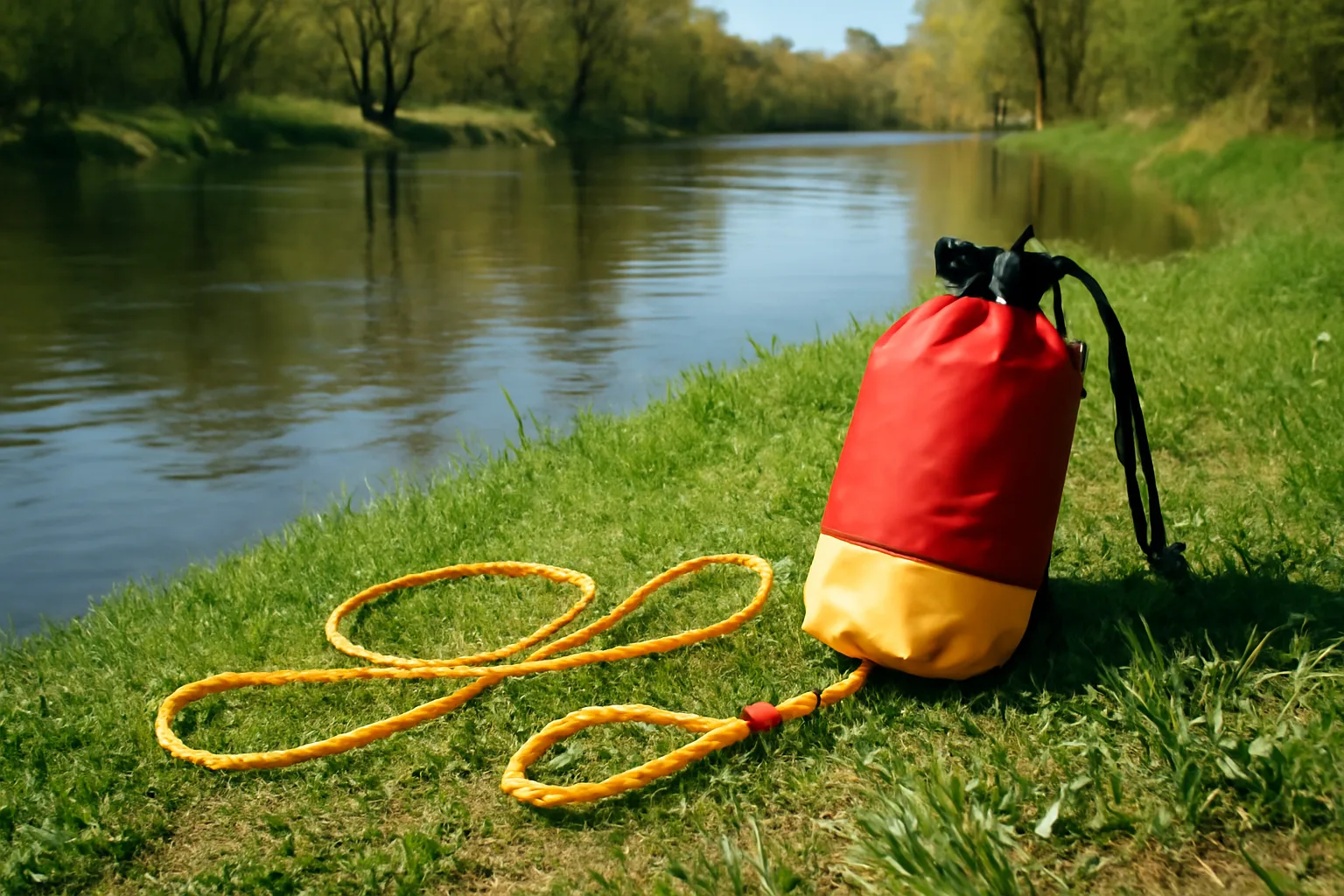
A throw bag that has never been thrown is only half-owned. Buy it, open it, throw it on grass, repack it, then repeat until you can do it without fuss.
Where to keep it
Keep the bag reachable. For kayaking, that might be behind the seat, clipped under deck elastics only if secure, or carried by a trained paddler in the group. For paddleboarding, deck bungees can work on flat water, but check that the bag cannot slide away or trail rope.
Do not clip loose rope to yourself without understanding quick release. Do not wrap the rope around your hand during a pull. Those are small details until they are suddenly not small.
Practise the boring bits
Practise:
- Pulling out a short length before throwing.
- Throwing beyond the target, not at their face.
- Bracing low when the line goes tight.
- Recoiling or reloading after a missed throw.
- Repacking the rope so it pays out smoothly next time.
I like using a garden, park or quiet club bank for practice. Throw to a rucksack, not a person, until you are accurate. Then practise with the bag wet, because dry-rope practice can flatter you.
Maintenance checks
After use, rinse dirty water off the rope, let it dry and repack it neatly. Check for cuts, stiff sections, mildew, damaged stitching, broken buckles and knots that have crept into the wrong place.
This sits alongside other safety maintenance. If you already own a buoyancy aid, our PFD care and maintenance guide is worth reading at the same time. Safety kit gets boring until it fails.
My Buying Advice: Spend Enough, Then Practise
For most UK paddlers, buy the Palm Pro 20m at about £45 and spend an hour practising with it. That is my clean recommendation. It is the best mix of length, price, handling and availability for normal river, lake, club and sheltered open-water use.
Buy the Lomo 20m if the budget is tight and the alternative is owning no throw bag. Buy the NRS Compact or HF Big Fish if you paddle rivers often and want something more compact or robust. Buy Northern Diver if you are equipping a club, outdoor centre or bank-safety setup and need several lengths.
The mistake is buying a rescue throw bag as a badge of preparedness. Preparedness is knowing where it is, being able to throw it, and knowing when not to put yourself in danger. Spend enough to get a bag you trust, then make the cheap part count: practise.
Frequently Asked Questions
What length rescue throw bag should I buy? Most UK paddlers should buy a 15-20m throw bag. A 20m bag is the best all-round choice for rivers, canals, club sessions and open-water edges.
Which rescue throw bag should beginners buy? The Palm Pro 20m is the best overall beginner-to-intermediate choice if budget allows. The Lomo 20m is a cheaper starter option for occasional gentle paddling.
Can I use a dry bag as a throw bag? No. A dry bag is for storage. A rescue throw bag contains floating rope designed to pay out during a throw, so it is a different piece of kit.
Should I carry a throw bag for sea kayaking? It can be useful at launch spots, harbour edges and close group rescues, but it is not your main sea safety plan. Weather checks, buoyancy, communication and group skills matter more.
How much should I spend on a rescue throw bag? Expect to spend about £25-£35 for a basic starter bag, £45-£60 for a better all-round paddling bag, and more for specialist rescue or whitewater designs.
Do I need training to use a throw bag? You should practise before relying on one, and moving-water paddlers should take rescue training. Throwing, bracing, rope control and safe positioning are skills, not just product features.