Kayak weight limits are not a target to aim for. They are the point where the boat is being asked to carry more than it handles well, so the safer rule is to keep your real paddling load at least 15-25% below the stated maximum.
In This Article
- The Short Answer: Stay Below the Rated Load
- What a Kayak Weight Limit Actually Includes
- How to Calculate Your Real Paddling Load
- Why You Should Not Paddle Right at the Maximum
- Single, Tandem and Inflatable Kayaks: Where Limits Catch People Out
- How to Spot an Overloaded Kayak Before You Launch
- What to Do If You Are Close to the Limit
- A Practical UK Kit and Cost Checklist
- Frequently Asked Questions
The Short Answer: Stay Below the Rated Load
If a kayak says “maximum load 150kg”, that does not mean a 150kg paddler should climb in and expect it to feel normal. The limit normally includes the paddler, clothing, water, lunch, safety kit, fishing gear, dry bags, a dog if you take one, and sometimes removable seats or accessories depending on how the brand states the spec.
For calm UK canals and sheltered lakes, I would treat the published figure as an upper boundary, not a planning number. A sensible working load is roughly:
- Beginner or nervous paddler: use no more than 70-75% of the quoted maximum.
- Competent paddler on flat water: use no more than 75-85% of the quoted maximum.
- Open water, wind, chop or cold conditions: leave more spare capacity, not less.
That gives you margin when the boat takes on spray, when your dry bag is heavier than you thought, or when you need to edge, turn or climb back in. It also keeps the kayak riding high enough that it still behaves like the boat you bought.
This kayak weight limit guide is not about squeezing the last possible kilogram into the hull. It is about checking the setup will paddle cleanly, sit level and give you enough stability to deal with the ordinary messy bits: gusts, awkward launches, tired shoulders and kit that always seems to weigh more on the way back.
A quick example
A Decathlon 2-person inflatable canoe/kayak Tribord 100+ is currently listed at about £299.99 with a 195kg maximum load. Two adults at 78kg and 70kg are already at 148kg before shoes, buoyancy aids, paddles, water bottles and a picnic. Add 12-15kg of real-world kit and the boat is still under the limit, but the useful margin has shrunk.
By contrast, a cheap two-person inflatable with a 155kg payload can look fine on paper and feel overloaded with the same pair of adults. The number matters, but the margin matters more.
What a Kayak Weight Limit Actually Includes
The weight limit is the total load the kayak is designed to carry while still floating with an acceptable amount of freeboard and stability. Freeboard is the height of the side of the kayak above the waterline. Less freeboard means more splash, more drag and less forgiveness if the water gets lively.
Count the paddler, not just the kayak
Start with your dressed paddling weight, not your bathroom-scale weight in shorts. In spring and autumn that can add more than people expect:
- Buoyancy aid: around 0.6-1.2kg, with basic 50N models such as Decathlon’s adult kayak/SUP buoyancy aids around £34.99.
- Waterproof jacket or cag: around 0.4-0.8kg, often £45-£120 from Decathlon, Palm, NRS or similar UK retailers.
- Wet shoes or neoprene boots: around 0.5-1kg per pair, with basic Decathlon kayak/SUP shoes around £14.99.
- Water bottle and snacks: easily 1-2kg once you pack properly.
If you wear winter layers, a drysuit, a helmet or carry rescue kit, the number climbs again. Whitewater paddlers know this already; casual summer paddlers often forget it.
Count shared kit too
The craft does not care who owns the gear. A pump, spare paddle, throwline, dry bag, phone case and repair kit all sit somewhere in the same boat. A Decathlon dual-action kayak pump is about £24.99 and a basic two-part paddle is about £34.99; neither weighs much alone, but they are part of the payload.
The Canal & River Trust canoeing safety advice also makes the broader point that your craft needs to be suitable for the waterway and your competence. Load is part of suitability. A kayak that is fine for one adult and a small dry bag on a still canal may be the wrong boat for two adults, a dog and a breezy reservoir.
Manufacturer limits are not all tested the same way
One brand may publish a conservative touring capacity. Another may publish a buoyancy limit that makes the product look more useful in a shop filter. That is why two kayaks with similar dimensions can have different stated loads, and why a quoted maximum should not be treated as a comfort rating.
For buying context, Decathlon’s current UK pages put a 1-person inflatable touring kayak at about £179.99, a 2-person Tribord 100+ at about £299.99, and a 2/3-person Tribord 100+ at about £399.99. The higher-capacity boat is not just “more seats”; it gives you more room to carry a realistic load without sinking the sides into the water.

How to Calculate Your Real Paddling Load
The calculation is simple. The bit people miss is being honest about the small items.
- Write down each paddler’s clothed weight. Use the weight you are on the day, including footwear and paddling layers.
- Add safety kit. Include buoyancy aids, phone pouch, whistle, throwline, repair kit, first-aid pouch and spare warm layer.
- Add paddling kit. Include paddles if the manufacturer does not clearly exclude them, plus pump, skeg, seat bags and trolley if they are on the boat.
- Add food, water and leisure extras. Cameras, fishing gear, dog kit and picnic bags count.
- Compare the total with 75-85% of the kayak’s rated capacity. If you are above that working range, treat it as a warning even if you are below the printed maximum.
A realistic day-paddle calculation
Say you are paddling a 150kg-rated solo sit-on-top or inflatable. Your own clothed paddling weight is 86kg. Then you add:
- Buoyancy aid and wet shoes: 1.5kg
- Paddle, pump and repair kit: 2.5kg
- 10L dry bag with spare layer, phone pouch and lunch: 4kg
- Water bottle: 1kg
Your real load is about 95kg. That is 63% of the kayak’s maximum, so you have useful margin. The same setup in a 110kg-rated budget inflatable is 86% of the maximum before any extra kit, which is where the boat may start feeling slow, low and twitchy.
This is why our guide to choosing a kayak for a beginner matters alongside the spec sheet. Beginners do better with spare stability than with a boat that only works when loaded perfectly.
Tandem calculation
For a tandem, do not just add the two paddlers and stop. Two adults at 82kg and 72kg are 154kg. Add two buoyancy aids, two paddles, a pump, a 20L dry bag, water and lunch, and you can be at 168-175kg without trying.
On a 195kg kayak, that is probably workable on sheltered water if the load is placed well. On a 180kg kayak, it is close enough that I would remove kit, choose a calmer route, or pick a bigger boat. On a 155kg kayak, it is over the stated maximum and should be a no.
Why You Should Not Paddle Right at the Maximum
The maximum load is not a comfort setting. It is usually the point at which the kayak still floats within the manufacturer’s accepted test conditions. Real UK paddling adds wind, wake, cold water, awkward banks, muddy launches and the occasional badly timed turn from a hire boat.
Stability drops before buoyancy fails
An overloaded kayak does not need to sink to become a problem. It can become sluggish, wet and unstable while still technically floating. The bow may plough, the stern may drag, and the boat may stop responding cleanly when you sweep or edge.
If you have read our kayak strokes guide, you will know that strokes depend on the boat moving cleanly through the water. Too much weight makes every correction harder. A sweep stroke that should turn the boat neatly becomes a long wrestle.
Re-entry gets harder
If you capsize or swim, spare capacity matters. A boat that is already sitting low can take on more water, ride awkwardly and become harder to empty or climb back into. Flotation is not just a box-tick; it is what buys you time when the plan goes wrong.
For the same reason, I would rather see a newer paddler in a slightly dull, stable boat with capacity spare than in a sleeker kayak loaded to its limit. Speed is nice. Margin is better.
Cold water makes small mistakes bigger
UK water can be cold even when the air feels pleasant. If you are heavy in the boat and wearing thin kit because it is sunny, you have less margin at exactly the moment you need more. The Met Office paddling safety advice also puts weather checks, skill level and buoyancy aids at the centre of safe paddling, so leave more load margin when wind is part of the day. A warm layer in a dry bag weighs very little, but leaving it behind to stay under a limit is a sign the kayak is too small for the plan.
Our what to wear kayaking in the UK guide covers seasonal clothing in more detail. For weight-limit purposes, the point is simple: never solve an overloaded kayak by removing safety or warmth.
Single, Tandem and Inflatable Kayaks: Where Limits Catch People Out
Different kayak types fail in different ways when overloaded. The quoted number is only the start.
Single kayaks
Solo kayaks are easy to misjudge because the extra kit feels small. A paddler, one dry bag and a bottle of water does not sound much. Add a camera, spare fleece, lock, trolley, fishing rod holder or dog, and the boat can lose its tidy trim.
Sit-on-top kayaks are usually forgiving for casual paddling, but they can become wet rides when close to their limit. Sit-inside touring kayaks often have better storage and glide, but poor weight distribution can still make the bow wander or the stern squat.
If you are choosing between solo models, compare the working load, not just the advertised maximum. A kayak rated to 130kg may be fine for an 80kg paddler and a day bag. It is a poor match for a 105kg paddler who wants to carry camping kit.
Tandem kayaks
Tandems are where the numbers get tight fastest. The marketing photo shows two relaxed adults and a calm lake. The real version includes two buoyancy aids, two paddles, a pump, snacks, spare tops, car keys, phones and perhaps a child who wants to bring half the house.
If the two paddlers are very different weights, trim also matters. Put the heavier paddler in the stern on many recreational tandems, then use bags to balance the bow if needed. If the bow is skipping and the stern is dragging, you have not solved the load just because the total is under the limit.
Our tandem kayak guide goes deeper on layout and use cases. For this article, the key point is that a tandem with spare capacity is much more pleasant than a tandem bought because the total number only just works.
Inflatable kayaks
Inflatables are not automatically weak. Some modern drop-stitch designs carry weight well. The issue is that cheaper inflatables can flex, sit broad on the water and lose speed when heavily loaded.
Correct pressure matters too. A kayak rated for 150kg but under-inflated will feel worse than the same kayak pumped to the correct PSI. Decathlon support pages for several inflatable kayaks list pressures around 1.5 PSI for tube-sided recreational models, while higher-pressure drop-stitch boats vary by design. Check the manual on your own boat, not a forum comment.
If your inflatable folds around the load, wobbles under paddle pressure or leaves the floor sagging, treat that as a warning. More air helps only up to the stated pressure. After that, the answer is less load or a different craft.
How to Spot an Overloaded Kayak Before You Launch
Do the check on the bank, not halfway across the water.
Look at the waterline
Put the loaded kayak in shallow water and hold it steady. The sides should still sit comfortably above the water, with enough freeboard that small ripples are not washing straight over the gunwales or deck.
If the scupper holes on a sit-on-top are gurgling constantly, or the inflatable tubes are sitting low enough that every little wave comes aboard, reduce the load. A wet ride is not just annoying; it means the craft has less spare buoyancy for mistakes.
Check the trim
Step back and look from the side. The kayak should sit reasonably level. A stern-heavy boat drags and turns poorly. A bow-heavy boat can plough, weathercock oddly and feel nervous in chop.
Move dry bags first, not people. A 4kg dry bag shifted forward can tidy up the trim without changing the seating position. If the boat still sits wrong, the total load or paddler placement is wrong.
Test the first few strokes
Before committing to a route, paddle ten minutes close to the launch point. Look for:
- Slow acceleration: the boat feels stuck to the water.
- Excessive wobble: small movements create big reactions.
- Poor turning: sweep strokes need far more effort than normal.
- Constant splash: the bow or sides are taking water in ordinary conditions.
If the boat fails this short shakedown, change the plan. There is no honour in pressing on with a setup that felt wrong from the first minute.
What to Do If You Are Close to the Limit
Being close to the limit does not always mean cancelling the paddle. It means making a cleaner decision before launching.
Remove non-essential load first
Keep safety kit, warm clothing, water and communication. Remove duplicate leisure items, heavy camera gear, spare shoes, oversized cool bags and anything that belongs in the car rather than the boat.
A small 10L dry bag is usually enough for a phone pouch, keys, snack and spare layer on a short sheltered paddle. A 30L bag can turn into a floating cupboard. If you routinely fill it, you may be compensating for a route plan that is too casual.
Split the load
If two kayaks are going out, share the heavy items. Put the pump, lock, lunch and spare kit across both boats. Keep emergency essentials accessible rather than buried in one overloaded stern hatch.
For group paddles, do not let the most stable-looking boat become the dumping ground for everyone’s kit. That is how the best boat in the group becomes the worst-handling one.
Choose a bigger or more suitable craft
Sometimes the answer is not clever packing. It is a kayak with more capacity.
If you are near the limit before adding safety kit, hire or buy up. In the UK, a basic recreational kayak hire session is often around £20-£40 per person depending on location, while a coached club taster can be similar or cheaper. That is a low-cost way to try a higher-capacity boat before spending £300-£800 on the wrong one.
If you are buying, compare this article with our best kayaks under £500 and best inflatable kayaks guides. Capacity should sit alongside stability, storage, weight and where you actually paddle.
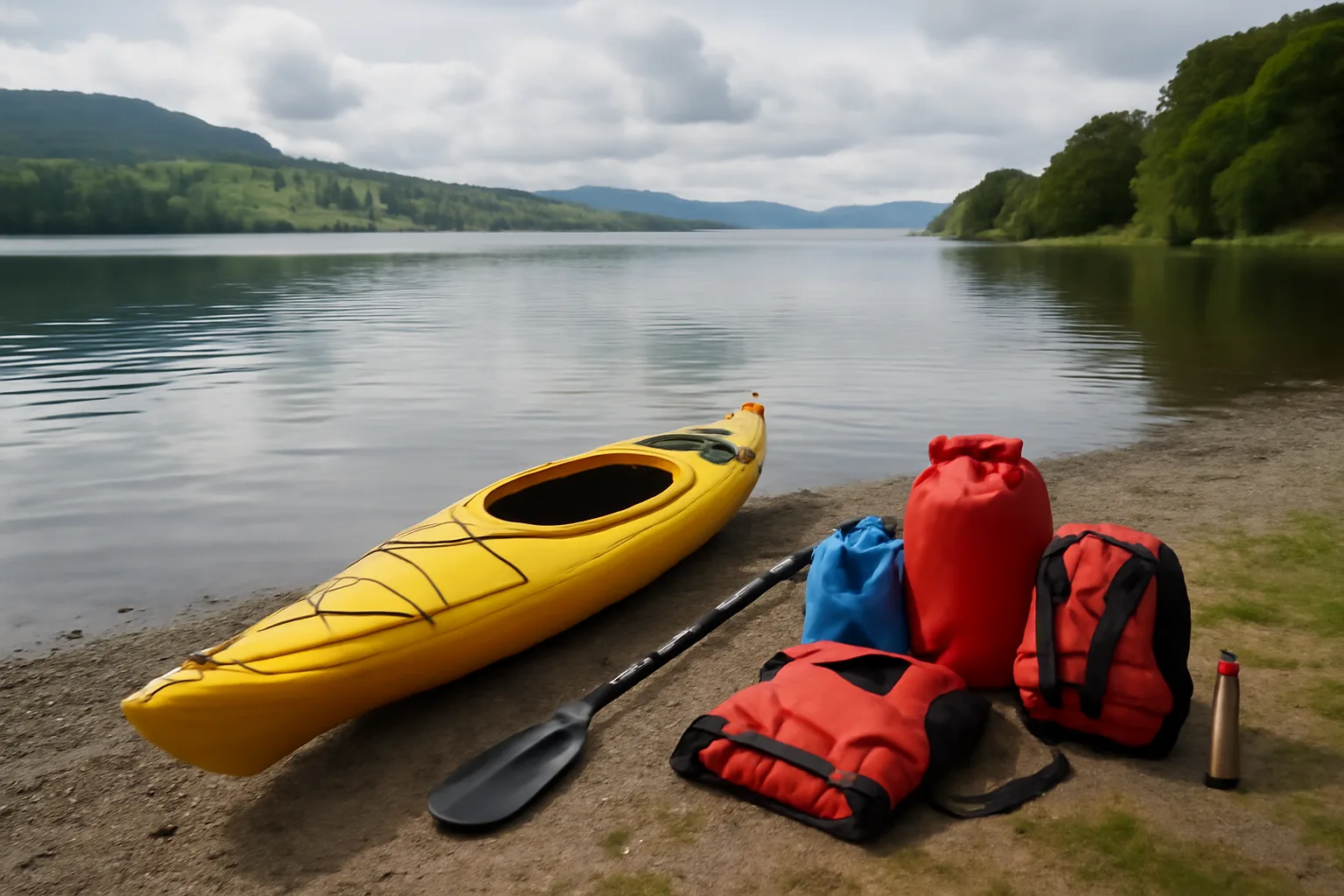
A Practical UK Kit and Cost Checklist
Here is the kit I would budget for when checking real load, using current UK-style prices as a guide:
- Kayak: about £179.99 for a Decathlon 1-person inflatable touring kayak, £299.99 for a 2-person Tribord 100+, and £399.99 for the 2/3-person Tribord 100+.
- Buoyancy aid: about £34.99 for a basic Decathlon 50N+ adult model, £80-£120 for better paddling-specific Palm or NRS options, and £140+ for more technical whitewater designs.
- Paddle: about £34.99 for a basic Decathlon two-part paddle, £80-£150 for a lighter aluminium/fibreglass option, and £200+ for carbon touring paddles.
- Pump: about £24.99 for a Decathlon dual-action hand pump for inflatables.
- Dry bag: about £10-£25 for a small 10-20L dry bag, or £40+ for heavier-duty waterproof luggage.
- Kayak trolley: roughly £45-£90 from Decathlon, Amazon UK or specialist paddling shops if the walk from car to water is long.
Not all of that goes on every paddle, but it shows why “I weigh 82kg, the kayak carries 100kg, so I’m fine” can be a weak calculation. You might be fine for a sunny 30-minute lake loop. You are probably not fine for a longer UK river paddle with lunch, layers and safety kit.
My rule of thumb
If your total load is under 75% of the kayak’s stated maximum, you are usually in a comfortable zone for sheltered recreational paddling. Between 75% and 85%, check conditions, trim and experience carefully. Above 85%, I would want a strong reason, calm water and a clear bailout plan.
For beginners, families and anyone taking kids or a dog, buy or hire more capacity than the spreadsheet says you need. A kayak that feels calm and level gets used more. A kayak that makes every launch feel twitchy ends up in the garage.
Frequently Asked Questions
Does the kayak weight limit include the kayak itself? Usually no. It normally refers to the load carried by the kayak, not the hull weight, but brands do not all phrase specifications the same way. Check the manual for your exact model.
Can I paddle if I am exactly at the maximum weight limit? I would avoid it. The kayak may float, but handling, stability and freeboard are likely to be worse, especially in wind, chop or cold UK conditions.
How much spare capacity should a beginner leave? A beginner should aim to use no more than about 70-75% of the stated maximum load. That leaves useful margin for mistakes, awkward launches and extra kit.
Do inflatable kayaks have lower weight limits? Not always. Some inflatable kayaks carry high loads, but cheaper models can flex or feel sluggish when heavily loaded. Correct inflation pressure and load distribution matter.
Where should heavy kit go in a kayak? Keep heavy kit low, secure and as close to the centre as practical. Avoid putting all the weight in the stern, because it can make the kayak drag and turn poorly.
Is a tandem kayak better for carrying extra gear? It can be, but only if the total load still leaves spare capacity. Two adults plus kit can use up a tandem’s limit quickly, so check the full calculation before buying.