You’ve rented a kayak for the first time, shuffled yourself into the seat, and someone’s handed you a paddle. You grip it like a broomstick, dig one end into the water, and promptly spin in a circle. Twenty minutes later your wrists ache, your shoulders are burning, and you’ve covered about fifty metres. Sound familiar? The problem isn’t fitness — it’s technique. And it starts with how you’re holding that paddle.
In This Article
- Why Your Grip Matters More Than Your Muscles
- Anatomy of a Kayak Paddle
- Correct Hand Position: The Basics
- Common Grip Mistakes That Cause Pain
- The Forward Stroke: Power and Efficiency
- The Reverse Stroke: Stopping and Backing Up
- The Sweep Stroke: Turning Your Kayak
- The Draw Stroke: Moving Sideways
- Torso Rotation: Where the Real Power Comes From
- Feathered vs Unfeathered Blades
- Practice Drills for Beginners
- Frequently Asked Questions
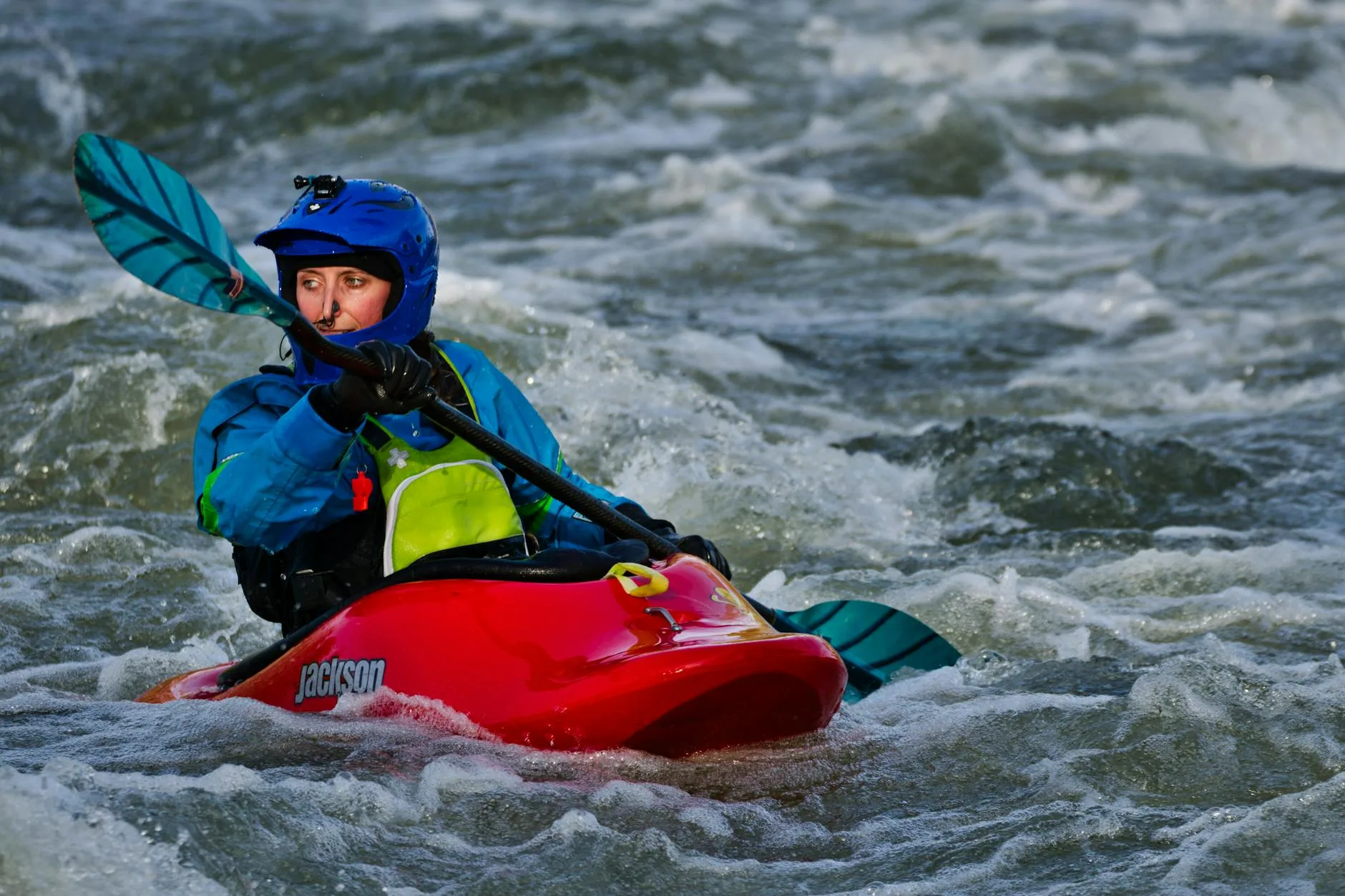
Why Your Grip Matters More Than Your Muscles
Most beginners think kayaking is an arm workout. It’s not — or at least, it shouldn’t be. Proper paddling technique uses your core and torso to generate power, with your arms acting more as connectors than engines. But none of that works if your grip is wrong.
A bad grip leads to wrist strain, blisters, sore shoulders, and inefficient strokes that waste energy. I’ve seen people come off the water after an hour looking completely shattered, while the experienced paddler next to them has barely broken a sweat over the same distance. The difference? Grip and technique, every time.
Canal & River Trust paddling guidance recommends learning proper paddle technique before anything else — before you learn rescue skills, before navigation, before fancy manoeuvres. Get the basics right and everything else becomes easier.
Anatomy of a Kayak Paddle
Before we talk about holding it, let’s make sure you know what you’re holding.
The Blade
The wide, flat part that goes in the water. Kayak paddles have two blades, one at each end. Most modern blades are asymmetric — one edge is shorter than the other. The shorter edge goes into the water first (at the bottom).
The Shaft
The long tube connecting the two blades. This is where your hands go. Shafts come in straight or bent variations — bent shafts are more ergonomic but cost more. For more on shaft materials and how they affect weight and performance, check our guide on choosing the right paddle length.
The Throat
Where the blade meets the shaft. This is not where your hands should be — a common beginner mistake.
The Drip Rings
Small rubber rings on the shaft near each blade. They stop water running down the shaft onto your hands. Make sure these are positioned correctly — they should be just below where your hands sit.
Correct Hand Position: The Basics
Finding Your Grip Width
Hold the paddle in front of you and rest the centre of the shaft on top of your head. Your elbows should form roughly 90-degree angles. That’s your grip width. Mark those spots mentally — some paddles have textured grip areas or alignment marks to help.
Too wide and you’ll lose power. Too narrow and you’ll strain your shoulders. The 90-degree rule gives you the optimal balance of reach and leverage.
Hand Position on the Shaft
- Grip firmly but not tightly — imagine holding a bird: tight enough that it can’t escape, loose enough that you don’t crush it
- Knuckles aligned with the top edge of the blade — this ensures the blade enters the water at the correct angle
- Control hand stays fixed — your dominant hand (usually right) keeps a firm, consistent grip while the other hand loosens slightly during each stroke to allow the shaft to rotate
- Wrists stay neutral — no bending up, down, or to the side. A bent wrist under load is the fastest route to tendonitis
The Loose Grip Principle
This is the single biggest change most beginners need to make. You don’t need to white-knuckle the paddle. A death grip tires your forearms within minutes and creates tension all the way up to your shoulders. Keep the non-control hand relaxed — the shaft should be able to rotate slightly in your palm between strokes.
After my first full day on the water, I had blisters on both palms because I was gripping too hard. Once I learned to relax my hands, I could paddle for hours without any discomfort. The difference was immediate.
Common Grip Mistakes That Cause Pain
Hands Too Close Together
If your hands are closer than shoulder-width, every stroke becomes a fight. You lose leverage and compensate with your arms instead of your torso. This leads to shoulder fatigue and sloppy strokes.
Hands Too Far Apart
Overreaching with a wide grip puts excess strain on your shoulder joints. If your elbows are wider than your shoulders during the overhead check, bring your hands in.
Gripping Too Tight
Already mentioned but worth repeating — it’s the number one beginner error. Tension travels from your hands through your forearms and into your shoulders. Relax.
Blade Orientation Wrong
If you can’t feel the blade catching water properly, check the blade angle. The concave (scooped) side should face you during the forward stroke. The shorter edge of an asymmetric blade should be at the bottom. Getting this backwards feels wrong immediately, but beginners often don’t know what “right” feels like yet.
The Forward Stroke: Power and Efficiency
This is the stroke you’ll use 95% of the time, so getting it right matters more than anything else.
The Catch
Rotate your torso toward the side you’re about to paddle on. Reach forward — extend from the hip, not just the arm — and plant the blade fully in the water near your feet. The blade should be completely submerged before you start pulling. A half-submerged blade just pushes air and water around. For a related angle, see our Kayak Paddle Blade Shapes: High-Angle vs Low-Angle guide.
The Power Phase
Push with the upper hand and pull with the lower hand simultaneously, but the real engine is your torso. Rotate from your core as the blade moves through the water. Think about driving your foot on the stroke side into the footpeg — this engages your legs and core. The stroke should feel like a twist, not a pull.
The Exit
Lift the blade out of the water when it reaches your hip. Going further back wastes energy and actually lifts water instead of moving the kayak forward. The exit should be clean — slice the blade out, don’t drag it.
Cadence
A smooth, relaxed rhythm beats frantic, choppy strokes every time. Aim for a steady pace you can maintain for an hour. On flat water, something like 40–50 strokes per minute is comfortable for most recreational paddlers.
The Reverse Stroke: Stopping and Backing Up
The reverse stroke is essentially the forward stroke in reverse — blade enters at your hip and exits near your feet. Use the back face of the blade (the convex side).
Key Points
- Look over your shoulder to see where you’re going
- Same torso rotation — don’t just push with your arms
- Use it for braking — alternating reverse strokes on both sides stops the kayak quickly
- Short, firm strokes work better than long, sloppy ones when stopping
The Sweep Stroke: Turning Your Kayak
When you need to turn, the sweep stroke is your go-to. It’s a wide, arcing stroke that turns the kayak rather than driving it forward.
Forward Sweep
- Plant the blade near your toes on the side you want to turn away from
- Sweep in a wide arc out to the side and back toward the stern — imagine tracing a half-circle on the water’s surface
- Keep the blade fully submerged throughout
- Edge the kayak slightly away from the stroke side for sharper turns
A forward sweep on the right turns the kayak left, and vice versa. Two or three sweeps will turn most recreational kayaks 90 degrees. For more on edging and advanced turning, see our piece on kayak hull shapes, which explains how hull design affects turning.
Reverse Sweep
Same arc, but starting at the stern and sweeping forward. Reverse sweeps on the right turn the kayak right. Combining a forward sweep on one side with a reverse sweep on the other gives you the fastest spin.
The Draw Stroke: Moving Sideways
The draw stroke lets you move the kayak sideways without turning — useful for pulling alongside a dock, another boat, or repositioning in current.
How to Do It
- Rotate your torso to face the direction you want to move
- Reach out sideways with the blade about 60cm from the hull
- Pull the blade straight toward the kayak — horizontal, not vertical
- Before the blade hits the hull, slice it away through the water and repeat
The draw stroke takes practice to get smooth, but it’s one of those skills that separates confident paddlers from beginners. Worth practising in calm water before you need it in a tricky situation.
Torso Rotation: Where the Real Power Comes From
If you remember one thing from this article, make it this: kayaking is a core sport, not an arm sport.
Why It Matters
Your arms are relatively small muscles. Your core — abdominals, obliques, back muscles — is a much larger, more powerful muscle group. Using torso rotation to power your strokes means you can paddle longer, faster, and with less fatigue.
How to Practise It
- Sit up straight — no slouching in the seat. Your posture affects your rotation range
- Wind up before each stroke — your chest should face the side you’re about to paddle on
- Unwind as you stroke — your chest rotates to face the other side by the exit
- Watch your top hand — it should cross your centre line during the power phase. If it stays on its own side, you’re arm-paddling
A good mental cue: try to paddle with “quiet arms.” Your arms stay relatively straight and relaxed while your torso does the twisting. After a few sessions focusing on this, it becomes natural.
Feathered vs Unfeathered Blades
What Is Feathering?
A feathered paddle has the blades offset at an angle to each other — typically 15 to 60 degrees. An unfeathered paddle has both blades in the same plane.
Which Should You Choose?
- Unfeathered (0°) — simpler for beginners, no wrist rotation needed. Start here
- 15–30° feather — reduces wind resistance on the top blade, gentle on the wrists. A good progression once you’re comfortable
- 45–60° feather — used by experienced touring and racing paddlers. Requires more wrist adjustment on each stroke
Most modern kayak paddles are adjustable — you can set the feather angle to suit your preference. If you’re choosing between a beginner kayak and have questions about other gear decisions, our beginner kayak guide covers the full kit list.
For beginners, start unfeathered and experiment with a small offset (15°) after you’ve nailed the basic strokes. Adding feather too early just introduces another variable when you’re already learning plenty.
Practice Drills for Beginners
The Straight-Line Drill
Pick a point on the far bank and try to paddle straight to it. This forces you to balance your strokes on both sides and develop an even cadence. If you keep veering left, your right stroke is probably stronger — focus on evening out the power.
The Pivot Turn
In calm water, see how quickly you can spin the kayak 360 degrees using only sweep strokes. This builds sweep technique and teaches you how the kayak responds to your input.
The Glide Test
Take five strong strokes and then stop completely. Count how many seconds the kayak glides before stopping. Better technique = longer glide. This drill rewards clean, powerful strokes over thrashing.
Hands-Free Balance
Lay the paddle across the cockpit and sit without holding it for a minute. This develops your balance and helps you relax — tense paddlers grip harder and waste energy.
Eyes-Closed Paddling
On very calm, safe water with a buddy nearby, try a few strokes with your eyes closed. This heightens your feel for the blade in water and helps you develop proprioception — the ability to sense your stroke quality without looking.
Frequently Asked Questions
How tight should I grip my kayak paddle? Much lighter than most beginners think. Your control hand (usually the right) maintains a firm but relaxed grip, while your other hand should be loose enough to let the shaft rotate slightly between strokes. White-knuckling the paddle causes blisters, forearm fatigue, and wrist pain within the first hour.
Why do my arms get tired so quickly when kayaking? Almost definitely because you’re paddling with your arms instead of your torso. Proper kayak technique uses core rotation to power each stroke, with your arms acting mainly as connectors. Focus on twisting from your waist and keeping your arms relatively straight.
Should beginners use a feathered paddle? No — start with blades unfeathered (0 degrees offset). This simplifies the stroke and lets you focus on grip, power, and torso rotation without worrying about wrist adjustment. Once you’re comfortable, experiment with 15–30 degrees of feather.
How do I know if I’m holding the paddle the right way up? Check the blade shape. On asymmetric blades, the shorter edge goes at the bottom. The concave (scooped) side should face you during the forward stroke. If the blade feels like it’s slicing through water without catching, it’s probably backwards.
What’s the correct paddle length for my height? It depends on your height, kayak width, and paddling style. As a rough guide, most recreational kayakers between 165cm and 185cm use a paddle between 220cm and 240cm. Our paddle length guide has a detailed sizing chart for getting the exact fit right.