You’ve just bought your first kayak — or maybe a SUP board — and now you’re standing in Decathlon staring at a wall of paddles that all look roughly the same but come in fifteen different lengths. The price tags range from £30 to £300, the staff member has disappeared, and you’re starting to wonder if you should have just stuck with cycling.
Here’s the thing: paddle length matters more than most beginners realise. Get it wrong and every stroke feels like hard work. Your shoulders ache after twenty minutes, your boat tracks sideways, and that peaceful morning on the Thames turns into a workout you didn’t sign up for. Get it right and paddling feels almost effortless — the blade catches water cleanly, your torso does the work instead of your arms, and you can stay out for hours without wanting to throw the thing overboard.
This guide covers how to choose the right paddle length for kayaking, stand up paddleboarding, and canoeing. The rules are different for each, and within each discipline, factors like your height, boat width, and paddling style all play a part. No universal answer exists, but by the end of this you’ll know exactly what length to look for — and why.
Why Paddle Length Matters So Much
A paddle that’s too short forces you to lean over with every stroke. Your knuckles clip the gunwale (the edge of the boat), your back rounds forward, and you lose power. After an hour, your lower back will let you know about it.
A paddle that’s too long creates the opposite problem. You’re sweeping wide arcs through the water instead of pulling cleanly alongside the hull. Each stroke pushes water out to the side rather than driving you forward. It’s tiring, inefficient, and surprisingly frustrating once you notice it.
The right length puts the blade fully in the water without forcing you to overreach or hunch. Your arms stay at comfortable angles, your core muscles do most of the work, and each stroke propels the boat forward with minimal wasted energy. I’ve paddled with mates who complained that kayaking was exhausting — then handed them a correctly-sized paddle and watched the difference immediately.
It’s worth spending ten minutes getting this right before you buy. A paddle you’ll use for years deserves at least as much thought as the boat itself.
How to Choose the Right Paddle Length for Kayaking
Kayak paddle sizing depends on two main things: your height and the width of your kayak. Paddling style plays a role too, but those two measurements get you 90% of the way there.
Your Height and Kayak Width
The wider your kayak, the longer your paddle needs to be — because the blade has to reach past the side of the boat to enter the water at an efficient angle. Similarly, taller paddlers need longer paddles because their torso sits higher above the waterline.
Here’s a rough guide to get you in the right range:
- Under 160cm tall, kayak under 58cm wide — 210cm paddle
- Under 160cm tall, kayak 58-71cm wide — 220cm paddle
- 160-172cm tall, kayak under 58cm wide — 220cm paddle
- 160-172cm tall, kayak 58-71cm wide — 230cm paddle
- 173-183cm tall, kayak under 58cm wide — 220cm paddle
- 173-183cm tall, kayak 58-71cm wide — 230cm paddle
- 173-183cm tall, kayak over 71cm wide — 240cm paddle
- Over 183cm tall, kayak 58-71cm wide — 230cm paddle
- Over 183cm tall, kayak over 71cm wide — 240-250cm paddle
Most recreational kayaks sold in the UK — your typical sit-on-tops from Go Outdoors or Decathlon — are around 70-76cm wide. If you’re average height (170-178cm), a 230cm paddle is almost always the right starting point.
Torso Height: The Secret Factor
Here’s something most sizing guides skip: your torso length matters more than your overall height. Two people who are both 175cm tall can have very different torso lengths depending on their leg-to-body ratio.
To measure your torso height, sit upright on a flat chair with your back straight. Measure from the seat of the chair to the tip of your nose. If your torso is longer than average for your height, go up one paddle size. Shorter torso? Consider dropping down. For a related angle, see our Kids’ Paddles: How to Choose the Right Size guide.
This is especially relevant if you’ve tried a paddle that “should” be right based on height charts and it still felt off. Torso height is usually the missing piece.
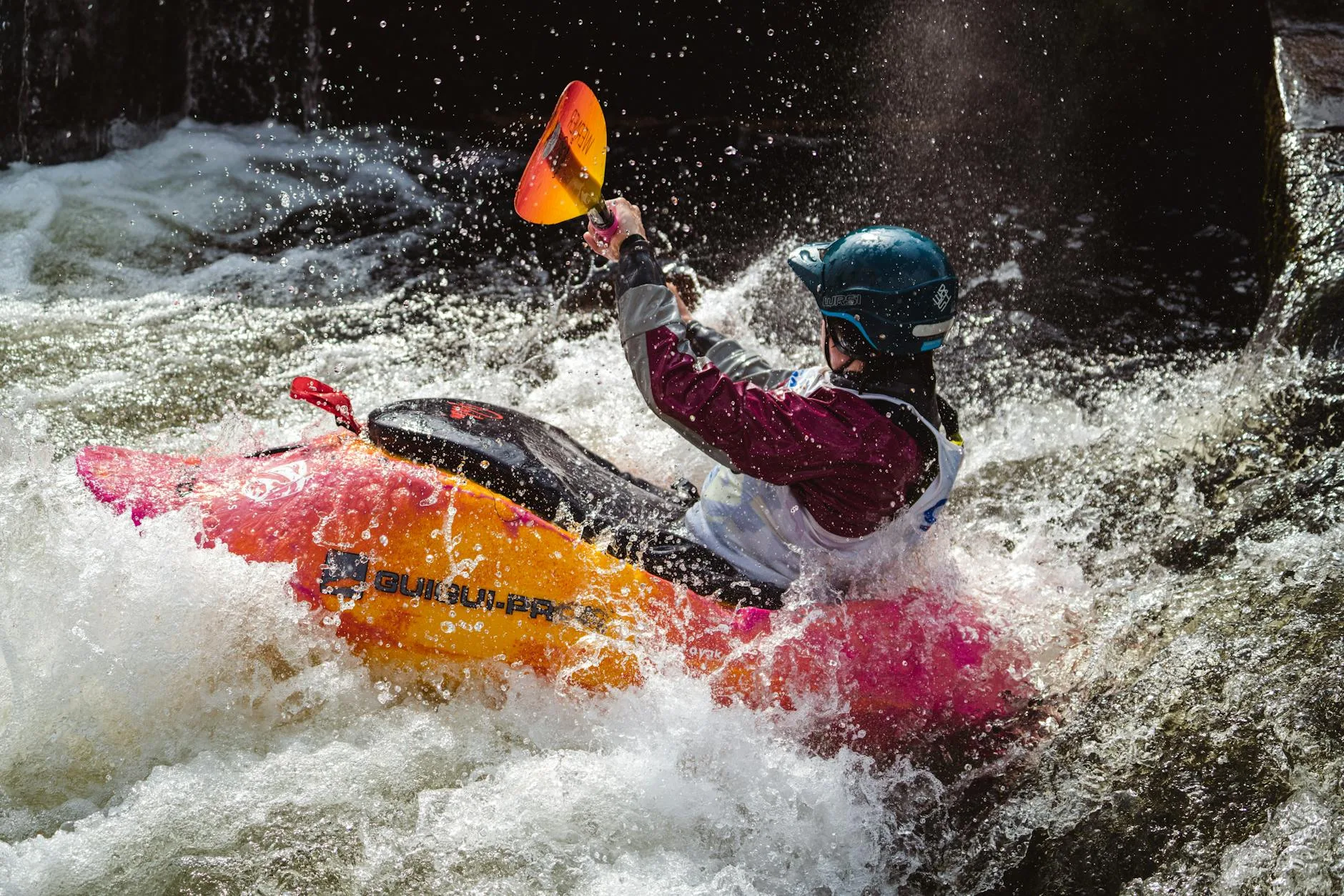
Low-Angle vs High-Angle Paddling
Your paddling style has a direct effect on what length works best:
- Low-angle paddling is the relaxed, casual style most recreational paddlers use. The paddle enters the water at a shallow angle, your hands stay below shoulder height, and each stroke sweeps in a long arc. This style works best with longer paddles (230-240cm for most people).
- High-angle paddling is more aggressive and powerful — common in touring, sea kayaking, and racing. The paddle enters the water almost vertically, close to the boat, with a shorter, punchier stroke. This style works best with shorter paddles (210-220cm for most people).
If you’re paddling canals and lakes on weekends, you’re almost using a low-angle stroke. If you’re doing coastal touring or training for distance, you might be high-angle. Most UK recreational paddlers should size for low-angle.
The Quick In-Shop Test
If you’re in a shop with paddles you can handle, there’s a dead simple test. Stand the paddle on the floor next to you, blade down. Reach up and curl your fingers over the top edge of the upper blade. Your first knuckle joint should just wrap over the top. If your whole hand clears the blade, it’s too short. If you can’t reach, it’s too long.
For a second check, hold the paddle horizontally above your head with both hands. Slide your hands until your elbows make 90-degree angles. Your hands should end up roughly two-thirds of the way from the centre of the shaft to each blade. If they’re further out, the paddle is too long for you.
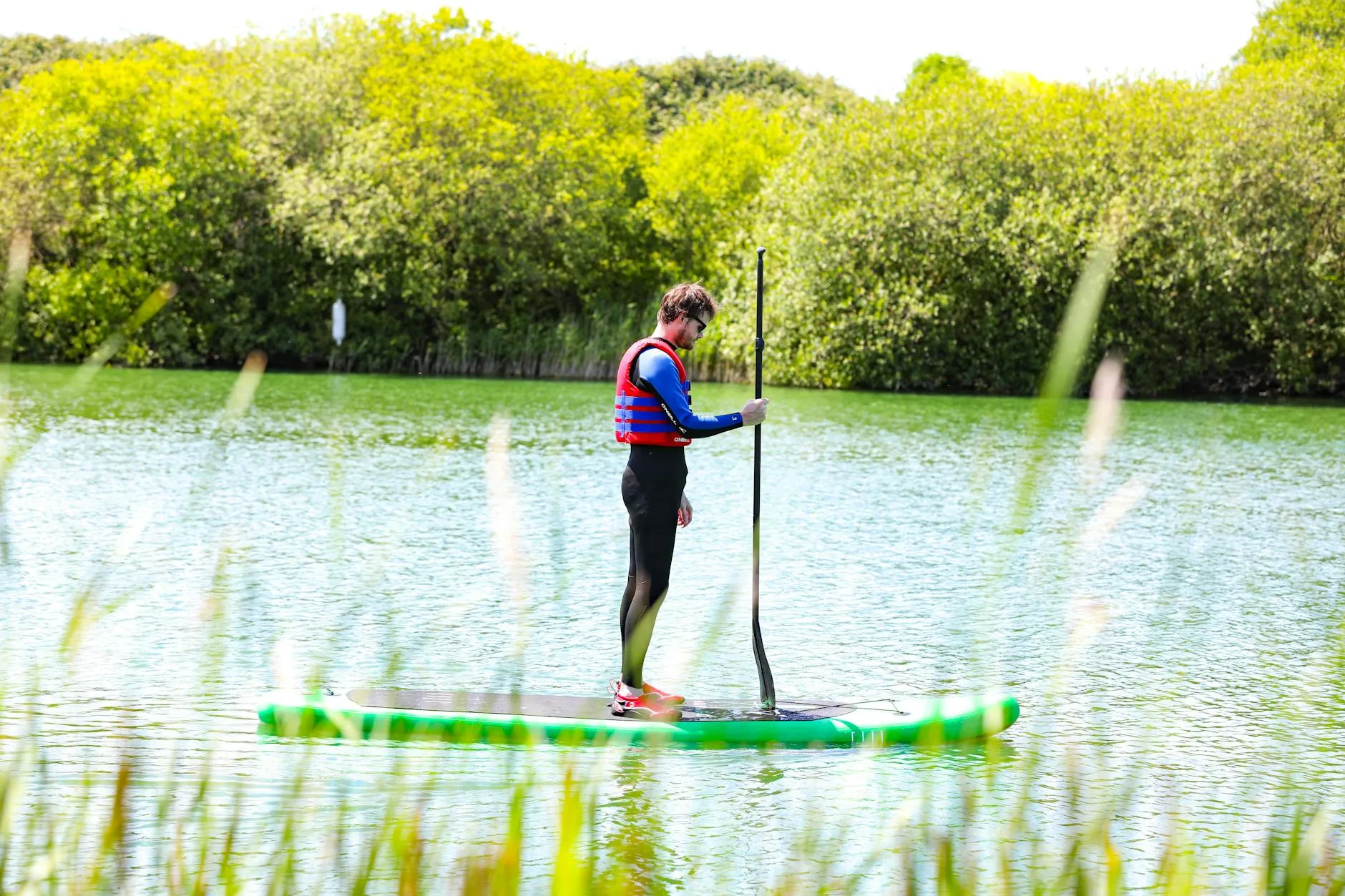
Choosing the Right SUP Paddle Length
Stand up paddleboard sizing works completely differently from kayaking. You’re standing upright, using a single-bladed paddle, and the geometry of the stroke is nothing alike.
The Classic Rule: Your Height Plus 20-25cm
The traditional starting point for SUP paddle length is to add 20-25cm to your height. So if you’re 175cm tall, you’d look at a paddle between 195cm and 200cm.
This works well for casual flatwater paddling — the kind most people do on UK rivers, lakes, and calm coastal spots. It puts the blade fully in the water without making you hunch over or overextend.
- Flatwater cruising and touring — add 25cm to your height
- SUP surfing — add 15-20cm (shorter for quick, reactive strokes)
- SUP racing — add 25-30cm (longer for maximum power per stroke)
Why Adjustable SUP Paddles Are Worth It
Unlike kayak paddles where fixed-length is standard, most SUP paddles sold in the UK now come with adjustable shafts. Brands like Red Paddle Co, Jobe, and Fanatic all sell adjustable models from about £50 for a basic aluminium shaft up to £200+ for carbon.
An adjustable paddle lets you fine-tune the length on the water, which is genuinely useful. You might want it shorter in chop (lower centre of gravity) and longer on flat water (more reach per stroke). It’s also practical if more than one person in the family uses the same board — common when you’ve got one board shared between adults and teenagers.
If you’re buying your first SUP paddle, get an adjustable one. You can dial in your ideal length over a few sessions, then if you later want a fixed-length carbon paddle for performance, you’ll know exactly what size to order.
Getting the On-Water Feel Right
Once you’re on the water, the right SUP paddle length means the blade submerges fully during your catch (the moment it enters the water) without you bending at the waist. Your top hand should reach roughly to forehead height at the peak of the stroke. If you’re constantly bending over, the paddle is too short. If your top hand is reaching above your head, it’s too long and you’ll fatigue your shoulders. Our Paddle Materials Explained: Aluminium vs Fibreglass vs Carbon guide is useful alongside this.
Spend your first few sessions experimenting with the adjustment. Most people start too long and gradually shorten it as their technique improves and they learn to engage their core rather than reaching with their arms.
Canoe Paddle Sizing: A Different Approach Entirely
Canoe paddles are single-bladed, like SUP paddles, but you’re kneeling or sitting much lower in the boat. That changes everything about the required length.
The Kneeling Method
If you’ll be kneeling in a traditional canoe (the way most open canoe paddlers in the UK paddle), the classic method works brilliantly:
- Kneel on the floor as you would in a canoe
- Measure from the floor to your chin
- That measurement is your ideal paddle length, from the tip of the blade to the top of the grip
For most adults, this puts canoe paddle length somewhere between 130cm and 155cm — far shorter than a kayak paddle because you’re only paddling on one side and the blade doesn’t need to reach across a wide boat.
The Seated Method
Some canoe paddlers prefer sitting on a seat rather than kneeling, which raises your position by 15-20cm. If you sit rather than kneel, add about 5-7cm to the kneeling measurement. The blade still needs to reach the water properly, and the extra seat height means you need more shaft length to compensate.
Canoe Width Matters Less
Unlike kayaking, the width of your canoe has minimal impact on paddle length. You’re paddling on one side with a single blade, so the paddle doesn’t need to clear the beam of the boat in the same way. Your body position — kneeling versus sitting — is the dominant factor, followed by your torso height.
Paddle Materials and How They Affect Your Choice
The material your paddle is made from doesn’t directly change the ideal length, but it affects weight, stiffness, and price — all of which influence how a paddle feels in your hands and whether you’ll still enjoy paddling at the two-hour mark.
- Aluminium shaft with plastic blades — the budget option, about £20-40 from Decathlon or Amazon UK. Heavy (over 1kg typically), cold to hold in winter, but perfectly functional for casual use. If you’re paddling a handful of times per year, this is all you need.
- Fibreglass — mid-range at around £60-120. Lighter, warmer to grip, and with some flex that reduces joint strain. A good choice if you paddle most weekends through spring and summer.
- Carbon fibre — the premium option at £120-300+. The lightest and stiffest material available. A carbon kayak paddle can weigh as little as 600g compared to 1.1kg for aluminium. Werner, Aqua-Bound, and Robson all make excellent carbon paddles available through UK retailers like Escape Watersports and Bournemouth Canoes.
Here’s where it gets practical: a heavier paddle is more tiring, which means you might want to size slightly shorter with a budget aluminium paddle to reduce the effort per stroke. With a featherweight carbon paddle, you can afford the extra centimetre or two for more reach. It’s a subtle difference, but after two hours on the water it adds up.
Common Sizing Mistakes and How to Avoid Them
After years of paddling UK waterways, I’ve seen the same mistakes come up over and over. Here’s what to watch out for:
- Buying the same length as your mate — your friend is a different height with a different kayak width. Their perfect paddle might be your worst nightmare. Always size for your own measurements.
- Ignoring kayak width entirely — height gets all the attention in sizing guides, but a wide sit-on-top needs a different paddle length than a narrow touring kayak, even for the same paddler. Always factor in boat width.
- Going too long “just in case” — beginners often think longer equals more power. It doesn’t. A paddle that’s 10cm too long will exhaust you faster than one that’s 5cm too short. When in doubt, go shorter rather than longer.
- Forgetting about feathering — feathered paddles (where the blades are offset at an angle) can feel slightly different in length because of wrist rotation. If you’re new to feathering, try the paddle with both feathered and unfeathered blade positions before deciding on length.
- Not accounting for your PFD — a bulky buoyancy aid adds volume around your torso and can subtly change your paddling position. If you always wear a PFD (and you should on open water in the UK — the RNLI recommends it), try paddles while wearing it.
Where to Try Before You Buy
One of the best ways to nail your paddle length is to try different sizes on the water before committing. In the UK, you’ve got several options:
- Paddlesport centres and hire shops — places like Canoe Trail on the Wye, Paddleboarding London on the Thames, and countless loch-side hire spots in Scotland usually carry a range of paddle lengths. Hire for a session and experiment.
- Paddle clubs — British Canoeing lists local clubs across the country where you can try kit before buying. Many clubs run taster sessions for under £20.
- Demo days at retailers — Go Outdoors and some specialist watersport shops run demo events in spring and summer where you can try paddles on the water. Worth keeping an eye on if you’re not in a rush.
- Friends and communities — if you know anyone who paddles, ask to borrow their kit for a session. Most paddlers are happy to help, and there’s no substitute for comparing two lengths back-to-back on the water.
If you’re choosing a kayak as a beginner, it’s worth sorting out the boat first and then sizing your paddle to match its width. And if you’re eyeing up an inflatable kayak for UK rivers, bear in mind that inflatables tend to be wider than hardshells — so you’ll likely need a paddle on the longer end of the range.
Getting It Right for Kids
Children’s paddle sizing follows the same principles but in smaller proportions. Most kids’ kayak paddles run from 160cm to 190cm, and kids’ SUP paddles from about 140cm to 170cm.
The adjustable-height rule applies even more here because children grow fast. An adjustable paddle that covers a 20-30cm range will last two or three seasons instead of one. Brands like Palm and Perception make decent kids’ adjustable paddles from around £25-35.
For very young children (under 8), the main thing is that the paddle isn’t too heavy. A chunky adult aluminium paddle is almost impossible for a small child to use properly, regardless of length. Look for lightweight kids-specific models — they’re shorter, lighter, and have smaller blade faces that match a child’s pulling power.
The Bottom Line
Paddle length isn’t something you need to obsess over, but it is something you need to get roughly right. The wrong length turns an enjoyable day on the water into a slog. The right length makes every stroke feel natural and efficient.
For kayaking, start with your height and kayak width using the sizing guide above, then adjust based on your paddling style. For SUP, add 20-25cm to your height and fine-tune with an adjustable paddle. For canoeing, kneel and measure to your chin.
If you’re just getting started with paddleboarding, don’t overthink it — grab an adjustable paddle within the right range and spend your first few sessions dialling it in. The water will teach you more about the right length than any guide can.
Frequently Asked Questions
What paddling kit should beginners buy first? Start with a suitable craft, paddle, buoyancy aid, leash where appropriate, dry bag and clothing that matches the water temperature.
Where can beginners paddle in the UK? Calm sheltered water is best at first. Check local access rules, licences and weather before choosing canals, rivers, lakes or coastal spots.
How do I avoid wasting money on paddling gear? Buy for your actual water, storage and transport needs. Comfort, safety and stability matter more than specialist performance features early on.
What should I check first with How to Choose the Right Paddle Length? Start with the real use case, then check size, compatibility, running costs and maintenance. A product that looks good on paper can still be the wrong fit if it does not suit the room, routine or budget.
How do I avoid wasting money on How to Choose the Right Paddle Length? Avoid buying on one headline feature alone. Compare the practical details, read the warranty or returns terms, and choose the option that solves your main problem rather than the one with the longest specification list.