You’re browsing kayaks online — or worse, standing in Decathlon surrounded by boats that all look roughly the same — and someone mentions “hull shape” like it should mean something to you. Flat bottom, rounded, V-shaped… it sounds like a geometry lesson nobody signed up for. But here’s the thing: the shape of the underside of your kayak affects everything. How stable it feels when you first sit in it. How it handles when the wind picks up on an exposed reservoir. Whether it tracks in a straight line or zigzags like a shopping trolley with a dodgy wheel.
I’ve paddled flat-bottomed recreational kayaks on canals, rounded touring boats on Scottish lochs, and V-hulled sea kayaks in conditions that made me seriously question my life choices. The differences aren’t subtle — they’re the reason some kayaks feel like floating sofas and others feel like they’re trying to throw you in. So before you spend £300-800 on a boat, it’s worth understanding what’s going on underneath.
This is kayak hull shapes explained in plain English: what each type does, where it excels, where it struggles, and which one actually suits the paddling you’ll be doing.
Why Hull Shape Matters More Than You Think
Most beginners pick a kayak based on colour, price, or whatever the shop assistant recommends. Hull shape rarely gets a mention — which is mad, because it’s the single biggest factor in how a kayak behaves on the water.
Think of it this way. Two kayaks can be the same length, same width, same weight, made from the same material — but if one has a flat bottom and the other has a deep V-shaped hull, they’ll feel completely different the moment you sit in them. One will feel planted and reassuring on a calm canal. The other will feel twitchy and alive, like it wants to go somewhere.
Neither is “better.” They’re designed for different conditions and different paddlers. The trick is matching the hull to what you actually need.
A few things hull shape directly affects:
- Initial stability — how steady the kayak feels when you’re sitting upright on flat water
- Secondary stability — how it behaves when tilted on edge (crucial in waves and wind)
- Tracking — whether it holds a straight line or wanders off course
- Manoeuvrability — how easily you can turn it
- Speed — how efficiently it moves through the water
- Wave handling — how it copes with chop, swell, and wake from passing boats
Get the hull shape right and everything else follows. Get it wrong, and no amount of expensive paddles or clever technique will make that kayak feel comfortable.
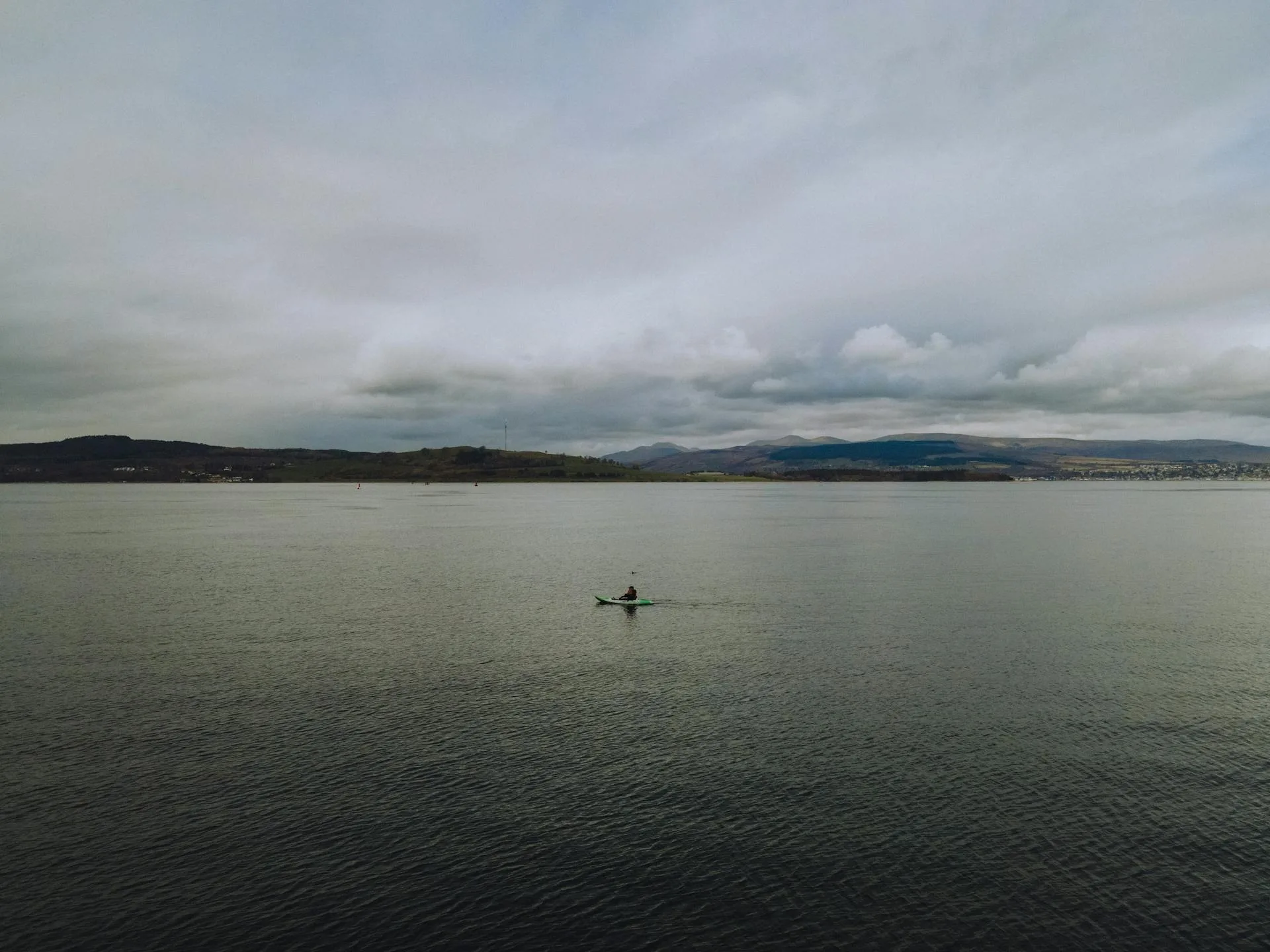
Flat Hull Kayaks: The Stable Starting Point
Flat-bottomed kayaks are what most people picture when they think “kayak.” The hull is essentially flat across the bottom — sometimes with a very slight curve, but broadly level from side to side. Pick one up and flip it over and the underside looks like a shallow tray.
What flat hulls do well
The defining characteristic is initial stability. Sit in a flat-bottomed kayak on calm water and it feels rock solid. There’s no wobble, no nervous twitching, no sense that it might tip. For beginners, this is genuinely reassuring — you can focus on learning your paddle stroke instead of gripping the sides and wondering if you’re about to swim.
This stability comes from the wide, flat surface area sitting on the water. Physics is doing the heavy lifting here: a broad, flat platform resists tipping until you push it past a certain angle. On a sheltered lake or gentle canal, you might never reach that angle.
Flat hulls are also the most forgiving when you’re getting in and out. Anyone who’s tried to board a twitchy sea kayak from a rocky bank knows the value of a boat that just sits there patiently while you sort yourself out.
They’re brilliant for:
- Canal and lake paddling — gentle conditions where stability matters most
- Fishing — you need to move around, reach for gear, maybe even stand briefly
- Photography and wildlife watching — sitting still without wobbling
- Kids and nervous beginners — confidence-building first experiences
- Short recreational paddles — the classic “hire a kayak for an hour” boat
If you’re choosing a kayak as a beginner, there’s a very good chance you’ll end up with a flat hull, and for good reason.
The trade-offs
Here’s where it gets honest. Flat hulls feel wonderful on flat water, but that stability has a sharp limit. Once you tilt past a certain point — say, a wake from a narrowboat catches you sideways — the kayak goes from feeling stable to feeling like it’s about to dump you in, with very little warning in between. Paddlers call this poor secondary stability.
They’re also slower than rounded or V-shaped hulls. All that flat surface area creates drag, so you’ll work harder to cover the same distance. On a short paddle that’s irrelevant, but spend four hours on a lake and you’ll feel it in your shoulders.
Tracking can be average to poor. A flat bottom doesn’t cut through the water the way a V-shape does, so you might find yourself making constant correction strokes to stay on course — especially in any kind of crosswind.
Typical flat-hull kayaks
Most sit-on-top recreational kayaks under £400 have flat or near-flat hulls. The kind you’ll find stacked up at Go Outdoors or Halfords in summer. Budget sit-inside kayaks from brands like Perception, Dagger, and Pelican often feature flat hulls too. Expect to pay about £250-500 for a decent one.
Rounded Hull Kayaks: The Versatile Middle Ground
A rounded hull curves smoothly from one side to the other across the bottom of the kayak. There’s no flat section — just a continuous arc, like the bottom of a shallow bowl. Some are gently rounded, barely different from a flat hull. Others have a more pronounced curve that changes the character noticeably.
What rounded hulls do well
The rounded shape is a compromise — and I mean that in the best possible way. You lose some of that brick-like initial stability of a flat hull, but you gain something arguably more useful: secondary stability.
When a rounded hull kayak tilts to one side, the curved shape means there’s always hull surface in contact with the water, resisting the roll. Where a flat hull tips suddenly once you pass a threshold, a rounded hull gives you a progressive, predictable feel. You can lean into turns, brace into waves, and generally feel like the kayak is working with you rather than against you.
This is why rounded hulls dominate the touring kayak market. When you’re paddling for hours across a lake or down a coast, you want a hull that handles varied conditions — calm stretches, wind-blown sections, boat wakes, the occasional choppy bit where the river opens up.
Speed is better too. That curved profile sits lower in the water and creates less resistance than a flat bottom. You’ll cover more ground for the same effort, which matters enormously on longer paddles.
Rounded hulls are ideal for:
- Touring and day trips — multi-hour paddles on mixed water
- Lake crossings — where conditions can change mid-paddle
- Sheltered coastal paddling — harbours, estuaries, and calm bays
- Intermediate paddlers — you’ve got the basics and want a kayak that grows with you
- Paddlers who want one kayak for everything — the best all-rounder shape
If you’re already comfortable on the water and looking to explore some of the best kayaking routes in the UK, a rounded hull touring kayak is probably your best bet.
The trade-offs
The initial wobble puts some people off. First time you sit in a rounded hull kayak, especially a narrow one, your brain screams “this is tippy!” and your knuckles go white. Give it ten minutes and your body adjusts — but those first ten minutes can be alarming if you’re coming from a flat-bottomed boat.
They’re not as good for stationary activities. If you want to fish, photograph birds, or just sit and have a sandwich without thinking about balance, a rounded hull asks more of your core muscles. It’s constantly making micro-adjustments, which is fine when you’re paddling (the paddle acts as a stabiliser) but noticeable when you stop.
Manoeuvrability varies. A shorter rounded-hull kayak can be quite nimble, but longer touring models — the 4-4.5 metre ones — can feel like turning a bus in a car park. That’s a length issue more than a hull issue, but it’s worth noting.
Typical rounded-hull kayaks
This is the sweet spot for quality touring kayaks. The P&H Delphin, Valley Avocet, and Eddyline Skylark all feature rounded hull profiles. In the more affordable range, the Perception Expression and Dagger Stratos offer gentle rounded hulls that don’t terrify beginners. Budget around £500-1,200 depending on materials.
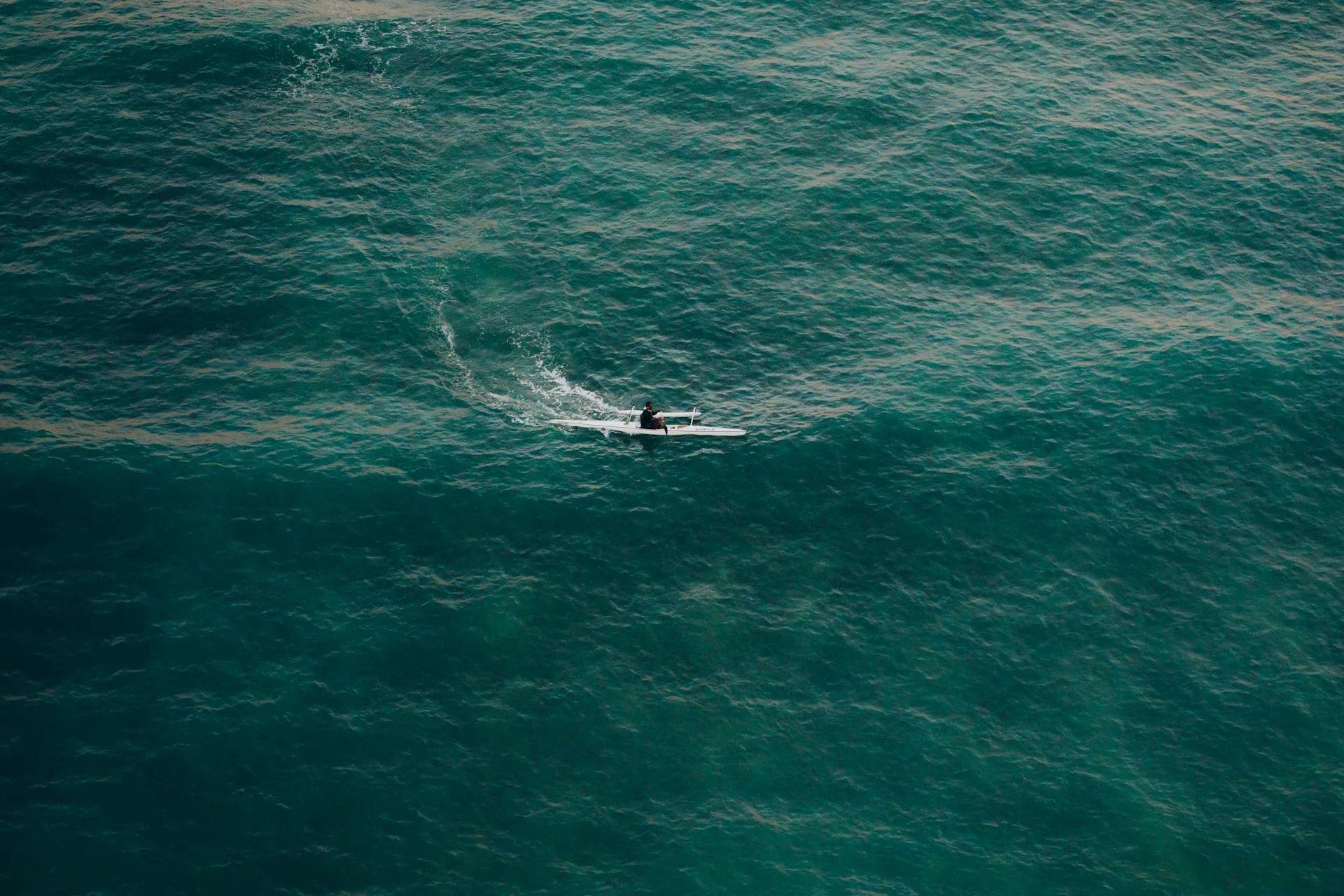
V-Shaped Hull Kayaks: Built for Speed and Rough Water
A V-shaped hull has a distinct ridge — called a keel line — running along the centreline of the bottom. The hull angles downward from both sides to meet at this ridge, creating a V-profile when you look at it head-on. Some are subtle, barely noticeable. Performance sea kayaks can have a pronounced V that looks almost aggressive.
What V-shaped hulls do well
Two things, primarily: speed and tracking.
That V-shape cuts through the water like a blade. Where a flat hull pushes water aside (creating drag), a V-hull parts it cleanly and lets it flow along both sides of the keel. The result is a kayak that glides further per stroke and maintains speed with less effort. On long crossings or coastal routes, this efficiency is the difference between arriving fresh and arriving wrecked.
Tracking is superb. The keel line acts like a built-in rudder, keeping the kayak pointed where you aim it. In crosswinds that would have a flat-hulled kayak crabbing sideways, a V-hull holds its line with minimal correction. For covering distance efficiently, nothing beats it.
V-shaped hulls also handle rough water exceptionally well. The angled shape slices through waves rather than slapping over them, which makes for a drier, smoother ride in choppy conditions. If you’ve ever paddled a flat-bottomed kayak across a windy lake and felt every single wave hit you like a slap, you’ll appreciate how a V-hull just… deals with it.
They’re the go-to choice for:
- Sea kayaking — open water, tidal races, coastal crossings
- Long-distance touring — multi-day trips where efficiency matters
- Windy conditions — exposed lochs, reservoirs, coastal waters
- Experienced paddlers — those with solid bracing and edging skills
- Racing and fitness paddling — if speed is the priority
The trade-offs
Initial stability is the weakest of all three hull types. Sit in a V-hulled sea kayak for the first time and you’ll feel like you’re balanced on a knife edge. Every tiny movement seems amplified. Your hips ache from constantly making micro-corrections. It’s the kind of boat where you look at experienced paddlers gliding along effortlessly and think “how on earth are they doing that?”
The answer is practice. V-hull kayaks reward skill and punish hesitation. Once your body learns to relax and work with the hull, the secondary stability is actually excellent — you can lean these boats to dramatic angles and they’ll come back. But the learning curve is real, and it’s steep.
They’re also poor in tight spaces. That aggressive tracking — brilliant on open water — makes turning in narrow rivers or weaving between moored boats frustratingly slow. Some sea kayaks need to be edged hard just to execute a basic turn.
Price tends to be higher too. V-shaped hulls are most common on performance and sea kayaks, which typically run £800-2,500+ for composite models. You’re paying for materials, design, and the assumption that you know what you’re doing.
Typical V-hull kayaks
The classics: P&H Cetus, Valley Etain, NDK Explorer. In the more accessible bracket, the Perception Essence and Dagger Alchemy offer moderate V-hulls that aren’t as punishing. Sea kayaking is where this hull shape really lives — these are boats designed for the Scottish west coast, Pembrokeshire, the Northumberland coastline. Serious water for serious paddlers.
Hybrid Hulls and the Shapes In Between
Real kayaks rarely have pure flat, rounded, or V-shaped hulls. Most designers blend these profiles to get the best compromise for a specific purpose.
Common hybrid features
- Flat bottom with rounded edges (pontoon style) — gives flat-hull stability with better secondary stability. Common on quality recreational kayaks. The Dagger Axis is a good example.
- Shallow V with rounded shoulders — tracks better than a pure rounded hull but isn’t as tippy as a deep V. Popular for day-touring kayaks that might see occasional open water.
- Multi-chine hulls — instead of smooth curves, the hull has defined angles (chines) where flat panels meet. This creates a hull that feels stable like a flat bottom at rest but behaves more like a rounded hull when edged. Many modern sea kayaks use this approach.
The terminology gets confusing because manufacturers use different words for similar things. “Hard chine,” “soft chine,” “multi-chine,” “swede form” — it’s enough to make your head spin. The practical takeaway is simpler: try before you buy, and pay attention to how the kayak feels at rest and when tilted, not just what the spec sheet says.
Which Hull Shape Should You Choose?
This isn’t really about picking the “best” hull shape — it’s about matching the shape to your paddling.
Choose a flat hull if:
- You’re brand new to kayaking and want maximum confidence
- You’ll paddle sheltered canals, lakes, and gentle rivers
- You want to fish, photograph, or just relax on the water
- Budget is a priority — flat-hull recreational kayaks offer the best value
- You’re looking at inflatable kayaks for casual use — most have flat or near-flat hulls
Choose a rounded hull if:
- You want one kayak that handles most UK conditions
- You’re planning day trips and touring paddles
- You’ve done some paddling and want to progress
- You value comfort over long distances
- You want decent stability AND decent performance
Choose a V-shaped hull if:
- You’re an experienced paddler comfortable with bracing and edging
- Sea kayaking or exposed coastal waters are your thing
- Speed and tracking matter more than initial stability
- You’re covering serious distance regularly
- You’ve already owned a kayak and know what you want
For most UK paddlers — especially those getting into the sport or doing recreational paddling on rivers, canals, and lakes — a rounded hull or a flat-with-rounded-edges design hits the sweet spot. You get enough stability to feel safe, enough performance to enjoy longer paddles, and enough versatility to handle the mixed conditions British weather throws at you.
How to Test Hull Shapes Before Buying
Reading about hull shapes is useful. Feeling them under your backside is better. Here are practical ways to compare:
- Demo days — brands like P&H, Valley, and Dagger run demo events at paddling centres across the UK. You can try 5-6 different boats in an afternoon. Check the British Canoeing events calendar.
- Kayak hire centres — most centres carry a mix of hull types. Hire two different kayaks on consecutive weekends and compare.
- Paddling clubs — join a local club (British Canoeing has a club finder) and you’ll often find members happy to let you try their boats.
- Second-hand first — buy a used kayak for £150-250, paddle it for a season, and sell it for roughly what you paid. You’ll learn more about what you want from six months of actual paddling than from any article — including this one.
Getting the right paddle length matters too, by the way. The best hull in the world won’t save you if your paddle is the wrong size.
Frequently Asked Questions
What is the most stable kayak hull shape? Flat hulls offer the most initial stability — the feeling of steadiness when you're sitting upright on calm water. However, rounded hulls offer better secondary stability, meaning they're more stable when tilted or in choppy conditions. For beginners on sheltered water, flat is best. For varied conditions, rounded is often more stable overall.
Can beginners use a V-shaped hull kayak? It's not recommended as a first kayak. V-shaped hulls feel very tippy to inexperienced paddlers and require good balance and bracing skills to feel comfortable. Most beginners are better served by a flat or gently rounded hull and can progress to a V-hull as their skills develop.
Does hull shape affect kayak speed? Yes, noticeably. V-shaped hulls are the fastest, cutting through water with minimal drag. Rounded hulls sit in the middle, offering good efficiency for touring. Flat hulls create the most drag and are the slowest, which is fine for short recreational paddles but noticeable on longer trips.
What hull shape is best for fishing from a kayak? Flat or pontoon-style hulls (flat bottom with rounded edges) are best for fishing. They provide the most stability when stationary, which matters when you're casting, reeling, and reaching for gear. Some anglers use sit-on-top kayaks with flat hulls specifically because they allow more movement without feeling tippy.
What is a chine on a kayak hull? A chine is the edge where the bottom of the hull meets the side. A 'hard chine' is a sharp, defined angle — common on some sea kayaks — while a 'soft chine' is a gentle curve. Multi-chine hulls have several angles, creating a hull that blends the stability of flat panels with the performance of a rounded shape.