The best wetsuit for paddleboarding in the UK must keep you warm after an unexpected swim without making every paddle stroke feel like shoulder training. For most spring-to-autumn paddlers, our best overall choice is the Decathlon 500 3/2 mm natural-rubber full suit at about £85: it balances upper-body stretch, full coverage and a sensible price. Colder water, long winter sessions and paddlers who rarely fall in all need different solutions, so thickness alone should not decide the purchase.
In This Article
- Best Wetsuits for Paddleboarding UK: Quick Picks
- How to Choose the Best Wetsuit for Paddleboarding in the UK
- The Best Paddleboarding Wetsuits Reviewed
- Paddleboarding Wetsuit Comparison
- How a Paddleboarding Wetsuit Should Fit
- What Else to Wear With Your Wetsuit
- The Bottom Line
- Frequently Asked Questions
Best Wetsuits for Paddleboarding UK: Quick Picks
Steady SUP often keeps you warmer than sports where you spend longer immersed, because most of the session is active and above the water. That makes flexible shoulders, sensible ventilation and a plan for falling in more useful than simply buying the thickest suit in the shop. We checked current UK retailer and manufacturer specifications and listed prices on 16 August 2026; sale prices and size availability can move quickly.
Best overall: Decathlon 500 Natural Rubber 3/2 mm
At approximately £84.99 from Decathlon, this flexible full suit is our first choice for typical UK paddling from late spring into early autumn. This current listing uses a men’s cut, so treat it as the best-value example rather than forcing the wrong body shape; fit comes before the model name.
Best budget SUP suit: Decathlon Canoe/Kayak and SUP Longjohn 2 mm
This sleeveless longjohn costs about £49.99 and is the neatest inexpensive option for warm-weather paddlers. Decathlon’s women’s Long Jane is currently about £44.99. Both leave the shoulders free but need an extra upper layer when conditions cool.
Best paddling-specific upgrade: Palm Quantum Longjohn 3 mm
Palm’s £115 Quantum is built around paddlesports rather than surfing, with men’s and women’s cuts at the same price. Reinforced knees, a two-way front zip and unrestricted shoulders make it our pick for frequent fair-weather use.
Best flexible system: Alpkit Element Jacket and Pants
The separate Element jacket and trousers were listed at roughly £69.99 each in the current sale, or about £140 for the set. Men’s and women’s versions let you alter upper and lower insulation separately, although the waist is less sealed than a one-piece suit.
Best for winter: OLAIAN 900 Hooded 5/4 mm
Decathlon’s hooded winter suit is about £249.99. Its 5/4 mm neoprene and integrated hood make it a serious cold-water option, not the default for every UK paddle; winter tourers who seldom fall in should also compare a drysuit.
How to Choose the Best Wetsuit for Paddleboarding in the UK
The best wetsuit for paddleboarding in the UK is the one matched to the water, wind and likelihood of immersion. Manufacturer temperature bands are useful starting points, not permission to ignore local conditions or your own cold tolerance.
Match thickness to water, not sunshine
Bright air and cold water are a common UK combination. The Met Office’s cold-water guidance explains that water below 15°C can trigger an involuntary response affecting breathing and movement. That threshold covers a large part of the British paddling year.
As a practical starting point, use the ranges below alongside local information rather than as fixed safety limits:
- Warm summer water: a 2 mm longjohn, shorty or modular neoprene system can work on sheltered water.
- Late spring to early autumn: a flexible 3/2 mm full suit is the most useful one-suit option for many paddlers.
- Cool shoulder seasons: a 4/3 mm full suit adds insulation, although shoulder flexibility becomes more important.
- Winter and very cold water: consider a quality 5/4 mm suit with hood, boots and gloves, or compare it carefully with a drysuit.
Do not translate those ranges into fixed calendar months. A sheltered southern lake in September and an exposed Scottish loch on the same day are not the same proposition.
Choose a cut that suits standing paddling
A full suit gives the most dependable immersion protection. A sleeveless longjohn frees the shoulders and vents heat, which is why it remains popular for touring and fitness paddling. Two-piece systems are even easier to regulate but introduce a waist seam where water can enter.
Shorties suit warm recreational sessions near shore, not ambitious year-round use. They protect the core but leave the lower legs and arms exposed to cold water and wind. If you want one purchase to cover the widest useful range, choose a flexible full 3/2 mm rather than a thick shorty.
Prioritise shoulder movement
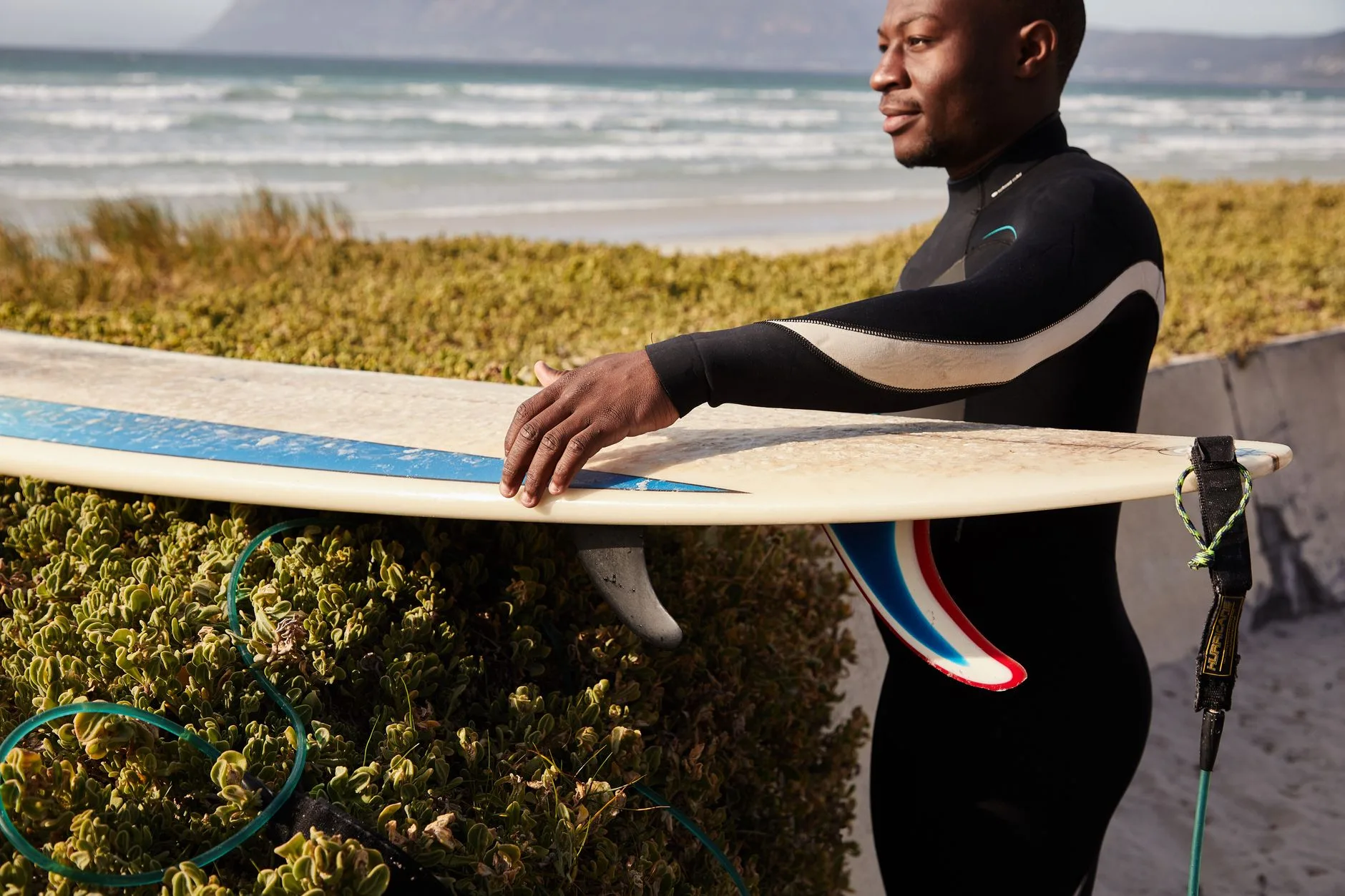
Surf suits are designed for repeated paddling while prone, so many work well on a SUP. Still, cheap neoprene can pull across the shoulders when you reach forward. Raise both arms, rotate your torso and imitate ten paddle strokes in the changing room. Any suit that rides into the neck or fights the reach will become irritating on a long tour.
Our shortlist uses published construction details, current UK availability and suitability for the upright paddling motion. We excluded race-focused swimming suits whose delicate outer coatings and specialist buoyancy profiles add cost without solving the normal SUP brief.
Check seams and entry style
Flatlock seams are comfortable and affordable but allow more water movement, making them better for warmer conditions. Glued and blind-stitched seams reduce flushing and suit cooler water. Taped seams add durability and warmth at a higher price.
Back zips are easiest to enter. Chest zips usually seal better and leave the back more flexible, though they require more wriggling. Front zips on longjohns are convenient when changing beside the water and can provide welcome ventilation between efforts.
The Best Paddleboarding Wetsuits Reviewed
These picks cover different conditions rather than pretending five similar black suits have five different personalities. Prices are current approximate UK prices and can change with size, colour and seasonal sales.
Decathlon 500 Natural Rubber 3/2 mm: best overall
The Decathlon 500 costs around £84.99 and is specified for water from 17°C to 22°C. That stated range makes it a summer-biased suit, but the full-length cut also provides useful wind and splash protection on cooler days. Stretch material across the upper body and stretch seams address the part of a surf suit that matters most to paddleboarders.
Its price is close to entry-level petroleum-neoprene suits, while the natural-rubber construction gives buyers another material option. The limitation is clear: 3/2 mm is not a winter system, and the water-temperature recommendation is warmer than much of the UK year.
- Best for: regular spring-to-autumn leisure paddling and beginners wanting one versatile full suit.
- Pros: good upper-body flexibility, full coverage, fair price and easy Decathlon availability.
- Cons: too light for winter and currently offered in a relatively restrained size range.
On its published construction and current price, this is the model we would start with for a first proper SUP wetsuit.
Decathlon SUP Longjohn 2 mm: best budget choice
At about £49.99, Decathlon’s 2 mm canoe, kayak and SUP longjohn costs less than many general-purpose full suits. It is shaped for paddling and leaves the shoulders completely free. That freedom is valuable for beginners working on an efficient SUP paddle stroke rather than wrestling stiff sleeves.
The trade-off is exposure. Arms cool quickly in wind, and 2 mm neoprene offers limited protection during a long swim. Pair it with a close-fitting neoprene top or a paddling jacket, and keep it for warm, sheltered outings where the bank or shore is accessible.
- Best for: summer leisure paddling, warm-water lessons and paddlers who overheat in full suits.
- Pros: low price, unrestricted shoulders and a cut designed for paddle sports.
- Cons: limited cold-water coverage and less useful as a single all-season purchase.
Palm Quantum Longjohn 3 mm: best SUP-specific upgrade
The £115 Palm Quantum brings better paddling details than most surf-derived options. It uses 3 mm limestone neoprene, flatlock seams, reinforced knees, a stretch lumbar panel and a two-way front zip. The pre-bent legs are useful when kneeling through choppy sections or launching from an awkward bank.
Palm lists separate men’s and women’s Quantum longjohns at the same price. That is better than presenting one body shape as universal. Its flatlock seams and sleeveless cut still point towards moderate conditions; add a thermal or windproof top when the air cools.
- Best for: frequent touring, coaching and active paddlers who value movement over maximum insulation.
- Pros: paddle-specific cut, reinforced knees, useful zip and broad size choice.
- Cons: costs more than budget longjohns and needs an upper layer in cold wind.
Alpkit Element Jacket and Pants: best modular system
Alpkit’s Element separates use 3 mm limestone neoprene and can be mixed according to the day. The jacket and trousers were each available for about £69.99 in clearance pricing, creating a roughly £140 full system. The approach makes sense for SUP because your insulation needs change rapidly once you start working.
Wear the trousers alone on a warm fitness paddle, add the jacket on a breezy lake, or combine the jacket with Element shorts. Alpkit describes nylon-faced material in high-wear areas and promotes repair and end-of-life recycling routes. The compromise is a waist join that can flush more readily than a well-fitted full suit.
- Best for: paddlers who encounter mixed conditions and prefer adjustable layers.
- Pros: flexible combinations, easy changing and excellent shoulder movement.
- Cons: sale stock may be limited and the two-piece seal is weaker during sustained immersion.
OLAIAN 900 Hooded 5/4 mm: best winter wetsuit
The OLAIAN 900 is the specialist choice here. At around £249.99, it uses 5/4 mm neoprene, an integrated hood and a cut intended to reduce flushing while retaining movement. That specification is appropriate for cold-water exposure, and the available short, standard and tall variants improve the chance of finding a close fit.
It is also the easiest suit on this list to buy for the wrong reason. A paddler moving continuously above water can overheat in 5 mm neoprene, then chill when sweat and wind meet. For regular winter touring, compare a wetsuit with a paddling drysuit before spending £250. The wetsuit is strongest when repeated immersion is likely; a drysuit can be more comfortable when staying dry is realistic.
- Best for: cold-water sessions with a meaningful chance of immersion.
- Pros: serious insulation, integrated hood, better seals and multiple fit variants.
- Cons: expensive, warm during hard paddling and more restrictive than thinner options.
Paddleboarding Wetsuit Comparison
Use this table to narrow the type first, then try the correct size. A cheaper suit that seals neatly at the neck, wrists and ankles will usually outperform a premium suit with folds at the lower back.
| Wetsuit | Approx. UK price | Thickness | Best use | Main compromise |
|---|---|---|---|---|
| Decathlon 500 Natural Rubber | £84.99 | 3/2 mm full | Best all-round spring-to-autumn choice | Not warm enough for winter |
| Decathlon SUP Longjohn | £49.99 | 2 mm sleeveless | Warm-weather budget paddling | Exposed arms and light insulation |
| Palm Quantum Longjohn | £115 | 3 mm sleeveless | Active touring and paddle-specific movement | Needs an upper layer in cold wind |
| Alpkit Element Jacket + Pants | About £140 | 3 mm separates | Variable weather and flexible layering | Can flush around the waist |
| OLAIAN 900 Hooded | £249.99 | 5/4 mm full | Cold-water and winter immersion | Hot and bulky during hard efforts |
The Palm and Decathlon longjohns give the cleanest paddle stroke. The Decathlon 500 is the safer one-suit purchase for beginners because full sleeves cover more conditions. The OLAIAN only wins when genuine cold-water exposure outweighs heat management on the board.
How a Paddleboarding Wetsuit Should Fit
A wetsuit should feel close everywhere without restricting breathing or pulling your shoulders forward. Loose folds collect and circulate water; an over-tight neck, chest or shoulder panel makes the suit miserable before you launch.
Run a dry-land movement check
Try the suit with the swimwear you intend to use beneath it, then perform a short sequence:
- Reach both arms overhead: the suit should not drag painfully at the shoulders or throat.
- Rotate through a paddle stroke: check that the torso moves without the zip or seams biting.
- Squat and kneel: the knees should bend without the crotch pulling down.
- Check the lower back: a large hollow or fold will hold cold water.
- Inspect every seal: wrists, ankles and neck should sit flat rather than gape.
Brand sizing varies, so height alone is not enough. Chest or bust, waist, hips and weight can place you in different columns of the chart. Palm’s ranges illustrate the point: its men’s Quantum includes medium-tall, while its women’s version uses a separate pattern from UK 8 to UK 16. If a shortlisted model is not offered in a cut matching your measurements, choose an equivalent 3/2 mm or longjohn that is; do not size around the problem.
Allow for the buoyancy aid
Wear or borrow a buoyancy aid during the final fit check. Thick seams, a front zip or excess neoprene can rub beneath the side straps. If you are still choosing flotation, our guide to selecting a paddling buoyancy aid explains fit and adjustment; the same principle of secure, unrestricted movement applies on a SUP.
Do not size up merely because a dry wetsuit feels unfamiliar. Size up only when the maker’s measurements support it or movement and breathing remain restricted after the suit is seated correctly.
What Else to Wear With Your Wetsuit
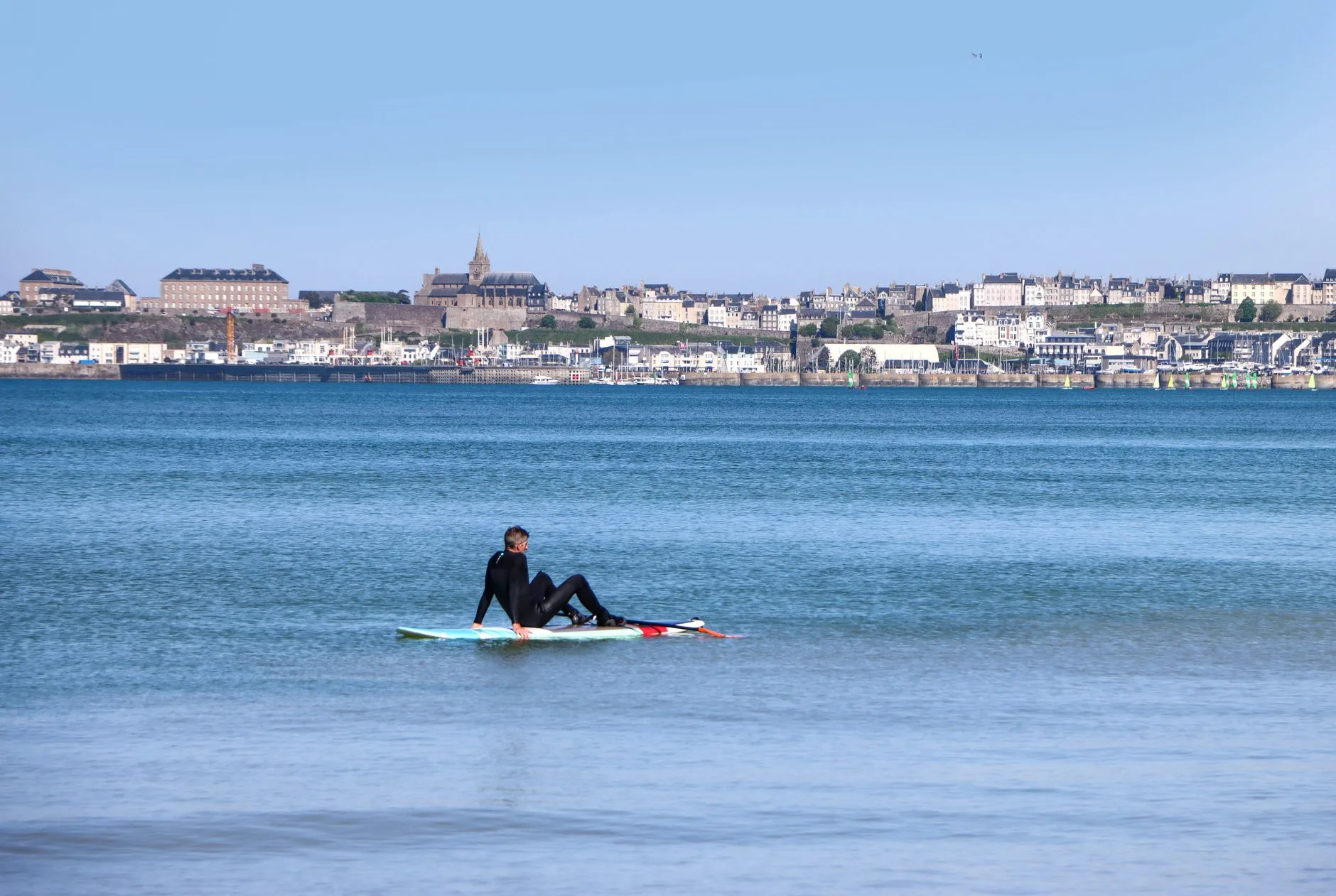
A wetsuit is insulation, not a complete safety system. Check the weather and tides before paddling, and dress for time in the water rather than the temperature beside the car.
Feet, hands and head
Neoprene boots improve warmth and protect feet on stones, shells and rough slipways. For product options, see our guide to the best paddleboarding shoes for grip and drainage. In cold weather, gloves and a hood reduce exposed surface area, but thick gloves can tire the forearms by making the paddle shaft harder to feel; our cold-water paddling glove guide covers that balance.
Keep a complete dry change in a roll-top bag. A changing robe is pleasant, but dry base layers, a warm hat and an insulated outer jacket matter more once the session ends.
Buoyancy aid and the correct leash
Wear a properly fitted buoyancy aid even when neoprene adds some buoyancy. Choose the leash for the environment: a conventional ankle leash can become a snag risk in moving water, where an appropriate quick-release waist system and the training to use it are important. Conditions change between rivers and coasts, so read our river versus sea paddleboarding guide before assuming one setup works everywhere.
The Met Office notes that UK and Irish sea temperatures typically range from 6–10°C in winter to 15–20°C in summer, with inland water sometimes colder. That is why a warm afternoon does not turn a cold reservoir into a swimming pool.
The Bottom Line
For most people looking for the best wetsuit for paddleboarding in the UK, buy a flexible full 3/2 mm suit first. The Decathlon 500 Natural Rubber at about £84.99 is our best overall pick because it covers the useful middle ground without charging premium money.
Choose the £49.99 Decathlon SUP Longjohn for sheltered summer paddling on a tight budget, or spend £115 on the Palm Quantum if you paddle frequently and want a better paddlesport cut. The Alpkit Element separates suit paddlers who value adjustable layers. Reserve the £249.99 hooded OLAIAN 5/4 mm for proper cold-water exposure—and compare it with a drysuit if you tour through winter while rarely falling in.
Fit outranks the logo. Try the suit, mimic a paddle stroke, kneel, add your buoyancy aid and reject any model that gaps at the back or fights your shoulders.
Frequently Asked Questions
What thickness wetsuit is best for paddleboarding in the UK? A flexible 3/2 mm full suit is the most versatile starting point for many late-spring-to-early-autumn paddlers. Move to 4/3 mm or 5/4 mm for colder water, and consider a 2–3 mm longjohn for warm, active sessions.
Do I need a wetsuit for paddleboarding in summer? Not on every warm, sheltered session, but dress for the water and the possibility of a swim. UK water can remain cold despite warm air, so check local water temperature, wind and exposure before leaving the suit at home.
Is a longjohn or full wetsuit better for SUP? A longjohn gives better shoulder freedom and heat control; a full suit gives more reliable immersion and wind protection. Choose the longjohn for active fair-weather paddling and the full suit for colder or less predictable conditions.
Can I use a surfing wetsuit for paddleboarding? Yes. A flexible surfing suit can work very well, provided it allows a full paddle stroke and matches the water temperature. SUP-specific longjohns mainly improve ventilation, knee durability and freedom around the shoulders.
Is a wetsuit or drysuit better for winter paddleboarding? A wetsuit suits repeated immersion and keeps insulating when wet, but can feel hot while working above water. A drysuit with suitable layers often suits winter touring when staying dry is likely. Training, fit and the conditions matter more than the label.
Should I wear anything under a paddleboarding wetsuit? Wear a swimsuit or close-fitting synthetic layer that does not bunch. Avoid cotton because it retains water. Thick extra layers can distort the fit and create rubbing unless the wetsuit maker specifically recommends them.