You’ve loaded the car, pumped up the board, and driven 45 minutes to the coast — only to arrive at a windswept beach where the water looks like a washing machine. The forecast said “partly cloudy” but said nothing about 25-knot gusts or a spring tide ripping through the estuary. Every paddler has been there, and it’s the kind of experience that teaches you to check more than just whether it’s going to rain.
In This Article
- Why Weather and Tides Matter for Paddlers
- Wind: The Biggest Factor in Paddle Safety
- Reading a Marine Weather Forecast
- Understanding Tides: Springs, Neaps and Tidal Range
- Tidal Currents and How They Affect Paddling
- Planning Your Session Around the Tide
- Temperature, Hypothermia and Seasonal Risks
- Lightning, Fog and Other Hazards
- Essential Apps and Resources for UK Paddlers
- What to Do If Conditions Change Mid-Session
- Frequently Asked Questions
Why Weather and Tides Matter for Paddlers
Paddling on flat water on a calm day is one of the most relaxing things you can do. Paddling on the same stretch of water in different conditions can be genuinely dangerous. The difference between a pleasant two-hour paddle and a 999 call often comes down to whether someone checked the forecast properly before setting off.
Wind creates chop, pushes you off course, and drains energy far faster than most beginners expect. Tides move water — and everything on it — in directions and at speeds that can overwhelm even experienced paddlers. Cold water robs your body heat in minutes, not hours. None of these things are unpredictable. They’re all forecasted, published, and free to check. The trick is knowing where to look and what the numbers actually mean.
If you’re relatively new to paddling, our stand-up paddleboarding beginners’ guide covers the basics of getting started. This article picks up where that leaves off — helping you understand the conditions you’ll paddle in and how to make smarter decisions about when (and when not) to go out.
Wind: The Biggest Factor in Paddle Safety
Why Wind Matters More Than Rain
Most people check whether it’s going to rain. Paddlers should check the wind first. Rain makes you wet — wind makes you unsafe. A Force 4 breeze (11-16 knots) on a SUP feels like paddling through treacle. A Force 5 (17-21 knots) can push a kneeling kayaker sideways faster than they can paddle forward.
The key number is wind speed in knots or miles per hour. As a rough guide for recreational paddlers:
- 0-7 knots (calm to gentle breeze) — ideal conditions for all abilities
- 8-11 knots (moderate breeze) — manageable for intermediate paddlers, beginners should stay sheltered
- 12-16 knots (Force 4) — experienced paddlers only, and stick to sheltered spots
- 17+ knots (Force 5 and above) — stay on shore unless you’re an advanced sea kayaker with rescue training
Offshore vs Onshore Wind
Direction matters as much as speed. An offshore wind (blowing from land out to sea) is the most dangerous scenario for paddlers. It pushes you away from shore, and the further out you get, the stronger it feels. I’ve watched a beginner on a SUP get carried 200 metres offshore at Sandbanks in what felt like a gentle breeze on the beach — it took a rescue boat to bring them back.
Onshore wind (blowing from sea to land) is less dangerous because it pushes you toward safety, but it creates shore break and choppy conditions near the beach.
Wind and Fetch
Fetch is the distance of open water over which the wind travels. A Force 3 wind blowing across the width of a narrow canal won’t build any meaningful waves. The same Force 3 blowing across 10 miles of open estuary creates a proper chop. When checking conditions, consider not just the wind speed but how much open water it has to build waves across.
Reading a Marine Weather Forecast
Where to Find Reliable Forecasts
The Met Office publishes inshore waters forecasts that cover every stretch of the UK coastline. These are designed for people on the water, not just people walking the dog along the seafront.
For inland paddlers, the standard Met Office 5-day forecast works fine — you’re mainly looking at wind speed and direction. For coastal or estuary paddling, the inshore forecast gives you sea state, swell, and visibility on top of wind.
What the Numbers Mean
Marine forecasts use specific terminology:
- Sea state — described in terms like “smooth”, “slight”, “moderate”, “rough”. For recreational paddling, “smooth” or “slight” is where you want to be
- Visibility — “good” means over 5 nautical miles, “moderate” is 2-5nm, “poor” is under 2nm. If visibility is moderate or worse, stay close to shore and carry a whistle
- Swell — the long-period waves coming from distant weather systems. Even on a calm day, a 2-metre swell from the Atlantic can make conditions uncomfortable around headlands and harbour entrances
Checking Multiple Sources
After a few sessions where the forecast didn’t quite match reality, I started cross-referencing. The Met Office gives the big picture, Windy.com shows hour-by-hour wind patterns with animated maps, and XCWeather provides granular local detail. Spending five minutes checking all three before driving to the put-in saves a wasted journey about one time in five.
Understanding Tides: Springs, Neaps and Tidal Range
The Basics
UK waters have some of the largest tidal ranges in the world. The Bristol Channel sees a difference of over 14 metres between high and low water during spring tides — that’s a four-storey building’s worth of water arriving and leaving twice a day.
Tides are caused by the gravitational pull of the moon and sun. When the moon and sun align (roughly every two weeks, around new and full moon), you get spring tides — bigger highs, lower lows, and stronger currents. When they pull at right angles to each other (around half moon), you get neap tides — smaller range, gentler currents. For a related angle, see our Best Greenland Paddles 2026 UK: Traditional Kayaking guide.
Why Tidal Range Matters
A large tidal range means:
- More water moves — stronger currents, faster flows through narrow channels
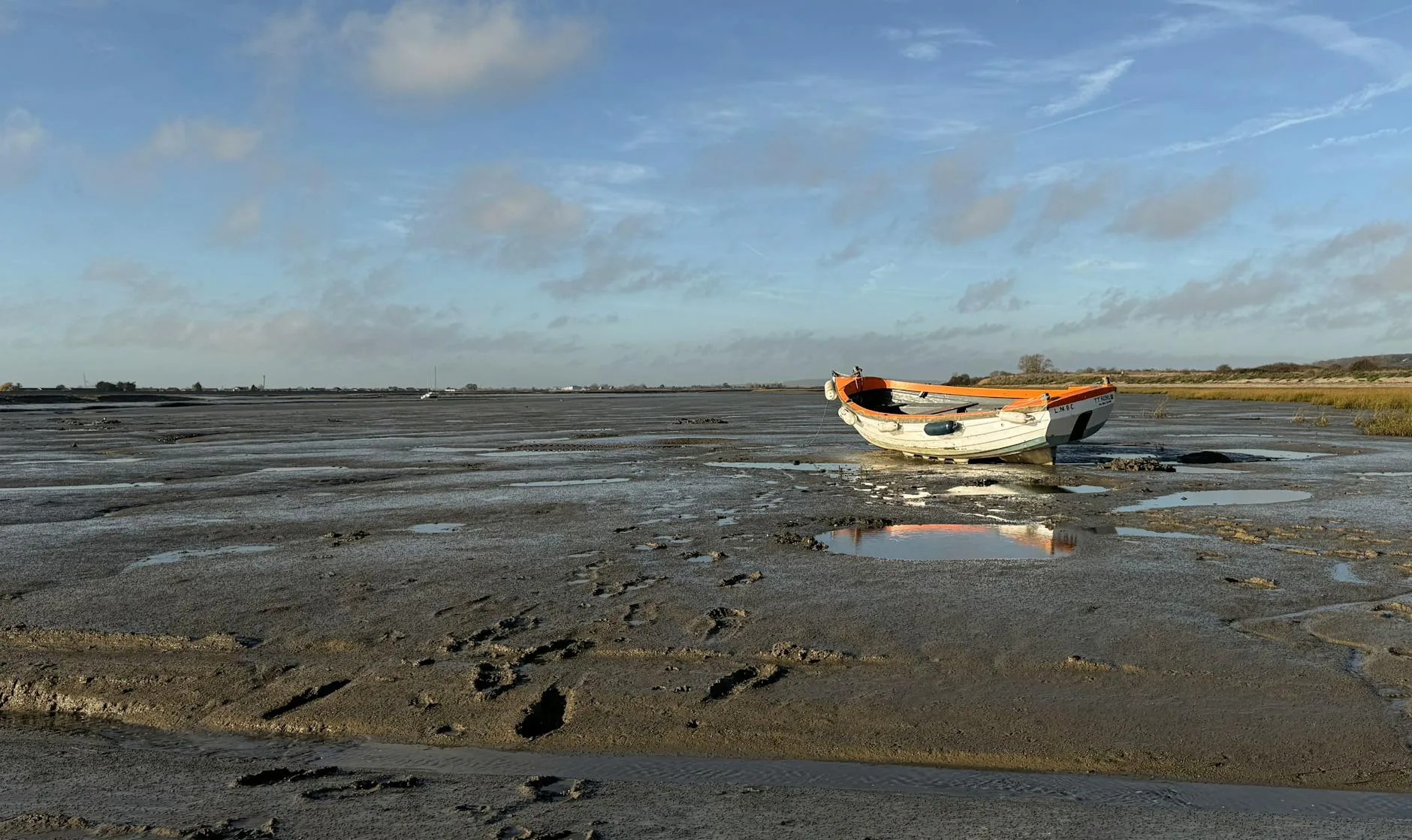
- More exposed shoreline at low tide — that gentle launch beach might be 300 metres of mud at low water
- Tidal races and overfalls — where fast-moving water hits an obstruction (headland, reef, sandbar) and creates turbulent, dangerous conditions
For beginners, neap tides are generally easier and more forgiving. The currents are weaker, the tidal range is smaller, and the conditions change more gradually.
Tidal Currents and How They Affect Paddling
The Speed Problem
A typical recreational kayaker paddles at about 3 knots. A moderate tidal current runs at 1-2 knots. That means paddling against the tide cuts your effective speed to 1-2 knots — you’re working twice as hard to cover half the distance. In a strong tidal area (the Menai Strait, Portland Bill, the Solent), currents can exceed 4-5 knots. No recreational paddler is making headway against that.
Flood, Ebb and Slack
- Flood tide — water rising, current flowing in
- Ebb tide — water falling, current flowing out
- Slack water — the brief period around high or low water when the current pauses before reversing. This is the calmest window for crossing tidal channels or paddling in areas with strong flows
The Admiralty EasyTide service gives free tidal predictions for ports around the UK, showing times of high and low water. For tidal stream information (the actual direction and speed of currents), you’ll want either a tidal atlas or an app like PaddleLogger that overlays current data.
Eddies and Back-currents
Where the main current flows past an obstruction — a headland, jetty, or island — an eddy forms on the downstream side. The water in the eddy flows in the opposite direction, and the boundary between the main current and the eddy (the eddy line) can be surprisingly turbulent. Experienced kayakers use eddies to rest and plan their next move. If you don’t know they’re there, they can spin you unexpectedly.
Planning Your Session Around the Tide
The Golden Rule: Paddle Against First
If you’re doing an out-and-back trip on a tidal river or coast, paddle against the current on the way out, while you’re fresh. Then turn around and let the tide carry you home. Getting this wrong — paddling with the tide outbound and then trying to fight it back when you’re tired — is how people end up calling for rescue.
Launch Timing
Check the tide tables for your location and work backwards. If you want to paddle at slack water, you need to be on the water 30 minutes before the predicted slack time. If the put-in requires a walk across a beach, low tide might mean a 15-minute carry across wet sand — plan accordingly. Our How to Choose a Kayak for a Beginner guide is useful alongside this.
For estuary trips, the best window is usually either side of high water. You get enough depth to avoid grounding, the current is manageable, and you can use the last of the flood to get upriver and the first of the ebb to come back.
Where to Find Tide Times
- Admiralty EasyTide — free, official tide predictions for all UK ports
- Magic Seaweed or Windguru — surf-focused but excellent tide data for coastal spots
- Ordnance Survey maps — show areas of tidal flats and drying heights
Temperature, Hypothermia and Seasonal Risks
Water Temperature vs Air Temperature
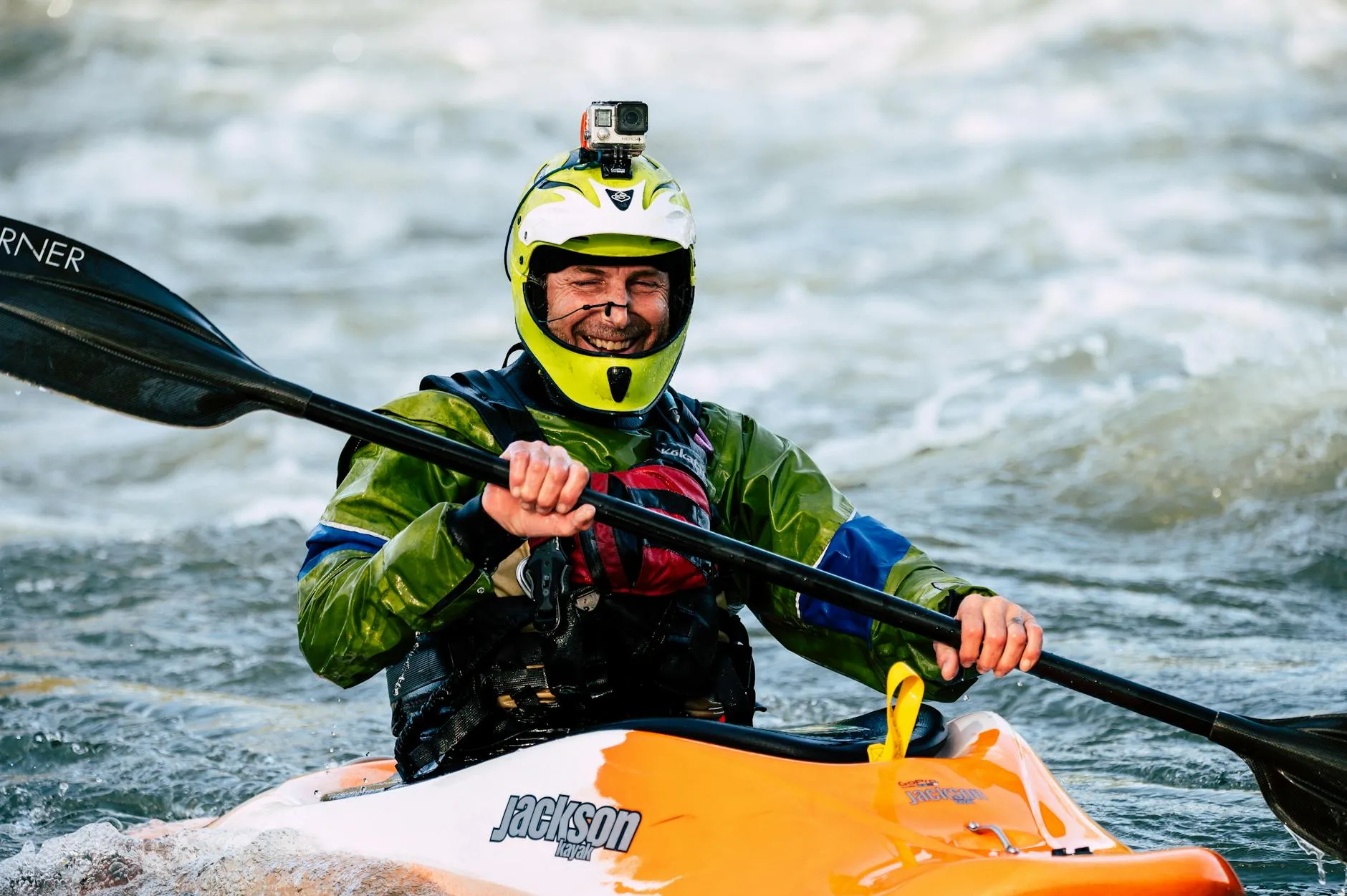
A sunny 18°C day in April feels lovely on the bank. The water is 8°C. Fall in wearing shorts and a t-shirt and you have about 10 minutes before cold water shock starts affecting your ability to swim. After 30 minutes, your muscles are too cold to grip a paddle. The RNLI’s advice is clear: if the water is below 15°C, wear a wetsuit or drysuit. No exceptions, regardless of how warm the air feels.
UK sea temperatures range from about 6-8°C in February to 15-18°C in August. Rivers and lakes can be colder still, especially after snowmelt in spring.
Cold Water Shock
The first reaction to cold water immersion is a gasp reflex — an involuntary intake of breath. If your head is underwater when it happens, you inhale water. Even if you stay on the surface, the shock triggers hyperventilation and a spike in heart rate that can cause panic and drowning in otherwise strong swimmers. This is why buoyancy aids are non-negotiable for cold water paddling.
Wind Chill on the Water
You’re wet, there’s no shelter, and the wind is blowing across your body. Wind chill on the water is brutal. A 12°C day with a 15-knot wind feels like 5°C on exposed skin. Carry a windproof layer in your dry bag even if you don’t think you’ll need it. After two hours of paddling on a gusty spring day where I started in just a rash vest, I learned this one the uncomfortable way.
Lightning, Fog and Other Hazards
Lightning
If you can hear thunder, you’re within range of a lightning strike. On water, you are the tallest object — and you’re holding a conductive paddle above your head. The rule is simple: get off the water immediately. Don’t wait for the storm to get closer. Lightning can strike 10 miles ahead of a storm front. We cover a similar decision in How to Choose a Tandem Kayak.
Fog
Visibility can drop fast on the water, especially in autumn and spring mornings. If you can’t see the shoreline, you can’t navigate. Fog also means boats can’t see you. Carry a whistle (one blast every two minutes in poor visibility is the sound signal for a vessel underway), wear bright colours, and stay well within your depth of local knowledge.
Sunburn
Paddlers get sunburn more than most outdoor enthusiasts because water reflects UV, you’re exposed for hours, and the breeze keeps you from feeling the heat. Factor 30 minimum, waterproof, reapplied every two hours. Your feet, the backs of your hands, and the tops of your ears are the spots everyone forgets.
Essential Apps and Resources for UK Paddlers
Having the right information on your phone before you leave the house makes all the difference. After a few years of paddling UK waters, these are the resources that actually get used:
- Met Office app — 5-day forecast, weather warnings, inshore waters section for coastal trips
- Windy.com — animated wind and weather maps showing hour-by-hour conditions. The visual layer for wind gusts is particularly useful
- Admiralty EasyTide — free tide predictions for all UK standard ports and secondary ports
- OS Maps — shows access points, parking, footpaths to put-ins, and tidal flats on coastal maps
- PaddleLogger — GPS tracking, route planning, tidal overlay for UK waters
- Magicseaweed or Windguru — primarily surf forecasting but excellent for coastal tide and swell data
- XCWeather — granular local wind data, very useful for spotting sheltered spots when it’s blowy elsewhere
You don’t need all of these. The Met Office plus one tide source covers 90% of recreational paddling decisions in the UK.
What to Do If Conditions Change Mid-Session
Stay Calm and Assess
Weather can shift faster than forecasts suggest, especially in spring and autumn. If the wind picks up or a squall rolls in, stop paddling for a moment and take stock. Where’s the nearest safe shore? Which direction is the wind pushing you? How much energy do you have left?
The Three Options
- Paddle to the nearest sheltered shore — not necessarily your launch point. Any safe landing will do. Deal with the car collection later
- Hunker down and wait — if you’re on a river or lake and can reach the bank, pull out and wait for the squall to pass. Most summer squalls blow through in 20-30 minutes
- Call for help — if you’re being swept offshore, if someone in your group has capsized and can’t remount, or if conditions are beyond your ability. The RNLI doesn’t charge for rescues and would rather be called out early than recover someone in serious trouble. Call 999 and ask for the Coastguard if you’re at sea, or call 999 for fire and rescue on inland waterways
Prevention Is Everything
The Paddle UK (formerly British Canoeing) safety advice recommends always telling someone where you’re going, when you expect to be back, and what to do if you don’t return. Carry a phone in a waterproof case. Wear a buoyancy aid. Check the forecast before you go — and accept that sometimes the smartest paddle is the one you don’t do.
Frequently Asked Questions
What wind speed is too strong for paddleboarding? Most beginners should stay off the water above 10-12 knots. Intermediate paddlers can handle up to about 15 knots in sheltered conditions. Above 17 knots (Force 5), even experienced SUP paddlers should think carefully — and on open water, stay ashore.
Is it safe to kayak during spring tides? Spring tides produce stronger currents and larger tidal ranges, which makes them riskier for inexperienced paddlers. If you’re new to tidal paddling, start with neap tides and sheltered estuaries. Experienced kayakers paddle spring tides regularly but plan carefully around slack water windows.
How do I check tidal currents for my paddling spot? Admiralty EasyTide provides free tide time predictions. For actual current speeds and directions, you’ll need a tidal atlas (available for all UK coastal areas) or an app like PaddleLogger that overlays tidal stream data on your route map.
What water temperature do I need a wetsuit? The RNLI recommends wearing a wetsuit or drysuit whenever the water temperature is below 15°C. In the UK, that’s roughly October through June for the sea, and year-round for many rivers and lakes. Even in summer, early morning water temperatures can be surprisingly cold.
Can I paddle in fog? You can, but it’s risky. If visibility drops below about 200 metres, you lose sight of the shore and other water users lose sight of you. Stay very close to shore, carry a whistle, wear bright clothing, and avoid shipping channels entirely. If in doubt, wait for it to lift.