You checked the forecast, it said light winds, and you drove an hour to the lake. Now you’re on the water and it’s blowing a steady 15mph with whitecaps forming, your board is getting pushed sideways, and every stroke feels like you’re paddling through treacle. The calm flatwater SUP session you planned has turned into a battle — and you’re losing.
Wind is the single biggest challenge for stand up paddleboarders in the UK. Our weather changes fast, forecasts are optimistic at best, and even “light breeze” can feel aggressive when you’re standing on a floating platform with the aerodynamic profile of a barn door. I’ve been caught out more times than I’d like to admit — including one memorable session on the Jurassic Coast where I spent forty-five minutes paddling into a headwind and made roughly 200 metres of progress.
The good news: with the right technique, you can paddle safely and even enjoyably in moderate wind and chop. Here’s what actually works.
In This Article
- Understanding Wind on a SUP
- Essential Technique Adjustments for Wind
- Paddling Into a Headwind
- Paddling With a Tailwind
- Dealing With Crosswinds
- Handling Choppy Water and Waves
- When to Go to Your Knees
- Safety Gear and Planning for Windy Conditions
- Building Confidence in Rough Conditions
- Frequently Asked Questions
Understanding Wind on a SUP
Why SUPs Are So Affected by Wind
A stand up paddleboard presents a massive surface area to the wind. You’re standing upright (acting as a sail yourself), the board sits high on the water (especially inflatables at 15cm thick), and the fin creates resistance below the waterline that the wind above the waterline pushes against. The result: even moderate wind affects your speed, direction, and stability far more than it would in a kayak or canoe.
Wind Speed Guide for SUP
- 0-8 mph (calm to light breeze): Perfect conditions. Paddle normally
- 8-15 mph (gentle to moderate breeze): Manageable with adjusted technique. Beginners will struggle
- 15-20 mph (fresh breeze): Experienced paddlers only. Technique critical. Wind chop forming
- 20+ mph (strong breeze): Stay off the water unless you’re very experienced with proper safety gear
RLSS water safety guidance (now Paddle UK) recommends that SUP paddlers check wind forecasts before every session and avoid paddling in winds above 15mph unless trained and equipped.
Wind Direction Matters More Than Speed
A 12mph headwind is tiring but predictable. A 12mph crosswind is destabilising and pushes you off course constantly. An 8mph offshore wind (blowing from shore toward open water) is the most dangerous — it pushes you away from safety and gets stronger as you get further out.
Critical safety rule: Always start your session paddling into the wind. That way, when you’re tired, the wind helps you home rather than fighting you.
Essential Technique Adjustments for Wind
Lower Your Centre of Gravity
The single most effective adjustment: bend your knees more. In calm water, you might paddle with relatively straight legs. In wind, drop into a slight squat — knees bent 15-20 degrees, hips lower, weight centred over the board. This makes you far more stable and reduces the “sail area” your body presents to the wind.
Shorten Your Paddle
If your paddle is adjustable, drop it 2-3cm shorter than your calm-water setting. A shorter paddle encourages a more compact, powerful stroke that keeps you lower. You lose some reach but gain control — a worthwhile trade in wind.
Increase Your Stroke Rate
In calm water, long slow strokes are efficient. In wind, shorter faster strokes maintain momentum better. Think of it like cycling uphill — you drop to a lower gear and spin faster. Aim for quick, punchy strokes rather than long graceful sweeps.
Keep the Blade Fully Submerged
Wind catches exposed paddle blades. Make sure your blade enters the water cleanly and stays fully submerged through the power phase. A blade that breaks the surface mid-stroke gets blown sideways, wasting energy and pulling you off balance. For a related angle, see our How to Choose Paddling Gloves for Cold Water guide.
Paddling Into a Headwind
The Power Stroke
When paddling directly into wind, your standard paddle stroke technique needs modification:
- Plant the blade as far forward as you comfortably can
- Pull through with your core (not just arms) — engage your abs and rotate your torso
- Exit the blade at your hip (don’t let it trail behind — that lifts the nose and catches more wind)
- Recover low — keep the blade close to the water surface during recovery to avoid wind catching it
- Switch sides every 3-4 strokes to maintain a straight line
Body Position
Lean slightly forward into the wind. Not from the waist (which throws off balance) but by shifting your whole stance forward on the board by 15-20cm. This keeps the nose down, reducing the surface area the headwind can push against.
Realistic Expectations
Accept that you’ll move slowly. A headwind cuts your speed by 30-50% depending on strength. Don’t fight it by trying to maintain your normal speed — you’ll exhaust yourself in 20 minutes. Settle into a sustainable rhythm and paddle at 60-70% effort. It’s a marathon, not a sprint.
Paddling With a Tailwind
Why It’s Not as Easy as It Sounds
Tailwinds feel like they should be free speed. And they partly are — you’ll move faster with less effort. But a tailwind also creates following seas (waves coming from behind) that can catch the tail of your board and push it sideways, causing you to lose balance or surf uncontrollably.
Technique Adjustments
- Move your stance back 10-15cm on the board — this drops the tail into the water and gives the fin more grip, reducing the tailwind’s tendency to push you off course
- Use longer, slower strokes — the wind is doing some work, so your strokes can be more relaxed
- Watch behind you — waves from behind arrive with less warning. Glance back regularly
- Use a rudder stroke if you start surfing a wave — a trailing blade on one side acts as a rudder to keep your line
Surfing Small Wind Swells
In stronger tailwinds, small wave trains form. You can catch and surf these for free speed — feel the board accelerate as a swell lifts the tail, take two quick strokes to match its speed, and ride it until it passes. This is genuinely fun once you get the timing right and feels like the wind is finally on your side.
Dealing With Crosswinds
The Constant Correction Problem
Crosswinds push you sideways and turn your board downwind. You’ll find yourself paddling on one side constantly to correct — which is exhausting and inefficient.
Techniques That Work
- Paddle predominantly on the windward side (the side the wind is coming from). This naturally corrects the wind’s push
- Angle your board 10-15 degrees into the wind — this gives you a net forward track despite the correction angle. Think of it like sailing upwind
- Use a sweep stroke on the leeward side — when you do switch sides, a wider sweep corrects your heading more than a standard forward stroke
- Move your stance slightly windward on the board — shifting your weight toward the wind counteracts its tipping force
Rail-to-Rail Balance
Crosswinds create uneven water — waves hit one side of your board. Practise keeping your weight evenly distributed through your feet, absorbing the wave motion through your knees and ankles. Think about keeping your head level while everything below your hips moves with the board. Our Best Inflatable Paddleboards 2026 UK: Beginner to Advanced guide is useful alongside this.
Handling Choppy Water and Waves
Reading the Chop
Wind chop is short, steep, and irregular — different from ocean swell which is long and predictable. In chop:
- Widen your stance by 5-10cm for a broader base
- Keep knees deeply bent — your legs are shock absorbers
- Look at the horizon, not at the water immediately around you — peripheral vision handles the waves better than staring at them
- Accept you’ll get wet — spray and small waves over the nose are normal. Don’t flinch away from them (which shifts your weight and causes falls)
Wave Angles
- Head-on waves: Easiest. Drive straight through them. Lean slightly forward as each wave hits
- Quartering waves (45 degrees): Trickier. They try to push you sideways. Keep paddling on the wave-facing side
- Beam waves (side-on): Most destabilising. Widen stance, lower centre of gravity, paddle actively for stability
Foot Positioning
In choppy water, your feet should be parallel (not staggered), shoulder-width apart, centred over the carry handle. Weight should be on the balls of your feet — not heels, which makes you reactive rather than proactive with balance adjustments.
When to Go to Your Knees
There’s No Shame in Kneeling
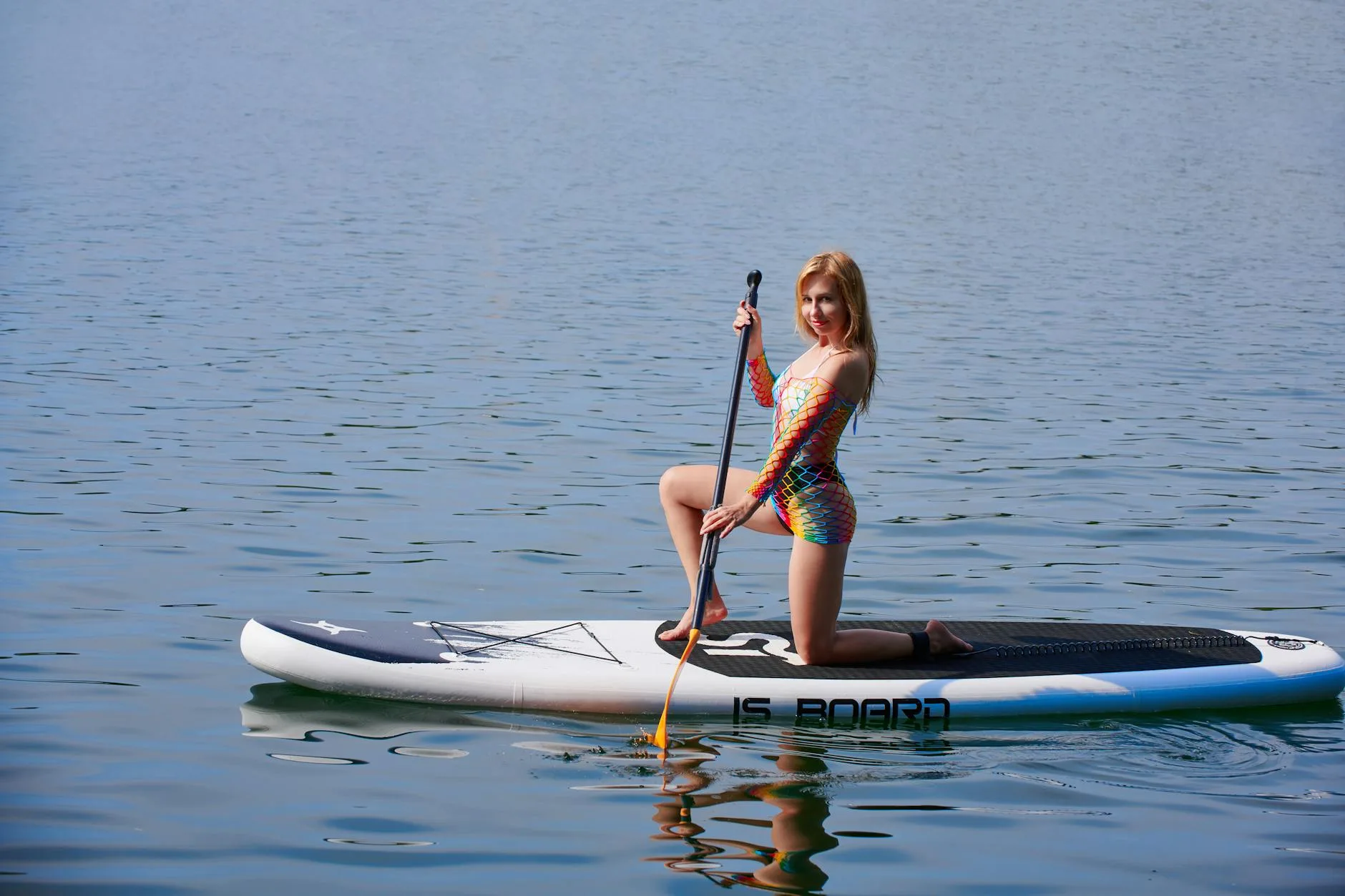
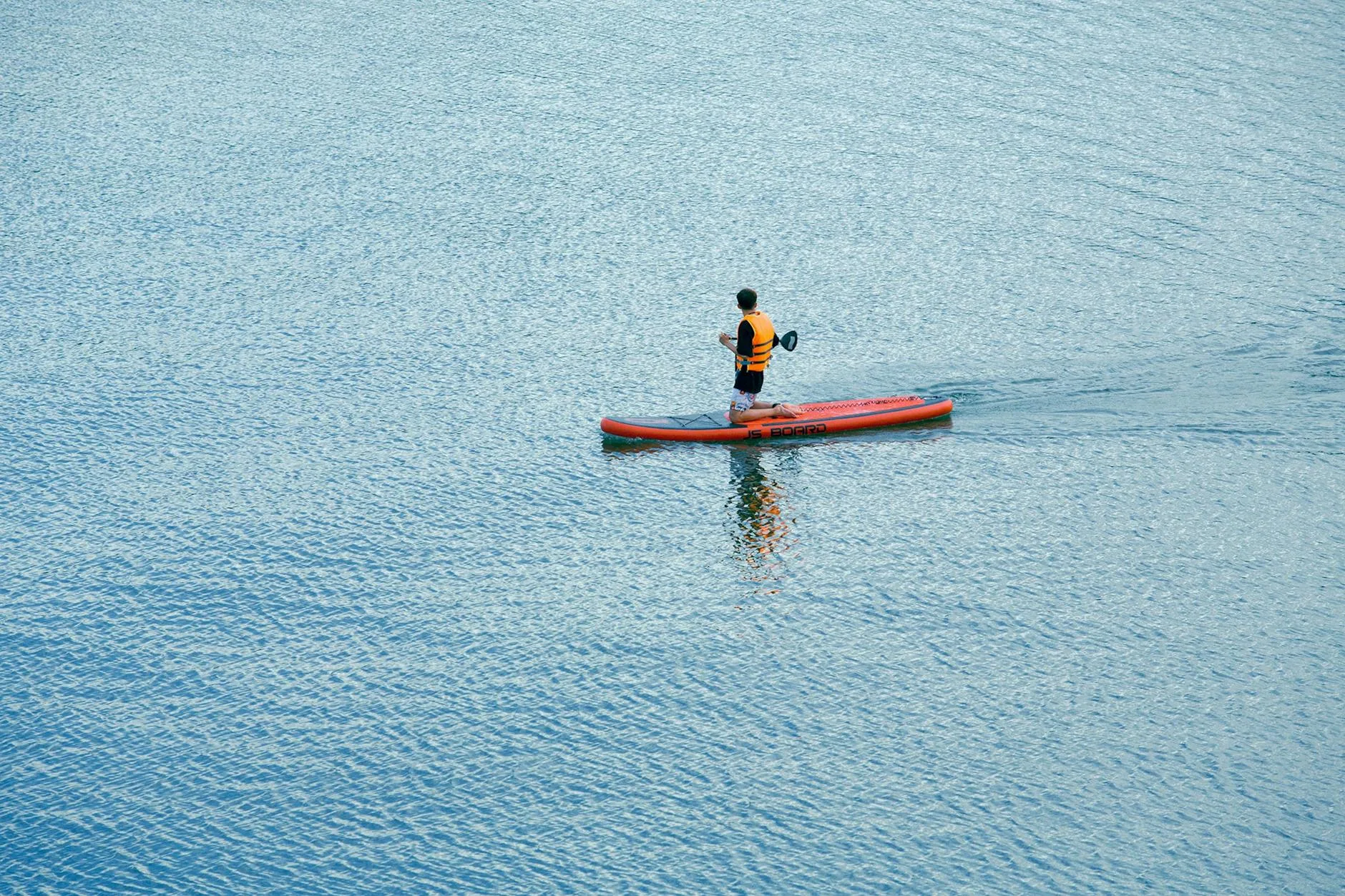
Kneeling on your SUP sharply lowers your centre of gravity and reduces your wind profile. It’s not giving up — it’s smart. Many experienced paddlers kneel in strong wind, especially during crossings or when conditions change unexpectedly.
How to Kneel Properly
- Lower slowly from standing — don’t drop suddenly
- Both knees on the deck pad, roughly where your feet were
- Sit back on your heels for stability
- Shorten your paddle (or choke down on the shaft) to account for the lower position
- Paddle with the same technique but scaled down
When Kneeling Is the Right Call
- Wind has picked up beyond your standing comfort zone
- You need to cross an exposed section quickly and safely
- Fatigue is affecting your balance
- Offshore wind is pushing you and you need maximum efficiency to get back to shore
Safety Gear and Planning for Windy Conditions
Essential Safety Kit
- Leash — ALWAYS wear a leash in wind. If you fall, the wind blows your board away faster than you can swim. Coiled leashes for flatwater, quick-release waist belts for rivers
- Buoyancy aid or PFD — non-negotiable in wind. A CE-marked 50N buoyancy aid is the standard for SUP
- Whistle — attached to your buoyancy aid. Three short blasts = distress signal
- Phone in a waterproof case — for emergencies and to check weather updates mid-session
- Appropriate clothing — a dry bag with spare warm layers if conditions worsen
Planning Your Route
- Check wind forecast at xcweather.co.uk or Windy.com — both show hourly wind speed and direction
- Check for gusts — forecast might say 12mph but gusts of 20mph+ change everything
- Plan a downwind return — always paddle into the wind first
- Tell someone your plan — where you’re going, when you expect to return
- Know your bail-out points — identify places you can come ashore if conditions worsen
Choosing the right board matters too. Narrower touring boards handle wind better than wide all-rounders because they present less surface area to the water. If you’re regularly paddling in UK conditions, choosing the right paddleboard size and shape makes a bigger difference than any technique adjustment.
Building Confidence in Rough Conditions
Progressive Exposure
Don’t jump from calm water straight to 15mph wind. Build gradually:
- Start with light breeze sessions (8-10mph) in sheltered spots — canals, rivers, small lakes with tree cover
- Graduate to moderate wind (10-15mph) on familiar water where you know the exit points
- Try coastal paddling in moderate conditions only after you’re confident in wind technique
- Never paddle alone in challenging conditions until you’re very experienced
Practice Falling
Falls in choppy water are inevitable. Practise them deliberately in warm conditions:
- Fall flat (not headfirst) to minimise depth
- Fall away from the board — a 12kg board hitting you hurts more than the water does
- Get back on from the side — grab the carry handle, pull yourself belly-first onto the centre, then stand up using the kneeling position as a transition
Mental Approach
Wind paddling requires a different mindset to calm-water cruising. The first time I paddled comfortably through a 15mph session — staying upright, making progress, reading the gusts — it felt like levelling up in a way that no flatwater session ever did. It’s physical, it demands attention, and it can be frustrating. But it’s also deeply rewarding when you nail a clean paddle through rough conditions. Every challenging session builds skill that makes calm water feel effortless.
Frequently Asked Questions
What wind speed is too much for SUP? For beginners, anything over 10mph is challenging and above 15mph is unsafe without experience and proper safety gear. Intermediate paddlers with good technique can handle 15-20mph in sheltered locations. Above 20mph, only very experienced paddlers should be on the water — and only with safety equipment, a planned route, and someone aware of their session.
Should I use a longer or shorter paddle in wind? Shorter — by 2-3cm from your calm-water length. A shorter paddle keeps you lower, encourages a faster stroke cadence, and reduces the leverage the wind has on the blade during recovery. Most adjustable paddles make this a quick change before you launch.
Is an inflatable or hard SUP better in windy conditions? Hard boards generally handle wind better — they sit lower in the water (reducing wind drag) and respond faster to technique adjustments. Inflatable boards at 15cm thick present more surface area to the wind, particularly at the nose. However, a well-shaped touring inflatable will outperform a wide hard board. Shape matters more than construction in wind.
How do I stop my board turning in crosswinds? Paddle predominantly on the windward side (the side the wind is coming from). Angle your board 10-15 degrees into the wind. If you’re still drifting, move your foot position slightly toward the windward rail and use a wider sweep stroke when correcting. A tracking fin or longer centre fin also helps resist lateral drift.
What’s the safest thing to do if conditions suddenly deteriorate? Drop to your knees immediately — this lowers your centre of gravity and wind exposure. Assess your position: can you paddle to the nearest shore? Is the wind pushing you toward land or away from it? If you’re being blown offshore and can’t make progress, lie flat on your board, signal for help with your whistle (three short blasts), and call for assistance on your phone.