You booked a kayaking trip on the River Wye, paddled for three hours, and spent the next four days unable to lift your arms above your shoulders. Your back seized up getting out of the car. Your grip felt like you had been arm-wrestling a gorilla. The kayak was fine. You were not.
Kayaking looks relaxing from the riverbank, but it is a full-body workout that hammers your shoulders, core, back, and grip in ways that most gym routines do not prepare you for. The good news is that you do not need to train like an Olympic paddler to enjoy a day on the water — a few targeted exercises, done consistently for 4-6 weeks, make a dramatic difference to comfort, endurance, and injury prevention. This guide covers how to get fit for kayaking with practical training you can do at home or in a gym.
In This Article
- Why Kayaking Fitness Matters
- The Muscles Kayaking Uses Most
- Cardiovascular Fitness for Paddling
- Upper Body Strength Exercises
- Core Training for Kayakers
- Grip and Forearm Endurance
- Flexibility and Mobility
- A 4-Week Training Plan
- Warming Up Before Paddling
- Recovery After a Paddling Session
- Frequently Asked Questions
Why Kayaking Fitness Matters
Endurance on the Water
A casual river paddle lasts 2-4 hours. A sea kayaking day trip can be 6-8 hours. Even at a relaxed pace, you are performing thousands of repetitive paddle strokes, each one engaging your shoulders, lats, core, and arms. Without base fitness, fatigue sets in after an hour, your technique deteriorates, and every stroke becomes harder — which increases injury risk.
Injury Prevention
The most common kayaking injuries are shoulder impingement, rotator cuff strain, and lower back pain. All three are caused or worsened by weak stabilising muscles and poor mobility. British Canoeing recommends that paddlers include strength and flexibility work in their routine, particularly for the shoulders and core. A strong, mobile shoulder joint tolerates the repetitive overhead motion far better than a stiff, weak one.
Enjoyment
This is the underrated reason. When you are fit enough that paddling feels comfortable rather than exhausting, you notice the scenery, enjoy the rhythm, and actually want to go again. When you are struggling physically, the whole experience becomes a test of willpower rather than a day out. Our guide to getting into kayaking covers where to start if you are new.
The Muscles Kayaking Uses Most
Shoulders and Rotator Cuff
The primary movers in every paddle stroke. The deltoids power the stroke, and the rotator cuff muscles (supraspinatus, infraspinatus, teres minor, subscapularis) stabilise the joint throughout the movement. Weak rotator cuffs are the single biggest risk factor for shoulder injury in paddlers.
Latissimus Dorsi (Lats)
The large muscles down the sides of your back. These provide the pulling power in each stroke — when you pull the paddle through the water, your lats are doing most of the work. Strong lats mean more powerful strokes with less effort.
Core (Abdominals, Obliques, Lower Back)
Kayaking is a rotational sport. Every stroke involves twisting the torso — the power comes from the core rotation, not the arms. Beginners paddle with their arms; experienced kayakers paddle with their core. The difference in efficiency is enormous. Our paddle technique guide explains the rotation mechanics.
Forearms and Grip
You hold a paddle for hours. Even a relaxed grip fatigues the forearm flexors over long sessions. Cold water makes it worse — your grip tightens involuntarily in cold conditions, accelerating fatigue.
Hip Flexors and Legs
In a sit-inside kayak, you brace with your knees and feet against the foot pegs. Your hip flexors work isometrically (holding position without moving) for the entire session. Tight hip flexors are the main cause of the stiff, painful “kayaker’s back” feeling when you climb out after three hours. For a related angle, see our Best Adjustable SUP Paddles 2026 UK: 3-Piece Travel guide.
Cardiovascular Fitness for Paddling
What Level You Need
Kayaking at a moderate pace burns about 300-500 calories per hour — roughly equivalent to brisk walking or easy cycling. You do not need marathon-runner cardio, but you do need a base level of aerobic fitness that allows sustained effort for 2-4 hours without exhaustion.
How to Build It
- Rowing machine — the single best cross-training tool for kayakers. It mimics the pulling motion and builds the same muscles. Aim for 20-30 minutes, 3 times per week. Start at a comfortable pace and build duration before intensity.
- Cycling — excellent for general cardio without shoulder strain. 30-45 minutes, 2-3 times per week.
- Swimming — builds shoulder endurance and cardiovascular fitness simultaneously. Front crawl is the most transferable stroke.
- Brisk walking with hills — accessible, free, and builds leg endurance for portaging (carrying the kayak between water).
The Target
If you can comfortably sustain moderate exercise for 45-60 minutes without needing to stop, your cardiovascular fitness is sufficient for most recreational kayaking.
Upper Body Strength Exercises
Resistance Band Pull-Aparts
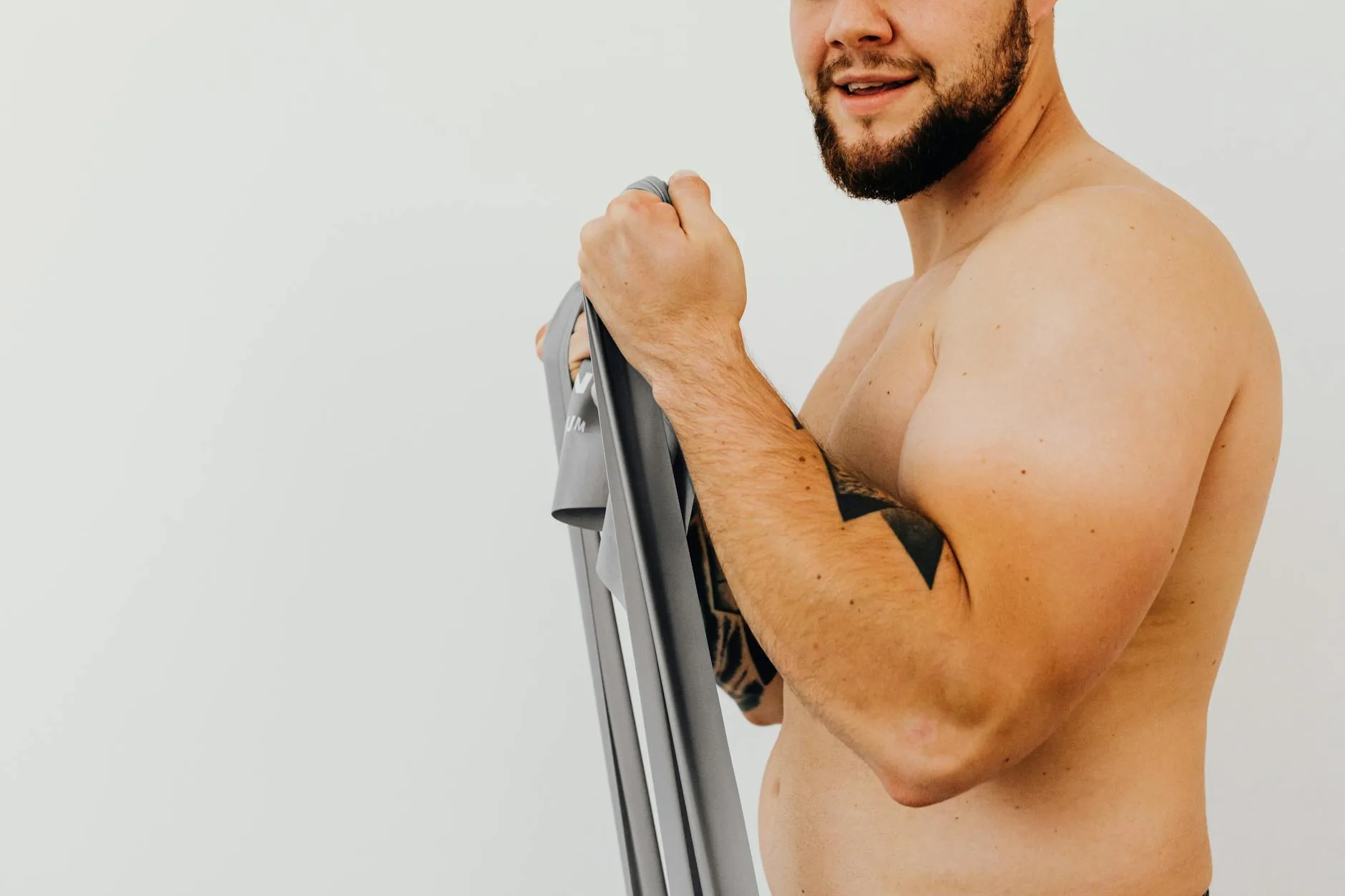
Stand with arms extended in front, holding a resistance band. Pull the band apart by squeezing your shoulder blades together. This strengthens the rear deltoids and rhomboids — the muscles that stabilise your shoulders during the catch phase of each stroke.
- 3 sets of 15 reps, 3 times per week
Dumbbell Rows
Hold a dumbbell in one hand, hinge forward at the hips, and pull the weight to your hip. This targets the lats and mimics the pulling motion of a paddle stroke.
- 3 sets of 10-12 reps per side, 2-3 times per week
Shoulder External Rotations
Hold a light resistance band at elbow height with your elbow tucked against your side. Rotate your forearm outward against the band’s resistance. This isolates the rotator cuff muscles that protect the shoulder joint.
- 3 sets of 15 reps per side, 3 times per week. Light resistance — these are small muscles.
Press-Ups (Push-Ups)
Press-ups strengthen the chest, shoulders, and triceps — the pushing muscles that complement the pulling muscles used in kayaking. The balance between pulling and pushing strength protects the shoulder joint.
- 3 sets of 10-15 reps, 3 times per week. Modify on knees if needed.
Lat Pulldowns or Pull-Ups
If you have access to a gym, lat pulldowns directly train the primary kayaking muscles. Pull-ups are the bodyweight equivalent. Both build lat strength and scapular stability.
- 3 sets of 8-12 reps, 2-3 times per week
Core Training for Kayakers
Russian Twists
Sit on the floor with knees bent and feet slightly raised. Hold a weight or medicine ball and rotate your torso left and right. This mimics the rotational pattern of paddling.
- 3 sets of 20 reps (10 per side), 3 times per week
Plank (Front and Side)
Planks build isometric core strength — the ability to hold a stable torso while your arms and shoulders work. Front planks target the rectus abdominis; side planks target the obliques, which drive rotation.
- Front plank: 3 holds of 30-60 seconds
- Side plank: 3 holds of 20-40 seconds per side
Dead Bugs
Lie on your back with arms extended and knees at 90°. Lower opposite arm and leg toward the floor while maintaining a flat lower back. This trains the deep core muscles (transverse abdominis) that stabilise the spine during rotation.
- 3 sets of 10 reps per side
Pallof Press
Stand sideways to a resistance band anchored at chest height. Press the band straight out in front of your chest and hold. The band pulls you into rotation; your core resists. This anti-rotation strength is exactly what kayaking demands. Our guide on kayak edging technique shows how core strength translates to boat control.
- 3 sets of 10 reps per side, with a 2-second hold at full extension
Grip and Forearm Endurance
Why It Matters
After 2 hours of paddling, your forearms burn and your grip weakens. When your grip goes, your technique falls apart — you compensate by gripping harder, which exhausts the forearms faster. Building grip endurance before your trip breaks this cycle.
Exercises
- Farmer’s carries — hold a heavy dumbbell or kettlebell in each hand and walk for 30-60 seconds. 3 sets. Builds grip endurance and core stability simultaneously.
- Towel hangs — drape a towel over a pull-up bar and hang from the towel ends for 20-30 seconds. The thick, soft grip is closer to holding a wet paddle shaft than a metal bar.
- Wrist curls — light weight, high reps (3 sets of 20). Targets the forearm flexors directly.
Flexibility and Mobility
The Problem Areas
- Shoulders — limited rotation range makes the catch and recovery phases of the stroke inefficient and increases impingement risk
- Thoracic spine — a stiff upper back limits torso rotation, forcing the arms to do more work
- Hip flexors — tight hip flexors from desk work make the seated kayak position uncomfortable within minutes
Daily Stretches (5-10 Minutes)
- Doorway chest stretch — stand in a doorway with arms at 90°, lean forward. Hold 30 seconds. Opens the chest and front of the shoulders.
- Thread the needle — on all fours, thread one arm under the other and rotate the torso. Hold 20 seconds per side. Mobilises the thoracic spine.
- Kneeling hip flexor stretch — kneel on one knee, push hips forward. Hold 30 seconds per side. Lengthens the hip flexors that tighten during seated paddling.
- Cat-cow — on all fours, alternate between arching and rounding the spine. 10 reps. Warms up the entire spine.
A 4-Week Training Plan
Week 1-2: Foundation
- 3 sessions per week, 30-40 minutes each
- Cardio: 20 minutes rowing machine or cycling at moderate pace
- Strength: resistance band pull-aparts (3×15), press-ups (3×10), dumbbell rows (3×10)
- Core: front plank (3×30sec), Russian twists (3×20)
- Mobility: daily stretches (5-10 minutes)
Week 3-4: Build
- 3-4 sessions per week, 40-50 minutes each
- Cardio: 25-30 minutes rowing or cycling, increase pace on alternate sessions
- Strength: add shoulder external rotations (3×15), lat pulldowns (3×10), increase dumbbell row weight
- Core: increase plank holds to 45-60sec, add side planks (3×30sec), Pallof press (3×10)
- Grip: add farmer’s carries (3×40sec) and towel hangs (3×20sec)
- Mobility: continue daily stretches, add thoracic spine rotation
The Goal
After 4 weeks, you should notice: easier paddling for the first hour, less shoulder fatigue in the second hour, a stronger grip that lasts the session, and less back stiffness when you get out of the kayak.
Warming Up Before Paddling
On Land (5 Minutes)
Before getting in the kayak, do a quick warm-up on the bank:
- Arm circles — 10 forward, 10 backward
- Torso rotations — standing, rotate left and right with arms extended, 10 each way
- Hip circles — hands on hips, circle the hips 10 times each direction
- Shoulder shrugs — 10 shrugs up and down
- Wrist circles — 10 each direction
On the Water (First 5 Minutes)
Start with 5 minutes of gentle, relaxed paddling. Short strokes, no power. Let your muscles warm up and your joints settle into the movement pattern before increasing effort. This is especially important in cold weather — muscles that have not warmed up are far more susceptible to strain. Our paddling safety guide covers cold water considerations.
Recovery After a Paddling Session
Immediate (First 30 Minutes)
- Stretch — shoulders, lats, hip flexors, forearms. Hold each stretch for 30 seconds.
- Hydrate — paddling dehydrates you more than you notice because the wind evaporates sweat before you feel it.
- Eat — a carbohydrate and protein snack within 30 minutes helps muscle recovery. A sandwich, a banana, or a protein bar.
That Evening
- Gentle movement — a walk or light stretching session prevents the muscles from seizing overnight.
- Hot bath or shower — relaxes tight muscles and eases stiffness. Add Epsom salts if you have them.
- Sleep — recovery happens during sleep. Do not underestimate this.
The Next Day
If your muscles are sore (delayed onset muscle soreness, or DOMS), light movement is better than rest. A 20-minute walk or easy swim increases blood flow to the sore muscles and speeds recovery. Sitting still all day makes the stiffness worse.
Frequently Asked Questions
How fit do I need to be to go kayaking? For a gentle river paddle of 1-2 hours, moderate general fitness is enough — if you can walk briskly for 30-45 minutes without difficulty, you will manage. For longer trips (3+ hours) or sea kayaking, 4-6 weeks of targeted training makes a big difference to comfort and safety.
What is the best exercise for kayaking fitness? The rowing machine is the single best cross-training tool because it closely mimics the pulling motion of paddling and builds the same muscle groups. If you do not have access to a rower, dumbbell rows and resistance band work are excellent alternatives.
How long before a kayak trip should I start training? Four to six weeks of consistent training (3 sessions per week) produces noticeable improvements in paddling endurance, shoulder strength, and core stability. Starting earlier is better, but even 2 weeks of preparation helps.
Will kayaking give me sore shoulders? Some soreness is normal after your first few sessions, especially in the deltoids and between the shoulder blades. Persistent or sharp pain in the shoulder joint is not normal and may indicate rotator cuff strain or impingement — stop paddling and rest. Strengthening the rotator cuff before kayaking reduces this risk.
Do I need gym access to get fit for kayaking? No. Resistance bands, bodyweight exercises (press-ups, planks, dead bugs), and a pair of dumbbells are enough for effective kayaking-specific training at home. A rowing machine is ideal but not essential.