You want to kayak with your partner, your kid, or a friend who’s never paddled before, and you’re wondering whether a tandem kayak is the answer. The short version: probably yes, but only if you choose the right type. A bad tandem kayak turns a relaxing day on the water into a floating argument. A good one is one of the best ways to share the sport with someone who wouldn’t go out in a solo boat.
In This Article
- Why Choose a Tandem Kayak?
- When a Tandem Isn’t the Right Choice
- Sit-on-Top vs Sit-In Tandem Kayaks
- Inflatable vs Hard-Shell Tandems
- Key Features to Look For
- Weight Capacity: Getting It Right
- Who Sits Where?
- Paddling Technique for Tandems
- Best Tandem Kayaks in the UK
- Storage and Transport
- Tandem Kayaking with Children
- Solo Paddling a Tandem
- Frequently Asked Questions
- The Bottom Line
Why Choose a Tandem Kayak?
Tandem kayaks solve specific problems that two solo kayaks can’t.
The Practical Reasons
- Paddling with a non-paddler — if your partner, child, or friend has never kayaked, putting them in a solo boat and hoping for the best is stressful for everyone. A tandem lets the experienced paddler do the steering while the passenger contributes at their own pace
- Cost — one tandem kayak is cheaper than two solo kayaks. If you’re buying for occasional family use, one boat serves two people
- Shared experience — you’re in the same boat, having the same experience, at the same speed. No drifting apart on a windy lake or one person struggling to keep up
- Safety for beginners — a novice in a tandem with an experienced paddler is safer than a novice alone, especially on open water or rivers with current
- Gear capacity — tandems are wider and longer than solos, with more storage space. For day trips and overnight paddles, the extra capacity is useful
The Honest Downsides
- “Divorce boats” — the nickname exists for a reason. Tandems require coordination and communication. If one paddler wants to go left and the other pulls right, frustration builds quickly
- Less freedom — you’re committed to each other’s schedule, pace, and direction. Solo paddling offers independence that tandems don’t
- Weight and size — tandems are heavier (25-35kg for hard shells) and longer (3.5-5m), making them harder to transport, carry, and store than solo kayaks
- Slower solo paddling — if you want to paddle alone sometimes, a tandem is less efficient than a purpose-built solo boat
When a Tandem Isn’t the Right Choice
Before you buy, check that a tandem actually solves your problem.
Buy Two Solo Kayaks Instead If…
- Both paddlers are experienced and want independence
- You paddle frequently and will eventually want different boats for different conditions
- Storage space allows two boats more easily than one large one
- You plan to progress into whitewater, touring, or sea kayaking where tandems are uncommon
Consider Guided Hire First If…
- You’ve never kayaked together before — try a hired tandem before committing to buying one
- Your paddling partner is uncertain about the sport — don’t invest until they’ve confirmed they enjoy it
- You paddle infrequently — hiring twice a year is cheaper than owning
Our beginner’s kayak choosing guide covers the full range of options if you’re not sure a tandem is right.
Sit-on-Top vs Sit-In Tandem Kayaks
The same choice you face with solo kayaks, but the trade-offs matter more in a tandem because two people’s comfort and safety are involved.
Sit-on-Top Tandems
You sit on a moulded seat on the deck rather than inside a cockpit. Your legs are exposed, and getting on and off is as simple as climbing onto the boat from the water or a bank.
- Best for: Warm weather paddling, families with children, fishing, casual lake and coastal use
- Pros: Easy to get on and off, self-draining (scupper holes let water run through), less claustrophobic, easier for beginners who fear capsizing
- Cons: You get wetter (no spray deck), less efficient in wind and waves, harder to paddle in cold or rough conditions
- Stability: Very stable — wider and flatter hulls. Hard to capsize
- UK suitability: Best for summer use. Spring and autumn paddling gets cold without the wind protection of a sit-in cockpit
Sit-In Tandems
Both paddlers sit inside enclosed cockpits with the option of spray decks to keep water out.
- Best for: Year-round UK paddling, touring, longer trips, cooler weather
- Pros: Dryer, warmer, more efficient in wind and waves, lower centre of gravity for better stability in rough conditions
- Cons: Harder to get in and out (especially for beginners), can feel claustrophobic, capsizing requires a wet exit
- Stability: Slightly less initial stability than sit-on-top but better secondary stability (harder to fully capsize once you’re past the initial tipping point)
- UK suitability: Better for the British climate, where wind, rain, and cooler water are the norm outside July and August
Inflatable vs Hard-Shell Tandems
This is often the deciding factor for UK buyers, because storage and transport are major constraints.
Inflatable Tandems
Pack down into a bag the size of a large rucksack. Inflate with a pump in 5-10 minutes. Store in a cupboard.
- Weight: 12-18kg packed
- Storage: Fits in a wardrobe, car boot, or under a bed
- Transport: No roof rack needed. Fits in any car
- Durability: Modern drop-stitch inflatables are tougher than you’d expect. PVC and Hypalon materials resist punctures on rocks and gravel
- Performance: Slower and less responsive than hard shells. Wind catches them more. But perfectly adequate for lakes, canals, and gentle rivers
- Price: £300-800 for a quality tandem inflatable
Our inflatable kayak guide covers the best UK options in detail.
Hard-Shell Tandems
Traditional rigid kayaks made from polyethylene, fibreglass, or composite materials.
- Weight: 25-40kg
- Storage: Needs a garage, shed, or outdoor storage space
- Transport: Requires a roof rack or trailer. Loading a 4.5m tandem onto a car roof is a two-person job
- Durability: Extremely tough. Polyethylene boats last 15-20 years
- Performance: Superior tracking, speed, and responsiveness compared to inflatables
- Price: £400-1,500 for polyethylene; £1,000+ for composite
The Practical Verdict for UK Buyers
If you live in a flat without a garage, an inflatable tandem is your only realistic option — and they’re good enough for most recreational paddling. If you have storage space and paddle regularly, a hard-shell tandem tracks better, handles wind more easily, and feels more like a “proper” kayak.
Key Features to Look For
Adjustable Seats
Both seats should be adjustable for height and backrest angle. Paddlers of different sizes need different positions, and comfort over a 2-3 hour paddle depends heavily on back support. Cheap tandems often have fixed, thin seats that become painful after an hour.
Footrests
Adjustable footrests (or foot pegs) for both positions. Without proper foot bracing, your paddling power comes entirely from your arms, which tires you fast and limits control. Both paddlers need to be able to brace their feet at a comfortable distance.
Storage
Tandem kayaks should have sealed hatches or bungee cord deck rigging for gear. For day trips, you need space for dry bags, food, water, and sun protection. Sit-on-tops typically have more open deck storage; sit-ins have sealed compartments.
Tracking
Tandems are long, which helps them track straight. But without a skeg (a small fin on the underside near the stern) or rudder, wind can push them off course. A skeg is particularly useful for inflatable tandems, which have less waterline resistance than hard shells.
Centre Seat or Third Position
Some tandems include a centre seat or mounting point for a third (smaller) passenger — typically a child or a dog. This is worth looking for if you’re buying for family use.
Weight Capacity: Getting It Right
Tandem kayak weight capacities range from about 180kg to 300kg+. This needs to include both paddlers plus all gear.
How to Calculate
- Paddler 1 weight + Paddler 2 weight + gear weight (15-25kg for a day trip with food, water, dry bags, and safety equipment) = total load
- Your total should be no more than 80% of the kayak’s stated maximum capacity. At 100%, the boat sits too low in the water — it’s sluggish, takes on water easily, and handles badly
Example
Two paddlers at 80kg each + 20kg gear = 180kg total. You’d want a kayak rated for at least 225kg (180 ÷ 0.8). A 200kg capacity boat would be too close to the limit. For a related angle, see our Best Kayak Paddles 2026 UK: Carbon, Fibreglass & Aluminium guide.
Who Sits Where?
This causes more tandem arguments than any other issue. There’s a correct answer.
The Stronger or More Experienced Paddler Sits in the Back
The rear seat controls steering. Each forward stroke from the back influences the boat’s direction more than from the front. The person in the back also sets the pace and cadence that the front paddler follows.
The Front Paddler Sets the Rhythm
The front paddler can’t see the rear paddler’s strokes, so the rear paddler matches the front’s timing. This means the front paddler should maintain a steady, consistent stroke rate. The rear paddler adjusts for steering and matches the rhythm.
With Children
Children sit in the front (or centre seat if available). The adult sits in the back for control. Children can paddle when they want and stop when they’re tired — the adult does the actual work.
Common Mistakes
- Putting the heavier paddler in the front — this makes the bow dig in and the stern lift, reducing steering control
- Both paddlers trying to steer — the front paddler should focus on forward strokes only. Steering from both positions creates conflict
- No communication — call out “left turn,” “stop paddling,” or “paddle on the right” clearly. Silent disagreement leads to zig-zagging
Paddling Technique for Tandems
Synchronisation
The key to efficient tandem paddling is matching your stroke timing. The front paddler sets the pace; the back paddler matches it. When both paddles enter and exit the water simultaneously, the boat tracks straight and moves efficiently. When strokes are out of sync, the boat yaws (turns side to side) and wastes energy.
Turning
- Gentle turns: The rear paddler uses a sweep stroke (wide arc away from the boat) on the opposite side to the direction you want to turn
- Sharp turns: Front paddler sweeps on one side while the rear paddler reverse-sweeps on the other. This pivots the boat quickly
- In current: The rear paddler controls direction using stern rudder strokes while the front paddler provides power
Communication
Establish clear commands before you get on the water:
- “Forward” — both paddle forward
- “Stop” — both stop paddling
- “Left” / “Right” — the rear paddler adjusts. Front paddler keeps paddling straight
- “Draw left/right” — both pull sideways to move the boat laterally (useful for approaching banks or docks)
Best Tandem Kayaks in the UK
For specific model recommendations with prices and detailed reviews, our best tandem kayaks roundup covers the top options at every budget. Here’s a quick summary of what to expect at each price point.
Budget (Under £400)
- Inflatable tandems from Sevylor and Intex. Adequate for calm lakes and canals. Comfortable seats are hit-and-miss at this price. Tracking can be poor without a skeg
- Basic sit-on-top polyethylene from brands like Seaflo. Heavy, simple, virtually indestructible. Fine for beaches and sheltered coastal paddling
Mid-Range (£400-800)
- Quality inflatable tandems from Advanced Elements, Aqua Marina, and Itiwit (Decathlon). Better materials, adjustable seats, skegs included, and decent tracking. The sweet spot for most recreational paddlers
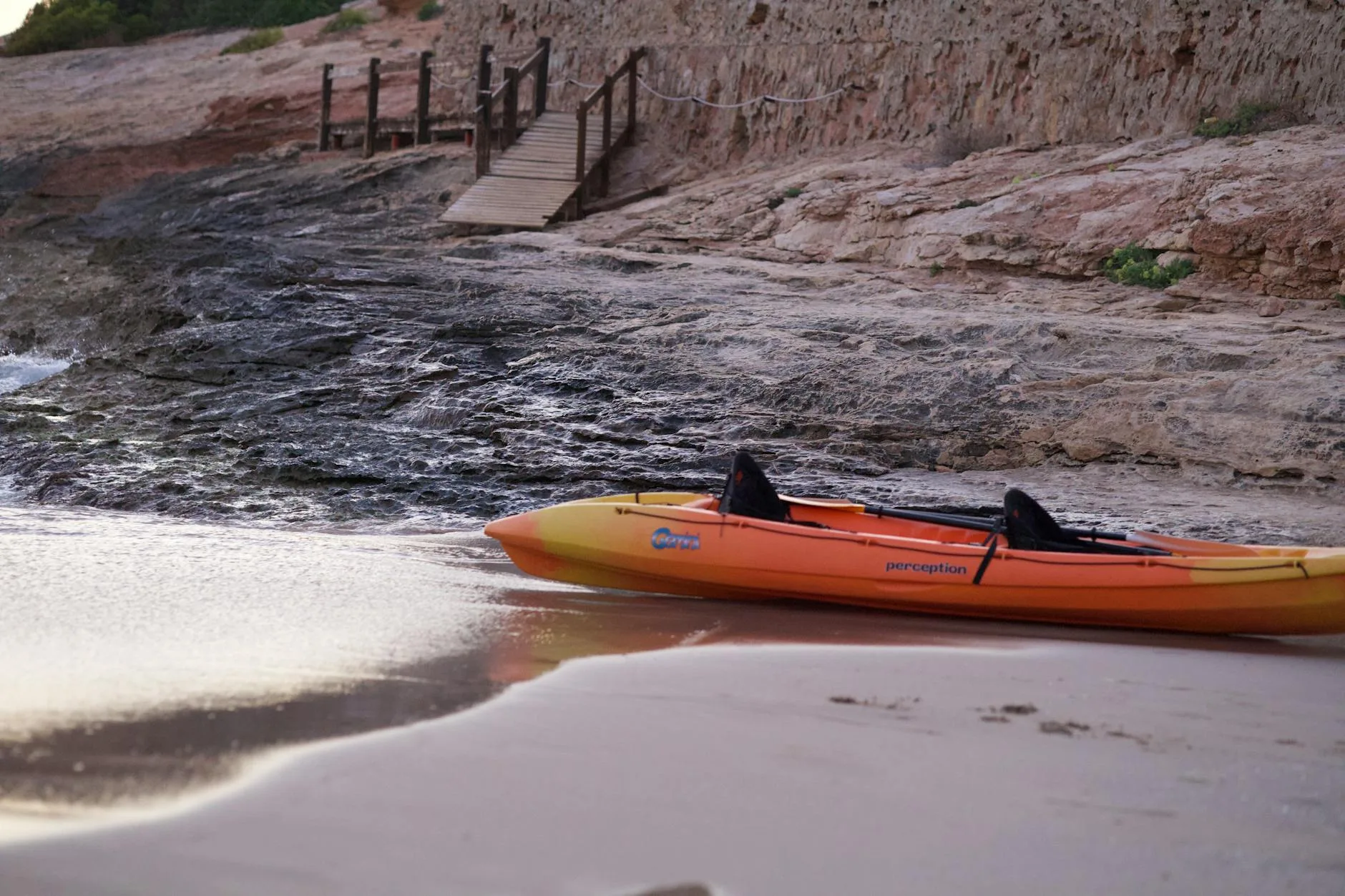
- Polyethylene sit-on-tops from Ocean Kayak and Perception. Wider range of features, better seat quality, integrated rod holders for fishing models
Premium (£800+)
- High-performance inflatables with drop-stitch floors for rigidity. Brands like Gumotex and Sea Eagle
- Touring sit-in tandems from P&H, Valley, and Prijon. Serious boats for serious paddling — sealed bulkheads, rudder systems, expedition-grade storage
Storage and Transport
Inflatables
The easy option. Deflate, roll, pack into the carry bag, and store anywhere. A cupboard, the boot of a car, under a bed. No roof rack needed. This alone makes inflatables the most practical choice for most UK buyers without dedicated storage. Our Best SUP Paddle Bags 2026 UK: Protection for Travel guide is useful alongside this.
Hard Shells
You need space. A tandem hard shell is typically 3.5-5m long and 70-80cm wide. Options:
- Garage or shed — ideal. Store on its side or on wall-mounted brackets to save floor space
- Garden — with a weatherproof kayak cover. UV exposure degrades polyethylene over years, so a cover is worth the £30-50 investment
- Roof rack — J-cradles or saddles designed for kayaks cost about £50-100 and mount to standard roof bars. Loading a tandem requires two people and practice
Weight Considerations
Carrying a 30kg tandem from car to water is a two-person job. If your launch point involves a long carry, an inflatable (12-18kg in a backpack) is much more practical. Some hard-shell tandems come with integrated handles at bow, stern, and centre, which helps, but the weight doesn’t change.
Tandem Kayaking with Children
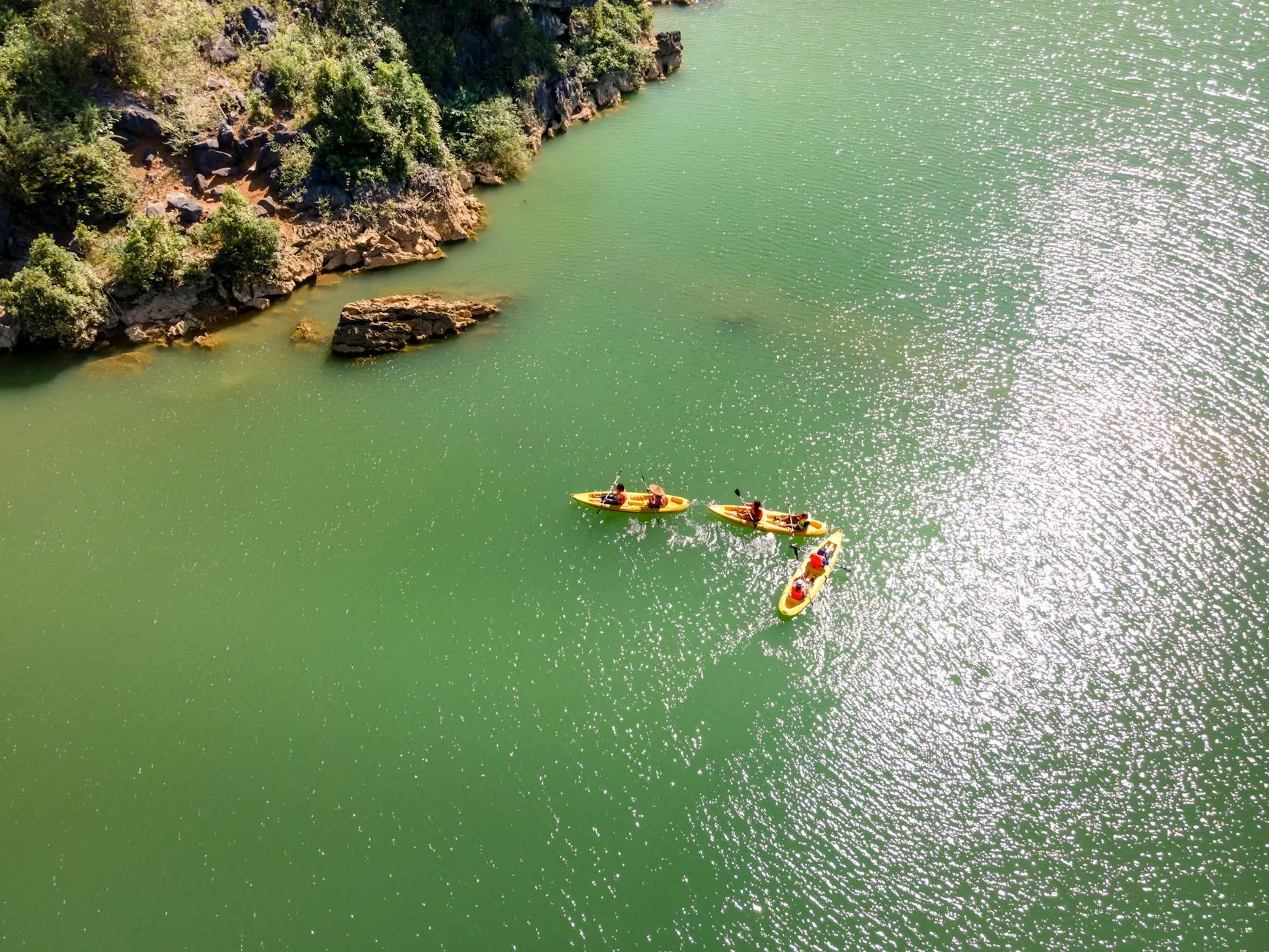
Tandems are one of the best ways to introduce children to paddling. The child participates as much or as little as they want, while the adult provides safety and propulsion.
Age Guidelines
- Under 5 — can sit in a tandem with an adult but won’t paddle meaningfully. Choose a sit-on-top for easy boarding and a positive first experience. Wear a properly fitted child’s buoyancy aid at all times, as recommended by the RoSPA water safety guidelines
- 5-8 — can paddle intermittently from the front seat. Keep sessions short (30-60 minutes) and on calm water
- 8-12 — can be active front paddlers on calm water and gentle rivers. Capable of following instructions and maintaining a basic stroke
- 12+ — capable of meaningful tandem paddling including gentle whitewater with an experienced adult in the rear
Safety Essentials for Children
- Buoyancy aid (not a life jacket) — must be properly sized for the child’s weight. Check the weight range on the label
- Sun protection — hat, sunscreen, and protective clothing. Water reflects UV and children burn faster
- Warm layers — UK water is cold even in summer. A lightweight wetsuit or rash vest is sensible from April to October
- Whistle — attached to the buoyancy aid. The child should know to blow it if they end up in the water
Solo Paddling a Tandem
Most tandems can be paddled solo, but they’re not designed for it and the experience varies.
How to Solo a Tandem
Sit in the rear seat for steering control. The front of the boat will ride high, which means:
- Wind catches the bow — the empty front acts like a sail, making the boat weathercock (turn into the wind)
- Reduced efficiency — you’re paddling a boat designed for two people’s power with one person’s output
- Weight forward helps — stash a heavy dry bag in the front hatch or on the front seat to bring the bow down
Is It Worth Buying a Tandem for Solo and Tandem Use?
Some tandems are marketed as “convertible” — usable as a solo or tandem. In practice, they’re always a compromise. They solo worse than a purpose-built solo kayak and tandem worse than a purpose-built tandem. If you’ll paddle solo more than 50% of the time, buy a solo kayak and hire a tandem for shared trips.
Frequently Asked Questions
Are tandem kayaks more stable than solo kayaks? Yes. Tandems are wider and longer, which gives them more stability. They’re harder to capsize than most solo kayaks, which makes them popular for families and beginners. The trade-off is reduced manoeuvrability — turning a tandem takes more effort.
Can one person paddle a tandem kayak? Yes, but it’s not ideal. Sit in the rear seat for steering control. The boat will be slower, harder to turn, and more affected by wind than with two paddlers. Some tandems have a centre seat position that works better for solo use.
How much does a tandem kayak cost? Budget inflatables start around £200-300. Quality inflatables run £400-800. Hard-shell polyethylene tandems cost £400-1,000. Touring and composite tandems start at £1,000+. For most recreational UK paddling, the £400-700 range offers the best value.
Should the heavier person sit in the front or back? The back. The rear paddler controls steering, and having the heavier person at the stern keeps the bow slightly raised, which improves tracking and manoeuvrability. A bow-heavy tandem digs into the water and is difficult to steer.
Are inflatable tandem kayaks any good? Modern inflatables are surprisingly capable. Quality models with drop-stitch floors track well, handle moderate wind, and are tough enough for rocky rivers. They’re not as fast or responsive as hard shells, but for recreational paddling on UK lakes, canals, and gentle rivers, they’re excellent — and the storage advantage is unbeatable.
The Bottom Line
A tandem kayak is the best way to share paddling with someone who wouldn’t go out alone — a partner, a child, a friend who’s curious but not committed. The key is matching the boat to your actual use: inflatable for easy storage and occasional paddling, hard-shell for regular use and better performance, sit-on-top for warm weather and families, sit-in for year-round UK conditions.
Buy a boat rated for at least 125% of your combined weight. Put the stronger paddler in the back. Communicate before you start turning. And remember — the reason they’re called “divorce boats” is that people buy the wrong one and blame the boat instead of the choice. Get the right tandem, and it’s one of the most enjoyable ways to spend a day on the water.