Someone at the kayak club says they are heading to a “grade 3 river” this weekend and asks if you want to come. You have been paddling for six months, you are comfortable on flat water, and you need to know whether grade 3 means manageable, demanding or out of your depth. The river grading system gives paddlers a shared language for difficulty and risk.
Quick Answer: River grades run from Grade I for easy moving water to Grade VI for extreme, exploratory whitewater. Most developing paddlers should treat Grade II as the first real moving-water step, Grade III as intermediate whitewater that needs reliable boat control, and Grade IV+ as advanced water requiring coaching, rescue skills and local knowledge. Always check current water levels and use club or guidebook advice before relying on a grade alone.
In This Article
- What the Grading System Is
- Grade I: Easy
- Grade II: Novice
- Grade III: Intermediate
- Grade IV: Advanced
- Grade V: Expert
- Grade VI: Extreme and Exploratory
- How Water Levels Change the Grade
- UK River Grading vs International Grading
- Matching Your Skill Level to Grades
- Where to Find River Grades
- Frequently Asked Questions
What the Grading System Is
The International Scale of River Difficulty classifies whitewater rapids from Grade I (easy, minimal risk) to Grade VI (extreme, risk of serious injury or death). It’s used worldwide by kayakers, canoeists, and rafters to communicate the difficulty and danger of a river or individual rapid.
The system was developed by the International Canoe Federation and is used by RLSS water safety guidance (formerly British Canoeing) across all UK rivers and artificial whitewater courses.
Each grade describes the technical difficulty of the water features (waves, holes, drops, rocks) and the consequences of getting it wrong (mild swim vs hospital visit). The two don’t always align perfectly — a technically easy rapid with a dangerous undercut rock might be graded higher than its technical difficulty alone suggests.
Plus and Minus Grades
You’ll often see grades written as 3+ or 4- (sometimes III+ or IV-). The plus means “harder than average for this grade, approaching the next grade up.” The minus means “easier than average, close to the grade below.” A river described as “grade 3-4” has sections at both levels — the harder rapids are the ones that determine whether you should paddle it.
Grade I: Easy
What to Expect
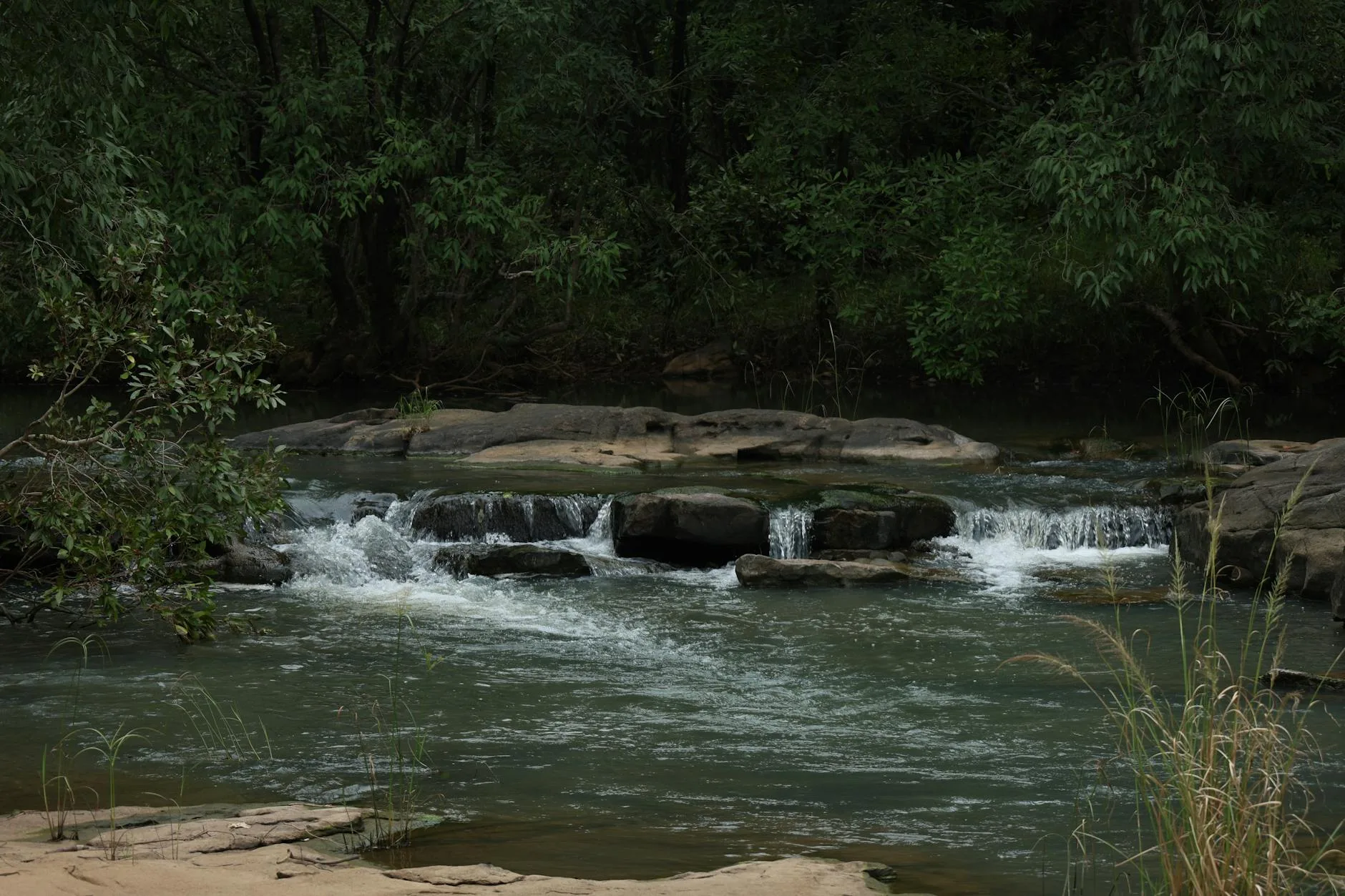
- Water: Moving water with small waves, few obstructions. Clear passage without needing to manoeuvre
- Hazards: Minimal — occasional shallow spots, slow-moving shallow rapids
- Consequence of swim: You get wet and mildly embarrassed. Walk to the bank. No danger
Skills Required
Basic forward paddling and steering. You should be able to keep the boat pointing downstream and avoid obvious obstacles. No rolling or bracing skills needed — if you capsize, you swim and recover without drama.
UK Examples
- River Wye (middle sections, Herefordshire) — gentle current, wide river, occasional riffles
- Bala Lake to Llandderfel (River Dee, North Wales) — mild current, easy access
- River Thames above Lechlade — flat with gentle flow
Who Should Paddle Grade I
Complete beginners with basic boat handling. This is where everyone starts. If you’ve had one introductory lesson and can hold a paddle correctly, you can paddle grade I in a stable boat with experienced company.
Grade II: Novice
What to Expect
- Water: Rapids with wide, clear channels that are obvious without scouting. Some manoeuvring required around rocks and through waves. Eddies (calm spots behind obstacles) are easy to catch
- Hazards: Rocks that you might bump, small waves that splash over the deck. Nothing that would trap a swimmer
- Consequence of swim: Cold, bumpy, and you might lose your paddle. Rescue is simple — eddies and calm pools are nearby
Skills Required
Confident eddy turns, ferry gliding (crossing current diagonally), and basic bracing. You should have a developing roll — not necessarily bombproof, but reliably coming up at least half the time. If you swim, you can self-rescue in the calmer sections below the rapid.
UK Examples
- River Dee (Mile End Mill section) — the classic UK progression run. Continuous grade 2 with a few grade 2+ rapids
- River Tryweryn (lower section, dam release) — reliable water level, well-known features
- Tees Barrage (artificial course, Stockton) — purpose-built grade 2 course
Who Should Paddle Grade II
Paddlers with 3-6 months of regular practice, a developing roll, and experience on grade I. This is where paddling starts to feel like whitewater rather than just moving water. I spent about four months at this level before feeling ready for grade 3 — and looking back, that patience was the smartest thing I did. It’s exciting without being scary — which is exactly what you want at this stage.
Grade III: Intermediate
What to Expect
- Water: Irregular waves, some large enough to swamp an open boat. Narrow passages, ledges, and small drops (up to about 1 metre). Eddies may be small and hard to catch. Scouting from the bank may be needed for unfamiliar rapids
- Hazards: Significant hydraulics (holes and stoppers) that can hold a swimmer. Rocks that could pin a boat. The consequences of a swim become more serious — you could be carried a significant distance through turbulent water before reaching calm
- Consequence of swim: Potentially dangerous. Long swims in cold, turbulent water. Impact injuries from rocks. Rescue may require a throw bag and group assistance
Skills Required
Reliable roll on both sides. Confident eddy catching in fast water. Ability to read water and identify features, lines, and hazards. Understanding of tides and water conditions for coastal or tidal rivers. You should be comfortable being in turbulent water and able to think clearly when things go wrong.
UK Examples
- River Dee (Serpent’s Tail to Mile End Mill) — classic grade 3 with the Serpent’s Tail rapid as the crux move
- River Tryweryn (upper section) — grade 3 at normal dam release levels. Continuous and committing
- Dart Loop (River Dart, Devon) — beautiful grade 3 river trip with one portage-able grade 4 rapid
Who Should Paddle Grade III
Experienced intermediates with at least a year of regular whitewater paddling, a reliable roll, rescue training, and experience on grade 2+. This is the level where most UK club paddlers operate regularly. After my first grade 3 river (the Dee at Serpent’s Tail), I understood why people say the gap between grade 2 and 3 is bigger than any other single grade jump. The water feels alive and it demands your full attention.
Grade IV: Advanced
What to Expect
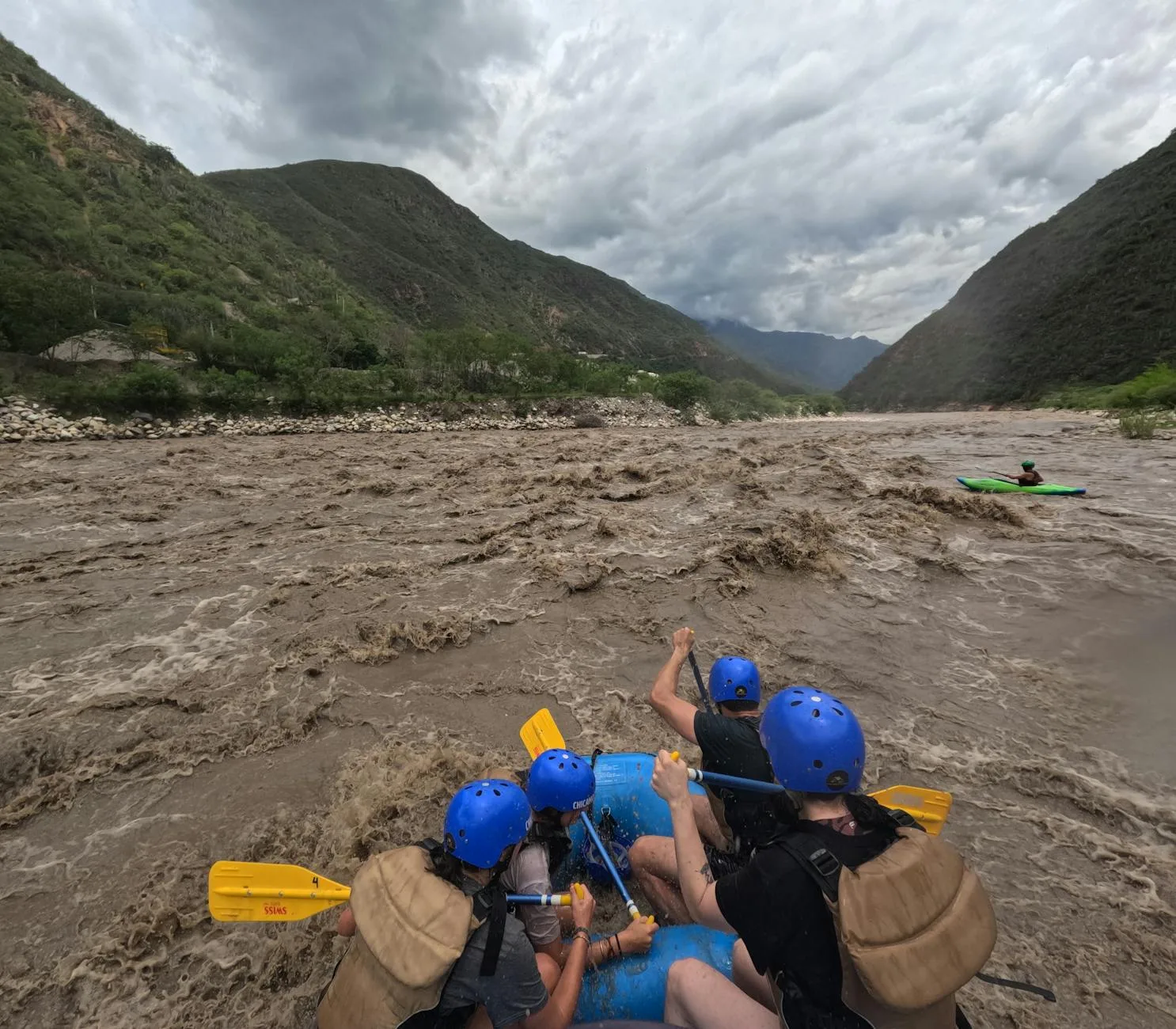
- Water: Powerful, turbulent rapids with large waves, big holes, constricted passages, and drops up to about 3 metres. Precise boat control required — specific lines through rapids with consequences for missing them. Scouting is essential on unfamiliar sections
- Hazards: Serious. Powerful hydraulics that can hold boats and swimmers. Undercut rocks, strainers (fallen trees), and sieves (water flowing through rock piles). A swim at grade 4 can result in injury
- Consequence of swim: Dangerous. Rescue is difficult and may not be possible quickly. Swimmers can be recirculated in holes, pinned against obstacles, or carried into worse rapids below. This is where people get hurt
Skills Required
Bombproof roll. Advanced reading of complex water features. Rescue skills (throwing a bag accurately, T-rescues, live bait). The fitness to paddle hard for sustained periods and the judgment to walk away from rapids you’re not confident on. Grade 4 paddlers can paddle grade 3 without stress and make it look easy. For a related angle, see our Best Paddleboards for Fishing 2026 UK guide.
UK Examples
- Fairy Glen (River Conwy, North Wales) — enclosed gorge, continuous grade 4 with powerful water
- River Etive (Scotland) — remote, committing, with several grade 4 drops
- Upper Dart (Devon) — technical grade 4 in a narrow gorge. UK classic
Who Should Paddle Grade IV
Advanced paddlers with years of experience, extensive whitewater rescue training, and a personal assessment that they can handle the consequences of things going wrong. This is not a progression you rush. Many excellent paddlers never paddle grade 4 — and that’s a perfectly valid choice.
Grade V: Expert
What to Expect
- Water: Long, violent rapids with severe, unavoidable hazards. Large drops, extreme turbulence, complex routes that require expert river reading. Scouting is mandatory. Rescue is difficult to impossible in many sections
- Hazards: Life-threatening. Every feature has the potential to cause serious injury or death if handled incorrectly. Swims are extremely dangerous and may require self-rescue because group rescue isn’t feasible in the conditions
- Consequence of swim: Potentially fatal. Long exposure to powerful water with limited rescue options
UK Examples
- Upper Etive (Scotland, high water) — continuous grade 5 in a remote setting
- Fairy Glen (Conwy, very high water) — upgrades from grade 4 to 5 at flood levels
- Various Scottish Highland runs accessible only at specific water levels
Who Should Paddle Grade V
Expert paddlers with extensive experience at grade 4+, advanced rescue training, exceptional fitness, and a deep understanding of their own limits. Grade 5 paddling in the UK is a small community — everyone knows each other, paddles together regularly, and makes careful group decisions about what to run.
Grade VI: Extreme and Exploratory
Grade VI is the theoretical limit — rapids that are at the edge of what’s paddleable. They may be first descents that haven’t been repeated, or rapids that have only been run by a handful of people in specific conditions. In the UK, grade VI is extremely rare and typically involves specific drops or rapids rather than whole river sections.
No recreational paddler should attempt grade VI. It exists for reference, not aspiration.
How Water Levels Change the Grade
The Same River, Different Grades
A UK river can be grade 2 at low water and grade 4 at high water. Rainfall transforms gentle rapids into powerful hydraulics, submerges reference rocks that normally mark the safe line, and creates features that don’t exist at normal levels. Our Kids’ Paddles: How to Choose the Right Size guide is useful alongside this.
The River Tryweryn, for example, is graded based on dam release levels. A “medium release” gives grade 2-3. A “full release” pushes sections to grade 3-4. Natural flood flows can take it to grade 4+.
Checking Water Levels
Before any whitewater trip, check the river level:
- SEPA (Scotland) — real-time river gauges across Scotland
- Natural Resources Wales — river levels for Welsh rivers
- Environment Agency — river levels for England
- River gauge apps — Riverapp and Gauge Map aggregate gauge data with paddler reports
Most experienced UK paddlers have specific gauge readings that tell them whether a river is too low (boring, scraping rocks), optimal (the graded level), or too high (bumped up a grade or unrunnable). These “sweet spot” levels are shared in club WhatsApp groups and on forums like UK Rivers Guidebook.
High Water Is Not Just “Harder”
High water doesn’t just make existing rapids bigger — it changes the river fundamentally. Trees that were above the water become strainers. Eddies that existed at normal levels wash out. The speed of the water doubles or triples. A grade 3 river at flood level can have grade 5 consequences because the power of the water overwhelms normal rescue capabilities. Respect water levels more than you respect grades.
UK River Grading vs International Grading
UK Grading Tends to Be Conservative
A UK grade 3 is broadly equivalent to an international grade 3, but some paddlers argue that UK rivers are graded slightly harder than equivalent runs in the Alps or North America. This is partly because UK rivers are often narrower, colder, more remote (especially Scottish Highlands), and rain-dependent — meaning conditions change rapidly. We cover a similar decision in How to Choose a Paddleboard: Size, Shape & Type.
The Practical Difference
If you paddle grade 3 confidently in the UK, you’ll be comfortable on grade 3 rivers anywhere in the world. The reverse isn’t always true — someone used to warm, wide, pool-drop rivers in southern Europe might find a cold, continuous UK grade 3 more challenging than expected.
Grade Inflation
Like academic grades, river grades can inflate over time. A rapid that was considered grade 4 in the 1980s might be called grade 3+ today as equipment improves and techniques advance. Read recent guidebooks and online reports rather than relying on decades-old classifications.
Matching Your Skill Level to Grades
A Realistic Progression Timeline
This assumes regular paddling (2-4 times per month) with coaching and club support:
- Month 1-3: Pool sessions (rolling), flat water, controlled environments
- Month 3-6: Grade I-II rivers with experienced company
- Month 6-12: Consolidating grade II, attempting grade II+ and easy grade III
- Year 1-2: Confident at grade III, beginning to attempt grade III+
- Year 2-4: Consolidating grade III+, attempting grade IV if desired
- Year 4+: Grade IV confident, grade V if desired
These are rough guidelines. Some people progress faster, some slower. The key is not rushing. Every grade level should feel comfortable before you attempt the next. If grade 2 still feels exciting, you’re not ready for grade 3 — regardless of how long you’ve been paddling.
The “Comfortable One Down” Rule
You should be able to paddle one grade below your target grade comfortably, confidently, and without stress. If grade 2 still requires your full concentration, grade 3 will overwhelm you. If you can paddle grade 2 while chatting to your friend and enjoying the scenery, grade 3 is the next step. This is a useful self-assessment tool because it stops you overreaching based on optimism rather than current ability.
Where to Find River Grades
UK Resources
- UK Rivers Guidebook (ukriversguidebook.co.uk) — crowd-sourced database of UK rivers with grades, descriptions, access notes, and gauge readings. The most thorough single resource
- Pesda Press guidebooks — printed guides for Welsh, Scottish, and English rivers. Detailed, reliable, and include maps
- RLSS water safety guidance — venue finder with grading information
- Club knowledge — your local kayak club’s experienced paddlers know the rivers, the gauges, and the conditions better than any guidebook. Ask them
Artificial Whitewater Centres
Centres like Nottingham, Lee Valley, and Cardiff grade their courses and offer sessions at specific levels. These are excellent for testing your readiness for a grade before committing to a natural river trip.
Frequently Asked Questions
What grade should a beginner kayaker paddle? Grade I to start, progressing to grade II after 3-6 months of regular practice with coaching. Don’t rush to higher grades — consolidating skills at each level builds the foundation for safe progression. Most beginners overestimate their readiness for the next grade. If grade I still feels challenging, spend more time there before moving up.
Is grade 3 dangerous? Grade 3 carries real risk — swims can involve turbulent water, rock impacts, and cold water immersion. With the right skills (reliable roll, rescue training), appropriate safety gear, and experienced company, the risk is manageable. Without those things, grade 3 can be dangerous. The river doesn’t care about your experience level — it treats everyone the same.
Can water levels change a river’s grade? Yes — this is one of the most important things to understand. A river graded 2-3 at normal levels can become grade 4+ at flood levels. The same features become more powerful, eddies wash out, and new hazards appear. Always check river gauge readings before paddling, and know the specific gauge level at which your chosen river becomes safe and enjoyable versus dangerous.
What’s the difference between a grade and a class? In the UK, we use “grade” (Grade III). In North America, the term is “class” (Class III). They refer to the same international scale and are interchangeable. UK paddlers occasionally use Roman numerals (III) while American paddlers tend to use Arabic numerals (3). The difficulty described at each level is the same.
Do I need to roll to paddle whitewater? For grade I and easy grade II, no — you can wet exit (capsize and swim out) without serious consequences. From grade II+ upward, a reliable roll is strongly recommended. From grade III onward, it’s essential. Swimming in grade 3+ rapids is dangerous and exhausting. Learning to roll in a pool before attempting whitewater is one of the best investments in your safety and enjoyment.