You’re standing in a surf shop in Cornwall, surrounded by paddleboards that all look roughly the same — big, colourful, and expensive. The sales assistant is talking about litres of volume, rocker profiles, and fin configurations, and you just want something to float on without falling off every thirty seconds. Choosing a paddleboard shouldn’t require an engineering degree, but the range of sizes, shapes, and materials can make it feel that way.
In This Article
- Inflatable vs Hard Board: The First Decision
- Paddleboard Sizes Explained
- Board Shapes and What They Do
- Matching Your Board to Your Weight
- Paddleboard Types by Activity
- Construction Materials and Quality
- Fins and Fin Setups
- Features That Actually Matter
- What to Spend in the UK
- Where to Paddle in the UK
- Frequently Asked Questions
Inflatable vs Hard Board: The First Decision
This is where every paddleboard decision starts, and for most UK paddlers the answer is inflatable. That might surprise you if you’ve only seen the rigid boards at the beach, but inflatables have improved enormously in the last five years.
Why Inflatable Wins for Most People
- Storage — deflated and rolled, an inflatable fits in a rucksack. If you live in a flat or terraced house without a garage, this matters enormously. A hard board needs wall racks or ceiling storage and a vehicle with roof bars
- Transport — throw the bag in the boot, cycle to the lake with it on your back, or check it as luggage on a flight. Hard boards need roof racks and ideally a van
- Durability — modern drop-stitch inflatables are surprisingly tough. I’ve bounced mine off rocks, dragged it over gravel, and left it inflated in the sun for weeks. No dings, no repairs
- Price — good inflatables start around £300. Equivalent hard boards start at £700+
When Hard Boards Make Sense
- Performance — hard boards glide faster and track straighter. If you’re racing, surfing, or covering serious distance, they’re noticeably better
- Responsiveness — the rigidity gives more precise control, especially in surf
- You have storage — a garage, shed, or boathouse makes the size issue disappear
For the vast majority of UK recreational paddlers — families on lakes, casual coastal paddles, fitness sessions on rivers — an inflatable board is the right call.
Paddleboard Sizes Explained
Three numbers define every board: length, width, and thickness. Each affects how the board performs.
Length
- Short boards (under 10′) — more manoeuvrable, easier to turn, better for surfing and kids. Slower in a straight line
- All-round boards (10′-10’8″) — the sweet spot for most paddlers. Stable enough for beginners, versatile enough for everything from flat water to small waves
- Touring boards (11′-12’6″) — longer boards track straighter and glide further per stroke. Better for distance paddling, exploring, and fitness
- Race boards (12’6″-14′) — narrow, long, fast. Built for competition and experienced paddlers
Width
Width determines stability. This is the number beginners should care about most:
- 30″-31″ — narrow, fast, less stable. For experienced paddlers and racers
- 32″-33″ — the all-round sweet spot. Stable enough for most people, not so wide that it slows you down
- 34″-36″ — extra stable, great for yoga, fishing, or carrying kids and dogs. Slower through the water
Thickness
Most boards are 5″ or 6″ thick. The difference matters:
- 5″ boards — lighter, more responsive, flex more under heavier riders. Fine for paddlers under 80kg
- 6″ boards — stiffer, higher weight capacity, more stable. Better for paddlers over 80kg or anyone carrying extra gear
For help understanding weight limits in detail, our guide to SUP board weight limits breaks down exactly how to match board volume to your size.
Board Shapes and What They Do
Nose Shape
- Round nose — pushes water aside gently, stable, forgiving. Standard on all-round boards
- Pointed nose (displacement hull) — cuts through water like a kayak, faster and more efficient. Found on touring and race boards. Less stable in chop
- Wide, upturned nose — designed for surf. The rocker (upward curve) prevents the nose diving into waves
Tail Shape
- Square tail — maximum stability and surface area at the back. Common on all-round and touring boards
- Pin tail — narrower, faster through the water, less stable. Found on race boards
- Swallow tail — split design for better grip in surf turns. Specialist boards only
Hull Type
- Planing hull — flat bottom, sits on top of the water. Most beginner and all-round boards use this. Stable, versatile, slower
- Displacement hull — V-shaped bottom, cuts through water. Touring and race boards. Faster, tracks straighter, less stable when stationary
Matching Your Board to Your Weight
This is where people get caught out. A board that’s perfect for a 65kg paddler will feel completely different under a 95kg paddler. Too small and the board sinks low, becomes unstable, and every paddle stroke fights the drag.
General Guidelines
- Under 70kg — 10′ × 32″ × 5″ all-round board works well. About 240-270 litres volume
- 70-85kg — 10’6″ × 33″ × 6″ gives good stability and buoyancy. About 280-310 litres
- 85-100kg — 11′ × 33″ × 6″ provides the extra volume needed. About 300-330 litres
- Over 100kg — look for boards rated 150kg+ with at least 330 litres. Extra width (34″+) helps with stability
The Volume Rule
A rough formula: your weight in kg × 2 = minimum board volume in litres for comfortable recreational paddling. So a 75kg paddler wants at least 150 litres, but more volume (200-300 litres) makes everything easier and more fun. Manufacturers list volume in the specs — check it before buying.
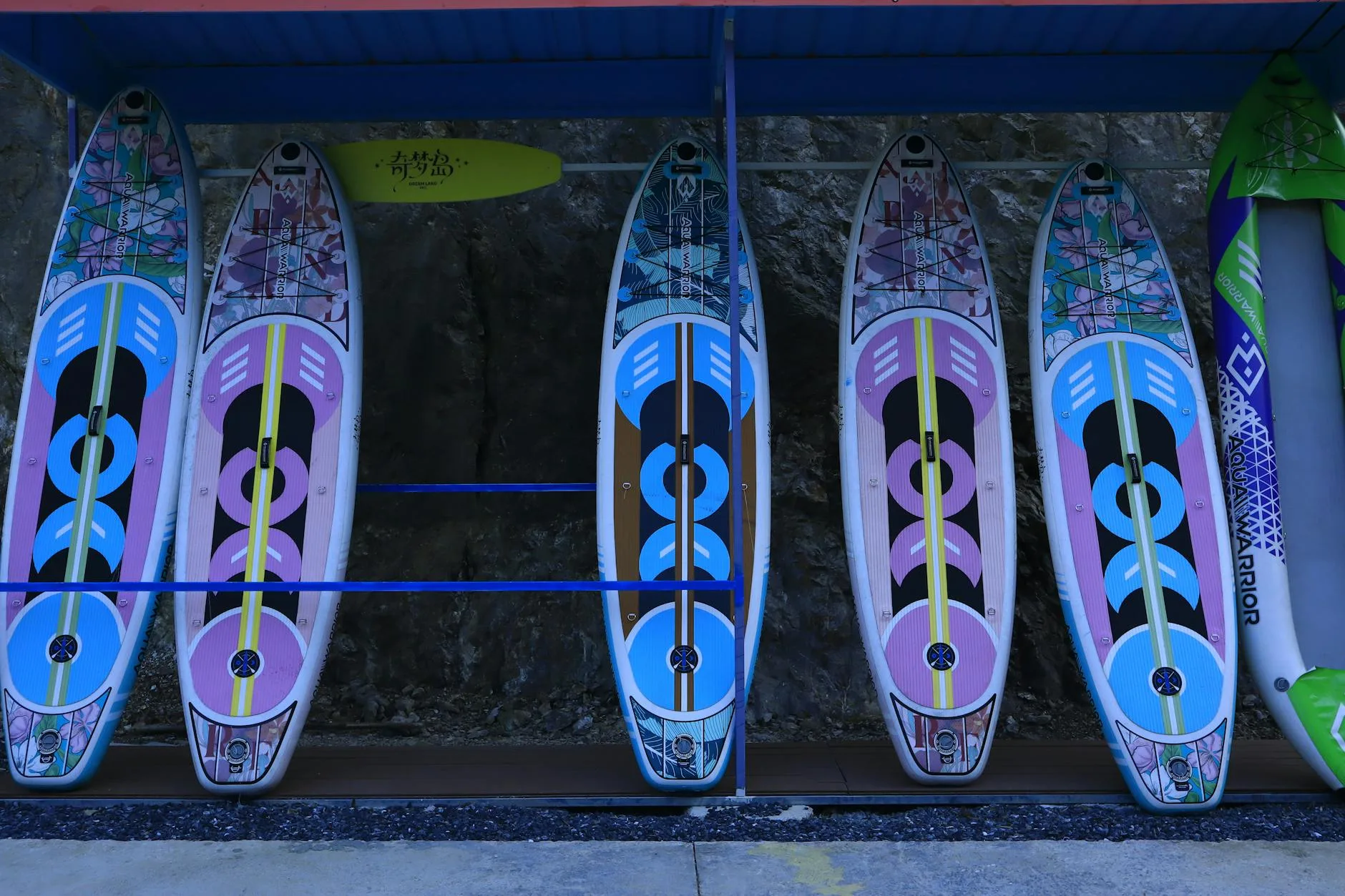
Paddleboard Types by Activity
All-Round (Best for Beginners)
The Swiss Army knife of paddleboards. Wide enough to be stable, long enough to glide, and shaped to handle flat water, small waves, and gentle rivers. If you’re buying your first board, buy an all-round.
- Typical dimensions: 10′-10’8″ × 32″-33″ × 5″-6″
- Best for: learning, casual paddling, fitness, family use, mild coastal conditions
- UK recommendation: Red Paddle Co Ride (about £650) or Bluefin Cruise (about £380) — both handle UK conditions well
Touring
Longer and often narrower than all-round boards, designed for covering distance efficiently. The pointed nose cuts through water rather than pushing it aside, and the extra length maintains speed between strokes.
- Typical dimensions: 11’6″-12’6″ × 30″-32″ × 6″
- Best for: exploring coastline, river trips, fitness paddling, covering 5+ km
- UK recommendation: Red Paddle Co Voyager (about £850) or Bluefin Sprint (about £500)
Yoga and Fitness
Wider and flatter than standard boards, with a large deck pad for mat-free yoga poses. Stability is the priority — you need to hold a warrior pose without swimming.
- Typical dimensions: 10′-10’8″ × 34″-36″ × 6″
- Best for: yoga, pilates, fitness training on water, anyone who values stability above all else
Surf SUP
Shorter, narrower, with a pronounced rocker and surf-specific fin setups. These are specialist boards for catching and riding waves.
- Typical dimensions: 8’6″-9’6″ × 30″-31″ × 4″-5″
- Best for: wave riding. Not recommended as a first board — learn on an all-round first
Construction Materials and Quality
Inflatable Construction
- Single-layer — cheapest, lightest, least rigid. Fine for casual use under 70kg but flexes noticeably under heavier riders
- Dual-layer (fusion or laminated) — two layers of PVC bonded together. Stiffer, more durable, slightly heavier. The standard for good mid-range boards
- MSL (monocoque structural laminate) — Red Paddle Co’s proprietary process that heat-bonds materials rather than gluing. The stiffest, lightest, and most expensive inflatable construction
Hard Board Construction
- Foam core with fibreglass — the standard. Lightweight and responsive but dents and cracks if knocked
- Epoxy — tougher outer layer, better impact resistance. Most mid-range to premium hard boards use epoxy over foam
- Carbon fibre — lightest and stiffest but expensive (£1,500+) and fragile on impact. Race boards
- Plastic (rotomoulded) — heavy but nearly indestructible. Cheap boards from supermarkets and budget brands. Functional but slow
Fins and Fin Setups
Fins affect tracking (going straight), turning, and stability. Most beginners never think about fins, but they make a real difference.
Single Fin
One large centre fin. Standard on all-round and touring boards. Provides good tracking and straight-line performance. US fin box is the standard fitting — replacement fins are widely available and easy to swap.
Tri-Fin (Thruster)
Three fins — one centre and two smaller side fins. Better grip and control in surf and choppy conditions. The side fins prevent the tail sliding out during turns. Common on surf SUPs and some all-round boards. For a related angle, see our Best Paddleboard Bags 2026 UK: Carry & Storage guide.
2+1 Setup
A large centre fin with two small side fins. Combines the tracking of a single fin with the extra grip of a thruster in chop. A good all-conditions setup.
Quick-Attach vs Toolless
Modern inflatables increasingly use toolless fin systems — slide in, click, done. Older boards and hard boards often need a fin key to tighten a bolt. Toolless is more convenient; just check the fin doesn’t wobble after attachment.
Features That Actually Matter
Deck Pad
The foam pad you stand on. A full-length pad (covering most of the board’s top) is better than a short pad that only covers the standing area. You’ll kneel on it, sit on it, and your dog will stand on it. Diamond grooves give better grip than flat foam when wet.
Carry Handle
Central handle for carrying the board to the water. Neoprene-padded handles are comfortable. Plastic handles dig in after 200 metres. Check this before buying — you’ll carry the board more than you think.
D-Rings and Bungee
Front bungee (elastic cord net) for storing dry bags, water bottles, and shoes. The more D-rings, the more attachment options for leashes, action cameras, and rod holders. At minimum, you want a front bungee and a rear D-ring for a leash.
Leash Attachment
A coiled leash keeps you attached to the board. In moving water or coastal conditions, this is a safety essential — British Canoeing recommends always wearing a leash in open water. Most boards come with a leash or have a D-ring at the tail for attaching one.
Pump Quality
Cheap boards come with single-action pumps that are exhausting. Better boards include dual-action pumps (pump air on both the up and down stroke) or triple-action pumps. If your board comes with a poor pump, upgrade to a dual-action one (about £30-40) or invest in an electric pump (about £70-100) — your arms and your patience will thank you.
For more on paddles and technique, have a look at our guide to choosing the right paddle length and our SUP stroke technique guide.
What to Spend in the UK
Under £250
Boards from Amazon, Aldi specials, and supermarket seasonal ranges. Functional for a few sessions but typically single-layer construction, poor pumps, flexy under adults, and accessories that break. Fine for a try-it-and-see purchase. Not fine for regular use.
£300-£500
The sweet spot for recreational paddlers. Bluefin, Aquaplanet, and Aztron make solid boards in this range with dual-layer construction, decent pumps, and durable build quality. These boards last years with basic care.
£500-£900
Premium inflatables from Red Paddle Co, Starboard, and Fanatic. Better stiffness, lighter weight, superior accessories, and materials that hold up to heavy use. Worth it if you’re paddling weekly.
£900+
Race-specific inflatables, premium hard boards, and specialist touring setups. For committed paddlers who know exactly what they want.
Don’t Forget the Extras
Budget £50-100 for essentials not always included with the board:
- Paddle — some boards include one; if not, budget £40-80 for a good adjustable aluminium or fibreglass paddle
- Leash — £15-25 for a coiled SUP leash
- Buoyancy aid — £25-50 and legally recommended on open water
- Dry bag — £10-20 for a 10-litre bag for your phone, keys, and wallet
Where to Paddle in the UK
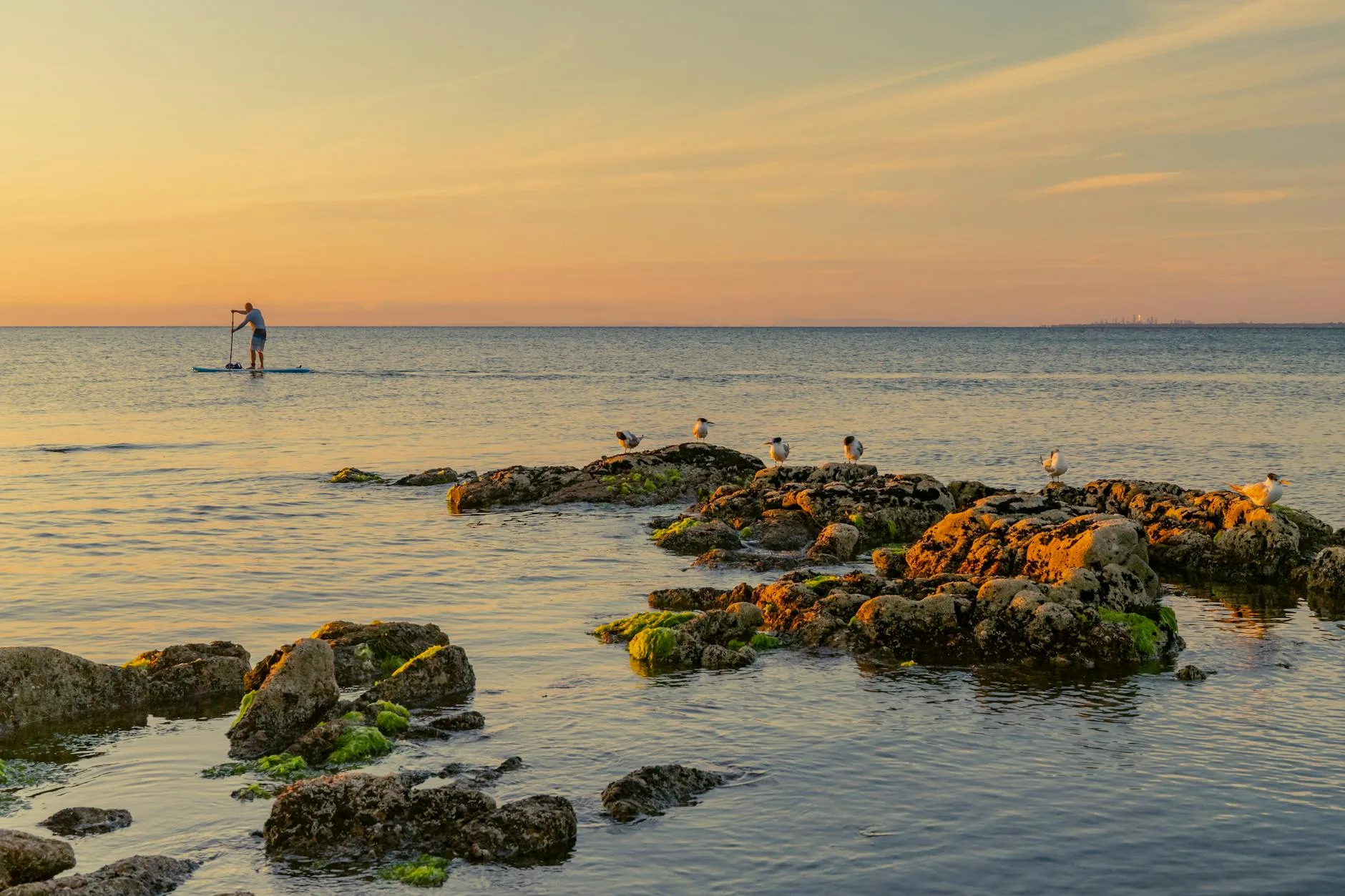
The UK has brilliant paddling spots if you know where to look:
Flat Water (Best for Beginners)
- Windermere, Lake District — classic. Large, sheltered, stunning scenery. Board hire available
- Bala Lake, Snowdonia — quieter than Windermere, good for improvers
- Salcombe Estuary, Devon — sheltered salt water with beautiful surroundings
- Loch Lomond, Scotland — enormous, dramatic, and relatively accessible from Glasgow
Coastal
- Bantham, Devon — gentle beach break, great for first attempts at SUP surfing
- Watergate Bay, Cornwall — consistent waves, board hire, and coaching available
- Rhossili Bay, Gower — exposed but beautiful. For experienced paddlers in good conditions
Rivers and Canals
- River Wye — gentle current, scenic. Multi-day paddle trips available
- Kennet and Avon Canal — flat, sheltered, perfect for beginners and families
- River Thames — accessible from London, though check Environment Agency licensing requirements for certain stretches
Our guide to getting into kayaking courses and clubs covers many of the same venues if you want to try both disciplines.
Frequently Asked Questions
Can I use an inflatable paddleboard in the sea? Yes, in calm to moderate conditions. Inflatables handle small waves and coastal paddling well. Avoid offshore winds (blowing from land to sea) which can carry you out faster than you can paddle back. Check conditions before you go and always wear a leash.
How long does an inflatable paddleboard take to inflate? With a dual-action hand pump, about 8-10 minutes to reach the recommended 15 PSI. An electric pump does it in 10-15 minutes hands-free. It’s the one part of SUP that nobody loves, but a good pump makes it bearable.
What size paddleboard do I need if I weigh 90kg? Look for a board at least 10’6″ long, 33″ wide, and 6″ thick with a volume of 300+ litres. This gives enough buoyancy and stability for comfortable paddling. Our SUP weight limit guide has detailed recommendations by weight range.
Do I need a licence to paddleboard in the UK? On most coastal waters and many lakes, no. On some rivers and canals managed by the Environment Agency or Canal & River Trust, you may need a licence or permit. British Canoeing membership includes a waterways licence for most inland venues — it costs about £45/year and is good value if you paddle regularly.
Is paddleboarding safe for non-swimmers? You should be able to swim at least 50 metres in open water before paddleboarding. Wear a buoyancy aid, use a leash, paddle in shallow water, and go with experienced friends. Cold water is a bigger risk than drowning in the UK — even strong swimmers can be incapacitated by cold water shock.
What size paddleboard should beginners choose? Most beginners do well with a stable all-round inflatable board around 10-11ft long and 32-34in wide.
Are inflatable paddleboards worth it? Yes for most UK beginners. They are easier to store and transport, though hard boards can feel faster and more responsive.
What should I check first with How to Choose a Paddleboard: Size, Shape & Type? Start with the real use case, then check size, compatibility, running costs and maintenance. A product that looks good on paper can still be the wrong fit if it does not suit the room, routine or budget.
How do I avoid wasting money on How to Choose a Paddleboard: Size, Shape & Type? Avoid buying on one headline feature alone. Compare the practical details, read the warranty or returns terms, and choose the option that solves your main problem rather than the one with the longest specification list.