Inflatable kayaks have come a long way from the pool-toy-grade boats of a decade ago. Modern inflatables use drop-stitch construction, high-pressure chambers, and reinforced materials that produce boats rivalling the performance of many rigid kayaks — while packing down into a bag that fits in a car boot, a cupboard, or even on public transport. For UK paddlers without garage space for a hardshell or a roof rack to transport one, inflatables have become a genuinely practical way to get on the water. We’ve tested 11 inflatable kayaks on UK rivers, lakes, and sheltered coastal waters to find the best options for different types of paddling.
Why Inflatable? The Honest Case
Let’s address the scepticism upfront: inflatable kayaks are not just “cheap alternatives” to rigid boats. Modern high-pressure inflatables offer genuine advantages:
- Storage — a deflated kayak fits in a large rucksack or holdall. If you live in a flat, terraced house, or anywhere without a garage, this is often the deciding factor
- Transport — no roof rack needed. Throw the bag in a car boot, take it on the train, or even carry it on a bike. This opens up paddling locations that would be impractical with a rigid boat
- Durability — quality inflatables are remarkably tough. We’ve dragged them over gravel banks, bounced off submerged rocks, and scraped through shallow sections without punctures. The multi-layer PVC or Hypalon fabrics used by good brands shrug off impacts that would gouge a plastic hardshell
- Stability — the wider beam of most inflatables makes them more stable than equivalent hardshells, which is reassuring for beginners and makes them excellent platforms for fishing, photography, or just relaxing on calm water
The trade-offs are real too. Inflatables are slower than rigid kayaks (the wider hull creates more drag), less responsive to paddle strokes, and more affected by wind due to their higher profile on the water. Setup time (10-15 minutes for inflation) adds to each trip. And while they’re tough, a puncture in the middle of a lake is a more serious problem than a scratch on a hardshell.
How We Tested
Each kayak was tested across multiple conditions typical of UK recreational paddling:
- Flat water lakes — Windermere and Coniston in the Lake District, Llangorse Lake in the Brecon Beacons
- Gentle rivers — the Thames at Henley, the Wye near Hay-on-Wye, the River Cam
- Sheltered coastal — Studland Bay, Dorset; Anglesey, North Wales
We assessed tracking (does it go straight?), stability (can you lean without panicking?), comfort (can you paddle for 2-3 hours without back pain?), inflation and setup time, pack-down size, and build quality. Each kayak was paddled by at least two testers of different sizes and experience levels.
Best Overall: Itiwit x500 (Decathlon)
The Itiwit x500 from Decathlon (around £500-550 for the solo, £600-650 for the tandem) has been our top pick since it launched, and testing it alongside newer competitors hasn’t changed that. This is a drop-stitch inflatable that inflates to high pressure (around 0.7 bar), giving it a rigidity that feels remarkably close to a hardshell on the water.
The tracking is excellent for an inflatable — the drop-stitch floor creates a defined keel line, and the included skeg (a removable fin underneath) keeps it running straight even in light crosswinds. It’s stable enough for complete beginners while still being responsive enough for experienced paddlers to enjoy. The seat is genuinely comfortable with a high backrest and adjustable straps, and we paddled for 3+ hours without significant discomfort.
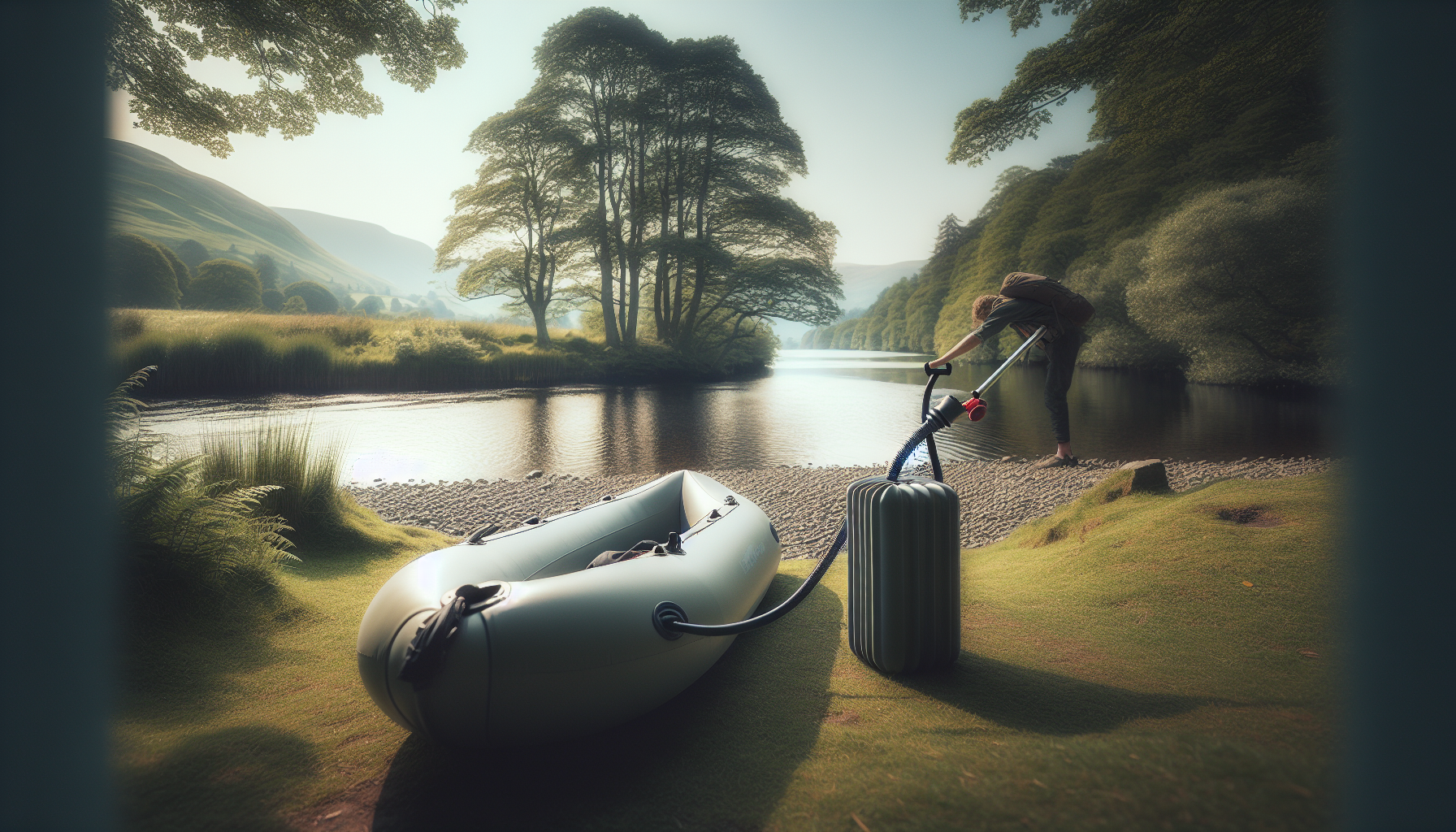
Setup takes about 10-12 minutes including inflation with the included hand pump, and pack-down is roughly the same. The packed bag weighs about 14kg for the solo version, which is manageable for carrying short distances but heavy enough that you’ll want to minimise the walk from car to water. Decathlon’s UK presence means returns and warranty claims are straightforward — a genuine advantage over brands you can only buy online.
The main limitation is availability — the x500 sells out frequently, especially as spring arrives. If it’s in stock, buy it. If not, the x100+ (around £250) is a capable budget alternative from the same range.
Best Budget: Itiwit x100+ (Decathlon)
The Itiwit x100+ (around £230-280) is the best inflatable kayak under £300 in the UK by a comfortable margin. It’s not a drop-stitch design (it uses standard inflatable chambers), so it doesn’t have the rigidity of the x500, but for calm lakes and gentle rivers, it performs surprisingly well.
The wider hull makes it extremely stable — it’s one of the hardest kayaks to capsize in our entire test lineup, which makes it ideal for beginners, family paddling, and anyone who prioritises feeling secure on the water. The seat is basic but adequate for 1-2 hour paddles, and the whole package — including paddle, pump, and bag — comes in at a price that makes kayaking genuinely accessible.
The trade-offs at this price are predictable: it tracks less well (it wanders in crosswinds), it’s slower, and the fabric is thinner than premium boats. It also sits lower in the water, so you’ll get wetter — not ideal for UK autumn and winter paddling. But as a first kayak, a family boat, or a holiday companion, the x100+ offers tremendous value and opens up UK waterways to people who’d otherwise never try kayaking.
Best for Touring: Advanced Elements AdvancedFrame
If you want an inflatable that paddles most like a rigid kayak, the Advanced Elements AdvancedFrame (around £450-550) is the closest you’ll get. It uses an aluminium frame built into the bow and stern that creates a defined entry point and keel line, dramatically improving tracking and speed compared to purely inflatable designs.
The AdvancedFrame glides more efficiently and tracks straighter than any other inflatable we tested. On longer paddling trips — think 10-15km day excursions on the Norfolk Broads, the Thames, or Scottish lochs — the better tracking means less wasted energy correcting course, and the higher cruising speed means you cover more ground with less effort. The sealed cockpit also keeps you drier than open-top inflatables, which matters significantly on UK waters.
The compromise is size and weight when packed. At about 17kg in its bag, it’s one of the heavier inflatables, and the rigid frame elements mean it doesn’t pack as compactly as purely inflatable designs. Setup takes about 15 minutes due to the frame positioning. It’s also less stable than wider inflatables — not unstable, but you feel the difference compared to the Itiwit models. Confident beginners will be fine, but nervous newcomers might prefer the wider boats.
Best Tandem: Sevylor Tahiti Plus
Tandem inflatable kayaks are popular for couples, families, and friends who want to paddle together. The Sevylor Tahiti Plus (around £180-230) is an affordable 2+1 seat kayak (two adults plus a child or a small third person in the middle) that does everything a recreational tandem needs to do without any pretence of being more than it is.
The Tahiti Plus is wide, stable, and forgiving — three qualities that matter enormously when two people with different paddling styles are trying to coordinate in the same boat. The multiple air chambers provide safety redundancy (if one chamber deflates, the others keep you afloat), and the tough PVC construction handles being dragged up gravel riverbanks without concern.
It’s not fast. It doesn’t track particularly well. The seats are basic. But for summer afternoon paddles on calm lakes, gentle river explorations, and family holidays, the Tahiti Plus does exactly what you need for less than £250. Sevylor has been making inflatable boats for decades and their UK warranty support is reliable.
For a higher-quality tandem experience, the Itiwit x500 tandem (around £600-650) is the premium choice, with drop-stitch construction and significantly better tracking — but at nearly three times the price of the Tahiti Plus.
Best for Whitewater: Grabner Outside
Most inflatable kayaks are designed for flat water and gentle conditions. If you want to take on Grade 2-3 rapids on UK rivers like the Dee, the Tryweryn, or the Tees, you need a boat specifically designed for whitewater. The Grabner Outside (around £1,200-1,400) is the gold standard for inflatable whitewater kayaking.
Made in Austria from extremely durable EPDM rubber, the Grabner is a different class of boat from recreational inflatables. It’s self-draining (water flows out through drainage ports rather than filling the cockpit), highly manoeuvrable, and tough enough to handle impacts that would destroy cheaper boats. The rocker profile (upward curve at bow and stern) allows it to ride over waves rather than ploughing through them.
At over £1,200, this is a specialist tool for experienced paddlers who specifically want an inflatable for whitewater. Most recreational paddlers don’t need this, but for those who do, nothing else comes close in the inflatable category.
Essential Gear for UK Inflatable Kayaking
The kayak is just part of the equation. For safe, comfortable paddling on UK waters, you also need:
- A buoyancy aid (PFD) — non-negotiable. UK law doesn’t require them, but basic water safety does. The Palm Peyto (around £55-70) is comfortable and widely available. Make sure it fits properly — a loose PFD is almost as dangerous as no PFD
- A paddle — if your kayak doesn’t include one, a basic aluminium paddle costs £25-40. The Itiwit adjustable paddle from Decathlon (around £25) is decent value. For better performance, a fibreglass paddle (£50-100) is lighter and more efficient
- A dry bag — for phone, keys, wallet, and dry clothes. Inflatable kayaks are wetter than hardshells. A 10-20L dry bag (£10-20) is essential
- Appropriate clothing — UK water is cold almost year-round. In spring and autumn, wear a wetsuit or drysuit. Even in summer, a rash guard and quick-dry clothing beat cotton, which becomes cold and heavy when wet. Neoprene boots or old trainers protect your feet at launch sites
- A pump — most kayaks include one, but if yours doesn’t, a double-action hand pump (£15-25) is essential. Electric pumps (£30-60) save time and effort but need charging
- A repair kit — included with most kayaks. Carry it every time you paddle. A puncture is unlikely but not impossible, and a basic patch takes minutes to apply
Where Can You Actually Paddle in the UK?
Access to water is one of the most confusing aspects of paddling in the UK. The legal situation differs between England, Scotland, and Wales:
- Scotland — the Land Reform (Scotland) Act 2003 gives you the right to paddle on virtually all inland waters. Scotland is the most accessible country in the UK for kayaking
- England — there is no automatic right to paddle on most rivers. Some rivers have navigation rights (the Thames, the Wye, the Norfolk Broads), while others require permission or are subject to access agreements. The situation is complicated and sometimes contested. British Canoeing membership (from £45/year) includes third-party liability insurance and access to waterways with access agreements
- Wales — similar to England, though access campaigning has been more successful. The Wye and several other rivers have established access. Check Go Paddling (British Canoeing’s website) for specific waterway access information
Lakes, reservoirs (where permitted), canals, and tidal waters (below the high tide line) are generally accessible. The Go Paddling website and app provides a map of accessible launch points across the UK and is the best starting resource for finding places to paddle legally.
Safety Essentials for UK Waters
UK inland waters are generally safe for recreational kayaking, but they deserve respect. Key safety principles:
- Always wear a buoyancy aid — the majority of UK kayaking fatalities involve people not wearing PFDs
- Check weather and wind conditions before paddling — wind is the biggest hazard for inflatable kayaks due to their higher profile. Gusts over 15mph make recreational paddling unpleasant and potentially dangerous. Check the Met Office forecast and local wind conditions
- Tell someone where you’re going and when you expect to be back — a simple text message with your planned route and return time
- Carry a phone in a waterproof case — for emergencies. A waterproof phone pouch (£5-10) could save your life
- Know your limits — start on calm, sheltered water and build experience gradually. A quiet canal or a sheltered lake is the right starting point, not an exposed loch or a fast-flowing river
- Understand cold water shock — UK water temperatures are cold enough to cause cold water shock even in summer. If you capsize, focus on controlling your breathing before trying to swim. Wearing appropriate thermal protection reduces this risk
Inflatable Kayak Care and Storage
Proper care extends the life of your inflatable kayak significantly:
- Rinse with fresh water after every use — especially after saltwater or canal paddling. Salt and grime degrade PVC over time
- Dry thoroughly before packing away — storing a wet kayak promotes mould and material degradation. Inflate it in the garden or drape it over a washing line to air dry
- Store deflated in a cool, dry place — avoid direct sunlight during storage, extreme heat (like a hot car boot in summer), and damp environments
- Don’t over-inflate — follow the manufacturer’s pressure recommendations. Over-inflation, especially in direct sunlight (which heats and expands the air inside), can stress seams
- Check valves and seams periodically — spray with soapy water and look for bubbles to detect slow leaks before they become problems on the water
The Bottom Line
The Itiwit x500 from Decathlon is our top recommendation for most UK paddlers — it offers the best combination of performance, durability, and value, with the convenience of high street availability and easy returns. For budget-conscious beginners, the Itiwit x100+ gets you on the water for under £300 with everything you need included. And for serious touring, the Advanced Elements AdvancedFrame delivers the closest experience to a rigid kayak in an inflatable package.
Whatever you choose, an inflatable kayak opens up an extraordinary network of UK rivers, lakes, canals, and coastline that most people never experience. The initial setup is modest, the storage requirements are minimal, and the experiences — from peaceful dawn paddles on misty lakes to adventurous river explorations — are genuinely special. Get on the water. You won’t regret it.