You have the lure in the right spot, the drift is perfect, and then the rod ends up across your knees while you try to paddle, unhook a snag, and stop the kayak turning broadside. That is the point where a cheap clip-on rest starts to feel like false economy. The best kayak fishing rod holder is not the fanciest one on the shelf; it is the one that keeps the rod secure, stays reachable from your seat, and does not get in the way every time you paddle.
In This Article
- Best Overall Kayak Fishing Rod Holder
- Quick Comparison
- How to Choose a Kayak Fishing Rod Holder
- Best Kayak Fishing Rod Holders 2026 UK
- Where to Fit Rod Holders on a Kayak
- Flush Mount vs Rail Mount vs Track Mount
- Safety and Legal Notes for UK Kayak Fishing
- Bottom Line
- Frequently Asked Questions
Best Overall Kayak Fishing Rod Holder
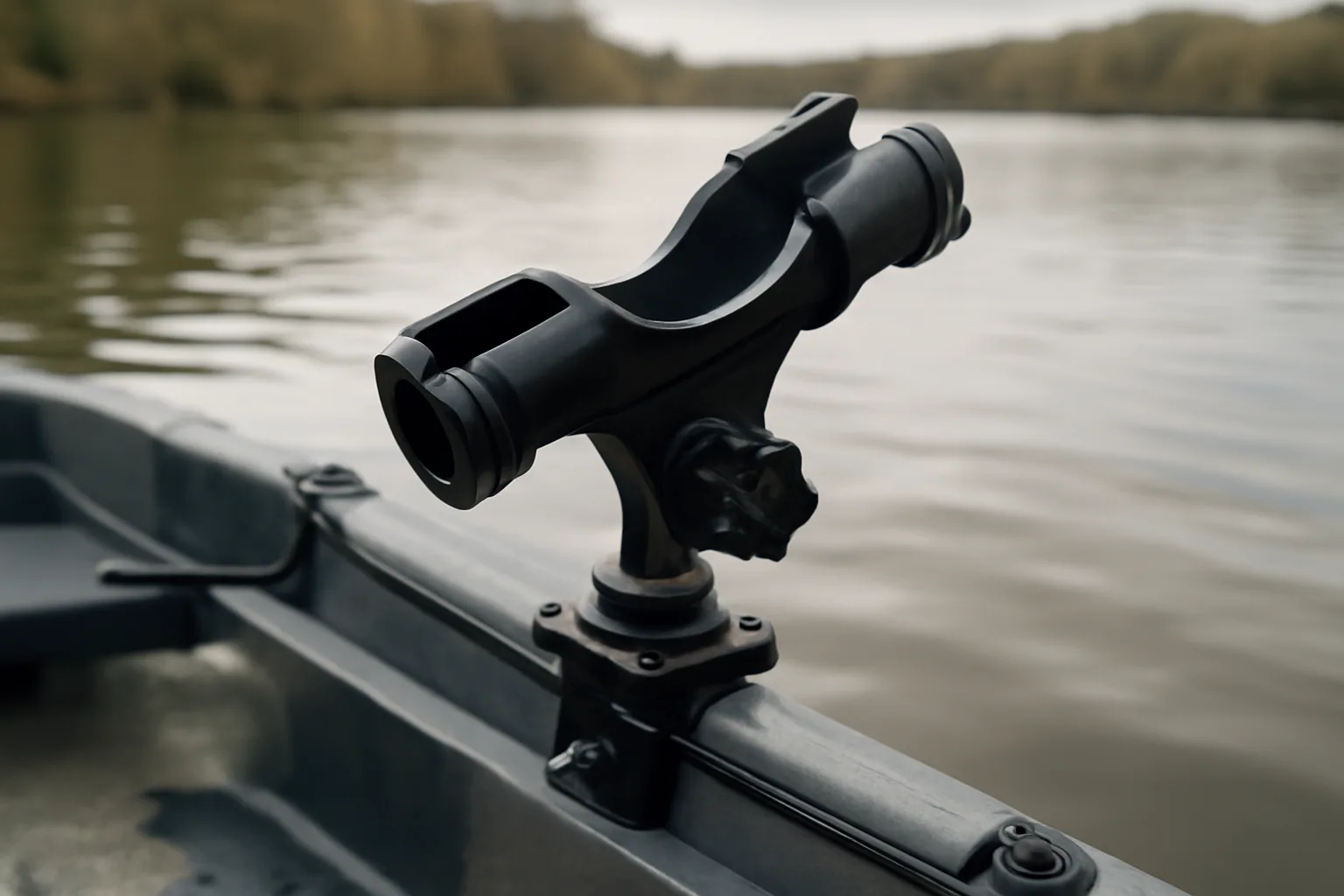
The RAILBLAZA Rod Holder R is the one I would fit first on most UK fishing kayaks. It costs about £28-35, works with the common StarPort mounting system, and gives you enough adjustment to angle the rod for trolling, bait fishing, or simply parking it while you deal with tackle.
It is not the cheapest option. A basic flush-mount tube can be under £15. But the RAILBLAZA makes sense because it solves the real kayak problem: you rarely want the rod in exactly the same position all day. A fixed tube behind the seat is fine for carrying a spare rod. For the rod you are actively using, adjustability matters.
If your kayak already has gear tracks, the YakAttack Omega is neater. If you want a simple budget fit, the Scotty Baitcaster/Spinning Rod Holder is still a dependable choice. But for most sit-on-top kayaks sold in the UK, especially Perception, Feelfree, Galaxy, and Vibe-style fishing kayaks, the RAILBLAZA is the easiest recommendation.
Quick Comparison
- Best overall: RAILBLAZA Rod Holder R – about £28-35, adjustable, easy to remove, good UK availability.
- Best for gear tracks: YakAttack Omega Rod Holder – about £40-50, very secure, excellent if your kayak has track rails.
- Best budget pick: Scotty Baitcaster/Spinning Rod Holder – about £22-30, simple and proven, needs the right base.
- Best rear storage holder: Flush-mount rod tube – about £10-18, useful behind the seat, less useful for active fishing.
- Best no-drill option: Clamp-on rod holder – about £18-30, handy for borrowed kayaks, but check it cannot twist under load.
How to Choose a Kayak Fishing Rod Holder
The right holder depends less on the brand and more on where you sit, how you cast, and whether your kayak already has mounting points. A rod holder that feels perfect on a wide pedal kayak can be annoying on a narrower touring-style sit-on-top.
Check Your Mounting Options First
Before buying anything, look at the kayak. You might have:
- Gear tracks: long aluminium or plastic rails along the sides of the cockpit.
- Flat deck space: a blank area where a StarPort, Scotty base, or similar mount can be bolted.
- Existing flush tubes: angled holders moulded behind the seat.
- Carry handles and bungee points: useful landmarks, but not always strong enough for mounting.
Gear tracks are the cleanest option because you can move the holder without drilling new holes. A fixed base is stronger if you choose the position well. Flush tubes are cheap and tidy, but you normally cannot adjust their angle.
Think About Rod Angle
A rod held too upright catches wind and gets in the way of casting. A rod held too flat can drag the tip close to the water, which is awkward when trolling or paddling through chop.
For lure fishing from a kayak, I like the rod angled slightly forward and out to the side. It keeps the reel within reach and leaves space for a normal paddle stroke. For bait fishing at anchor, a higher angle can be easier to watch. For carrying a spare rod, rear-facing is fine as long as the tip is clear of overhanging branches.
Make Sure the Holder Locks the Rod
This is where cheap holders often disappoint. A rod holder does not need to be overbuilt, but it does need some kind of collar, strap, or retaining shape that stops the rod lifting out when the kayak rocks.
Owners consistently report that open U-shaped holders feel fine on a calm lake but less convincing in wind, weed, or tidal flow. If you fish canals or sheltered reservoirs, that may not bother you. If you launch on estuaries, sea lochs, or bigger lakes, buy a holder that physically retains the rod.
Keep Paddle Clearance
The best position on dry land can be the worst position once you are paddling. Sit in the kayak with your paddle before drilling anything. Move through a normal stroke and check whether your hand, shaft, or paddle blade clips the holder.
This matters even more if you use a shorter paddle or a high-angle stroke. If you are still tuning your general kayak setup, our guide to how to hold and use a kayak paddle correctly is worth reading before you start drilling holes in the deck.
Best Kayak Fishing Rod Holders 2026 UK
RAILBLAZA Rod Holder R
The RAILBLAZA Rod Holder R is the most sensible all-rounder for a UK kayak fishing setup. It is adjustable, removable, and widely stocked by kayak shops and Amazon UK. The StarPort base system also means you can use the same mount for other accessories later.
The holder grips spinning and baitcasting rods well, and the rotating collar makes it feel more secure than the simplest open holders. It is particularly good for sit-on-top kayaks where you want the rod beside the cockpit rather than behind you.
What I like is the balance between security and convenience. You can lift the rod out quickly when a fish takes, but it does not feel as if the rod is one awkward wobble away from leaving the boat. The adjustment knob is chunky enough to use with cold hands, which is not a small detail in April.
The downside is that you need a compatible base. If your kayak does not already have a StarPort or suitable flat mounting area, budget for the base and stainless fittings as well.
YakAttack Omega Rod Holder
The YakAttack Omega is the premium pick if your kayak has gear tracks. It is especially good for anglers who swap between spinning rods, baitcasters, and different lure setups because the cradle is flexible and easy to reposition.
Expect to pay about £40-50 in the UK. That is a lot for a rod holder, but the value is in the track-mount convenience. Slide it forward for trolling, move it back for casting, or take it off entirely when you are paddling without fishing gear.
The Omega feels more at home on modern fishing kayaks than on basic recreational sit-on-tops. If you have a Galaxy, Old Town, Hobie, Feelfree, or similar kayak with proper accessory tracks, it is a strong upgrade.
The only caveat is bulk. It is not huge, but it does sit proud of the deck. On a narrow kayak, that can make self-rescue practice and close-in paddle strokes more fiddly.
Scotty Baitcaster/Spinning Rod Holder
Scotty gear has been around for ages because it works. The Baitcaster/Spinning holder is not flashy, but it is a reliable mid-priced option at about £22-30 before you add the right base.
It suits anglers who want a fixed cockpit holder for lure fishing and bait fishing rather than a full track ecosystem. The front slot keeps spinning reels sitting naturally, and the holder shape supports the rod without feeling too grabby.
The main thing to check is compatibility. Scotty uses its own bases, so do not assume it will drop into a RAILBLAZA or generic mount. If you are starting from scratch, buy the holder and base as a bundle.
I would choose this over a no-name holder if you plan to fish regularly. The saving on generic options is usually only a tenner, and the Scotty fit and adjustment are less irritating after a wet season of use.
Flush-Mount Rod Tubes
Flush-mount tubes are useful, cheap, and often misunderstood. They are brilliant for storing spare rods behind the seat. They are less good as your main working holder because the angle is fixed and usually behind you.
A pair of rear flush tubes can cost about £15-25. They sit neatly in the deck and keep rods out of the cockpit while you paddle. On a compact kayak, that makes the boat feel much less cluttered.
The problem is access. Reaching behind you to grab a rod while the kayak is moving is awkward, and if the tube angle is too upright, rods can catch branches, mooring lines, or landing-net handles. Flush tubes also need drilling a fairly large hole, so measure twice.
Use them for spare rods and transport. Use an adjustable holder near the seat for the rod you are actively fishing.
Clamp-On Rod Holders
Clamp-on holders are tempting because they avoid drilling. They can work well on rented kayaks, borrowed boats, or older sit-on-tops where you are not ready to commit to permanent fittings.
The best ones clamp around a rail, carry handle area, or firm gunwale section. The poor ones twist as soon as a rod pulls sideways. That is annoying with a float rig and risky if you are trolling a lure.
If you buy one, test it hard at home. Clamp it, insert a rod, then pull from the likely fishing angles. If it moves on land, it will move on water.
I would not use a clamp-on holder for sea fishing or heavy trolling. For canals, sheltered lakes, and occasional coarse fishing, it can be a practical low-commitment option.
Where to Fit Rod Holders on a Kayak
If paddle control is part of the problem, sort that before adding more deck hardware. Our best kayak paddles UK guide is a useful cross-check, because a heavy or badly sized paddle makes rod-holder placement feel worse than it is.
Position matters more than most product listings admit. A good holder in the wrong place is still annoying.
For a single active rod holder, start beside the cockpit, slightly forward of your hip on your casting side. That gives you easy access without forcing you to twist. If you are right-handed and usually cast to the right, try the holder on the left so the rod is parked out of the casting path. Some anglers prefer the opposite. Sit in the kayak and mimic the whole cast, retrieve, net, and unhook sequence before drilling.
For a second holder, place it either behind the seat for a spare rod or forward on the opposite side for trolling. Avoid mounting both active holders so close together that the rod tips cross.
Practical fitting tips:
- Use stainless fixings: ordinary screws rust quickly around water.
- Add backing washers or plates: thin kayak plastic can flex under load.
- Seal drilled holes: marine sealant reduces water ingress.
- Avoid footwell clutter: anything near your heels will get kicked.
- Keep rescue space clear: do not block handles, deck lines, or re-entry points.
If your fishing kayak also carries dry bags, a crate, or electronics, plan the whole cockpit at once. Our dry bag guide for paddling covers the storage side, but the same rule applies: keep the kit you touch most often closest to your normal seated position.
Flush Mount vs Rail Mount vs Track Mount
Flush Mount
Flush mounts look neat and cost little. They are best for rear storage or simple trolling setups where the rod angle is not critical. The catch is permanence. Once you cut the hole, you own that position.
Choose flush mounts if you have a wide, stable fishing kayak and want spare rods stored out of the way. Avoid them as your only holder if you are still experimenting with layout.
Rail Mount
Rail mounts, including StarPort-style systems, are a good middle ground. You still need a base, but the accessory can be removed or swapped. That makes them useful on kayaks that do double duty for fishing, family paddles, and touring.
The RAILBLAZA system sits here. It is secure enough for normal kayak fishing and easier to adapt than a fixed tube.
Track Mount
Track mounts are the most flexible if your kayak supports them. You can move accessories along the track without drilling new holes. That is why many dedicated fishing kayaks now include accessory rails as standard.
The downside is cost. Track-compatible holders usually cost more, and you need to make sure the track hardware is tight before each trip. A loose track nut is not something you want to discover while a fish is running.
Safety and Legal Notes for UK Kayak Fishing
If you are still choosing the boat as well as the holder, compare our best fishing kayaks UK guide and the beginner-focused kayak fishing for beginners guide before drilling anything permanent. The Scottish Fire and Rescue Service water sport safety advice is also worth reading before adding extra kit that can snag lines or get in the way during a capsize.
Rod holders are convenience kit, not safety kit. Do not let extra fishing gear crowd out the basics: buoyancy aid, leash where appropriate, waterproof phone pouch, spare warm layer, and a realistic weather plan.
If you are fishing in England or Wales, check the current GOV.UK rod fishing licence guidance before you go. Sea fishing and private waters have different rules, but many freshwater situations require a licence.
For the paddling side, treat kayak fishing as paddling first and fishing second. If you are still building confidence, start with the basics in kayak fishing for beginners before adding multiple rods, anchors, and electronics.
The holder should also release the rod quickly. If you hook weed, a submerged branch, or something moving faster than expected, you need to be able to grab the rod or ditch pressure without leaning too far over the side.
Bottom Line
For most UK anglers, the RAILBLAZA Rod Holder R is the best kayak fishing rod holder to buy first. It is adjustable, easy to remove, and not wildly expensive. Pair it with a sensible cockpit position and it will make lure changes, trolling, and landing fish much less chaotic.
Choose the YakAttack Omega if your kayak has gear tracks and you want the neatest premium setup. Choose a Scotty holder if you prefer a proven mid-price option. Add flush tubes behind the seat only when you want spare rod storage, not as your main working holder.
Whatever you buy, test the position on land before drilling. The right holder should make the kayak feel calmer, not more cluttered.
Frequently Asked Questions
What is the best kayak fishing rod holder for most UK anglers? The RAILBLAZA Rod Holder R is the best first choice for most UK kayak anglers because it is adjustable, secure, removable, and easy to find from UK retailers.
Do I need to drill my kayak to fit a rod holder? Not always. Gear-track and clamp-on holders can avoid drilling, but fixed bases and flush mounts usually need holes. If you do drill, use stainless fixings, backing washers, and sealant.
Are flush-mount rod holders good for kayak fishing? Flush-mount holders are good for carrying spare rods behind the seat, but they are less convenient for the rod you are actively using because the angle and position are fixed.
Can I troll from a kayak rod holder? Yes, but use a secure holder with a retaining collar or strap, keep the drag set sensibly, and avoid heavy trolling in strong flow until you know how your kayak reacts.
Where should I put a rod holder on a fishing kayak? For an active rod, mount it beside the cockpit and slightly forward of your hip, where you can reach it without twisting and where it does not interfere with your paddle stroke.