The most ungraceful moment in any kayaking trip is not capsizing in rapids — it is trying to get into the boat from a muddy bank while your friends watch and your paddle drifts away. You shuffle forward, the kayak tilts, you overcorrect, one foot is in the water, the other is on the bank, and for a split second you are doing the splits over a widening gap between solid ground and floating plastic. Everyone has been there. The good news is that launching and landing are learned skills, not natural talent — once you know the technique, you step in and push off with the confidence of someone who has done it a thousand times.
In This Article
- Why Launching and Landing Matter
- Launching from a Beach or Gentle Slope
- Launching from a Bank or Pontoon
- Launching in Moving Water
- Landing Safely: The Approach
- Landing in Surf and Waves
- Common Launching Mistakes
- Equipment That Makes It Easier
- Frequently Asked Questions
Why Launching and Landing Matter
Most kayaking injuries happen not on the water but at the water’s edge — slipping on wet rocks, twisting ankles on uneven banks, or straining backs lifting loaded boats. A controlled launch and landing technique keeps you dry, safe, and in possession of all your equipment rather than watching your paddle float downstream while you are knee-deep in mud.
The Stability Challenge
A kayak on land is stable — it sits flat on the ground. A kayak fully afloat is stable — your body weight is centred and the hull design keeps you upright. The dangerous moment is between these two states: half on land, half floating, with your weight transitioning from one support (the ground) to another (the water). This is when capsizes happen — not because you cannot paddle, but because you have not practised the getting-in part.
Different Environments Need Different Approaches
Launching from a gently sloping sandy beach is nothing like launching from a concrete pontoon 50cm above the water, which is nothing like entering a river from a steep muddy bank. Each environment demands a specific technique, and knowing which to use before you reach the water prevents the improvisation that leads to swimming.
Launching from a Beach or Gentle Slope
The easiest scenario. A gradual slope into calm water lets you use the “straddle and slide” method.
The Technique
- Place your kayak at the water’s edge, perpendicular to the shore, with the bow (front) pointing toward the water and the stern (rear) on dry ground
- Load your gear into the cockpit while the boat is still partially beached and stable
- Push the kayak into the water until the cockpit is just barely floating — the stern should still lightly rest on the sand/gravel for stability
- Stand beside the cockpit, place your paddle across the deck behind the seat (bridging from the boat to the shore for extra stability)
- Put one hand on the paddle shaft (pressing it against the rear deck), lean your weight onto that hand, and lower yourself into the seat
- Bring your legs in, centre your weight, then push off from the bottom with your paddle or hands
Key Points
- Keep weight low — lower your body by bending your knees, not by leaning forward. A high centre of gravity tips you over.
- Move decisively — slow, hesitant movements give the kayak time to drift or rotate. Get in with purpose.
- Paddle as a brace — the paddle resting across the rear deck to the shore gives you a stability point. Lean on it as you enter.
For a gentle slope with no current, this is the safest and driest method available. Practice on calm days until it becomes automatic before attempting it in wind or waves.
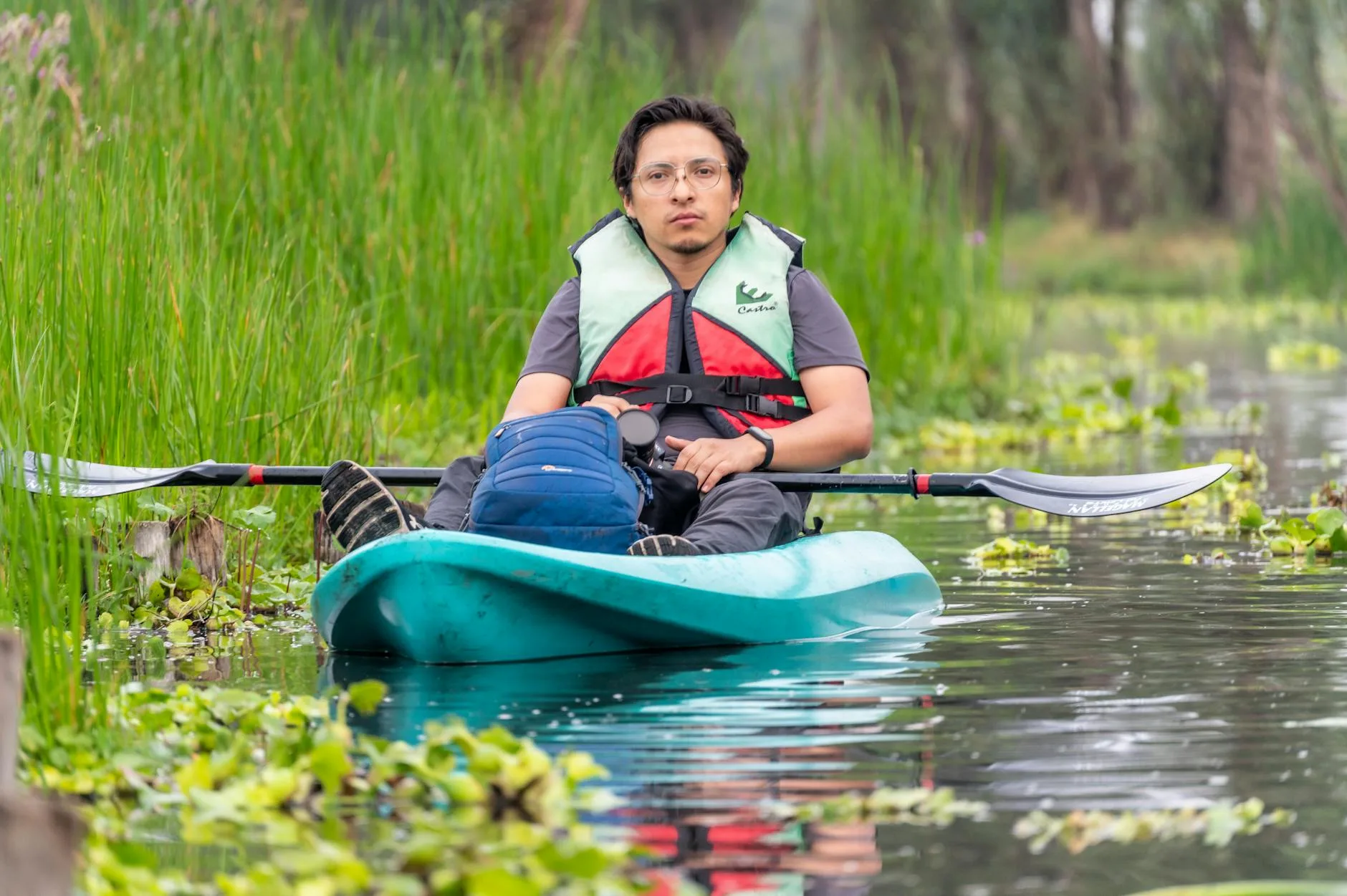
Launching from a Bank or Pontoon
Higher banks, river edges, and concrete pontoons require a different approach because you cannot straddle the kayak while standing in shallow water.
The Seal Launch (From Pontoons and Low Walls)
- Sit on the edge of the pontoon with your legs hanging toward the water
- Place the kayak directly below you in the water, held close to the pontoon with your paddle or a line
- Put your paddle across the pontoon behind you (one end on the pontoon, one end on the kayak deck) for a stability bridge
- Lower yourself from the pontoon directly into the cockpit — weight supported by arms on the pontoon edge
- Once seated, bring legs in, attach spray deck if used, and push away from the pontoon wall
The Bank Entry (Steep or Muddy Banks)
- Place the kayak parallel to the bank, close enough that you can step directly from bank to cockpit
- Squat down on the bank beside the cockpit — never stand tall above the boat
- Place both hands on the cockpit rim (one on the near edge, one reaching across to the far edge)
- Step one foot into the centre of the cockpit floor (NOT the seat — the floor for stability)
- Lower your body in one movement, transferring weight from the bank to the boat
- Immediately sit down and centre your weight before bringing the second leg in
The Partner Assist
On difficult banks, a second paddler holds the bow or stern of your kayak steady while you enter. They brace the boat against the bank with their foot or hand, preventing it from drifting away during your entry. Return the favour when they launch. This is standard practice in kayaking groups — nobody judges you for wanting a steadying hand on tricky entries.
Launching in Moving Water
Rivers with current add complexity because the water is trying to push your kayak downstream while you are trying to get into it. The technique changes to account for flow.
Eddy Launches
Find an eddy (a calm pocket of water behind a rock, bank feature, or bridge support) and launch from there rather than directly into the main current. Eddies provide calm water for a stable entry, and you paddle into the current when ready rather than being swept into it mid-launch.
Facing Upstream
Always position the kayak facing upstream (into the current) or at least angled upstream. Facing downstream means the current pushes water over your stern as you enter — potentially flooding the cockpit before you have attached your spray deck. Facing into the flow means the water parts around your bow cleanly.
The Rapid Entry
In strong current, speed matters. Have the kayak fully in the water (held by a partner or tied to a bank feature), get in fast, and peel out into the current immediately. Extended time half-in-half-out with current pushing against you is when things go wrong. Confidence and speed — practised in calm water first — prevent problems here.
For proper kayak stroke technique once you are afloat, see our dedicated guide.
Landing Safely: The Approach
Landing is launching in reverse — but with added factors: you are approaching the shore with momentum, the landing surface may be unfamiliar, and waves or current may be pushing you faster than you want. For a related angle, see our How to Do a Wet Exit from a Kayak Safely guide.
The Controlled Approach
- Scout first — look at the landing spot from the water before committing. Check for rocks just below the surface, steep drop-offs, sharp objects, or unstable banks.
- Approach slowly — reduce speed to walking pace for the final 10 metres. Arriving fast means hard contact with the shore that can damage your hull or catapult you forward.
- Approach perpendicular — come in at 90 degrees to the shore. Approaching at an angle means the current or waves can push you sideways and broadside onto rocks.
- Paddle as brake — drag your paddle blade flat in the water beside you as a brake in the final 2-3 metres. This gives fine speed control for a gentle beaching.
The Exit
Once the bow touches the shore and the kayak stops:
- Place your paddle across the deck behind you (one blade on the shore for stability, as with launching)
- Push your body up using the cockpit rim and the paddle shaft
- Bring one leg out and place your foot on solid ground beside the kayak
- Transfer your weight onto the shore foot and lift yourself out, keeping your centre of gravity low
- Pull the kayak further up the shore before it drifts away (currents can pull an empty boat back)
Landing in Surf and Waves
Coastal paddling introduces surf landings — the most challenging and potentially dangerous entry/exit scenario for recreational kayakers.
The Approach
Catch a wave and ride it toward the shore rather than fighting against the white water. Time your approach between sets — watch the wave pattern for 30-60 seconds and go during a lull. The British Canoeing safety guidance recommends that surf landings are practised in organised sessions before attempting them solo.
Staying Straight
As waves push you shoreward, they want to turn you sideways (broaching). Use a stern rudder stroke to keep the bow pointing directly at the beach. If you broach (turn sideways to a wave), lean INTO the wave and brace — leaning away from the wave guarantees a capsize as it rolls you over.
The Beach Landing
- As the hull scrapes the sand, immediately lean back slightly to keep your weight off the bow (preventing it from digging in and flipping you)
- The moment you stop, get out fast — the next wave will try to push you further or pull you back. Do not sit admiring the view. Grab the bow toggle, step out, and drag the kayak above the wave line.
- Never exit a kayak in breaking surf while sitting sideways — a wave hitting a broadside kayak with you half-out is a recipe for injury
Common Launching Mistakes
Standing Up in the Kayak
Never stand — not to reach something, not to see further, not for any reason in a recreational kayak. The centre of gravity rises above the stability threshold and capsize is almost certain. Everything happens from a seated or crouching position.
Launching Without Your Paddle Ready
Push off from the shore and realise your paddle is still on the bank. You are now drifting with no propulsion and no way to return easily — especially awkward in current. Always have the paddle in hand (or across the deck within immediate reach) before pushing off.
Ignoring Conditions
Launching into strong offshore wind is dangerous — it pushes you away from shore faster than beginners expect, and the return paddle is directly into the wind. Check wind direction before launching. If it is blowing offshore, question whether your skill level matches the conditions. Our weather and tides guide covers decision-making for paddling conditions.
Overloading Before Entry
Packing your kayak with all your gear then trying to enter an already-heavy, already-low-in-the-water boat from a steep bank. Load the boat in the water where it is stable, not on land where the extra weight makes it slide unpredictably. Or load minimal gear, launch, then have a partner pass remaining items once you are seated and stable. We cover a similar decision in How to Choose a Kids’ Paddleboard.

Equipment That Makes It Easier
Kayak Cart/Trolley
Wheeling your kayak to the water’s edge on a cart means you arrive at the launch point fresh rather than exhausted from carrying a 20-30kg boat. Less fatigue means better coordination during the actual launch. Carts fold flat and stow behind your seat or in a hatch during the paddle.
Paddle Leash
A coiled leash connecting your paddle to the kayak ensures that if you drop it during entry or exit, it does not float away. Invaluable for beginners and useful for everyone in current or wind. £5-10 from any paddlesport retailer.
Neoprene Paddling Shoes
Proper grip on wet, slippery surfaces (rocks, pontoons, muddy banks) prevents the foot-sliding-away disaster that causes most ungraceful entries. Bare feet slip. Trainers get soaked and stay heavy. Neoprene shoes grip, drain, and dry quickly. Essential for UK river and coastal paddling where surfaces are unpredictable.
Spray Deck (For Sit-Inside Kayaks)
A spray deck keeps water out of the cockpit during surf landings, splashy rivers, or rainy conditions. Practice attaching and releasing the spray deck on dry land until you can do it without looking — fumbling with a spray deck while waves hit you is not the time to learn.
Frequently Asked Questions
How do I stop the kayak tipping when I get in? Keep your centre of gravity low (crouch, do not stand), enter the dead centre of the cockpit (not one side), and use your paddle as a stabilising bridge between the kayak and the shore. Move decisively — slow, tentative movements give the boat time to react to each weight shift.
What if I capsize while launching? You are in shallow water near the shore — simply stand up, empty the kayak by flipping it, and try again. Capsizing during a launch is embarrassing but not dangerous unless you are in deep water or strong current. Wear appropriate clothing (not jeans and trainers) so a dip is uncomfortable rather than dangerous.
Can I launch a sit-on-top the same way as a sit-inside? Sit-on-top kayaks are more forgiving because there is no cockpit to lower yourself into and they are inherently more stable. Wade in knee-deep, straddle the seat from behind, sit down, and swing your legs up. The wider hull and open deck make entry much simpler than sit-inside boats.
How do I launch from a high bank with no one to help? The seal launch: sit on the bank edge with legs in the kayak below, push yourself forward off the bank directly into the seat. This works from drops up to about 60cm. Above that, find an alternative launch point — dropping into a kayak from a metre-high bank risks spinal compression and hull damage.
Should I practice launching before going on a real trip? Yes — spend 20 minutes at a calm lake or river bank just getting in and out repeatedly until it feels natural. Five smooth launches in practice prevents one catastrophic launch on a group trip with spectators. Most kayaking courses include this as session one for exactly this reason.