The Bluefin Cruise 10’8 is the best beginner paddleboard here for most adults. It combines an all-round shape with a complete package and a more established SUP brand than the cheaper alternatives. Choose the compact Aqua Marina Breeze for smaller paddlers and easier carrying, Niphean for value, SereneLife for a lower-cost starter kit, or the 35-inch iTAOSTAR when maximum initial stability matters more than speed.
Quick picks: the best paddleboards for beginners
- Best overall: Bluefin Cruise 10’8.
- Best compact option: Aqua Marina Breeze 9’10.
- Best-value all-rounder: Niphean 10’6.
- Best budget starter kit: SereneLife 32-inch SUP.
- Best for extra stability: iTAOSTAR N26F 35-inch.
Quick navigation
- How we chose
- Comparison at a glance
- Five beginner paddleboards reviewed
- Which board should you buy?
- Size, stability and load capacity
- Package and safety checklist
- Frequently asked questions
How we chose
We compared current UK packages by board length, width, thickness, shape, stated load guidance, fin arrangement and included equipment. For a first board, predictable balance and a sensible fit for the paddler matter more than touring speed, elaborate accessory bundles or an inflated maximum-load figure.
Dimensions and load figures can vary between colour or size options, and package contents can change, so check the chosen variation before ordering. We favour all-round inflatable boards because they are easier to store and transport than rigid boards for most UK beginners.
Comparison at a glance
| Board | Best for | Format | Main compromise |
|---|---|---|---|
| Bluefin Cruise 10’8 | Best overall | 10’8 all-round package | Premium position |
| Aqua Marina Breeze 9’10 | Best compact option | 9’10 all-round package | Less suitable for larger paddlers |
| Niphean 10’6 | Best-value all-rounder | 10’6 stable SUP kit | Less established SUP brand |
| SereneLife 32-inch SUP | Best budget starter kit | 32-inch-wide all-round kit | Simpler package and construction |
| iTAOSTAR N26F 35-inch | Best for extra stability | 35-inch-wide full kit | Extra width reduces glide |
Treat stated load limits as ceilings rather than ideal rider targets. Your body weight plus clothing, water, dry bags and any passenger all count. Leaving useful headroom generally produces a board that sits higher and feels less sluggish.
The five best beginner paddleboards
1. Bluefin Cruise 10’8: best overall

The Bluefin Cruise 10’8 is the most rounded recommendation for an adult expecting to paddle regularly. The 10’8 length gives more glide and usable deck space than a compact board without pushing into a long touring shape. Its all-round format makes sense for sheltered lakes, calm rivers and gentle coastal sessions when conditions and local guidance allow.
The compromise is cost and bulk. A more substantial package is harder to carry than a compact board, and new paddlers still need to learn inflation pressure, fin fitting and safe leash choice rather than assuming a premium kit removes those decisions.
- Buy it if: you want one dependable all-round package for regular recreational use.
- Skip it if: you are a smaller paddler prioritising the lightest carry.
- Main compromise: the strongest all-round choice here sits above entry-level alternatives.
2. Aqua Marina Breeze 9’10: best compact option
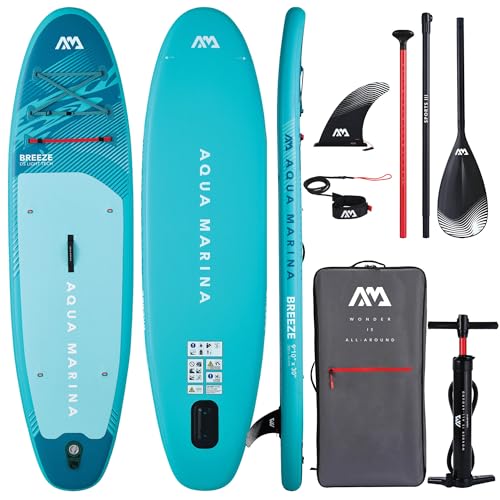
The Aqua Marina Breeze is the shortlist choice for a smaller adult, teenager or anyone who values easier handling off the water. A shorter board takes less room in a car boot and can feel less cumbersome when turning at low speed. Aqua Marina also has a recognisable inflatable-SUP range, which gives this option more product context than an anonymous starter kit.
A compact board gives up deck space and may feel busier beneath a tall or heavier paddler. It is not automatically the easiest board for every beginner: matching the board to the rider matters more than simply choosing the shortest package.
- Buy it if: compact storage and manageable handling suit your size and intended use.
- Skip it if: you are tall, heavy or want to carry substantial gear.
- Main compromise: easier transport with less usable deck area and load headroom.
3. Niphean 10’6: best-value all-rounder

The Niphean 10’6 occupies the useful middle ground: a familiar all-round length, a complete accessory package and a lower commitment than the premium Bluefin. For occasional summer paddling on sheltered water, that combination is more relevant than specialist touring features.
The product title covers more than one size, so selecting the intended 10’6 variation is essential. Brand support, replacement parts and long-term specification continuity are also less clear than with an established specialist manufacturer.
- Buy it if: you want a conventional all-round package without moving to the premium tier.
- Skip it if: specialist dealer support matters more than initial value.
- Main compromise: appealing specification-to-cost balance from a less established SUP name.
4. SereneLife 32-inch SUP: best budget starter kit

The SereneLife is the budget-led choice for a new paddler who wants the board, paddle, pump, backpack and leash in one package. Its 32-inch width sits in familiar all-round territory and should suit calm-water learning when the rider and equipment remain comfortably within the selected board guidance.
At this level, accessories are part of the compromise. Entry-level paddles and pumps can be heavier or slower to use, while broad marketing claims should not replace checking the actual dimensions and included parts. Budget also must not mean treating open water casually.
- Buy it if: you want a complete lower-cost kit for occasional sheltered-water sessions.
- Skip it if: you expect frequent use or want stronger after-sales support.
- Main compromise: accessible starter package with fewer reasons to choose it for long-term progression.
5. iTAOSTAR N26F 35-inch: best for extra stability

The iTAOSTAR N26F is the widest board here. That 35-inch platform is attractive for nervous beginners, larger paddlers and slow activities such as gentle fitness work, where initial steadiness matters more than covering distance. The full kit also reduces the number of separate purchases needed before a first session.
Width is not free performance. A very wide board takes more effort to paddle in a straight line, catches more wind and can encourage an inefficient stroke around the rail. It is a stability-first option, not the automatic best board for every beginner.
- Buy it if: extra initial stability is your leading requirement.
- Skip it if: you want better glide, easier cadence or longer trips.
- Main compromise: the widest platform here is slower and more affected by wind.
Which beginner paddleboard should you buy?
Choose the Bluefin Cruise 10’8 if you want the best balance of beginner stability, progression room and brand confidence. The Aqua Marina Breeze suits a smaller paddler or compact setup, Niphean offers the strongest value balance, SereneLife keeps the initial commitment down, and iTAOSTAR is the stability-first choice.
The common mistake is buying solely from a high maximum-load number or the biggest accessory list. Start with your combined on-water load, storage space, distance from car to water and likely conditions. Our paddleboard size and type guide explains shapes in more depth, while inflatable versus solid paddleboards covers the storage and performance trade-off.
Size, stability and load capacity
Width and length
Width gives initial stability, but it also increases drag. Around 32 to 33 inches is a useful all-round starting point for many adults; 35 inches prioritises steadiness, while a narrower board may suit a lighter paddler who values glide. Length influences tracking and deck space. A 10’6 to 10’8 all-rounder is popular because it remains manageable without feeling cramped.
Volume and rider weight
Maximum load is not the same as comfortable working load. Add the rider, clothing, drinking water, dry bag and any child or pet. If that total approaches the advertised ceiling, step up in volume or choose a wider, longer board. Our SUP weight-limit guide explains why overloaded boards become slow and unstable.
Where you will paddle
A beginner all-round board is intended for sheltered conditions, not rough open sea, surf or fast water. Wind can overwhelm a new paddler quickly because both body and board present a large surface. Check a reliable forecast, stay within easy return distance and postpone the session when conditions exceed your experience.
Package and safety checklist
A usable starter package should include a suitable paddle, pump with readable gauge, compatible fin, carry bag and repair materials. Inspect the valve tool and patch instructions before the first trip rather than discovering missing parts at the water. An electric pump is convenient, but a working manual backup is sensible; our paddleboard pump guide compares both types.
- Buoyancy aid: choose one that fits properly and is intended for paddlesports.
- Leash: match it to the environment; quick-release waist systems are used where snagging or current is a concern.
- Phone protection: carry a means of calling for help in a waterproof pouch attached to you.
- Clothing: dress for the water temperature, not merely the air temperature.
- Plan: tell someone where you are going and when you expect to return.
The RNLI paddleboarding guidance covers buoyancy aids, leashes, weather and communication. Beginners should use recognised launch sites, understand local restrictions and seek instruction if they are unsure about self-rescue or changing conditions.
Rinse and dry the board after saltwater use, keep grit away from the valve and fin box, and store it away from heat and direct sunlight. Our transport and storage guide covers packing and longer-term care.
Frequently Asked Questions
What size paddleboard is best for a beginner?
Many adults suit a 10’6 to 10’8 all-round inflatable around 32 to 33 inches wide. Rider weight, height, carried gear and intended water matter more than one universal size.
Is a wider paddleboard always better for beginners?
No. Extra width improves initial stability but adds drag, catches more wind and can make an efficient paddle stroke harder. Choose enough width for confidence without oversizing the board.
How much load headroom should I leave?
Avoid treating the stated maximum as a target. Include the rider and all equipment, then leave useful capacity so the board does not sit low or feel sluggish.
Do I need a buoyancy aid on a paddleboard?
A properly fitted paddlesports buoyancy aid is a sensible core safety item. Leash choice must also suit the environment, especially around current or snag hazards.
Can beginners paddleboard at sea?
Only in suitable sheltered conditions with appropriate knowledge, equipment and a reliable forecast. Offshore wind, tide, waves and cold water can turn a simple outing into an emergency.
Are complete paddleboard packages ready to use?
They provide the main equipment, but you still need to check every component, inflate to the stated pressure, fit the fin correctly and add appropriate safety equipment and clothing.
The bottom line
The Bluefin Cruise 10’8 is the beginner paddleboard we would choose for most adults. It offers the most convincing balance of all-round dimensions, package completeness and progression room. Buy smaller only when compact handling suits the rider, wider when stability genuinely dominates, and cheaper when occasional use makes the trade-off worthwhile.