The UK has some of the most beautiful and varied kayaking water in Europe — from mirror-calm Scottish lochs to winding English rivers, Welsh gorges to Norfolk waterways that feel like they’ve barely changed in centuries. Whether you’re a complete beginner looking for a relaxing first paddle or an experienced kayaker seeking something more adventurous, there’s a route in the UK that’ll suit you. We’ve paddled every route on this list personally and selected them for their accessibility, scenery, and the quality of the overall experience. Here are our 10 favourite UK kayaking routes, with practical information to help you plan your trip.
1. River Wye — Glasbury to Hay-on-Wye (Easy)
Distance: 11km | Time: 3-4 hours | Difficulty: Beginner-friendly | Best season: April-October
The Wye is arguably the UK’s most perfect river for recreational kayaking, and this section is the ideal introduction to river paddling. The current does most of the work — you’ll paddle gently downstream through a landscape that’s quintessentially British countryside: rolling green hills, ancient woodland, grazing sheep, and the occasional heron watching you drift past from the riverbank.
The river is wide and gentle along this stretch, with no significant rapids or hazards. There are a few easy riffles (shallow, fast-flowing sections) that add a bit of excitement without any real risk, and plenty of shingle banks where you can pull over for a picnic. The take-out at Hay-on-Wye puts you right in the heart of one of the UK’s most charming market towns — perfect for browsing the famous second-hand bookshops after your paddle.
Several local operators offer kayak hire with shuttle services between Glasbury and Hay, so you don’t need to arrange car logistics. Wye Valley Canoes and Paddles & Pedals are both well-established and reliable. Access on the Wye is covered by a long-standing access agreement.
This is the route we recommend to anyone trying kayaking for the first time. The combination of easy water, stunning scenery, and convenient logistics makes it unbeatable as an introduction to the sport.
2. Loch Lomond — Balmaha Bay Circuit (Easy-Moderate)
Distance: 8-12km depending on route | Time: 3-5 hours | Difficulty: Easy in calm conditions, moderate if windy | Best season: May-September
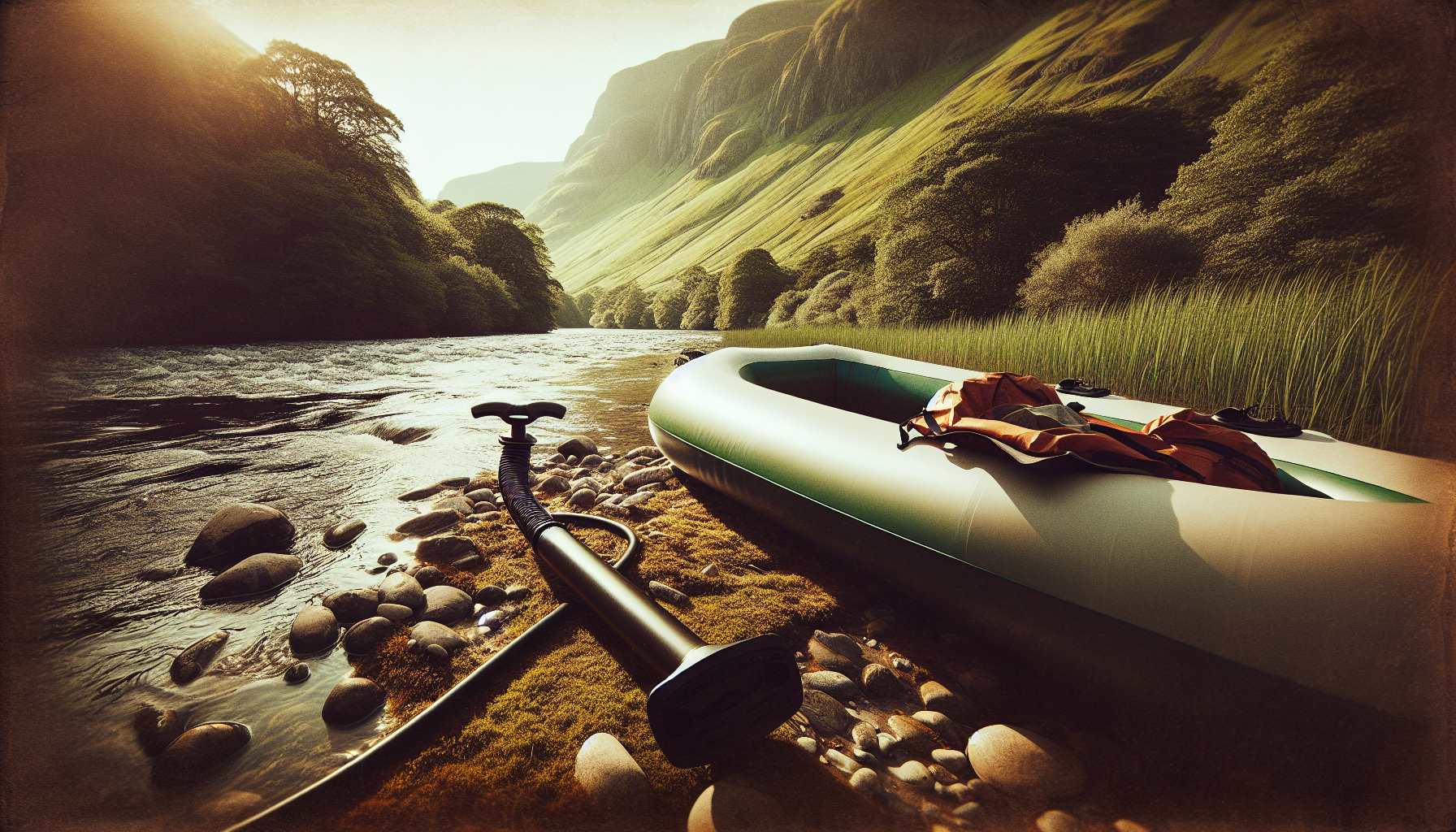
Loch Lomond is spectacular from any angle, but from a kayak, it’s genuinely breathtaking. Launching from Balmaha on the eastern shore, you can explore the cluster of islands in the southern part of the loch — Inchcailloch, Inchfad, and Inchcruin — each with its own character. Inchcailloch is a National Nature Reserve with a waymarked trail and summit viewpoint that’s worth the short walk.
The southern islands are relatively sheltered, making them suitable for less experienced paddlers in calm conditions. However, Loch Lomond can change character quickly — wind funnels down the glen and can whip up significant waves with little warning. Check the forecast carefully and stay close to shore if conditions are uncertain. Scotland’s right to access means you can paddle freely, but respect the National Park guidelines and take all rubbish with you.
The beauty of this route is its flexibility. A short circuit around Inchcailloch takes an hour. A longer exploration of multiple islands fills a full day. Wild camping on several of the islands is possible (with a permit in busy season), turning a day paddle into an overnight adventure.
3. Norfolk Broads — Barton Broad and the River Ant (Easy)
Distance: 10-15km | Time: 3-5 hours | Difficulty: Beginner-friendly | Best season: April-October
The Norfolk Broads are the flattest, calmest paddling waters in England — literally zero gradient. The river barely flows, the broads (shallow lakes connected by rivers and channels) are sheltered, and the landscape is a unique patchwork of reed beds, marshes, and open water that’s home to an extraordinary variety of birdlife.
Launching from Gay’s Staithe on the River Ant, you paddle through quiet channels into Barton Broad — one of the largest and most pristine broads. Marsh harriers wheel overhead, kingfishers flash between the reed banks, and bitterns boom from the marshes in spring. The paddling itself is effortless, leaving you free to focus entirely on the wildlife and scenery.
Navigation authority access on the Broads is well-established, with numerous public launch points. The main hazard is hire boats and cruisers on busier sections — stay to the side of navigable channels and be visible. Early morning paddles (before the hire boats launch around 10am) are the most peaceful and offer the best wildlife sightings.
This is the perfect route for nature lovers, photographers, and anyone who finds the idea of rapids and waves more alarming than appealing. Pure, peaceful paddling.
4. River Thames — Henley to Marlow (Easy)
Distance: 14km | Time: 4-5 hours | Difficulty: Beginner-friendly | Best season: April-October
This section of the Thames passes through some of the most beautiful river scenery in southern England. From Henley (famous for the Royal Regatta), you paddle through gentle countryside, past Temple Island, along the Quarry Wood nature reserve, and through the picture-perfect village of Hambleden before reaching Marlow with its striking suspension bridge.
The Thames is wide, slow, and completely manageable for beginners. Locks punctuate the route — most have canoe passes that you can paddle through (small chutes beside the lock that are fun without being challenging). During busy summer weekends, the river sees a lot of traffic from motorboats and rowers, so morning starts are preferable for a more peaceful experience.
You’ll need an Environment Agency licence for kayaking on the Thames (available online from £38.68 per year, or free if you’re a British Canoeing member). Several Henley-based companies offer kayak hire and shuttle services. The route is well-served by train stations at both ends, making car-free trips practical.
After paddling, Henley and Marlow both offer excellent pubs and restaurants along the riverfront — the Angel on the Bridge in Henley is a particularly good post-paddle reward.
5. Anglesey Sea Kayaking — Church Bay to Porth Swtan (Moderate)
Distance: 6-10km | Time: 2-4 hours | Difficulty: Moderate (sea kayaking experience recommended) | Best season: May-September
Anglesey’s coastline is a sea kayaking paradise — dramatic cliffs, hidden coves, sea caves, arches, and wildlife including seals, puffins (on South Stack), and porpoises. The northwest coast around Church Bay offers accessible sea kayaking with spectacular scenery.
This route follows the coastline south from Church Bay, exploring sea caves and rock formations before reaching the beautiful sandy cove of Porth Swtan (Church Bay’s neighbour). The coastline is exposed to the Irish Sea, so this route demands respect — tidal planning, weather awareness, and sea kayaking skills are essential. This is not a route for beginners in inflatable kayaks.
For those with the skills, the rewards are extraordinary. Paddling along the base of sea cliffs, peering into caves, and watching grey seals haul out on rocky platforms is wildlife viewing at its most immersive. Local operators like Anglesey Adventures and Psyched Paddleboarding offer guided trips and courses if you want professional guidance.
The northwest coast is relatively sheltered from prevailing westerly winds, but swell from the north can wrap around the headlands. Always check the Magic Seaweed or Windguru forecast for swell height and direction, and plan around the tides.
6. Loch Morlich, Cairngorms (Easy)
Distance: 5-8km circuit | Time: 2-3 hours | Difficulty: Beginner-friendly | Best season: May-September
Loch Morlich sits in the heart of the Cairngorms, surrounded by ancient Caledonian pine forest with the Cairngorm mountains as a backdrop. It’s one of the most photogenic paddling locations in the UK, and the relatively small size (about 1km long) makes it perfect for a relaxed exploration without committing to a full day on the water.
The loch has a sandy beach at its eastern end that looks like it belongs on a tropical island (until you feel the water temperature — this is the Highlands). Paddling along the shore, the Scots pines come right down to the water’s edge, and red squirrels, ospreys, and occasionally crossbills can be spotted from the water. The paddle around the full perimeter takes about 2-3 hours at a relaxed pace.
The water is incredibly clear — you can see the sandy bottom several metres down. It’s also incredibly cold, even in summer (rarely above 15°C), so dress for immersion rather than the air temperature. The loch is sheltered by the surrounding forest, making it less affected by wind than larger, exposed lochs.
Free to access under Scottish right to roam. There’s a car park at the beach (small charge) and the Glenmore Visitor Centre nearby with facilities. Combine with hiking in the Cairngorms for a full day outdoors.
7. River Dart — Totnes to Dartmouth (Easy-Moderate)
Distance: 18km | Time: 4-6 hours | Difficulty: Easy to moderate (tidal section) | Best season: April-October
The lower Dart is a stunning tidal estuary that winds through rolling Devon countryside before opening out to the sea at Dartmouth. This is an outgoing-tide route — you launch at Totnes and let the ebbing tide carry you downstream, with the landscape shifting from pastoral farmland to wooded gorges to the picturesque naval town of Dartmouth.
Timing is everything on this route. You must paddle with the outgoing tide, which means checking tide tables and launching 1-2 hours before low water at Dartmouth. Against the tide, the current is too strong for comfortable paddling. With the tide, the river carries you gently and the paddle feels effortless. Several operators in Totnes (including Canoe Adventures) offer hire boats and tidal timing advice.
Highlights include the densely wooded Sharpham Estate, where vineyards slope down to the river, and the Royal Naval College at Dartmouth, dramatically positioned above the harbour. Seals are frequently spotted in the lower estuary, and kingfishers haunt the upper stretches. The route finishes in Dartmouth, where a regular ferry crosses to Kingswear for train connections back to Totnes — creating a perfect linear route without needing a car shuttle.
8. Llangollen Canal, North Wales (Easy)
Distance: 8-15km (flexible) | Time: 2-5 hours | Difficulty: Beginner-friendly | Best season: Year-round
Canal kayaking might not sound exciting, but the Llangollen Canal is an exception. This UNESCO World Heritage waterway crosses the Pontcysyllte Aqueduct — an 18-arch stone structure that carries the canal 38 metres above the River Dee. Kayaking across the aqueduct, with the valley floor far below you on one side and the canal bank barely a metre wide on the other, is genuinely thrilling in a way that defies the usual “boring canal” stereotype.
The section from Llangollen to the aqueduct at Trevor is about 8km and passes through beautiful Welsh scenery, including the limestone gorge at the Chain Bridge and the wooded valley above Froncysyllte. The water is dead calm (it’s a canal), there’s no tidal planning, and you can paddle in either direction or turn around whenever you like. Perfect flexibility for beginners and families.
Canal access is via a British Canoeing licence (included with membership) or a Canal & River Trust day licence. Launch points are limited but well-marked. Watch out for narrowboats — they have right of way, and some canal sections are too narrow for easy passing. Early morning before the narrowboats set off is the most peaceful time.
9. Loch Awe, Scottish Highlands (Moderate)
Distance: Variable (up to 40km end to end) | Time: Half day to multi-day | Difficulty: Moderate (exposed loch, weather dependent) | Best season: May-September
Loch Awe is one of Scotland’s longest lochs at 40km, but it’s relatively narrow, which means you’re never far from shore — a comfort factor that matters on a large body of water. The loch is dotted with islands, many topped with the ruins of castles and crannogs (ancient loch dwellings), giving the paddling a wonderfully atmospheric, almost mystical quality.
Kilchurn Castle, standing on a peninsula at the northern end of the loch, is the photographic highlight — approaching it by kayak as the mist lifts off the water on an early morning is one of the most memorable paddling experiences in Scotland. The surrounding mountains of the Argyll region provide a dramatic backdrop that changes character with the light and weather.
The moderate rating reflects the loch’s exposure to wind — it runs roughly north-south, creating a natural wind funnel. Calm days are idyllic; windy days can be challenging, with significant waves developing on the longer fetch. Choose your days carefully, stay within your comfort zone, and have a plan for getting off the water if conditions deteriorate. Wild camping on the shores and islands is possible under Scottish access rights, making multi-day expeditions a real possibility.
10. Fal Estuary, Cornwall (Easy-Moderate)
Distance: 8-15km | Time: 3-5 hours | Difficulty: Easy to moderate (tidal awareness needed) | Best season: April-October
The Fal Estuary is one of the world’s largest natural harbours, and its network of tidal creeks and inlets provides sheltered sea kayaking that feels wilder and more remote than its proximity to Falmouth might suggest. Launching from Loe Beach or Mylor, you can explore the Carrick Roads waterway and venture up quiet tidal creeks where woodland meets the water and herons fish in the shallows.
The Fal’s creeks — Restronguet, Pill, and the Percuil River — are the real treasures. At high tide, you can paddle deep into wooded valleys where the only sounds are birdsong and your paddle dipping. At low tide, extensive mudflats are exposed, so tidal timing matters — plan to paddle the upper creeks around high water and the main estuary channel at other times.
Wildlife is abundant: grey seals are common in the lower estuary, curlews and oystercatchers work the mudflats, and if you’re lucky, you might spot one of the Fal’s resident otters in the quieter creeks. The area around St Just in Roseland, reachable by kayak across the Percuil River, has been described as one of the most beautiful places in England.
Koru Kayaking in Falmouth offers guided trips and kayak hire, and their knowledge of tidal timings and the best routes on any given day is invaluable for first-time visitors. The main estuary channel sees commercial shipping and yachts — stay out of the main channel and you’ll be fine.
Planning Tips for UK Kayaking Trips
A few practical tips that apply to all the routes above:
- Check access before you go — the Go Paddling app (from British Canoeing) shows accessible launch points and any restrictions. Scotland has open access; England and Wales are more complex
- Always check the weather forecast — wind is the most important factor. Anything above 15mph makes recreational paddling unpleasant. Rain is fine (you’re already wet); wind is dangerous
- Tell someone your plan — route, launch point, expected return time. A simple text to a friend or family member
- Start early — dawn and early morning offer the calmest conditions, the best wildlife sightings, and the fewest other water users
- Dress for immersion, not for the air temperature — UK water is cold. If you capsize, you want to be wearing something that keeps you warm in the water
- Leave no trace — take all rubbish with you, respect wildlife, and leave launch points as you found them. The paddling community’s access to waterways depends on responsible behaviour
- Consider a guided trip first — local guides know the water, the tides, the access, and the best spots. A guided trip is the fastest, safest way to explore a new area
The Bottom Line
The UK’s waterways offer an extraordinary range of kayaking experiences, from the peaceful lanes of the Norfolk Broads to the dramatic sea cliffs of Anglesey, from the ancient lochs of Scotland to the tidal creeks of Cornwall. You don’t need to travel abroad for world-class paddling — some of the best experiences are within a few hours’ drive.
If you’re new to kayaking, start with the River Wye — it’s the most reliably enjoyable, accessible, and well-supported route on this list. If you’re looking for something more challenging, Anglesey’s sea kayaking and Scotland’s exposed lochs offer genuine adventure. And if you just want peaceful, nature-focused paddling, the Norfolk Broads and Loch Morlich are hard to beat.
The best kayaking route is the one you actually do. Pick one, check the forecast, pack your gear, and go. Every one of these routes delivered moments that made us glad to be on the water — and that’s the whole point.